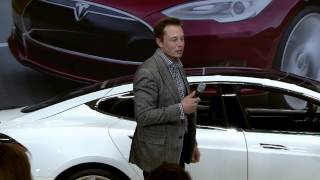
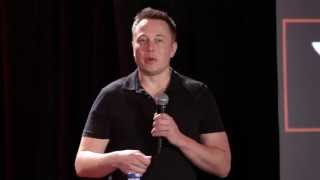
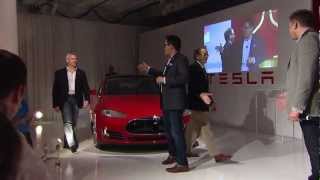
2012年9月24日,周一傍晚,洛杉矶霍桑。特斯拉的设计工作室里挤了几百人,车主、记者、员工,还有几位专程飞过来的供应商。
台上那个人没带讲稿,穿一件深色外套,开口第一件事,是把三张反对票摆到桌面上。
他说,大家认为电动车有三个过不去的坎:跑不了长途、排放只是从排气管搬到了发电厂的烟囱、以及比同级别汽油车贵。今天晚上,这三条会一条一条被回答。
我们要给你们看的,就是这三个问题的答案。(马斯克)
那一年,全美路上跑的电动车加起来只有几万辆,绝大多数还是日产聆风和雪佛兰沃蓝达。特斯拉自己的 Model S 三个月前才刚交付第一批。这家公司四年前差点死掉,2008 年圣诞节前夕,账上的现金只够撑几天,融资是在最后一刻签下来的。
在这样的背景下,一个人站在台上说"这三个问题今晚都有答案",听上去像吹牛。所以他没先讲道理,先放了一段视频。
视频里是当天拍到的四座充电站,车就停在桩边充电,旁边是高速公路出口的餐厅和便利店。画面很朴素,没有一张渲染图。
三个问题,一次回答
超级充电桩(Supercharger)要解决的第一个问题是距离。汽油车的自由感建立在"理论上你可以去任何地方",电动车要追平这个感觉,必须先把高速公路连成一条线。
所以特斯拉把站点选在了高速沿线的餐厅。不是商场地下车库,不是写字楼停车场,是那种开车三小时一定会想停一下的地方。
第二个问题是排放的归属。电从发电厂来,发电厂烧煤烧气,那么电动车只是把尾气挪了个位置。这种质疑在 2012 年几乎是共识,反驳它需要拿出能源源头的方案。
第三个问题是钱。电池贵,车就贵,补贴一停就卖不动。这一条最难,因为它牵扯到整个成本结构。
发布会最容易犯的错误,是拿参数当答案。马斯克的处理方式反过来:先把对方最强的话说完,再给解法。台下坐着的怀疑者,听到自己的顾虑被准确复述出来,注意力才真的给出去。
一百千瓦,真正改变的是时间感
超级充电桩的功率是一百千瓦,马斯克说往后可能做到一百二十千瓦。
这个数字要放回 2012 年的坐标系里看。当时家用桩改出来的 Level 2 充电是七千瓦上下,特斯拉自己的车载双充能把功率推到二十千瓦,日本主推的 CHAdeMO 快充标准是五十千瓦。一百千瓦是主流快充的两倍,是家用桩的十几倍。
但整场发布会,他几乎没有谈功率。他谈的是这样一件事:
你可以开三个小时,停不到半小时,充好电,再上路。开电动车和开汽油车,中间没有实质区别。(马斯克)
然后他把这半小时拆开算了一遍。早上九点出发,开三小时,中午到服务区,吃饭、上洗手间、买杯咖啡,前后二十到三十分钟。车插上枪,人去做人的事,回来电也补得差不多。特斯拉当年给出的口径是半小时补进大约一百五十英里,也就是两百四十公里。
这段描述里没有任何电化学,全是人的作息。
汽油车之所以让人觉得自由,原因不在续航里程,而在加油这件事只需要五分钟。五分钟短到不值得被记住,所以从来没人把它算进出行成本。电动车要追平的从来不是"能跑多远",是这段"不值得被记住"的时间。
三小时的车程,正好对应一次人的生理需求。这个匹配并非巧合,它是被设计出来的目标。
顺着这个思路往下看,会发现它比功率参数更能预测技术路线。手机快充的广告词从"充电五分钟"开始,而不是从"电池容量五千毫安"开始,道理是一样的。用户感知的是等待,不是容量。
十年之后回看,这条曲线走得很陡。2019 年特斯拉推出 V3 超充,峰值功率两百五十千瓦;再往后是 V4,功率继续往上走。当年那个"半小时补两百四十公里"的承诺,如今在部分车型上被压缩到了十几分钟。方向从一开始就没跑偏。
车棚上的太阳能板,和那个"净额"的说法
第二张反对票更硬:电是发电厂烧出来的,你不过是把排气管换成了烟囱,问题只是搬了个家。
马斯克的答案是车棚。每个超级充电站配一片太阳能顶棚,合作方是 Solar City。这家公司当时由他的表弟林登·里夫(Lyndon Rive)经营,马斯克本人担任董事长,2016 年被特斯拉以大约二十六亿美元收购。
我们把太阳能系统的规模,按全年发电量超过这些车一年用掉的电量来设计。它送回电网的电,会比这些车用掉的更多。(马斯克)
这套说法的边界得掰开说清楚。
它按年核算总额,不做实时匹配。车在晚上充电,太阳在白天发电;冬天发电少,夏天发电多;阴天那几天,板上什么也没有。头顶那块板发出来的电,和你车上充进去的电,并不是同一度电。特斯拉做的是把一年的账拉平,让"净排放"这个数字变得好看。
批评者的反驳也站得住:单个站点的光伏装机有限,放进全网、全国的电力结构里,这点增量改变不了什么。
但这个论证有它自己的价值。它把发电侧的排放拉进了产品的账本,而不是假装那道烟囱不存在。一个产品宣称自己清洁,就得一路管到上游去,哪怕管得不彻底。
几年之后,一些站点开始配储能电池,把白天的电挪到夜里用,顺便在断电时顶一下。那次升级的逻辑,和 2012 年车棚上那块板是同一个。
免费:这笔钱特斯拉自己掏
第三张反对票是成本。马斯克给出的解法是规模。
超级充电桩复用了 Model S 车上的充电机技术,两套系统并行工作;因为和量产车共用零部件,采购量一上去,单站造价就压下来了。
Model S 上的充电技术、和 Solar City 的合作,可以用 Model S 的规模效应,把整件事做得非常便宜。这一点非常重要,因为它让这套网络可以免费提供给 Model S 车主。(马斯克)
具体条款是:85 度电的版本标配超充硬件,60 度电的版本加一笔选装费。
装了超充硬件的 Model S,可以在纯粹阳光下免费跑一辈子。(马斯克)
"免费、永久、纯太阳能",三个词叠在一起,是 2012 年汽车行业最锋利的一句广告。台下当时的掌声,比整场任何一个技术参数都要响。
代价在几年后才显形。充电网络的建设与运维是持续支出,车卖得越多,这笔账越大。特斯拉后来逐步收口:新车主不再享受终身免费,改成每年一定额度的免费里程,超出部分收费;再往后是推荐奖励、限时免费转移之类的花样。那张"终身免费"的支票,最终被锁进了一个越来越小的老车主群体里。
用免费去启动网络效应,这个判断没错。错的地方在条款:没人写下这张支票什么时候到期。任何一项长期补贴,都该在推出的那天就配好退出机制,写清楚什么条件下停止、长期成本由谁承担。
六个已经通电的站
马斯克在现场反复强调一件事:这不是计划,是已经发生的事。
当晚已经装好六座站,他点名提到了其中几座:巴斯托(Barstow)、特洪(Tejon)、哈里斯牧场(Harris Ranch),全都沿着加州的五号州际公路铺开,那是洛杉矶往北去旧金山最繁忙的一条线。他说这些站是秘密建起来的,今晚第一次对外公布。
然后是那张时间表。
年底之前,加州加密,并向内华达、俄勒冈延伸。两年之内,覆盖美国绝大部分地区。四到五年,覆盖美国全境,"没有例外",再加上加拿大南部。之后是欧洲和亚洲。
这套节奏后来被验证得相当扎实。2014 年 1 月,特斯拉的团队用七十六小时,把一台 Model S 从洛杉矶开到了纽约,横穿整个美国。充电桩从西海岸的一条线,长成了一张网。到今天,全球的超级充电桩超过六万个。
当然也有拖延。美国中北部的空白区域补得比承诺晚,"全境无例外"这句话拖了好几年才勉强兑现。科技公司给的时间表通常要打对折看,特斯拉这张表大体只打了七折,在行业里已经算少见。
他给承诺的方式很具体:具体区域、具体年限、可以被检验。这种做法有风险,做不完会被人翻旧账;好处是它逼着组织按路线图走。
请两个外人上台
发布会上最容易出问题的地方,是自说自话。特斯拉当晚的处理方式很直接:请人来证明。
第一个人是《纽约时报》撰稿人布拉德·伯曼(Brad Berman)。他当天从太浩湖一路开到洛杉矶,五百多英里,走的就是这张刚通电的网络。他写的稿子,那个周日见报。
第二个人是车主本·魏斯(Ben Weiss)。他在拉斯维加斯提车,直接开到了活动现场,接下来还要开去圣塔芭芭拉。
马斯克顺带提了一句《汽车趋势》(Motor Trend):同样这段路,他们没中途充电,一口气开到了。
两种开法都成立,这才是他真正想说的。想省时间就用超充,想验证续航就一次开完。用户按自己的需求选,不用被厂商教育该怎么开。
请记者和车主到现场,成本几乎为零,可信度却远高于任何一支广告片。里程表不会替谁说话。
这套方法也有反面。几个月后,2013 年 2 月,《纽约时报》刊出另一篇评测,作者约翰·布罗德(John Broder)在东北部的暴雪里把 Model S 开上了拖车,标题叫《在特斯拉的电动公路上抛锚》。马斯克公开了车辆的行驶数据日志,逐条反驳,双方吵得不可开交。
同一套"让第三方验证"的策略,既能把你送上神坛,也能把你拽下来。差别只在于,数据被公开的那天,你接不接得住。
为什么他敢把这一天和龙飞船相提并论
现场有一句话,听起来最夸张。
我觉得这一天会被记进历史,至少和今年早些时候 SpaceX 与空间站对接是同一量级。(马斯克)
2012 年 5 月 25 日,龙飞船成为第一艘与国际空间站对接的商业航天器。那是人类航天史上的一个节点。把一场充电桩发布会放到同一水平线上,怎么看都像自我膨胀。
但如果顺着他的逻辑走,两件事的内核确实一样。
它们都在证明"被普遍认定做不到的事"其实做得到。商业公司能把货送到空间站;电动车能像汽油车一样跑长途。前者打破的是国家对航天的垄断,后者打破的是关于电动车的一整套常识。
他真正的判断在这里:电动车的障碍不在电池,在认知。人们不是算过账才不买,是根本不相信这东西能用。
所以要赢的从来不是技术辩论,是那个"电动车等于不自由"的印象。技术辩论赢了,印象还在,车照样卖不动。
"你可以把钱包留在家里"
整场发布会最有画面感的一句,出现在最后。
人们有一种印象,开电动车就没有自由,被困住了,哪儿也去不了。今天我们想说的是,你其实比开任何车都更自由。顺便说一句,如果你想从洛杉矶开到纽约,带上食物、住朋友家,你可以把钱包留在家里。(马斯克)
这句话把"环保"换成了"自由",把"牺牲"换成了"占便宜"。卖电动车最难的一关,是让人觉得我在为地球做贡献,所以忍受一点不便。他试图把这道心理成本直接清零。
对照一下当时另一条被看好的路线。以色列公司 Better Place 做的是换电,车主开进换电站,机器把空电池卸下,换一块满的上去,全程几分钟。这个方案融资超过八亿美元,一度被认为是最优雅的解法。2013 年 5 月,公司进入清算。
换电的问题在于,它把重资产压在运营商身上,各家电池规格还不统一,网络效应起不来。超充走的是另一条路:桩固定、接口自有、钱由车企出、用户免费。前者是服务业,后者是基础设施。
十年后,胜负已经很清楚了。2023 年起,福特、通用、里维安等一批车厂陆续宣布改用特斯拉的充电接口,这个接口后来被标准化为 NACS。当年那个"只有特斯拉自己用"的插头,成了北美的事实标准。
发布会最后还有个细节。马斯克让人去看会场外面那台 Model S,说它停在这里的这段时间充进了不少电。一句话把抽象的网络变成了眼前的事实:你们坐在这儿听我讲话的工夫,外面那台车正在充电。
2012 年那个周一晚上,他讲的三件事,兑现了两件半。长途出行这件事兑现得最彻底,从六个站长成了六万个桩,还顺手统一了北美的接口标准。太阳能净额那套说法站得住一半,账是对的,量级有限。免费这件事撑了五年左右,最终变成了一张越来越小的老车主名单。
一场发布会能把其中一件真正做成,就已经够了。
- 先列出反对意见,再给方案。马斯克开场就把三张反对票摆出来,比任何产品介绍都有效。写方案时先花二十分钟写下别人会怎么否定你,然后一条一条准备答复。
- 判断一项技术能不能被接受,看它是否对齐人的作息。三小时车程配二十分钟休息,这个匹配比充电功率更能决定体验。检查你产品里那个"等待时间",它落在用户本来就要停顿的窗口里吗?
- 用净额逻辑时必须主动标注边界。年度总账平衡,不等于每一度电都干净。说清楚这是净额核算、不做实时匹配,反而更容易赢得技术型用户的信任。
- 补贴和免费政策在推出那天就写好退出机制。终身免费最终变成了历史包袱。条款里要写明:什么条件下停止、长期成本由谁承担。
- 发布之前先跑通一个最小完整闭环。六座站、一条公路、两个真实用户,比一张覆盖全美的地图更有说服力。规模可以小,但必须真的能用。
- 找第三方替你验证,同时准备好被同样的人质疑。让记者和真实用户先上路,可信度最高;数据被公开的那天,你也得接得住。
- 把你公开承诺的时间表记进日历,两年后回看。特斯拉说两年覆盖美国大部、五年覆盖全境,实际打了七折。给自己设可检验的承诺,是训练判断力最便宜的办法。
0:01Good evening, ladies and gentlemen. My name is Fran Van Holtzen and I'm chief of design for Tesla Motors. And I'm super excited that you guys came out on a Monday night, the end of September. Beautiful night we have for you. This is our design studio here in Hawthorne. And we have something really special to talk about and to show you. So without further ado, let me introduce to you Mr. Elon Musk.
0:26[Applause] All right, thanks everyone for coming. so what what we want to show you tonight is essentially the answer to the three major problems that are holding back electric vehicles or at least that people think are holding back electric vehicles. you know, one is this question of being able to drive long long distances conveniently. And with a with a gasoline car, you can drive in theory anywhere anywhere you want with with high convenience. Well, how do you do that with with an electric car? And that's what the supercharger is going to enable. then another question is what do we do about the fact that u when electricity is generated it is
1:15generated at a power plant and so what about this idea that the emissions are just pushed to the power plant and we're going to show you how we address that. and then the third is well what about the cost of electric vehicles? How do we how do you compare the cost of electric vehicles with the cost of of gasoline vehicles? And we'll address all three of those things. The the re the answer to that is what we're going to show you here with the Tesla Supercharger.
2:01[Music] So, we're going to have these at highway restaurants allwhere all around the country and around the world. And that's combined with the the solar power deck that you see there. So that provides the solar power that goes to the supercharger and then to the cars. So what we're able to do here with with the supercharger is charge at about 100 kilowatts and going forward potentially as much as 100 120 kilow.
2:53What what that means is you could you could drive for three hours, stop for less than half an hour, and recharge and be ready to go again. So, yeah. So, if you if you take the typical trip that someone experiences when they're when they're driving, let's say you you you started out at 9:00 a.m. and you drove for 3 hours. around noon, you'd want to stop for a bite to eat, go to the restroom, grab a coffee, and be on your way. And that actually takes about 20 to 30 minutes. And what you can do with the supercharger, you can just plug your car in, and by the time you're done with all that, you're ready to go again. So there's no meaningful difference between driving a a an
3:37electric car and driving a gasoline car. And the supercharge, this is not something that's going to be deployed at some distant point in the future. This is video from today showing four of the supercharger locations in use. So we we actually have six superchargers installed already. There's four of them.
3:59Basam, Tahhon, and Harris. And in fact we have we have here two of the people that the first two nonTesla people to use the two supercharger network. and we'll we'll go to them in a moment. U one is Brad Burman from the New York Times and he's driven all the way from Tahoe to to Los Angeles. It's over 500 miles today.
4:25And in fact, he's going to write be writing a story that's going to be in this Sunday's New York Times. So, so look for that when it comes out. and then there's a one of our customers, Ben Weiss, took delivery of the car in in Las Vegas and drove drove here from Las Vegas. You know, you can actually do that trip non-stop as Moto Trend did, but you you can also do it really fast with air conditioning on if you use a supercharge network.
4:54So, so Ven took advantage of that. And and then he's going to be driving he's on from here to Santa Barbara. So, you can drive from Las Vegas to Santa Barbara, no problem. w with with this network and so it's it's actually already deployed so you can drive almost anywhere in California right now this is not some like I said this is not some you know figment of imagination that maybe it'll happen some point in the future this is these are installed we we we built these up in secret and we're unveiling it for the first time tonight so [Applause]
5:33So, by the end of this year, in in a few months, we'll actually have a bunch more installed in California and extending to, Nevada and Oregon and going beyond that, within two years, this is not an exaggeration, within two years, we will cover almost the entire United States with superchargers.
5:56should be able to travel practically anywhere. And then our long-term goal, which is perhaps in the sort of four or five year time frame, so not Tesla longterm, four or five year time frame, we expect to cover the entire United States without exception and the lower part of Canada.
6:16So yeah, and then in addition beyond this, we'll obviously have supercharges in Europe and Asia. So, you'll be able to travel almost anywhere in the world on with an electric car with it with with with your Model S with the same level of convenience as a gasoline car. and then because we have the solar power systems that are that that are providing the energy and and we're sizing the solar powered systems with the with with Solar City to to generate more power than the cars use over the course of a year. So you the the the solar powered system will actually put more power back into the grid than than the cars use during driving.
7:01This is a very important thing because it it it it goes to the heart of the argument that people will use to say oh well this doesn't really address the CO2 problem because what about the power plant? They this is putting more energy back in the grid than the cars use. Okay. [Applause] and in creating this the the supercharger and the the solar panels all that working closely with the with Solar City and and using the the existing charger technology that we have in the Model S running in parallel we're able to use the economies of scale of the Model S and and do the whole thing very inexpensively which is also very very important because it's going to enable us to offer
7:51for this to Model S customers for free. [Applause] So for for model cars that have supercharger hardware installed, which will be the case for the 85 kWh pack and and for a small incremental charge for the 60 kilowatt hour pack, it it'll you you'll be able to travel for free forever on pure sunlight.
8:18[Applause] So, I think it's pretty hard to to beat that, you know. I mean, free long distance, you're not going to get that with gasoline. So, yeah, exactly. Or AT&T. Yeah. So, I think I think this I I think this this day will actually go down as as being quite historic. I think at least on par with SpaceX talkinging with the space station earlier this year. I mean, I really think this is important.
8:56and and and really I want you to go out there and sort of and and spread the word because people have this idea that if you have an electric car, you you can't you're sort of you let there's no freedom. You're you're stuck. You're you know, they have this this this idea that you can't go anywhere. And what we're showing here today is that in fact you have more freedom than with anything.
9:17You'll be able to go anywhere and and you can feel really good about your your travel because you're you're going on sunlight. And by the way, if you want to go from LA to New York, if you pack food and stay with friends, you can leave your wallet at home. So, well, see, so, well, we'll show a few a few extra videos. There's Model S charging. I think I think we're actually going to say see how much it charged in the last since it was parked there. I think it charged quite a lot. anyway, so
9:53there was quite a significant amount of charge that the car gained just while we were sitting here. so thanks very much for coming and I'll I'll be around if you want to talk to me. So yeah, thank you very much. Bye. [Applause]
资源与出处
- 视频在 YouTube 收看
- 档案silicon-valley.tech 档案页本页视频与文稿数据来自 Elon Musk Archive
- 精读本篇精读 Markdown 版