2016年11月17日,特斯拉特别股东大会。议程上最重的一项,是股东投票批准对Solar City的收购。非关联股东以压倒性多数投了赞成票。马斯克上台第一句是道谢,第二句是,你们的信任会得到回报。
然后进入问答。第一个问题就撞上了当年最难缠的那件事:华盛顿换了主人,电动车的政策环境大概率要变,特斯拉怎么办。
马斯克的回答是这样的:如果所有针对特斯拉的激励和补贴一夜之间全部取消,特斯拉的竞争地位会上升。
一家靠着7500美元联邦税收抵免和加州2500美元补贴卖车的公司,公开说自己不怕补贴消失。这话听上去要么是嘴硬,要么背后有一本大多数人没算过的账。接下来那几分钟,他把这本账从头翻了一遍。
补贴这件事,多数人算错了方向
马斯克先把话挑明。
关于特斯拉,最大的误解之一,也有点反直觉,是特斯拉对激励和补贴的依赖程度。讽刺的地方在于,如果所有针对特斯拉的激励和补贴都被取消,特斯拉的竞争地位会上升,而不是下降。(马斯克)
他说很多人把因果关系整个装反了。真正该问的问题,是特斯拉怎么去弥补竞争对手手里那份补贴优势,而不是特斯拉自己拿了多少。
第一个例子是加州的零排放车辆积分(ZEV credit)。一个积分名义价值5000美元,一辆电动车大概能拿两到三个。按两个算,账面就是1万美元。
问题出在兑现环节。
特斯拉只能把积分卖给其他车企,价格大约是面值的五折。因为加州的零排放强制要求太弱,我们只能拿到五折。(马斯克)
同一个积分,通用或者福特自己造电动车,可以按面值100%兑现。一辆车两个积分,通用每辆车就相当于比特斯拉多出5000美元的成本空间。
这就把整件事说清楚了。规则写在纸上是一样的,落到两家公司身上,一份打五折,一份给全价。特斯拉是卖积分的一方,价格由买家定;传统车企是自用积分的一方,价值按面值算。补贴在这两家公司之间的实际效果,差了一倍。
马斯克的原话是,如果人们真的担心特斯拉的补贴问题,该担心的是特斯拉怎么克服这种竞争劣势,方向完全反了。
他还补了一句更根本的判断:政府确实应该给电动车激励,但理由是为了整个行业好,为了加快可持续交通的到来,跟特斯拉需不需要没关系。
7500美元的联邦抵免,跟量产根本没关系
再说联邦那7500美元税收抵免。这笔钱听上去更实在,但它挂着一个硬条件:累计销量到25万辆就停。
一旦我们做到年产50万辆或者100万辆,那25万辆的累计额度早就用完了。所以它对任何高量产项目来说基本无关紧要。(马斯克)
一个无法随销量扩张的补贴,天生就不是为大规模普及设计的。你不可能一边把电动车做成主流产品,一边指望这条政策还站得住。政策的容量和产品的目标是错位的。
加州的操作更让他想不通。州里给2500美元的补贴加了一道收入上限,结果特斯拉的很多客户压根不符合资格。
我觉得这很有破坏性,因为我们已经是加州唯一剩下的汽车公司,特斯拉是加州最大的制造商。我不理解州议会为什么要做这种事,最终损害的是自己州的利益。(马斯克)
到了国际市场,情况还要更别扭。
中国是全球最大的汽车市场。特斯拉的车要交25%的进口关税,因为不是本地生产,也够不着任何补贴。两件事叠在一起,一辆特斯拉在中国的落地成本比本地生产的车贵出40%。
德国给补贴设了6万欧元的上限,这个数字卡得非常巧,刚好压在特斯拉欧洲售价的下方。特斯拉很难够到德国的任何补贴。丹麦做了同样的事,法国正在考虑跟进。
把这些拼到一起,结论就顺下来了:如果全世界的补贴一起归零,特斯拉的竞争位置会立刻改善一大截。他不认为这对世界是好事,但对特斯拉是好事。
这段话背后有一层意思值得单独拎出来。补贴在设计的时候,往往带着保护本地产业、照顾既有玩家的隐性倾向。特斯拉作为新进入者,拿到的那一份是打了折的、加了上限的、被收入门槛卡住的。传统车企拿到的那一份是全额、无摩擦的。于是补贴体系本身的运行结果,反而在惩罚最早动手做电动车的那家公司。
这也解释了马斯克为什么敢在股东大会上说这种听上去不讨好的话。他的判断建立在结构上,不建立在情绪上。对他而言,补贴是一笔算得清的账,账面上的数字对外界有利,对特斯拉不利。
太阳能屋顶,比普通屋顶还便宜
话题转到Solar City,他的语气明显轻快起来。他说当天早些时候刚跟Solar City的工程团队开过会,虽然还不敢100%打包票,但看起来很有希望:太阳能屋顶的成本,会在你计算电费价值之前,就已经低于一个普通屋顶。
他把这个产品的主张压成了一句话。
你想要的屋顶,比普通屋顶好看,寿命是它的两倍,价格更低,顺便还能发电。那你还有什么理由选别的?(马斯克)
这话听着像宣传语。后半段的问答里,他把成本怎么降下来的过程拆开讲了一遍,那部分才是真正有信息量的内容。
有人问技术归谁。他说几乎全部由特斯拉和Solar City开发,主要是Solar City,特斯拉出了一部分力。可能会用到3M的一种薄膜,但把这个膜用在太阳能屋顶这个具体场景,是他们自己想出来的。他估了一下,合并后的公司握有90%以上的技术。
时间表也给了。太阳能屋顶预计明年夏天开始量产,一共四种主要款式,一款一款推,大概每三个月上一个新款,先从看起来最受欢迎的那款开始。价格会随房子大小和安装难度浮动,关键在同等条件下的对比,他们有信心做到跟普通屋顶持平,甚至略低一点。电费,算白送的。
有人追问安装成本,特别问到人工。马斯克的回答很干脆,那个价格已经包含了屋顶的人工费用。
屋顶这门生意,几十年没人认真看过
为什么能比普通屋顶还便宜?他给的角度很少有人想到:屋顶的供应链,效率低得离谱。
他反问在场的人,上一次认真讨论屋顶是什么时候?几乎没有。这个行业太久没被人用工程眼光审视过了。
然后他把成本结构拆开。现在主流的屋顶瓦片是混凝土或者陶瓷,换成高强度玻璃之后,重量只有陶瓷或混凝土瓦片的三分之一,有时是四分之一,甚至五分之一。
瓦片成本里的大头其实是运输,物流费用非常高。陶瓷和混凝土瓦又脆,运输和施工过程中的破损率很高。密度不好,做得又厚,从产地一路到屋顶,每一个环节都在漏钱。
只要把这条链理顺,收益就已经很大了。说实话这不算特别难的事,我不太明白为什么没人做。我也想不通。(马斯克)
有人问电池本身。他说用的是很高效率的电池,电池层面的效率在22%到24%之间,属于中高水平。电池层压在高强度装饰玻璃后面,真正的难点在于怎么把这些电池连起来,以及背板长什么样。
现场还问了一个很实际的问题:是不是每块瓦片后面都装电池?
答案是否定的。有些瓦片后面没有电池,但外观必须做到完全一致,不能让人从街上看出屋顶上有斑驳的补丁。有些区域遮挡严重,装电池没有意义。
做法就是两条:外观统一,功能按需分配。看不见的地方可以不装,看得见的地方必须一模一样。
还有人问,太阳角度低的时候效率损失怎么处理。马斯克的回答分两层。第一层,太阳贴近地平线时,实际能拿到的能量本来就很小,把这部分排除掉,影响微乎其微。第二层,瓦片的微观结构可以让光子在内部来回反射,光子进来之后不会直接弹走,而是在里面反复弹,多踢出几个电子。这个增益在一定程度上抵消了效率损失,算下来大概接近持平,上下浮动几个百分点。
一个屋顶,一块电池,一辆车
会上这个问题被反复提到,马斯克显然很在意:特斯拉想做的是完整的一套东西。
我们在做一个整合产品。太阳能屋顶,配上Powerwall,再配一辆电动车。你走进一家特斯拉门店,说一句要,它就发生了。整套系统无缝运转,你会喜欢它。(马斯克)
这个整合的方向,也解释了他对充电的判断。有人问Model 3的免费充电。
他说Model 3从一开始就讲清楚了,不包含免费无限充电。长途免费,本地不免费。
理由很实际。让电动车主像去加油站那样,专门绕路跑一趟充电,这件事本身就别扭。车应该像手机一样,停在哪儿就在哪儿充。日常充电在家或者在目的地顺手解决,超级充电站只负责长途这一段。分工划清楚,整套系统才转得动。
竞争对手的电动车,是做给补贴看的
有人提到新竞争者。马斯克说看到更多车企做电动车当然值得鼓励,但他对节奏和规模有点担心。
他的观察是,这些车企大多把目标定在补贴门槛附近,一旦过了那条线,就不再认真做量。
从我们看到的情况,除了少数几家公开表态的,没有竞争对手在计划真正上量。他们的产量只是刚好卡在补贴允许的范围内。(马斯克)
他点了雪佛兰Bolt(Chevrolet Bolt)的名。这款车的目标是年产2到3万辆。
但这样一款车,真要做点事,一年应该是30万到50万辆。(马斯克)
这句话的重量在对比里。2到3万辆,是一个为了让补贴算得过账而存在的产量。30万到50万辆,才是一个真打算改变市场的产量。两者差了一个数量级。差的那部分,跟工程能力关系不大,跟意愿关系很大。
把这个观察和前面的补贴结构对上,逻辑就闭环了。既然补贴的额度封顶、不随销量扩张,那么一款以补贴为生的电动车,最优产量就是刚好把补贴吃满的那个数。政策设计的天花板,直接变成了产品的天花板。
油气行业的补贴,才是真正的巨兽
现场有观众问太阳能这边的补贴。马斯克承认目前有30%的投资税收抵免(ITC),但执行过程太复杂,实际价值被大幅稀释。
这套税收抵免的申请方式太绕,真实价值可能只剩15%到20%。(马斯克)
然后他把镜头拉远,对准了更大的那张桌子。
石油、天然气、农业,这些领域的补贴是天文数字。他说了一句很到位的话:当有人抱怨特斯拉拿补贴的时候,先看看特斯拉在补贴名单上排第几。特斯拉大概排第150位。
如果这些人真的关心补贴,为什么不去问排在前十的是谁?他们在攻击的其实不是补贴,补贴只是个由头。(马斯克)
他举了两个例子。枯竭油井(stripper well)能拿到大约25%的税收抵免,而且没有时间上限。
我想不通为什么要给枯竭油井25%的抵免,这很荒唐。(马斯克)
另一个更隐蔽。石油公司可以在海外做零成本租赁,把账面做成在海外被征税,于是在美国就不用交税。
这是有史以来最大的骗局之一。没有哪份租约真的零价值。你把租约价格压到极低,假装在海外交了税,实际上就在美国逃了税。这是一笔巨大的隐性补贴。(马斯克)
讲完这些,他又绕回太阳能屋顶。假设那个成本目标真的实现,在计算电费价值之前就比普通屋顶便宜,那么补贴就真的不重要了。产品本身的经济性,比任何政策都稳。
Model 3 的时间表,和那些场外的问题
有人追问Model 3的节奏。马斯克不肯给具体日期,只说现在不是宣布的时候,大概春天,三四个月之后。
现场提问里混进来一些别的话题。有位观众很直接,说自己最关心的是把化石燃料行业干掉,还提到可以切换电力供应,每度电多花3美分,就能用上北加州的太阳能农场,让钱留在加州。马斯克回应,同意,而且今天就能做。
也有人泼冷水,说自己家的屋顶山墙太多、周围还有树,装不了太阳能板。马斯克没有回避,这类情况确实存在。
但当被问到能不能所有人都切过去时,他的判断很干脆:如果真能把化石燃料行业挤出去,电动车和Solar City自然会做得更好。
这句话点出了整场问答的底色。太阳能屋顶、家用储能、电动车、超级充电网络,单看是四个产品,合起来是一件事:让化石燃料变得不必要。
把这场问答变成几条能用的判断
整场问答的信息密度很高,具体数字多半会过时,数字背后的判断不容易过时。
- 看一家公司受不受补贴照顾,别只看它拿了多少,要看它拿到的补贴能不能按面值兑现、能不能随销量扩张。打五折的补贴和有上限的补贴,名义上是福利,实际上是天花板。
- 判断一个新产品能不能撬动旧市场,先去找那条几十年没人认真看过的供应链。屋顶的运输和破损就是被埋起来的利润。很多行业的低效跟难度无关,跟有没有人愿意问一句有关。
- 看竞争对手的新车,先看它的产量目标。产量定在补贴门槛附近,说明它是做给政策看的;产量定在市场容量附近,才是真想做。一个数量级的差距,比任何发布会都诚实。
- 遇到"某公司靠补贴活着"的说法,先查它在补贴名单上排第几。排第150位的被反复点名,排前十的没人提,这本身就说明了讨论的性质。
- 评估一个整合产品,看它有没有把用户最麻烦的那一步去掉。电动车最麻烦的是专门跑一趟充电,那就把充电塞回停车的地方,让超级充电站只管长途。麻烦被移除的地方,体验才真正升级。
六年后回头看这场问答,那套算法仍然成立。一家公司敢在股东面前说"取消补贴对我们更好",前提是它已经算清了自己到底靠什么活着。算不清这一步的公司,才会把政策当成命。
0:00[Applause] Hello everyone. So yeah, I'd like to to thank all of the unaffiliated shareholders that voted in favor of the transaction you know by by an overwhelming margin. So I think your faith will be rewarded. It's it's really going to be I think some amazing stuff that that comes out.
0:22in fact, I was just meeting with the early earlier today meeting with the Solar City engineering team and you know I I don't want to h 100% commit to this yet but it's looking quite promising that that a solar roof will actually cost less than a normal roof before you even take the value of electricity into account. So,
0:50so, so the basic proposition would be, would you like a roof that looks better than normal roof, lasts twice as long, costs less, and by the way, generates electricity. It's like, why would you get anything else? Maybe there's a reason. I'm not sure why, but anyway, so that's looking that's really looking really promising, and I think there's there's even room for for improvement beyond there. So, you know, very excited about where things are going to go, with with the solar roof integrated with the the power wall and with the, you know, obviously with electric with electric cars. So, with that, let's go to questions.
1:32I think questions I think should appear on the screen or maybe not. Maybe we'll have to read them or something. Should we? Okay. Thanks. Yeah. Okay. so apparently there's a new political landscape and not sure people what people are referring to but yeah something so so the I think one one of the the biggest misunderstandings about Tesla and somewhat counterintuitive is the degree to which Tesla is reliant upon incentives or subsidies. the the
2:23the ironically if if all incentives and subsidies were removed for Tesla, Tesla's competitive position would increase, not decrease. This is a like a really fundamental misunderstanding. we we do believe there should be incentives and government incentives for electric vehicles, but we believe that they should be there for the good of the the industry and to accelerate the advent of sustainable transport, not because Tesla needs them. let let me let me explain what what I mean by this.
2:54The the incentives either don't scale or or they're disadvant disadvantageous. If you take the zero emission vehicle credit where you get $5,000, it's a nominal value of $5,000 per credit and let's say you might get, you know, say take two of those per vehicle or or three. so two would be worth $10,000 face value, but Tesla can only sell them to other car companies for about 50 cents on the dollar.
3:23Because the ZEV mandate is is is very weak. we we we only get 50 cents on the dollar. However, if General Motors or Ford or somebody else makes an electric vehicle, they they get to monetize their ZEV credit at a hundred cents on the dollar. So, if they say two ZE credits per vehicle, General Motors would have a $5,000 cost advantage over Tesla.
3:47they do not would would have they they do have. so if people are concerned about Tesla incentives, they should be concerned well how does Tesla overcome the competitive disadvantage of EV incentives? Not not the other way around. there's also the $7,500 federal tax credit, but that that stops at a cumulative quarter million vehicles. So it's essentially irrelevant for any any high volume program. as soon as we stop making half a million or a million vehicles per year that that 250k cumulative will long ago have run out.
4:25So no no scale no it's impossible to scale electric vehicles and have the the incentive be relevant. And then ironically in California they put an income cap on the $2,500 in incentive. so many of our customers don't even qualify for the the $2,500 incentive because of the income cap, which I think is really quite destructive since we're the and doesn't make any sense to me because we're the only car company left in California.
4:52it's like Tesla is the biggest manufacturer in California. so I don't understand why the legislator would legislature would do such a thing. That's ultimately to the detriment of of its own state. Anyway, these things are puzzling. and and then if you look if you look internationally in in in China which is the world's biggest car market we we currently pay 25% import duty and we have no access to incentives because our car is not locally made. the net effect is that our car costs 40% more than a locally made vehicle. So if we made the vehicle locally be yeah be 40% difference. so
5:33so not only do we not have access to incentives, we have a huge penalty. looking at other other parts of the world, Germany put a 60,000 euro cap on the incentives conveniently just below the Tesla, you know, cost of a Tesla in Europe. or just above it. Yeah. Yeah. Just below. So, so essentially we it's very very difficult for us to to get get access to any incentives in Germany. Denmark did the same thing. France is considering doing the same thing. So the great irony is that if all the incentives just went to zero, Tesla's competitive position would immediately improve by quite quite significantly. we don't think that that's a good thing for the world, but
6:15it would be a good thing for Tesla. so you know I think that's that's a pretty important thing to consider. So I let's say the new president did erase all incentives that Tesla's competitive position would just be better. So that that's actually what would happen. So who owns the technology for the new solar roof? technology is well what's
6:41owned by us. Sorry. yeah, this this was almost entirely developed by Tesla and Solar City. Well, mostly by Solar City, some by Tesla. And then, you know, we may or may not use a film from 3M, but the use of the film in the particular application that we're talking about was, you know, something that we came up with. but, you know, call it I don't 90% plus of the technologies owned by the combined company.
7:18yeah, I sort of partially answered this question. So we expect to start doing the solar roofs in volume this in summer next year. so we'll we'll and we'll roll out there's four main types if you saw the the roll out and we'll roll them out one at a time. So we'll start off probably in like three month intervals. start with the one that appears to be the most popular and then and then roll the each new variant out roughly on three-month cycles from summer next year. and the
7:49the cost will obviously vary according to the size of the house and the difficulty of the installation, but the important thing is that the apples to apples comparison compared to a regular roof, we're confident will be at at at least at and we believe slightly below the cost of a regular roof. And then electricity is just a bonus.
8:09Well, we have to touch on this question more than a few times. we're trying to make an integrated product. So, you have an integrated solar roof with a power wall and an electric car. and you can just go into a Tesla store, just say yes, it just happens. It all works. It's seamless and you love it.
8:30thoughts on new competitors? Well, it's certainly encouraging to see other car makers do electric cars. I am a little concerned about the the pace and volume of of what they're doing since they they seem to be mostly aiming to just target whatever the incentive threshold is and and then not really do serious volume beyond that. so the as as I said a moment ago, the the incentives don't scale with volume. So the major manufacturers are not from what we see maybe with the exception of what folks vlogging says they're going to do none of the competitors are
9:10planning to do serious volume in in electric vehicles yet. that they're just sized to to stay within the the the volume constraints of the of the incentives. so the the the I think this is like this the Chevrolet Bolt with a B is I think aim they're aiming for like 20 to 30,000 cars a year, but really a car like that should be 3 to 500,000 per year for it to really make a difference.
9:44I'm not sure I understand this question. Oh. Model 3. I think you know Model 3 from the beginning we said free free charging is not is not included in the in the Model 3 or not not free unlimited charging is not included. so free long distance is but not free local. It's just it becomes really unwieldy for people to use the the gas station approach for electric cars.
10:13The car should really be charged while you charge your phone, but then you just need to solve the long distance problem, which is what the supercharger stations will do. Already answered. All right. and any I can maybe take a few quick questions from the audience. sure. Sure.
10:51The question is, will each tile have a solar cell behind it or will some not? and the answer is some will not, but it's important that they aesthetically look the same so that you do not see a patchy roof. so it has to be aesthetically consistent, but it will not make sense to put solar cells on every portion of the roof because some portions are heavily shaded as you're pointing out.
11:14Yeah, it just needs to be aesthetically consistent. Do you have a schedule for the model? today is not the time for that announcement. but I mean it's probably Yeah, I don't know. you know, beginning of spring or something like that, you know. Yeah. Three or four months from now. I'm sorry. I'm just I'm just going to take like maybe three or four more questions and Yeah. Just over there.
11:45Yeah. Yeah. So the question was what about the incentives for for solar? because there is currently a 30% investment tax credit. although the the efficiency with which that tax credit is applied really diminishes it its true value to I think maybe a 15 to 20% true value because of the complexity of of of how it's set up.
12:32so and it's it is important to note that obviously oil and gas and many other things farming you know farming subsidies subsidies are gigantic. it's always like like when somebody's like complaining about subsidies, why are they complaining about what Tesla receives if we're like number 150 on the list? You have to really question their motivations. Like if they're really about subsidies, what about the top 10?
12:58it's but it's not really about subsidies. that's that's that's not really what they're attacking. so it you know like stripper oil wells get something like a 25% tax credit. I I don't know why we're giving a 25% tax credit to stripper oil wells. It's crazy. with no no time limit by the way. and then there's the the whole scam where oil companies can
13:28do zerocost leases in foreign countries and just pay taxes and then not pay taxes in the US. This is like one of the biggest scams ever. no lease is truly zero value. But if you if you if you if if you go zero to to very low value on the lease be pretend that you're getting te taxed instead then you don't pay taxes in the US. It's a really giant subsidy. but but going back to what I was saying a moment ago, assuming assuming assuming it pans out that we're able to do a solar roof for less than a normal roof before you even take into account the cost of the value of the electricity that assuming that pans out well
14:16subsidies are don't really matter. Have you analyzed labor cost? Yes. Yes, that includes the labor cost of the roof. Yeah, absolutely. Turns out the roofing supply chain is incredibly inefficient. and it's been a long time since people really looked at that. I mean, when was the last time anyone here had a conversation about a roof? I mean, it's like rare. so it just hasn't, you know, roofing hasn't gotten a lot has just not got a lot not gotten a lot of love, you know. So looking at just the supply chain efficiency and going to a high strength glass instead of a concrete or ceramic tile, the
14:58the glass weighs maybe a third to a quarter, sometimes even a fifth as much as a regular ceramic or or concrete tile. and most of the cost of the of the tiles is actually transport. The logistics costs are are huge and they tend to be quite fragile. So the inprocess breakage of the ceramic and concrete tiles is very high. So you have a lot of breakage, very high transport costs. The density is not very good.
15:27They typically be quite thick. and and the whole supply chain from where they're made to where they're finally installed is is really inefficient. So just by kind of cleaning all that up, there are huge gains. Turns out. Okay. Just maybe two more questions. Sure. The actual solar components
15:56Yeah, the the cell it it uses a very high efficiency cell or will be using a high very high efficiency cell that that's in the cell efficiency be in the you know low to mid 20s kind of 22 20 22 to 24% efficient at the cell level. and then it's like laminated to to behind decorative glass, high decorative high strength glass. And then you got to be clever about how you connect all those cells together and what the back plane looks like. but honestly in looking at this, it's like I don't know why anyone's not doing it. It's not that crazy hard. So beats me.
16:39It's okay at the back there. Sure. concerned. I'm most concerned with getting rid of the fossil fuel industry. PG&E forward slashs solar choice for 3 cents more per your kilowatt hour. We'll give you whatever. We'll give you solar energy from solar farms in Northern California. Keeps our economy in California strong.
17:07Sure. And you can do it today. All right. Sounds great. So, I mean, I know that maybe you want to put roofs on. Our roof wouldn't take solar panels. well, actually, or even the even the roof, it's got too many gables and has trees. So, everybody can switch over. It's just if we get rid of the fossil fuel industry, then the electric cars will and Solar City will do better.
17:37Sure. Agreed. All right. One last question, I'm sure. Go ahead. All right. This is that's not the subject matter.
18:04Yes. throughout the whole year. Mhm. It is. Yeah. it turns out like actually the actual sun energy you get when it's really low in the horizon is is tiny. so excluding that low angle energy has very little effect. Yeah. And then the in the way that the sort of the micro structure of the way it's arranged you can actually get internal reflections. So as the photon comes in instead of bouncing right out it can actually bounce around inside and and kick down an electron which is you know photo voltics. So so it turns out that it actually the the benefit
18:44benefit offsets the the the efficiency hit to some degree. it looks like it's probably going to be close to even you know plus minus a few%. So all right thank you everyone. Thank you.
资源与出处
- 视频在 YouTube 收看
- 档案silicon-valley.tech 档案页本页视频与文稿数据来自 Elon Musk Archive
- 精读本篇精读 Markdown 版
相关视频
同频道、同主题或相邻年份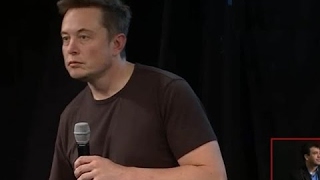 201622:35
 20131:25:37
 20238:50