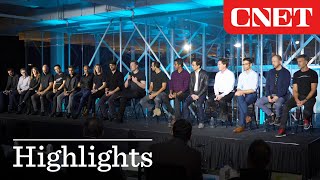
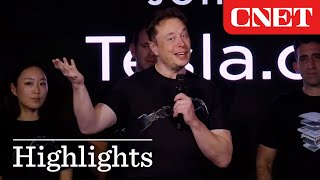
2023 年 3 月 1 日,特斯拉投资者日。马斯克上台讲的第一件事,跟车没关系。
他说自己被一个问题困扰很久:他认识的大多数聪明人,都不相信人类有一条通往可持续能源的路。
我经常感到意外,意识到这一点的人竟然这么少。我认识的大多数聪明人,其实看不到这条清晰的路。他们觉得要么根本没有路,要么得动用某种极端手段才行。这些都不是事实。(马斯克)
这场发布会的主题叫 Master Plan Part 3,秘密宏图第三篇章。前两部分别在 2006 年和 2016 年发布,讲的是怎么把电动车造出来、怎么把成本压下去。第三篇的野心完全不同:给整个地球的能源系统换一套算法。
整场演讲信息密度很高,核心只有一句话:可持续能源地球不但存在,还能一笔一笔算出来,成本低到超出直觉。
马斯克反复强调一件事:这条路不需要毁掉自然栖息地,不需要过苦日子,不需要挨冻,也不需要停用电。他甚至说,这套能源体系能支撑的文明规模,远超地球上 80 亿人。
先看今天这本账:三分之二的能源在到手前就废了
特斯拉 CFO 扎克·柯克霍恩(Zach Kirkhorn)先摆出现状:全球一次能源里,超过 80% 来自化石燃料。而所有这些能源,最终只有大约三分之一变成了有用的功或热。
剩下那三分之二去哪了?烟囱里的余热、散热器里的热水、排气管里的高温废气。它们完成了燃烧,没有完成工作。
先把单位捋清楚。马斯克提到全球一次能源消费是每年 165 PWh,也就是 165 拍瓦时。1 拍瓦时等于 1 万亿千瓦时,等于 1 万亿度电。165 PWh 就是 165 万亿度电。中国 2022 年全社会用电量大约 8.6 万亿度,拿来做量级参照,全球一年的一次能源消耗相当于十几个中国全年用电量。
这个数值本身不新鲜,各种能源报告里都有。真正被忽略的是后面那半句:三分之二在转换环节就没了。
把汽油车从头拆一遍:真正推动车轮的不到两成
马斯克现场做了一次拆解,因为他知道听众的技术水平跨度极大,从顶尖工程师到完全不做工程的人都有。
一台汽油车,发动机把汽油里的化学能转成动能的效率不到三分之一,很多时候只有 25%。剩下的全部变成热量,从散热器和排气管跑掉,一点用没有。
这还不是全部成本。石油要从地下开采出来,要运输,要炼制成汽油,再运到加油站。这一整套流程本身就在耗能。全部算进去,一台典型汽油车真正用于前进的能量,占最初那桶石油的比例不到 20%。
换个说法更直观:你花 100 块钱加油,真正推着车往前走的钱不到 20 块,剩下的在发动机舱里变成热风,在油田、炼厂和油罐车上就烧掉了。
这个拆解看起来是在讲车,其实是在讲一个更大的错误。
电气化真正的作用:把分母砍掉一半
马斯克说,他看到很多人做可持续能源测算时,直接拿 165 PWh 这个数字去推算需要多少风电光伏,然后得出一个吓人的结论,说这事不可能。
问题出在前提上。电动经济不需要和燃烧经济一样多的能源。
原因不复杂。电动机的能量转换效率在 90% 上下,燃烧系统普遍在 30% 上下。电网输送有损耗,但那条链路比"开采、炼制、运输、加注"短得多,损耗也小得多。取暖用热泵而不是烧锅炉,搬一度电的热量能顶三四度。
这些效率优势叠加起来,结果是总能耗直接减半。
马斯克特意强调,这个减半还是保守估计。特斯拉的算法留了余量,假设偏悲观,真实情况应该好于一半。
留余量这件事值得多说一句。做能源转型测算,最容易受到的攻击就是"你的假设太乐观"。特斯拉把假设往悲观方向压,结论依然成立,这比给出一个漂亮数字更有说服力。
有人可能会问:能耗减半,是不是意味着大家要少用能源、生活水平下降?完全相反。减半省下来的是浪费掉的那部分,不是有用的那部分。同样一趟出行,电动车用的能源只有油车的四分之一左右,车没变小,路没变短。
240 TWh 电池:听着像天文数字,其实造得出来
风和光有个天生的毛病:太阳不总照,风不总吹。要用它们撑起整个电网,必须有大规模储能。
特斯拉给出的数字是 240 TWh,也就是 24 万 GWh。这个容量里既有车上的动力电池,也有电网侧的固定储能。
配套的功率规模大约 3 TW。240 TWh 除以 3 TW,平均能撑 80 小时左右。这个时长意味着,连续几天阴天无风也能顶过去。马斯克在现场还提了一个储能容量与功率之比的假设,口径上有些出入,但量级判断是一致的:需要的是几天的缓冲,不是几分钟的缓冲。
240 TWh 到底是多少?换一种算法:一块 100 度电的电池包,240 TWh 相当于 24 亿块。全球乘用车保有量是十几亿辆。也就是说,这个数字大致相当于给地球上每一辆乘用车都装上一块 100 度电的电池,还多出一截,多出来的部分是给电网用的。
听着夸张,但这是二十年跨度的累计产量,不是一年。全球电池产能在 2023 年已经进入 TWh 级别,并且每年翻倍增长。特斯拉自己的判断是:这个量非常可观,但完全可以做到。
10 万亿美元:全球 GDP 的百分之一
钱的部分最有意思。特斯拉按自己的模型算下来,建成这套体系的资本开支大约是 6 万亿美元。他们主动把这个数字抬到 10 万亿,理由还是留余量。
这 10 万亿涵盖采矿、精炼、电池工厂、回收、整车工厂,以及所有配套环节。
拿什么参照?全球 GDP 略低于 100 万亿美元。
摊到 10 年,每年占全球经济的 1%。摊到 20 年,每年占 0.5%。
马斯克的原话是:相对于全球经济,这不是一个大数字。
这句话需要放在上下文里读。全球每年花在石油、天然气、煤炭上的钱本来就是几万亿美元量级,还有大量资金投在能源基础设施上。10 万亿不是往水里扔的额外开销,很大一部分是替代原有的能源资本开支。真正额外的部分,比这个数字小得多。
从投资视角看,每年 1% 的全球产出,换一套不再依赖燃烧的能源系统,还顺带解决能源安全和空气污染。这笔账不难算。
土地:0.2%,大约一个意大利
风电光伏要占多少地?特斯拉给的答案是:不到地球陆地面积的 0.2%。
马斯克在现场做了一个物理层面的换算。太阳辐射到地面的功率大约是每平方公里 1 吉瓦。这个量级相当于一座大型核电机组的出力,只不过它是白天的、间断的。
要把间断的日照折算成连续功率,得把面积放大四五倍。再考虑光伏组件本身的光电转换效率,实际占地还要再放大几倍。即便这样层层打折,最终结论依然是 0.2%。
0.2% 是什么概念?地球陆地面积大约 1.49 亿平方公里,0.2% 差不多是 30 万平方公里。意大利的国土面积是 30.1 万平方公里。也就是说,把全人类剩下的能源需求都交给风光,占用的土地大致相当于一个意大利。
下面还有两条被忽略的红利。
风可以和光伏同场。已经建了风电场的地方,往往也能铺光伏,同一块地发两份电,产出直接翻倍。
海上有巨大空间。海上风电不占陆地。地球表面 70% 是水,海上光伏也在推进。马斯克特意提了这句:地球是个水球,陆地上挤出来的那点面积,本来就不是瓶颈。
采矿:转型之后要挖的矿,比现在更少
整场演讲里最反直觉的一条,马斯克和特斯拉动力总成与能源工程高级副总裁德鲁·巴格利诺(Drew Baglino)各强调了一遍。
我再强调一次:电动经济需要的采矿量,比现在的经济更少。是更少,不是更多。(马斯克)
很多人第一反应是反对。造电池要锂、要镍、要钴,光伏要银、要硅,电动车用的矿物比油车多得多,怎么可能挖得更少?
马斯克在现场只给了结论,没展开推导,但逻辑本身不难还原。化石燃料是流量型资源:每年烧掉几十亿吨,第二年还得重新挖、重新炼、重新运,永无止境。电池和光伏板里的金属是存量型资源:挖一次,用十几年二十年,报废之后进回收厂,金属回来接着用。
比法一旦换成"持续不断的燃料开采"对"一次性的材料投入加闭环回收",结论就反过来了。而且随着回收体系成熟,第二个周期的采矿需求会显著下降,第三个周期更低。
马斯克还补了一句:在原材料和资源层面,他们没看到任何无法跨越的障碍。
这套算法真正的价值,在于它把讨论从态度拉回了算术
整场演讲没有新技术,没有新产品,全是一堆公开的数字和一套换算方法。它想解决的问题不在工程层面,在认知层面。
关于可持续能源的公共讨论,长期卡在两种态度之间。一种说这事不可能,代价太大;一种说道德上必须做,大家忍一忍。两边都在谈态度,没人算账。
特斯拉把账摊开了:能耗减半,是分子变小;10 万亿摊二十年,是分母能扛;0.2% 的土地,是物理上装得下;采矿更少,是资源上划得来。四个数字摆出来,"不可能"这个判断就站不住了。
这套测算也有它的边界。白皮书里的假设需要被独立检验,电网调度、输配扩容、许可审批、供应链瓶颈这些现实约束,都不在那 10 万亿的成本表里。马斯克说的"清晰的路",是物理和成本上的路,不是政治和制度上的路。
但哪怕只把它当作一个参照系,它的价值也足够大。它给出了一个判断能源议题真假的门槛:拿不出一套完整算术的悲观,多半只是情绪。
- 下次看到任何一份能源转型测算,先翻到它的分母。用 165 PWh 一次能源直接推算风光装机的,结论一定偏悲观,因为电动经济的终端能耗只有一半左右。
- 记住两个数字:0.2% 和 1%。前者是全球风光所需土地占陆地面积的比例,后者是 10 万亿美元建设成本摊到十年后每年占全球 GDP 的比例。它们是回应"装不下""付不起"最省力的两个数。
- 评估任何一条能源路线,用端到端效率,别用单点效率。发动机 40% 热效率听着不错,从油井算到车轮不到 20%;电动机 90% 的效率背后,电网损耗远小于炼油加运输那条链。
- 区分流量型资源和存量型资源。拿"电池要挖锂"去对比"油车不挖矿",是把一次投入和每年持续开采放在一起比,结论必然失真。
- 在团队里做技术选型或投资判断时,把"能源转型"拆成四个可验证的量:终端能耗、储能容量、资本开支、土地占用。四个数字都能对上,方案才值得往下推。
- 如果要在内部推动这类讨论,直接去找特斯拉那份公开的白皮书,看它的假设和计算过程。用一份假设偏保守、过程可复核的模型开场,比用一份乐观预测有说服力得多。
0:00[Applause] okay [Applause] all right master plan part three so as Zach was mentioning the the thing that I think is we wanted to convey probably more importantly than anything else that we're talking about here is that there is a clear path to a sustainable energy Earth it's not it doesn't require destroying natural habitats it doesn't
0:40require has to be austere and stop using electricity and sort of be in the cold or anything the the story and I think that this holds together quite well and will be actually publishing detailed white paper with all of our assumptions and calculations is that there is that there is a clear path to a fully sustainable Earth with abundance in fact you could support a civilization much bigger than Earth than much more than the the eight billion humans could actually be supported sustainably on Earth and I'm I'm just often shocked and surprised by how few people realize this
1:27most of the smart people I know actually don't see a this clear path they think that there's there's not a path to a sustainable energy future or at least there's not one that is sustainable at our current population or that would have to resort to Extreme Measures none of this is true so we're going to walk through the calculations for how to create a sustainable energy civilization yeah to set the stage today our energy economy it's let's be honest it's sturdy and it's wasteful over 80 percent of global energy primary energy comes from fossil fuels and only one-third of that Global energy actually ends up delivering useful work or heat this is the problem statement but we're
2:19here to talk about the solution yeah it's like if for some of this I'm going to elaborate because there's there's a very wide range of technical expertise out there from people who are like you know whatever level 9 Wizards in the subject to people who do not do engineering at all so when if you have a gasoline car your your you're converting less than a third often maybe only 25 of the energy in
2:51the gasoline is converted into motion the rest is turning to waste heat that does no doesn't do any good at all and there's a lot of energy required even to get the oil out of the ground to refine the oil and to transport the gasoline to the gas station so when you when you look at all that for a typical gasoline car is is actually going to be using less than 20 percent fully considered of the energy from the oil actually goes into motion so this is a when when I see people when we see people doing calculations for what does it take to create a sustainable energy Earth they assume that the same energy amount is required for an elect for an electric an
3:32electrified civilization versus a combustion civilization this is not true that because most of the energy of combustion is waste Heat and even to get the fuel to combust in the first place and get it to the end use there's a lot loss along the way I mean this is the primary energy consumption 165 petawatt hours a year petawatt hour is a trillion a trillion kilowatt hours so it's a large amount of energy but the nice thing about electrified economy it there's a better way we're going to talk about it is that through end use efficiency and through efficiency along every step of the way actually the total energy use it halves so this is one of the most
4:14enabling aspects of electrifying everything is that the sustainable energy economy is that much easier to accomplish it's actually half the problem statement of the fossil fuel economy yeah and we're being conservative here so it could be better than half but we're trying to have assumptions that are reasonable not overly optimistic in fact slightly pessimistic so it's really better than half but just say for it's it's easy to make the argument that we need half as much energy with an electric economy versus a combustion economy yep
4:48so how the master plan works you want to talk yeah so the the thing that is needed is at very large scale that's not currently present is a vast amount of battery energy storage Our rough calculations are that this is about 240 terawatt hours or 240 000 gigawatt hours this is a lot of batteries but it is actually a very achievable amount we'll go into details on that so that's a combination of electric vehicles and stationary storage so if you've got solar or wind you've got to store the energy when the wind is not blowing the sun is not shining and so we're assuming sort of an eight to one ratio of stored energy to power so 30 terawatt hours of power
5:42three terawatts of power our actual capital expenditure calculation for manufacturing investment is more like a 6 trillion but we you know we made it higher to make it 10 trillion and this is across mining refining you know battery factories recycling vehicle factories all the things that we're going to talk about needing to invest in to build the sustainable energy economy yeah now if you look at the total World economy it's just under 100 trillion so if this was spread out say over 10 years it would be one percent of the global economy over 20 years it would be half a percent very difficult economy so this is yeah not a big number relative to the global
6:31economy as Drew mentioned you need about half as much energy with an electric economy versus a combustion economy and in terms of wind and solar how much land would be used it's less than 0.2 percent of the land area of Earth I think generally people don't realize quite how much energy is reaching us from the sun it's roughly a gigawatt per square kilometer and you know the sun doesn't shine all the time but it's if you multiply that by say for to get the continuous power four or five then that that that gives you the land area of solar and you can put wind and solar often in the same place so a lot of places that currently have wind you could have solar there and you
7:20double your energy you can also put wind offshore it doesn't even need to be on land so wind is even more flexible you could put a solar offshore too yep so Earth is 70 water anyway what is that with a pretty really a remarkably small amount of of Earth's land area we can go fully sustainable
7:41yeah and and and from to the resources and raw materials exist to support this transition we'll go through that in detail but we do not see any insurmountable resource challenges at all in fact in the end we should be mining less ore to accomplish this economy than we currently do with the fossil fuel economy and we're going to talk through that yeah just to emphasize that again the electrified economy will require less mining than the current economy does yes less not more okay
8:11so this is the plan and now we'll get into a little bit more of the details of the
资源与出处
- 视频在 YouTube 收看
- 档案silicon-valley.tech 档案页本页视频与文稿数据来自 Elon Musk Archive
- 精读本篇精读 Markdown 版
相关视频
同频道、同主题或相邻年份 20233:35:01
 202341:04
 202255:09