2015年10月21日,是《回到未来2》里马丁和布朗博士飞抵的那个"未来"。斯坦福的 Future Fest 把对谈安排在这个月,主持人、DFJ 基金合伙人史蒂夫·尤尔韦松(Steve Jurvetson)拿这件事开场:电影里许诺的飞行汽车、悬浮滑板、视频通话、长得像 Google Glass 的东西,有的成真了,有的荒唐得可笑。
然后他把埃隆·马斯克(Elon Musk)请上台。
接下来一个多小时,两人从三十年前的高中时代聊到二十年后的 2035 年。马斯克给出的判断一个接一个,几乎没有废话:为什么 1969 年之后人类放弃了月球,去莫斯科买导弹的荒唐经历,2008 年两家公司同时只剩最后一口气的那个圣诞节,以及火星上应该有一部什么样的宪法。
口袋里的超级计算机成真了,太空没跟上
尤尔韦松的第一个问题是:三十年前你在高中畅想的未来,今天哪些对上了,哪些没对上?
马斯克说,最了不起的是互联网。从任何地方获取全世界的所有信息,口袋里装着一台超级计算机,这大概是过去的人根本预测不到的。
最让他意外的遗憾在另一头。航天没有跟上。
人们当年大概以为会有太空旅馆。他们觉得 2010 年的太空进展会非常疯狂,比如去木星之类的。(马斯克)
他给了一个更狠的参照。1969 年人类第一次登月,如果那时候去问公众,2015 年的情况会是什么样,答案大概率是:月球上有基地,火星上有基地,人类已经遍布太阳系。
这个落差,比飞行汽车没造出来要严重得多。飞行汽车只是没实现,航天是实现了又被放下了。
大学时的三个判断
尤尔韦松问,科幻和现实在什么地方分道扬镳,有没有规律可循。马斯克没有直接回答规律,他讲了自己大学时的思考方式。
他当时只问一个问题:在宏观层面上,哪些东西最有可能影响人类的未来?
答案有五个。互联网、可持续能源、多行星生存,还有遗传学和人工智能。
前三个,他认为只要有人去做,几乎必然是有益的。后两个是双刃剑,他说不清哪一面的刃更锋利。
我当时觉得前三个你去做,几乎必然会是好事,后两个在净收益上就有点可疑了。(马斯克)
这个判断形成于二十多年前。今天回头看,他后来做的每一件事,几乎都能塞进这张清单的前三格。
他顺带提了一个在伯克利读物理和计算机的表弟。表弟告诉他,计算机系所有人都在做 AI。
我觉得接下来几年我们会看到一些疯狂的突破。(马斯克)
这句话在当时听是前瞻,放到今天听是纪录。
多听批评,以及物理学的思维方式
尤尔韦松问了一个稍显刁钻的问题:如果你能给年轻时的自己一句建议,会是什么?
马斯克的回答很朴素,甚至有点敷衍。他说自己还算满意事情的结果,所以还不算太糟。他提到约会之类的一堆琐事,主持人笑着说这些不算数。
认真想了一会儿,他给了两条。
一条是多听批评性的反馈。这句听起来像老生常谈,但他是把它放在"如果只能给一条建议"的位置上说出来的。
另一条是物理学式的思维方式,也就是第一性原理。把问题拆到最基本的、不可再分解的事实上,再从那里往上推。
把第一性原理应用到思考上,是搞清楚反直觉情况的好办法。(马斯克)
这条建议的分量,要放到后面他自己做的那些决定里才能看清。买火箭、造车、定火星方案,用的都是同一套方法。
从"知识之树上添一片叶子"到辍学
这场对谈里信息量最大的一段,是马斯克第一次比较完整地交代了他为什么离开斯坦福。
他当时的方向是电动车的储能技术,具体说是先进电容和电池,目标是提高能量密度。这是他原本打算在斯坦福做的博士课题。
问题在于,他不确定这条路能不能走通。
我很担心,这个东西在学术上可能有用,但在实践上没用。最坏的结果是拿到一个博士学位,在知识之树上添一片叶子,然后发现它其实没什么意义,它真的能用到电动车上吗?(马斯克)
我当时不确定成功是不是可能的结果之一。我觉得也许有可能,但我并不确定。(马斯克)
与此同时,互联网正在发生。1995 年,这件事还没那么明显,但马斯克已经看出来了。
如果我一边做着这个,一边眼看着互联网被建起来,那会非常令人抓狂。(马斯克)
于是他把储能技术放到一边,打算以后再回来。这个决定听起来像机会主义的转身,但他给的理由完全和财务无关。
1995 年,几乎没有人相信互联网上能赚到钱。马斯克说,直到 Netscape 在 1995 年底上市,人们才开始意识到这里能长出有价值的公司。在那之前,互联网的商业前景一点都不显然。
他做这件事的动机,是想成为构建这个东西的一部分。他把互联网比作人类的神经系统。在那之前,人类传递信息的方式接近于渗透,你得物理上接触到另一个人,比如寄一封写在纸上的信。有了互联网,世界上任何一个有连接的人都能访问全世界的所有信息。
人类实际上正在变成一个超级有机体,在性质上与此前完全不同。所以我想成为这件事的一部分。(马斯克)
他说最初的目标只是赚够钱付房租,仅此而已。
软件创业还有一层非常现实的考虑:它便宜。马斯克当时背着学生贷款,没有任何资本。写软件可以一个人干,不需要原子,不需要大量的工具和设备。
如果第一家公司是软件相关的,难度会小得多。这句话对台下那些一无所有、只有一台笔记本的学生来说,大概是全场最实用的一句。
去莫斯科买导弹,发现买不起
PayPal 卖掉之后,马斯克没有立刻想着再创一家公司。他想解决的是一件更抽象的事:为什么我们不再去火星了?
他最初的假设是,人类失去了探索的意志。阿波罗之后,那股劲头散了。
后来他推翻了这个假设。
我们并没有失去探索的意志,但人们不认为有可行的方法。如果人们不认为有办法,他们就不会一直拿头撞墙,他们会放弃。(马斯克)
这个修正很关键。它把问题从"人心"挪到了"工程",从一个没法解决的问题变成了一个可以解决的问题。
所以他给自己设计了一个能上头条的实验:把一个小的温室送上火星表面,里面装种子和营养凝胶,着陆后加水合,红色的背景上就会出现一抹绿色。
人们会对先例和最高级做出反应,而这将是火星上第一次出现生命,至少据我们所知,生命从未到过那里。(马斯克)
他的算盘打得很清楚:这张照片会让公众重新兴奋起来,公众兴奋了,NASA 的预算就会涨。从一家公司撬动一个行业,从一个行业撬动国家政策,他要推的是整条链条。
2001 年,他去了俄罗斯,想买几枚洲际弹道导弹。
那是一次很有意思的经历,很多伏特加。(马斯克)
结果没谈成。波音和洛克希德的火箭太贵,他买不起,而且到现在还是很贵。
回程的飞机上,他算了一笔账。火箭的原材料成本只占售价的一小部分。既然这样,不如自己造一个。
尤尔韦松在这里插了一段观察,说马斯克身上有一种反复出现的模式:一个坏掉的东西触发一个解决方案,然后方案大到超出公司本身。特斯拉的目标是推动所有车辆变成电动,不是只卖特斯拉;Powerwall 和 Solar City 指向的是整个能源结构的切换。
很多人把这种宏大叙事理解为包装。听完前面那段温室和伏特加的来龙去脉,会明白他是先看到了那个卡点,才动手做公司。公司是手段。
2008 年,两家公司同时只剩一口气
尤尔韦松问的是,这种宏大愿景到底从哪里起步,是先看见终点,还是先看见眼前最堵的那一步。马斯克的回应把话题拉回了地面。
当我们创立 SpaceX 和特斯拉的时候,我真的认为成功的概率非常低。我当时觉得大概只有 10% 的可能。(马斯克)
然后是 2008 年。
SpaceX 前三次发射全部失败,零比三。美国正在经历大衰退,特斯拉的融资轮崩了。在一个福特和克莱斯勒都在破产的年份,给一家创业汽车公司融资,难度可想而知。
两家公司同时到了悬崖边。
2008 年底,SpaceX 只剩下最后一次发射的钱。第四次发射成功了。特斯拉的融资在 2008 年 12 月 24 日,也就是圣诞夜的最后几个小时关闭。
尤尔韦松说,那是他见过的最惊心动魄的创业时刻。没人愿意写支票的时候,马斯克把自己的钱全投了进去,把身家变成负数。这笔钱改变了所有人的心态,从恐惧变成贪婪,其他投资人跟着上车。
马斯克对这段往事的全部回应,是一句"谢谢支持"。他很少在公开场合复盘那个把全部身家押上去的决定。
利润、目的,以及曲线下的面积
尤尔韦松提到特斯拉某份季报的开头第一句话:利润不是优先事项。
他的问题很实际:如果你的商业模式比现有的更差,凭什么带动整个行业转向?
马斯克的回答回到了最基础的定义。如果产出比投入更有价值,那就是一家有用的公司,这就是利润的含义。
在高增长的情况下,你有大量的投入是为了未来的产出,所以现金流是负的,暂时没有利润,特斯拉现在就是这种情况。但长期来看这必须被修正,长期不可能持续负现金流。(马斯克)
接着是开源专利。特斯拉把专利开放给整个行业,在马斯克看来是同一个逻辑的延伸:他要的结果是所有车都变成电动,特斯拉赢不赢是次要的。
那目的驱动到底给公司带来什么?他的答案很直接:吸引最好的人。
如果一件事本身令人愉快,财务回报也不错,同时它真的会改变世界,那是一个相当强大的激励。(马斯克)
不过他紧接着给这套叙事泼了盆冷水。他说不是每件事都需要改变世界,很多有用的事情就值得做。
我觉得真正该做的是有用性优化:我现在做的这件事,有没有可能更有用一点。(马斯克)
他给了一个数学化的说法。一个 app 也许只让每个人的生活好了一点点,但如果它影响的人足够多,曲线下的面积依然很大。
把道德问题换算成积分。这个说法很像他。
2035 年:算力、AI,和火星上的一个村子
对谈进行到这里,尤尔韦松把时间轴拨到二十年后。他开玩笑说,未来在加速,也许五年就等于过去三十年,但还是按二十年算,2035 年。
马斯克说预测未来很难,但有一件事几乎确定:算力会变得离谱。
他特别强调,真正的变化在成本,不在电路密度。看每一条指令的美元数,那条曲线是指数下降的。
造一台电脑本质上是在重新排列硅和铜,一旦开发和晶圆厂的资本成本付清,一颗芯片的边际成本非常非常低。(马斯克)
所以他预计会看到大规模并行计算,算力和存储会变成想要多少有多少。
然后是 AI。他说二十年后 AI 会精密到超出今天公众的理解。预测指数增长最难的地方在于,从近处看,指数像一条直线。
尤尔韦松追问:怎么量化 AI 是不是在加速?纵轴是什么?
马斯克给了一个很聪明的指标,一个递归的纵轴。
如果在任何一年,你发现自己对 AI 的预测在往近处挪,那就是在加速。如果一项技术永远在二十年之后,那它更接近对数增长。(马斯克)
他用自动驾驶举了个例子。三年前他觉得这事要十年,两年前觉得要五年,现在他觉得三年以内。
他补充了一句界定:这里说的是技术本身能跑通,而且是通用场景,不受限于高速公路。监管什么时候批,是另一个问题。
高速公路场景已经在特斯拉的公测里跑了。他说接下来几周会推送给过去十二个月生产的所有带 Autopilot 硬件的车。
尤尔韦松问了一个更软的问题:技术可以加速,人性不会。习惯和接受度是不是永远是一个反向的力?
马斯克承认人性永远在那里,但他说不清它会把事情拖成什么样。
他给出的 2035 年清单是这样的:算力远超今天,AI 超出公众理解,大部分新车是电动的,能源以可持续为主,太阳能挑大梁,全球宽带覆盖,火星上有一个基地,或者一个小镇。
尤尔韦松追问:"城市?"马斯克往回缩了缩:"小镇、村庄、小村落。"
他解释了为什么这件事值得做。阿波罗计划真正去过月球的人只有一小撮,但全世界都跟着去了一趟。
未来有一些让人兴奋和受到鼓舞的事情非常重要,否则早上为什么要起床?如果生活只是一堆悲伤的问题接着另一堆,那活着就不值得了。(马斯克)
还有一个他当时觉得会发生的方向:真正的赛博格,人脑与计算机的接口。他认为这是人类能与纯数字智能对话的唯一方式。
他提到当时的研究进展。人工海马体已经在老鼠和猴子身上做出来了,正在被用来治疗严重的癫痫,因为一半的严重癫痫病例源自海马体。这项技术可以在单个神经元的层面上向大脑读写信息。
快速非计划解体
尤尔韦松讲了一个两人共同经历的场景。在霍桑,SpaceX 做蚱蜢飞行器的垂直起降测试,董事会成员被请到现场看,结果那一次炸了。所有人坐在帐篷里,端着水杯,感受着冲击波。
马斯克给这类事故起了个名字:快速非计划解体,简称 RUD。
爆炸之后,一位董事引用了一句励志话,大意是如果你没失败过,说明你没在学习。马斯克的回应被尤尔韦松记了下来,说要印在牌子上。
鉴于选项,我更愿意从成功中学习。(马斯克)
尤尔韦松顺势问硅谷那句老话:快速失败,经常失败。马斯克没有全盘否定,他承认硅谷最好的地方之一就是失败不带污名,你努力过,没成,可以再来一次,这不叫大事。
但他给了一个物理学式的解释。失败的路径远多于成功的路径。一枚火箭有一千种方式失败,只有一种方式成功,所以你可以用大量失败去穷举所有失败的可能。
他也承认失败本身有多难受。
说实话,那非常痛苦,感觉糟透了。公司指望着你振作起来,所以你就得振作。但我心里真的像挨了一记重拳。(马斯克)
火箭这个行当的特殊之处在于没有容错空间。不能召回,不能打补丁,九分钟到轨道,成或者完。
还有一层更根本的限制:你没法在地球表面完整复现一枚火箭真正要经历的环境,高速运动加上真空,只能去太空里复现。
他给了一个软件工程师能听懂的类比:假设你要写一堆软件模块,但永远不能把它们放在一起跑,测试的时候还不能用目标机器,等到最后第一次把所有模块装进另一台完全不同的计算机里运行,要求零 bug。
这很难。(马斯克)
让轿车好看比让跑车好看难得多
有个建筑系的学生问,你看重什么样的设计。
马斯克从美学算法讲起。他说人脑子里有一些内在的元素,对应着美,被触发时会产生欣赏的情绪。这些元素在人群中有相当高的一致性,虽然每个人喜欢的东西不完全相同。
真正难的是把美学和功能捏在一起。
你可以通过调整比例让一辆车看起来非常好,让它低矮修长,但那样做实用性会大打折扣。(马斯克)
他举 Model S 的例子。这辆车的设计难题是塞进五个成年人加两个孩子,因为他想要七座。跑车好看容易,轿车和 SUV 好看就很难。
还有一条原则:里面感觉比外面大。这也很难做到。
然后是对细节的执念。他说你可以训练自己去注意那些微小的细节,几乎任何人都能做到。但这把刀是双刃的,因为一旦看得见,那些小毛病就会把人逼疯。
多数人不会主动看细节,潜意识会。你看到一件东西觉得丑,说不出为什么,那其实是无数小细节加总的结果。
尤尔韦松说这让他想起乔布斯,那种对不完美的生理性烦躁。马斯克说这种感知得学会关掉,否则生活过不下去,因为世界上永远有东西是错的,脑子里那份错误清单会一直往上涨。
先修铁路,再谈别的
有学生问,要支撑一个百万人的火星殖民地,哪些技术是急需的。也有人问,人类在另一个星球上该怎么治理。
马斯克的回答很克制。第一道关就是怎么把人送过去。SpaceX 正在解决大规模人员和货物运输的问题,他认为方案在基础物理和经济层面已经成立,剩下的是详细设计。
然后他说了一句很能说明优先级的话:这件事每周只花半个小时,因为近期有更紧迫的任务。
他把运输比作联合太平洋铁路。铁路修到加州之前,那里什么都不是;铁路通了,企业家才有机会。火星上也一样,先有通道,才有第一家意大利餐厅、第一座钢铁厂、一整套工业基础,以及一些火星独有的东西。
初期人们会住在玻璃穹顶里,长期来看要改造火星,让它变得像地球。
他还提到一个类比:当年修铁路的人不可能预测到硅谷和好莱坞。加州会成为人口最多的州,在他们看来大概是疯话,直到发现了金子。
治理的问题上,他先划了边界:火星最终怎么治理,由火星人决定。
但如果让他设计民主 2.0,他会选择更多的直接民主,而不是代议制。理由是通信延迟。美国建国时寄一封信要几个星期,直接民主在技术上不可能,只能选代表。
他还提到和拉里·佩奇聊过的一个建议:给法律限制字数。那些上千页的法案,没有一个人读完过,税法是典型的例子。
如果你没法把一条法律写在一千个词以内,那它大概就不该存在。(马斯克)
另一条是日落条款。法律应该有默认的失效期,如果不能被续期,就自动消失。他还想加一点滞后性,让删除一条法律比通过一条法律更容易,比如通过需要 60%,废除只需要 40%。
理由是熵。法律的总量只会越来越大,而且自带惯性。
尤尔韦松在这里点出了一个细节:整场对谈里,马斯克谈到火星时说的是"先把铁路修好",把九成以上的精力放在眼前这一步,而不是去琢磨穹顶怎么建、大气怎么改。三四年前尤尔韦松想撮合他和克雷格·文特尔聊聊火星采样返回,送一台基因测序仪过去,看看火星上有没有生命。马斯克的回答是:这个话题很有意思,但我得先把这些火箭弄成。
把宏大愿景拆成一连串眼前步骤,这件事比愿景本身更稀缺。
世界其实没那么糟
最后一个问题是开放式的:世界上最大的、最紧迫的问题是什么?如果可以对全场的人说一句话,你希望他们去解决什么?
马斯克的回答让这个问题落空了。他说他不认为每个人都需要去解决改变世界的大问题。
我们该问的是,我正在做的事有用吗?如果你做的事对你的同类有用,你就做了一件很好的事,应该为此骄傲。(马斯克)
他还给了一个和舆论氛围相反的判断。世界其实处在一个相当好的状态。暴力犯罪率是有记录以来的低点,我们比历史上任何时候都更富裕。信息获取的水平更是前所未有,一台一百美元的设备就能连上全世界的知识。
整场对谈里,这个回答最不像马斯克,也最像马斯克。他一边在造火箭、造电动车、计划火星城市,一边告诉台下的人,不必人人都去改变世界,把手头的事做得有用一点就够了。
因为改变世界这件事,最终也是由无数个"有用"堆出来的。
- 用"有用性优化"检验手头的事。不问它够不够宏大,问它能不能更有用一点。哪怕只让一小部分人好过一点,乘以人数,积分也不小。
- 把第一性原理用在你熟悉的行业上。找出那个行业里所有人都在接受、却从没人算过的成本假设,像马斯克把火箭价格拆成原材料、加工和利润那样,看哪一段最离谱。
- 建一个"递归预测"记录本。今年写下你对某项技术的成真时间估计,明年翻出来看它是往前挪了还是往后挪了。一项技术如果永远停在五年之后,那多半意味着它停滞了,离成真并没有更近。
- 把"技术能不能跑通"和"监管让不让上"分开判断。这是两个完全不同的问题,混在一起会得出完全错误的结论。
- 第一家公司选软件,前提是你没有资本。软件不需要原子,一个人就能写完,这比商业计划书重要得多。
- 给自己做一份失败预算。一枚火箭有一千种失败方式和一种成功方式,先想清楚你能承受几次失败,比想清楚怎么一次成功更实际。
- 训练自己看细节。拿一件你觉得好看或难看的日常物品,盯着看五分钟,逼自己说出三个具体原因。审美判断是潜意识加总的结果,拆开它需要刻意练习。
- 如果手上的事让你觉得抓狂,那种抓狂可能是有用的信号。马斯克辍学的理由和读博有没有前途无关,他不想一边做着别的,一边看着一件更大的事被别人建成。
0:00food the water the weather no he left to launch his first startup zip 2 a successful internet-based city guide and then he went on to launch PayPal he founded his third company SpaceX in 2002 and 6 years later NASA awarded him a contract for cargo transport to the International Space Station he was an early investor in Tesla Moda and now leads the company as its CEO and product architect but Alon dreams big as he told CNN a few years ago we should not be afraid of doing something just because some amount of tragedy is likely to occur if our forefathers had taken that approach the United States wouldn't exist Amen to that I think when you see
0:48the kind of work that Alan's doing and I still remember my first trip down to Los Angeles to visit SpaceX and to see the first Tesla prototype before it came out I realized he was going to change the world this will be a wonderful exchange after stepen Alan's discussion Matt Harvey executive director of stvp will close the program but now please join me in giving a warm Stanford welcome to Alon musk and Steve jersson [Applause] [Music] [Applause]
1:34thank you president Hennessy and this is a daunting venue I feel like we should sing or something dance perhaps wow okay so a future Fest today is all about the future and I can't imagine a better person to speak with about that than Elon Musk he is forging the future as you all know across multiple Industries repeatedly in the most spectacular way in a way that others have failed before him and perhaps unprecedented in history so I'm a big Fanboy future Fest originally I think bounced around and why this month because this is a special month for futurefest is that for those of you old enough and it looks like maybe five or six of you in the audience to have
2:13been around when Back to the Future the movie came out they had this vision of the future in the second edition of that Series where they fast forwarded in a Time Warp to the Future and it was October 2015 and they had flying cars and hoverboards and biometric and video calls and what looked like Google Glass a lot of the times and a lot of other stuff that was completely cockamamy but some of those dreams were true some were not and as a framework for future Fest we can think to the past and our dreams that did or didn't come true I think that's what we'll start and then move to the Future we're sitting here today what do we think the future may Bode so turn Elon
2:52maybe as a as as a starting point as you think back to your high school days 30 years ago when we were both there and dream dreaming of that future what about today is or isn't in accordance what you thought back then I mean where where have your dreams of the future the Bold Visions met or not met reality today I think the the most remarkable thing that we we do have today is the the internet and access to all the world's information from anywhere so that that's having a supercomputer in your pocket is I think something people wouldn't have predicted you know in Back to the Future yeah so that that's the that's the biggest thing and and probably the what they would
3:36be most surprised at is that we haven't progressed more in space so the people would have expected I think to have a space hotel in fact oy clock 2001 should yeah exactly thought 2010 was really crazy you know space advancement so it would like be going to Jupiter and that kind of thing so that that's probably like the most surprising thing like particularly if you go back even further if you say in' 69 when people first landed on the moon if You' asked people if You' asked the public what what would the situation be in 2015 I think they would imagine that we're we would have a base on the moon a base on Mars and be you know all over the solar system by now
4:22mhm that's probably biggest what happened I mean is there any pattern you can sense for where our dreams and science fiction realities Drift from reality and where they are reality is there is there some reason you think like as you because because we have dreams today of where that you know that we're going to have these Mars colonies in the near future and yeah well unless something jumps to mind let me let me I have a bunch of questions by the way from the audience as well here I want to I want to move to something a little more current as we move forward in time 20 years ago when we first met you were starting your first internet company of two the one before PayPal U
4:55zip 2 and I know that in your youth you envisioned a variety of industries that needed to change when you were pursuing your first one did you imagine you would get to the next one and the next one or no I mean when I was in college I just thought well what are the things that are most likely to affect the future of humanity just in you know at a macro level and it just seemed like it would be like the internet and sustainable energy making like multiplanetary and then genetics and Ai and I thought the first three if you worked on those they were like almost certainly going to be good and then the the last two a little more dodgy in terms of the net benefit yeah
5:41for the double-edged sword and you're not sure which Edge is the worse interesting so it would it seems like begging the question are genetics and AI the ones that are right for students today they' be thinking about as they look to the Future they are yeah my my cousin I a younger cousin who's just finishing up sort of physics and computer science degree actually Berkeley we we know and and he's he says everyone
6:15there is in the computer science department is working on AI so I mean I think we're going to see some crazy breakthroughs in the next few years on that front yeah I want to come back to that later as we look more to your vision of the future as you as you think back though to your younger self where you know many of the people in the audience are themselves college students and either undergrad or grad programs and are thinking about the world they're entering and I'm curious this may be an odd question but one that I find fascinating as you think here today back to your younger self is there any advice you wish you could have given your younger self in with hindsight given
6:52what you know now well I mean I give like a lot of advice I yeah dating whole bunch of things like that yeah I got you but just in terms of how to how to think about a life trajectory perhaps or how to pursue your passions I mean I I I'm reasonably happy with how things turned out so it's like touche not terrible yeah that's a good point I don't think if there's anything I'll let you if something jumps to mind let me know but let me I mean apart from the obvious like just telling telling my younger self exactly how the future will unfold which is right but but that that you know wouldn't be that that that's not exactly ADV or has been encapsulated into non time warping
7:46wisdom yeah yeah exactly like wisdom I mean I mean there there there's a lot of things I mean it's sort of I mean certainly yeah I mean you know listen listen more to critical feedback you know I mean like a lot of things I learned in college actually were pretty helpful I mean I think the physics approach to thinking is very good like the first principles approach and you applied that broadly yeah appli applying the first principles appr to thinking is I think a good way to
8:23figure out a counterintuitive situations and you know so I thought that was that was really a helpful thing to learn that's good yeah I mean yeah rightor go ah no no feel free to jump in because I don't know how I'd answer that question I mean other yeah what would you do what would you tell your yourself it'll be all right you weren't as dorky as you think advice like that nothing really too actionable don't worry about it well just don't be so insecure about you're insecure about yeah I would probably be advis to myself but but let's move on more I'm not used to thinking about me so you I I may be roughly overgeneralizing here but it seems to me that there's some often a
9:14trigger problem that generates in your mind a great solution for when you come up with a new company so for example when trying to negotiate with the Russians for launch capacity the the AHA that we should just build a better rocket to solve this problem comes forth or when you deal with the commute on the 405 or whatever in La it's like oh my God what is wrong with mass transit and and perhaps hyperloop and then you know with with with a variety of ideas there seems to be some trigger something that's broken in the world that and you have an idea of how to fix it and I guess what I'm curious about is not how you've picked the areas of interest and the solutions but how have
9:50you decided what not to per fix in other words there's many things that need fixing in the world and students here probably could think of a long list many of which you could prob imagine solutions to using the physics first principal approach but has there been any framework or idea you've used to filter out what you don't do what you don't pursue yeah I mean well if if sort of follow the where what I did initially was you know well you go back to like college times I was working on energy storage Technologies for electric vehicles and that's what I was going to pursue at Stanford actually was work on on like Advanced capacitors and batteries to
10:33improve the energy density for electric vehicles and then the internet was kind of happening it was clear like the internet was happening like back in like 9495 and and I wasn't sure if what I worked on in the PHD would actually be useful so I was like I was really concerned that if I why timing or what was your intuition meaning I think like it could be academically useful but not practically useful like I think it could result in a PhD and adding some Leaf to the tree of knowledge but then then discovering that well it's not really going to going to matter like that's you know is it is it going to be a a good enough thing to actually be used in an electric vehicle
11:17I wasn't sure I mean so it was like I was uncertain as to whether success was one of the possible outcomes like I thought maybe it was but I wasn't sure and and then I thought well if I watch the internet get built while I'm doing this that that that would be really frustrating there's a sense of that eminent timing that like that was the time for the internet and maybe the other stuff could wait or be on the back back burner of your mind was it always there as like one day I'll get back to that or was it yeah I thought probably I'd get back to it and did end up doing that but yeah I thought sort of the the the internet was was happening like really taking off
11:56although most people weren't aware of it in '95 and and so I figured like electric vehicle technology energy storage technology will there will be some sort of natural progression in that and I could come back to it later but the internet you know was was really that was the moment to to really do something although in 95 it wasn't obvious that you could actually make any money on the internet this was like no Nobody Until Netscape went public I think at the end of '95 nobody even thought there was like you could make a valuable company on the internet wasn't as obvious as it seems now yeah like now it seems really obvious but back then it was not at all so it was really from
12:40the perspective of it wasn't like oh I want to make a bunch of money it was actually from I was like I want to just be part of folding this thing that I thought it was like like a nervous system it was like previously people had communicated effectively via osmosis and you know you'd have to like basically physically you know connect with somebody to to really communicate you like a letter like you send letters like on paper and with the internet anyone who had a connection anywhere in the world would have access to all the world's information just like sort of a nervous system in a so like so Humanity was effectively becoming a superorganism
13:18and and qualitatively different than what it had been before and so I wanted to be part of that and yeah so but but initially the goal was just to make enough money to pay the rent it wasn't you know to do anything beyond that interesting and then as many know that much of that Capital then got plot back into your next businesses right right exactly exactly so then they and and then the Internet it's also helpful because it's anything to do with software is a low Capital Endeavor so I didn't have any money I just had a bunch of student debt and so but but
13:53software you can just write like by yourself and you don't need a lot of atoms like you don't need a lot of tooling and equipment and so it's not Capital intensive so the ability to start a company if it's software related and it's the first company is much much easier right right and it seems obvious now but of course the easier place to start and then as you gain more of a personal reputation and have more personal Capital some Mar I know SpaceX was almost was entirely funded by Elon for its first period partially from you know and in an era when others probably wouldn't have funded it right in those ear days well and actually I mean the precursor to to
14:34SpaceX was not the the idea wasn't really to create a company it was it was to to try to figure out why we hadn't gone send people to Mars so so so we went from sub2 to PayPal and then and then going from PayPal to sort of the next thing I was sort of thinking well is there some way to reignite the dream of Apollo and I thought well it was maybe a question of like we'd lost the will to explore but I actually think that that that my original premise was wrong we had not lost the will to explore but people did not think there was a way and if people don't think there's a way then they they just they won't bash their head against the wall continuously they'll you know
15:18they'll sort of give up so but but but in the beginning I thought it was a question of will so so if we can send a small Greenhouse to the surface of Mars and you could and you have seeds and nutrient gel and you hydrated it upon landing and then you'd have this little greenhouse on the surface of Mars and people tend to respond to precedents and superlatives and this would be the first life on Mars as far as we knew whether this that life's ever traveled you have this great shot of green plants on a red background and I thought W that maybe that would get people excited about sending people to Mars so the headlines were clear in your mind once you had success on what
15:55that would lead to to catalyze action and and actually the goal was was to get the public excited about that and get NASA's budget increased so that that was actually the the original goal and so I went to Russia to try to buy some icbms in 2001 it's interesting experience a lot of vodka yeah a lot of vodka yeah it's crazy and I
16:22couldn't afford the regular Rockets like the Boeing and lock heed Rockets are too expensive and still are yes very expensive that's true I had to sorry wait may I jump in here for a sec because the anecdote you brought up of wanting to change government policy and Inspire the world to have a Mars program if you will whether it's popular Uprising or or space programs at the government level I think it's a fascinating anecdote because in a sense what you were saying is I as an individual want to start a entity business or otherwise that will catalyze change even beyond the company level or the industry level and I see a parallel in other initiatives you've taken on in
17:02that if you look at the goal of Tesla under your leadership it is to assure the transition to all vehicles being electric not just the cars that currently are produced by Tesla and with power wall and Solar City arguably the the description is one of ushering in a a wholesale shift to renewable energy many of the solutions required wouldn't be provided by the companies you're starting and so as I as I deal in entrepreneurship as a venture capitalist every day we we see this incredible scope of ambition here that is breathtaking like change the world with Steve Jobs and others talk about in a company maybe shifting an industry but we're talking about shifting like the
17:43entire Zeitgeist of the world in a sense and maybe eventually other worlds so my question is do you do you start always in your mind with that as a like I where's the starting point is it okay I see this Arc of of a story like like the Mars example or renewable energy and then do you pull back to where's the best product to un get it unstuck like why isn't this happening and like if I solve that problem then it unlocks value like how does that happen in your mind sure so I mean I should say like the when
18:20when we started SpaceX and Tesla I I mean I really thought the probability of success was very low I mean it wasn't like I think oh we'll definitely be successful I thought I thought we would be like maybe 10% likely W yeah and and they we came very close to both companies not succeeding in 2008 you know we had the we had three failures of the SpaceX rocket so we were zero for three we had the crazy Financial recession like the Great Recession the Tesla financing round have fallen apart because like pretty hard to raise money for the startup car company FGM and chryler are going bankrupt like people partly for the upside yeah it's that was a tricky one and you know
19:09unfortunately at the end of 2008 the the fourth launch which was that was the last launch we had money for worked for SpaceX and and then we we closed the Tesla financing round as you know Christmas Eve 2008 last hour of the last day that was possible yeah and thanks to you for those who don't know it's the most extraordinary Act of entrepreneurial Zeal and commitment I've ever seen where Elon personally saved Tesla in those hours like when no one else would write a check he spoke for it all and that flipped the mentality from Fear to Greed and everyone joined the bandwagon and and everything changed from you know dividing into the ground to success but you were willing to go
19:48like net negative personally of of his entire net worth and it's it's un remarkable story thanks for supporting by the way that was much much appreciated yeah we were happy to fall right behind in line but but it was all him so I guess on this this idea though of the big picture I'm curious and the way I heard you just now describe the greenhouse and the headlines is interesting do the marketing headlines flash through your mind as you introduce new products that are a step to a much grander Vision I'm curious because it seems like it has two purposes like getting employees customers everyone really gung-ho about the vision but it also makes it larger than life in so many
20:28ways well I me if you're trying to convince the public to do something you have to say okay how's this going to read and what message are we going to try to convey what will people respond to what would I respond to if I was you know sort of an objective member of the public and so that's that that's really you know if you're trying to change people's minds or get people fired up about something then you got to think okay what what's that message what what's going to get them really excited I think that's really good advice by the way for all the engineering students yeah here yeah I was wi as well I'm I'm curious there's a as an adjunct sometimes to these Grand Visions
21:05like making Humanity a multiplanetary species or shifting us to renewable energy or making all vehicles electric that has a purpose-driven element to it there's a higher calling than the quarterly bottom line in fact there was a Tesla quarterly report I remember famously where the opening the literally opening line was while profits are not a priority comma you know never nevertheless exactly and and it occurred I was struck by it at first and it did occur to me that it's not like a Mis some sort of misdirected fiduciary question to me it seems like how could you lead an industry transition if your business model was worse than what's already there meaning like if you
21:42weren't more profitable in the long term and a better business why would anyone shift right so it almost seems like with the right purpose profits follow yeah well if if if you make a if the you know if the output is more valuable than the inputs which which is really that's that's that's profit like the output is more valuable than the input that that that says you you have a useful company so but you know in a high growth scenario you have a lot more inputs for for future outputs so that you have negative cash flow and lack of profitability and which we currently have at Tesla but in the in the long term of course that has to be that that has to be fixed that there can't be
22:24negative cash flow in the long term and that there needs to be a net positive output which is sort of profits in in the long term but in the short term when this high growth that that that doesn't it isn't the most sensible thing and then there's also related things like open sourcing patents and acts that to me relate to the purpose let's let the whole Auto industry do this and so I'm curious what do you see from your Vantage Point as the benefits of a purpose-driven company meaning when you have this thing that every employee and customer knows is the purpose of the company how do you see that flowing through the benefits for the company well I
23:04think I think having a purpose certainly is going to attract the the very best talent in the world because if if people can if there's something that's intrinsically enjoyable and the financial rewards are good but then also it's something that's going to genuinely change the world then that's I think that's a pretty powerful motivator and but I don't think like everything needs to change the world you know I mean honestly like there's lots of like useful things that people do and I mean I think really it should be like a usefulness optimization like just say like is what I'm doing as useful as it could be you're talking about the the goal of an
23:42organization or goal in general yeah and you know just even if something isn't changing the world if it's Mak making people's lives better I think that's that's great and you know if even if something's like making people's lives only slightly better but it's a lot large number of people they kind of like the area under the curve sure is is quite good so is that mathematical first principles a point utility and number yeah like I mean so of like one could say like say like is like some app really making people's lives better if it's but if it's affecting a lot of people even in a small way then yeah the sort of area is good interesting so let's shift gears a
24:25little bit since it is future Fest looking to the Future right we started 30 years in the past but the future keeps accelerating so let's maybe look 20 years in the future for an equivalent leap arguably 5 years in the future might be equivalent to the past 30 but let's say 20 so the year 2035 what does the future look like as far as you can tell what would you 20 20 yeah 2035
24:48yeah 20 years it's always really tricky to predict the future I mean some of us pretty obvious like computing power is going to be just crazy the really the big change is the cost of computing power not so much the sort of circuit density sort of the mo law thing but if you if you look at say what is the actual you know dollars per you know per instruction
25:21and and that that is Dr I mean that that that cost is is dropping exponentially and if you think about it like like if you're making a computer just you're rearranging silicon and copper you know so if on on a little chip and once the capital cost of the development and the the chip plant is paid for the ACT I mean the marginal cost of a chip is very very tiny so I think we'll see massively parallel computers and and computing power and storage being you know as really as much as you want mhm and it's interesting I too start with that like if I I don't know what else to predict but as a foundational thing this seems like the safest starting you know premise but
26:07then what does that Ripple through to in fields like genetics and AI which you mentioned autonomous driving space related topics I mean just ubiquitous Computing everywhere I think I think AI is going to be incredibly sophisticated in 20 years the when does it first wake up like it seems to be ating and the tricky thing about predicting things when there's an exponential is that an exponential looks like looks linear close up and and but it's actually it's not linear so and AI appears to be accelerating
26:46from what I can see and do you for that do you look at autonomous driving and point AI like the C like functionality as your guide post well I had sort of debate about someone like is AI accelerating or not and the like he was saying well what's the y- AIS you know if if it's accelerating you got T on the x-axis but what's what's the y- axis is well thought about that I think you could have a recursive y-axis so that if if at any point in time your your predictions for AI are coming sooner or later that that actually would help to find whether it's accelerating or not whatever that access was so you imag at the recursive access like so if if in any given year if you
27:30if you find your predictions are are going further out or coming further or coming closer in that that actually you know is one way to think of acceleration CU like because otherwise what's the what's the qualita of quantitive measure of of AI saying like if a given technology is always 20 years in the future yeah if it's always 20 years in the future it's like more logarithmic so does AI seem like it's one of the most fastly accelerating things that you're aware of yes and I I can certainly see that with with autonomous driving where you know 3 years ago I thought it was 10 years away and then two years ago I thought it was 5 years away now I think it's three
28:14years away or less than three years away wow so and when you say away like like like release to Market available for Consumer adoption because as opposed to prototyping no I mean like like the technology works there's a sort of second question as to when Regulators would approve it yeah yeah yeah yeah but but like i' like with that the technology Works in a technology works as a general solution so like autonomous driving like basically anywhere so it could be sooner for Point things Highway only or I mean Highway only we're already in public beta with this at Tesla so we'll be hopefully in the next several weeks releasing to to all of the cars that
28:55have the autopilot Hardware which is all cars buil in like the last 12 months wow wow and so it this seems like one of those things that once you've experienced it the inevitability of it becomes more apparent kind of like first time I sat an electric vehicle it's just so clear and same with autonomous vehicles do you think that will help persuade public opinion and like like that the regulatory question is an interesting one because as technology continues to accelerate human nature doesn't and acceptance of change I'm just not sure if there's like I we look out in the future should we assume that no matter how fast something like Mor law accelerates
29:32there's always the counterbalancing force of human nature and habit yeah I mean yeah I think yeah there's always going to be the sort of there's always going to be human nature and it's so difficult to predict I think what what what that will how that will affect things but I'm not sure if I fully answer your question so in terms of what what I think 20 please so for for sure U's Computing AI that's beyond anything like the public appreciates today I think we'll have most of the new
30:12vehicles being produced being electric and we'll be probably have a super majority of energy being produced being sustainable so I think I think we're on headed solar primarily in your mind primarily solar yeah and so I think those I think those are sort of some good things like I think we'll be on hopefully on a good path for sustainable energy sooner is always better but I think by 2035 I think we'll be substantially like most of Transport most of new energy being produced will be sustainable Broadband everywhere Broadband everywhere yeah Mars colony
30:55and hopefully hopefully a small base on mars or City on Mars in 20 years yeah I city did I hear well okay fine Town Village Hamlet I mean that's exciting I mean that could get people fired up about the future yeah I do I I agree exactly I I think that the idea of being multi species and getting out there and exploring the stars is one of those really inspiring exciting things I mean just as Apollo was incredibly inspiring to everyone around the world and even those I mean only a very tiny number of people went there but I mean vicariously we all went there and and I think that's true of of if we have a Mars base as well and it's very important that we have things
31:45that are exciting and inspiring in the future I because otherwise why get up in the morning you know if it's just about one sort of sad problem after another it's like life life's not worth living are there are there any other things that excites you a lot about the future beyond the multiplanetary species perhaps AI May Scare You as well as excite you the autonomous vehicles are there any other planks that you think looking forward 20 years would like this is what I really get excited about well I mean for sure for sure Mars and sustainable transport like those items I think think are really and sustainable energy those are I think really cool things and I mean in
32:27terms of getting excited about I mean it's like I I think we'll probably start seeing like more like truly cyborg activity like human brain inter like like brain computer interfaces okay like's alongside the AIS that are purely pathetic yeah I think so it's the only way we can relate I think you know and have a conversation and there were amazing things happen like happening these days like this they've been able to figure out how to do an artificial hippocampus in in rats and monkeys and and now they're looking at doing that to solve severe epilepsy but half of severe epilepsy cases originate in the H sry hippocampus and and by having sort of
33:12an artificially augmented hi hippocampus they can actually solve the severe epilepsy cases W that's amazing so it's like I'm like wow and you can you can write read and write information back to the chip from your brain at the individual neuron level like today pretty exciting yeah the whole field of biology and things inspired by biology and the information systems biology fascinate me personally as a as a computer science oriented person before I go to the student questions which I'm about to do there was one last story I wanted to share that we experienced together and ask your thoughts about it we were in Hawthorne Texas when the grasshopper vehicle yeah
33:52occur happened I mean yeah spectacular explosion right in front of us and right EXA I like brought I brought the SpaceX board out to take a look at one of the partical takeoff and Landing tests and of course that's the one that blows off we're all in a tent you know with a glass of water like wo I mean you feel the repercussions and then walking call that a rud it's a rapid unscheduled disassembly that's right a rud yes rapid unscheduled disassembly anyone rocketry like a hobbyist or or professional knows what that one is every component part is just strewn strewn across and as we walked one of the other board members asked maybe in a cheering up kind of method with some
34:31quoting Bill Gates or somebody that said you know if you haven't failed then you're not learning or that's a paraphrase of the quote and I remember your reply and I have it written as a quote because I want to put it on a placard given the options I prefer to learn from success which I think is a great comeback and so I guess I was curious in general what do you think of the silic and Valley Mantra fail fast fail often or as Esther Dyson says always make new mistakes as as if failure is The Crucible of learning curious if you had any further thoughts on that and that maybe off the cuff comment you made out there I mean there there are many sort of I mean I think
35:06there sort of there's like some entropic basis for this like there are many more ways to fail than to succeed so you I mean you have to explore I mean particular like for a rocket there's like a thousand ways that thing can fail and like one way it can work so you could you could have a lot of Rocket failures to explore all the ways in which it could fail so but I do think that one great thing about silic Valley is that failure is not a not a big stigma so it's like if you if you try hard and it doesn't work out that's okay like you can learn from that and you know do another company and it's not a big deal and I think that's that's really one of the great things about
35:44Silicon Valley interesting do you also I'm curious if either on the well it seems to me that on the system design side you can accommodate a a likely failure of subcomponents and and so much of the Elegance of let's say a falcon 9 or N9 heavy as as an ultimate incarnation of this vision of how the rocket should be built to say hey parts will fail thing but here's how the system can succeed and I'm curious if there's any other thoughts along that how to how to accommodate anticipated failure and then also maybe inter like in managerially is there ways that you motivate the team either in advance of failure to to coach them on hey this is going to happen or in the aftermath of
36:21failure to get them fired up to solve it and and move forward when it might be dark times and like for example when you Notions Failure to Launch you know exploding on the pad you know there's all these it's a very visual it's public spectacle when you have a setback in the rocket industry and I'm curious how you manage round failure I mean I think it's it's like quite quite painful and difficult honestly and it's it feels terrible but yeah I mean the
36:52the company's sort of looking to you know me to you know rally and so I do but I honestly feel super bad like a punch in the gut yeah yeah I remember it almost like a time like the stages of grief I remember in Texas is kind of like sort of denial and it sort of hits us at dinner like oh my God what just happened yeah I mean it's just I mean it it's particularly with rockets it's it's just a really like a Rockets are Rockets space is hard and Rockets tend to fail unfortunately and even when you've got like a lot of really smart people working super hard to minimize the probability of failure it's still still there and it's and it's you know it's
37:37it's quite significant and you know people have asked me like well why why a Rockets you know especially hard and and you know part of it is like everything has to work the the first time like there's there's no you can't do a recall you can't patch it it's got It's like 9 minutes to orbit or it's over and and then the you never you can't you can never test the rocket completely in the environment that it's actually going to experience you you can't fully recreate something that's moving super fast in a vacuum on the surface of Earth like you can only really recreate that on in space so that a limit of the simulation tools me is that a limit of the
38:17simulation tools today or is that a absolutely the if this if there's any error between the simulation and reality and there's always some amount of error then then that that can result in a failure y so it's a really really tricky one it's like in a software analogy it would be like if you had to write a whole bunch of software modules and you could never run them together and you couldn't run them on the target computer like like when you're testing them you'd have to test them individually and not in the actual computer that they're going to run on gotcha then you put them put all the modules together run it for the first time in a in a completely different very
38:59different computer and it has to run with no bugs that is difficult the software analogies to Rocket design are deep the modular reuse I mean there's many of these for those who aren't familiar with it's not like this is an aerospace engineer by traditional training coming but but is in fact radically changing the industry I think applying a CS perspective to Industry after industry and like how would how would you know a computer scientist or a physicist approach the problem which oftentimes a solution very unlike the industry incumbents there's there's a certain Elegance to it at least from the outside outside Observer like myself let me switch if I may to some student
39:38questions which will be completely in a different direction first one comes from nxu in an architectural design c-term so this will be switching more to the other side of our brain for a moment what do you look for in design and related if you'd like what do you look for in art design might be more immediately relevant but that's where he's coming from sure I mean I I think there's I mean you you want to make something beautiful I mean that you want to trigger what whatever fundamental aesthetic algorithms are like like in your brain there's you have I think some intrinsic
40:28elements that that represent beauty and and that that trigger the the emotion of appreciation of Beauty in in your in your mind and I think that these are these are actually relatively consistent among people I mean not not completely some people like not Everyone likes the same thing but there are there's a lot of commonality and and and and there yeah and there there but but I think it it is important to com to combine aesthetic design with functionality like the the thing that's like if you say like what was really hard about say the model S or the model X was to combine Aesthetics and
41:15utility so to to balance the two you can make a car look very good by giving it sort of certain proportions like making it sort of low and slim and and and but if you if you do that the the utility is significantly affected so the big challenge with the say the model S was trying to figure out how do we get five adults plus two kids because I want to have seven seater it seems like the dragon and every Tesla has room for seven seven five children I can see that might be an important design perimeter I definely don't think we should take the whole family on the spacecraft but but but like the big challenge with the like with with the S was having a car that had high
42:03utility and looked good and the same with the X so like it like with the to make a sports car look good is relatively easy but to make a sedan look good or an SUV look good is is quite difficult and and I think another principle is you want to have it feel bigger on the inside than it looks on the outside and that's also a really hard thing to do and then really pay attention to the little details the the the nuances of of design and shape and form function and the
42:41you know just the the way it looks in different lights and when something's off the little thing how do you experience that that drives me bananas yeah I mean it's and the problem is like if you you can train yourself to pay attention to the tiny details I think almost anyone can although it it it this is a very much double-edged sword because then you see all the little details and then little things drive you crazy so but like most
43:12people don't they don't see they don't consciously see the small details but they they do subconsciously see them like you you you sort of your mind takes in a result of the overall you know the an overall impression and and you you know if something is appealing or not even though you may not be able to point out exactly why and it's it's a summation of of these many small details so most of us experience it as a oh I think that's ugly or I think that's beautiful or like wow that's elegant but yeah can't break it down you mentioned something in passing like you can train yourself on this though yeah you can train yourself I think you can make
43:50yourself pay attention to to why you essentially bring the subconscious awareness into conscious awareness I wish I could do that how do you do that just just pay really close attention almost like a meditation on the object and trying to find the details like why do I not like this is that what yeah just look look closely and carefully mhm and you know for
44:16any given object it's that it's geometry it's I heard someone whisper Steve Jobs and that thought occurred to me as well I worked briefly with him and I I could only experience it as a visceral agitation with imperfection and and like that's just wrong like that has to be fixed I I I have to turn it off otherwise it's I can't go through life it just yeah it's yeah it's the world
44:43around you or even in yeah yeah if you because there's there's always something wrong somewhere all the time and so it you really have to turn it off otherwise you know God you just get the like the list of the mental list of things that are wrong just drives you crazy I just wish there was way you could just like record it for everyone else to go fix like this running tally right oh my god so let me go to one other question I I found that one interesting I I had no idea where that was going to go so I really appreciate that question Nick thank you let's see which one of these do there's some combination of questions let me mention both and you can pick which one you like
45:21more because they both relate to colonizing Mars one comes from Henning rodo a PhD candidate in civil and environmental engineering which just asks Elon given your plan to bring a bring a million colonists to Mars what are the pressing future technologies that need to be developed in order to support a robust and thriving surface Colony so technology for I guess survival and then maybe related from the Stanford space initiative students how do you envision humans governing a separate Planet I'm not sure if you had to think about that yet thought a little bit about those things I mean the I like the first challenge is just getting there at all and like that's you know so
45:55SpaceX is working super hard on figure out just how to get large numbers of people and cargo to Mars and I think know we've got something that I think works at a sort of fundamental physics and economics level so it's like a question of figuring out the detailed design which we're working on we're only spending like half an hour a week on it because we've like pressing near time priorities but I'm kind of excited about how it's coming together so so getting just getting that transport thing solved I think will then open up a tremendous number of opportunities ities for people on Mars you know just like you know having the Union Pacific Railroad to California and the you
46:35know and look at what what you know resulted after whole ecosystem of other companies figured out get there then you get then the opportunities for entrepreneurs are are tremendous that ranges everything from you know everything you can imagine like starting the F you know like the first Italian restaurant or something on Mars you know it's like somebody's got to do it and it'll be kind of cool you know like a iron an iron Refinery
47:06you know like found you know the like the the the entire base of Industry and and then there probably be things like that are just unique to Mars but but we we got to we got to get that you know effectively that Union Pacific Railroad there in order to get get the entrepreneurs that that and and and create a fertile environment for them to U create companies so that that's
47:33that's so so once you're there it's it's going to be I think a lot of exciting things that can be done and and in the beginning you know people would live in kind of glass domes but but over time we would Terri Mars and make it like Earth and so so I think there just be a lot of super exciting things that are hard to predict just like when they're building you in Pacific they it would hard nobody would have predicted Silicon Valley in Hollywood right you know that that's would have been like an urbanization in general yeah yeah U well that California would be like the most popular state in the country like they like that sounds crazy for them gold is discovered right
48:16yeah so and so the yeah I think like it's it's really in come on SpaceX or you know maybe other organizations to figure out how to get there otherwise nothing else matters right and then once you get there there's a lot of sort of yeah a a lot that can be done from a governance standpoint I mean obviously ultimately the governance of Mars will be up to the Martians but the cool that we have a name for him now become a martian when you go there but but I I think if you said like how would you do drop democracy 2.0
48:53you know or like some new version I think we probably have more of a direct democracy than a representative democracy and you know when the when the United States was formed it was really it was impossible to have a direct democracy like like you even sending a letter took weeks so there was no way that people could like vote directly on issues you had to have Representatives interesting so I think I think probably there would be more direct democracy and is this thing about the latency of communication from lates
49:28just communication errors and communication latency when you have letters that that take weeks to get anywhere would would have made governance almost impossible I think if if it hadn't been a representative democracy you had a lot of people who couldn't even read or or right you know so H that's fascinating I just wondering if if you were to start over with a clean sheet of paper on governance is there do you think a framework that could be Envision that encompasses other sentin beings to come meaning the AIS and others who might clamor for their rights along side right yeah it's difficult to predict but I can say think probably we would would aim for a more
50:09direct democracy and then and I was talking to Larry Page about this and he had a like a good suggestion like we should limit the number of words in a law because like we have these like thousand page laws that get passed and like nobody's read them Twitter equivalent of parsimony yeah like I don't know a thw letter count or something like that like if you can't if you can't write the law in a th words then probably it shouldn't be there and you know just we shouldn't have you know a single law pass that's like the size of Lord of the Rings that's right and and like literally not a single person in Congress has read the whole thing like the tax code it's unscrewable
50:52yes exactly so so there's that and then I think la also have an infinite lifespan unless they're given some sort of you know Sunset period so probably it be good to default laws to to have a a sunset period like and if it's not if it's not good enough to be renewed then it then it goes away and and maybe some hysteresis in that in making it easier to remove a law than to put one in place you can just imagine because like over time like the the body of Lord just gets bigger and bigger and bigger so like you like how do you avoid that and and you have inertia associated with laws and and so maybe you know it would take 60% to create a law but only
51:3640% to remove a law how interesting how fascinating yeah yeah something like that those are like the the the rules of a constitutional democracy have such a profound impact and to have a a new playground would be fantastic there there's something embedded in what you said a moment ago that that I want to highlight on transition to perhaps a closing question I heard in passing you know I think about some of these things about a half hour a week if I heard you right and this is I think a profound thing to to to dwell on is that you know he's changed in the world in so many areas and not many entrepreneurs I see get and myself and included enamored with all of
52:16the possibilities of a future Mars base of the terraforming of the every aspect of it that might need to come into being and and I find myself often distracted by those future questions that are a little less relevant today what you just heard was we got to solve the railway first like let me put 90% 95% of my effort into that and not get distracted by all the other interesting questions that need to come later and I remember a few years ago maybe three or four years ago trying to get you to brainstorm with Craig ventor about you know doing a sample return from Mars and sending a genetic sequencer there to help understand life there that might exist
52:49Etc and I remember profoundly that the response was that is a really interesting topic but I got to get these Rockets to work first before that's going to be to me and let me hker down on what's important here and that ability to prioritize it on the Stepping Stones to a huge Vision it's this it's this interesting dichotomy like not just pure Visionary scattered across many things alone it's clear sense of where we're heading chaining back to the present and making sure we're taking the right steps to not in a fumble to future if you will I think I wish we could all do that in the way we try to implement change so let me move if I made it one last question which could be broad
53:27or not which is there's a lot of people here from all kinds of parts of the world and I think everyone who hears your story you know an immigrant from South Africa through Canada to the US taking on four or five different Industries with great a plum and success is inspiring but it's not just that you've had business success or technology success it's that you really are changing the world for the better in these areas and so I guess maybe for as a closing question again looking from the present to the Future what do you see as the sort of the biggest pressing problems that need to be addressed this may in fact require you pull that filter off for a moment on the things of the
54:03world that are broken and if if everyone here in the audience could be a change agent themselves in their area of fashion what would you hope to catalyze today if you can say guys go solve this big hairy problem and figure out why it's broken I you know I say I I don't think everyone needs to go you know try to solve like some big big world changing problem I mean I think that like if I I really think like we should just think like are we doing something that's useful mhm to the world like if you're doing something useful that's great imagine it's like animal some things are more useful sure sure but but maybe one your personal I just think that like sort of a usefulness
54:48optimization is is like that's like a really good thing you know if you if you've done something that's useful to your fellow human being that's you've done a really good thing and people should feel proud of doing that you know it doesn't doesn't always have to be something that's going to change the world I mean sometimes the world should just keep going in a particular direction help the world yeah it might be the might be going in the right direction in and I mean in a lot of ways the the world is in we're we are in in great shape and that if you look at say violent crimes you know per Happ
55:26in the world it's at an like alltime low we're actually quite prosperous U and you know compared to history and you know I think there's a lot of things to feel good about in terms of how the world is today access to information is incredible I mean anyone with like a $100 device could
55:53has access to basically all the worlds inform which is an incredible thing MH and yeah so I I honestly I just think like the best thing for people to try to do is say like hey what is something that I can do that would really be be useful to the world and just do that you know and it's great well fantastic thank you so much for being with us today and future fests and foring your
56:25future so just very quickly on behalf of all the faculty and staff affiliated with stvp we'd like to thank president Hennessy the School of Engineering and our home Department of management science and engineering Matthew tw's Stanford arts and the amazing staff here at Bing that was so helpful to us this morning dfj obviously for your incredible sponsorship of futurefest and also for your continued long-term support of stvp in our hope to create entrepreneurship education opportunities for Stanford students and of course we offer our most sincere thanks please help me in thanking again Elon Musk and Steve [Music] jinson
资源与出处
- 视频在 YouTube 收看
- 档案silicon-valley.tech 档案页本页视频与文稿数据来自 Elon Musk Archive
- 精读本篇精读 Markdown 版
相关视频
同频道、同主题或相邻年份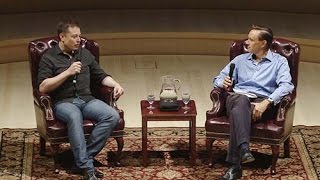 20161:00:45
 200346:34
 19982:11