距离发射还剩 4 小时 30 分钟。马斯克坐到镜头前,被问到此刻脑子里在想什么。
他的回答没有寒暄:各种让火箭失败的方式,很多。
紧接着他给这次飞行定了性。外界管它叫第九次综合试飞,他本人只用一个说法:隔热瓦任务。
把它当成一次隔热瓦任务。全部的意义都在隔热瓦上。(马斯克)
这句话把优先级说透了。星舰第九飞要验证的东西很多,但在马斯克心里,排第一的只有一件事:再入大气层、进入最大加热阶段时,那层贴在箭体表面的陶瓷瓦还能不能留在原位。
四万块餐盘,绑在一根正在抖动的金属筒上
星舰表面的陶瓷隔热瓦,数量在四万块这个量级。它们的任务单一:在再入时挡住高温等离子体,让不锈钢箭体不被烧穿。
难在哪儿?马斯克用了一个很日常的类比:这些陶瓷瓦的质地,跟咖啡杯、餐盘差不多。它们脆,怕冲击,怕不均匀的受力。
而它们贴着的那个东西,是一枚正在承受剧烈动态载荷的金属火箭。
马斯克把这几种载荷一层层拆开讲。先是低温:箭体里装着零下上百度(摄氏度)的推进剂,金属遇冷收缩。接着是增压:贮箱加压后,箭体像气球一样鼓起。箭体还会弯曲,这是结构力学上的必然。整段过程中,振动从未停止。
四种变形叠在一起,方向各不相同,幅度也不一样。粘在上面的,是一堆怕裂的陶瓷片。
马斯克对振动的描述相当夸张,但他显然不在修辞:
在一枚抖动的火箭上保住隔热瓦,难度非常高。那种抖动超过任何人能想象的程度,振动和声学超出人类的理解范围。(马斯克)
这句话值得停一下。工程上说的“超出想象”,通常意味着数值高到人的直觉失效。人体能感受到的振动极限,和一枚百吨级箭体在跨声速段、在最大动压段承受的声振环境,中间差着好几个数量级。工程师没法靠“感觉一下”来设计,只能靠实测数据、靠仿真、靠一次次的失败去校准模型。
隔热瓦的难题,本质上是多物理场耦合。材料是脆性的,结构是大变形柔性体,载荷是随机振动加瞬态冲击,边界条件还在变化。任何一环的模型偏一点,瓦片就会在某个谁也没预料到的位置掉下来。
瓦掉下来之后,真正的工作才开始
马斯克给了一个很坦诚的判断:绝大部分瓦会留住,但有一部分会掉。
重点在后面那句。掉瓦本身不算失败,掉瓦之后的归因才是这次飞行的产出。为什么掉?为什么裂?是间隙设计的问题,是粘接工艺的问题,还是那个位置的受力超出预期?
这里有个容易被忽略的工程细节。马斯克提到,目前瓦片后面还留了一层烧蚀材料作为备份。单块瓦掉了,箭体不至于立刻被烧穿,等于留了一道安全垫。
但他紧接着把话说清楚:这道安全垫不能成为常态。如果有大量瓦片脱落,快速复用就无从谈起,因为得有人爬上去,一块一块把新瓦粘回来。这道工序耗时以天甚至周计。
现在的策略是两头下注。一边尽最大努力让瓦不掉,一边保留兜底手段,同时把每一次掉瓦都变成改进输入。
最烫的地方不在迎风面中心,在襟翼转轴那条缝
再入加热并不均匀。马斯克指出,箭体上有些区域承受的热载荷远高于其他区域,最典型的就是襟翼周围。
原因在流场。高超音速再入时,箭体前方形成激波,空气被压缩、电离,变成等离子体。在平坦表面上,这层等离子体相对均匀地流过。一旦遇到几何不连续,比如襟翼根部和箭体之间的转折,流场就会重新组织,等离子体会往那里聚集。
更麻烦的是铰链。襟翼要转动,就必须留缝。缝里的空间是死的,气流进得去、出不来,会在襟翼铰链前方形成高压堆积。马斯克把这个现象描述成一种“喷流效应”:高压区一旦形成,就变成热量聚集器,处理不好,铰链会被直接烧掉。
这条因果链值得写清楚:缝隙存在,气流灌入,压力堆积,局部换热系数飙升,结构过热。每一步都被动,都由几何形状决定,没法靠加厚材料简单解决。
所以马斯克说,最敏感的位置就是襟翼附近那些几何不连续的地方。改进方向也很具体:改变某些区域的间隙尺寸,或者加填缝材料,或者换用不同规格的瓦。这些调整听起来都是小事,但在高超音速气动加热这种尺度上,几毫米的间隙变化会显著改变局部热流。
他还提到另外两种可能性:金属瓦,以及主动冷却瓦。金属瓦的思路是用耐高温合金替代陶瓷,牺牲一部分隔热性能换取抗冲击性。主动冷却则是往结构里通冷却剂,把热量带走。
主动冷却:能不用就不用
采访者追问主动冷却的具体形式,是不是让液甲烷流过瓦片再排出去,类似发汗冷却。
马斯克的回答很克制。他说外界不必过度解读,处理这个问题的路径有很多,而且主动冷却不是主要方案,是兜底方案。如果瓦片侵蚀问题能通过其他方式解决,就尽量不用。
理由很直接:主动冷却要付出质量代价。每多一套管路、一个泵、一份冷却剂,都是从运力里扣。星舰的目标是把每吨载荷送上火星的成本压到极低,任何恒定的死重都会被放大成长期的成本负担。主动冷却只能用在极少数关键位置,不可能铺满整个迎风面。
他顺带讲了热力学上的取舍。效率最高的做法,是让液甲烷或液氢在相变时吸收汽化潜热,那份热量非常大。但工程上很麻烦:要在极高温结构里维持低温流体管路,还要控制流量、防止堵塞、防止泄漏。整套系统复杂度和风险都高。
更容易实现的做法,是直接用甲烷气体做冷却剂。气体的热容比液体汽化潜热低得多,冷却能力差一截,但管路简单、控制容易、不需要维持深冷。工程上的典型折中:放弃理论最优,换可取的实施性。
马斯克还提到一个数字:解决隔热瓦问题,大概有 20 种不同的办法可以试。他不认为其中哪一种必须是“正确答案”。他用了句俗话,说剥猫皮的方式有很多种,还自嘲这是个糟糕的比喻。
有很多种方式可以剥猫皮,这个比喻很糟糕,但重点是猫最后总归是被剥了。你要抵达某个能实现完全可复用的方案。那才是核心。(马斯克)
这段话透出的方法论挺清楚:目标函数定死了,就是完全可复用;路径不预设,20 条路都摆上桌,哪条能走通就走哪条。这种思路在大规模硬件项目里很常见,因为物理世界的约束太多,先验判断往往不准,只能靠并行试错收敛。
半小时目视扫描,一小时内再飞
访谈里有个关键定义被反复强调:什么叫“快速可复用”。
马斯克给出的标准近乎苛刻。火箭落地后,最多花半小时做目视检查,扫一遍瓦片有没有明显问题。不能去做四万次瓦片测试,不能逐块确认间隙是否完美。加注推进剂,然后起飞。
时间尺度是一小时以内,从落地到再次飞行。他拿飞机和汽车做参照系:飞机降落后加个油、做个检查就能再飞,汽车停一会儿就能再开。火箭要成为交通工具,就得达到这个量级的地勤周转。
这个标准为什么定得这么死?因为复用次数直接决定成本摊销。一枚星舰的制造成本如果落在几千万到上亿美元这个量级,复用 10 次和复用 1000 次,单次成本差两个数量级。要逼近 1000 次,地勤作业必须是分钟级、小时级,不能是周级。
采访者追问:Artemis 的登月加注任务,真的需要这么高的节奏吗?
马斯克的回答拐了个弯。他没有直接算 Artemis 需要几次加注,而是把矛头指向了 Artemis 的目标本身。
“Artemis 的目标是虚弱的”
这段是整场访谈里态度最鲜明的地方。马斯克说:
Artemis 需要更大的野心。我认为应该把 Artemis 改成在月球建一个基地,而不是去重拍 1969 年那部伟大的电影,重拍版永远不可能比原版好。所以我认为 Artemis 的目标是虚弱的,客观上就是虚弱的。(马斯克)
他的批评逻辑是这样的:如果目标只是“再去一次月球、插旗、返回”,那这个目标在 1969 年已经完成过一次,再做一遍的价值有限。半个多世纪过去,技术条件、工业能力、资金来源都变了,结果却只是复现历史,这在投入产出上说不通。
他给了两个替代方向。要么在月球建立一个持续存在的基地,要么直接把人送上火星。这两个目标都比“再去一次”大一个量级,也因此才配得上星舰这种量级的运载工具。
这里有个容易被误读的点。马斯克并没有说月球不重要。他明确讲了,星舰也可以把货物和人送到月球。他否定的是目标的量级,不是目的地。
多行星的分叉点:火星能不能自己长大
访谈里最核心的一段,是马斯克解释星舰到底为什么存在。
他说目标是让生命成为多行星的,把意识延伸到地球之外。要做到这件事,必须能把数百万吨级的货物、人员、设备从地球运到火星。
然后他给出了一个非常明确的判据,这个判据值得逐字理解:
判断人类是否真正成为多行星物种,标准只有一条:火星能否在地球补给船停止后继续自我维持和增长。
只要还需要地球定期送零件、送药品、送芯片、送人,火星就只是一个前哨站,不属于第二个人类文明。补给线一断,前哨站就萎缩。真到那天火星能自己造工厂、自己种粮、自己繁衍、自己扩张,人类才算拿到了文明冗余。
这个判据之所以重要,是因为它把“多行星”从宣传口号变成了可测量的工程指标。指标一旦明确,路径就能倒推:需要多少吨设备、多少吨能源装置、多少吨工业母机、多少人口基数,才能形成一个能自我复制的工业闭环。
马斯克提到的风险清单很短也很实在:地球上的技术水平可能倒退到某个阈值以下,可能发生核战争,可能有陨石撞击。这些事件的概率都不高,但只要时间轴足够长,累积概率就不容忽视。
他还有一句判断:月球不太适合承担文明冗余的角色,真正需要的是一颗行星。这个结论他没有展开推导,但背后的考量并不难推。月球离地球太近,地球上的系统性风险很容易波及;月球没有大气、没有生态、没有可供农业展开的环境,长期自持的难度比火星更大;月球的重力只有地球六分之一,长期生理影响仍是未知数。火星有大气(虽然稀薄)、有水冰、有 24 小时左右的昼夜周期、有可用的土壤基质,自持潜力更高。
每吨 10 亿美元,要压到每吨 10 万美元
访谈最后给出的数字,是整段内容里最有冲击力的部分。
目前把一吨有效载荷送到火星表面,成本大约 10 亿美元。
马斯克说得很直白:任何文明都负担不起用这个价格建设火星。就算降到每吨 100 万美元,也只是 1000 倍的改进,绝对值依然高得离谱。他的目标是把成本压到每吨 10 万美元以下,相对今天这是 1 万倍的改进。
他还换了个说法,说这相当于让某些事情变好“一百万个百分点”。这个表达听起来像口误,但按字面算其实是准确的:从 10 亿到 10 万,正好是 1 万倍,也就是 100 万个百分点。
这个量级的改进没法靠优化现有流程实现。10 亿美元的单价背后,是一次性火箭、小批量手工制造、无数不可回收的部件。要降四个数量级,只能改变整个生产和使用范式:箭体完全复用、发动机完全复用、隔热瓦不需要翻修、推进剂用便宜且易得的甲烷和液氧、批量生产像造飞机一样造火箭。
所以前面那些看起来琐碎的技术细节,全都挂在这条成本曲线上。隔热瓦掉一块,意味着要人工粘回去,地勤时间从小时变成天,复用次数从上千次掉到几次,每吨成本回涨一个数量级。瓦片能不能留住,直接连着火星计划的经济可行性。
访谈在这里被打断,发射窗口在逼近。
这次访谈真正的信息量在哪
把整段对话拉通看,马斯克给出的是一套工程判断的排序。
第一位是隔热瓦,因为它是复用链条上最脆弱的一环,也是这次飞行的唯一主目标。第二位是襟翼铰链的局部热环境,因为那是几何不连续处,是物理规律注定要出问题的地方。第三位是地勤周转时间,因为它决定成本摊销。第四位是成本量级,因为它决定火星计划在不在经济上成立。最后才是 Artemis 和月球,那属于政策层面的判断,可以争论,但不影响前四件事的推进。
一个值得注意的细节是马斯克对失败概率的态度。被问到发射前在想什么,他第一反应是“各种让火箭失败的方式”,然后才说今天想达成什么。这种顺序在硬件工程师身上很常见:先把所有能炸的地方过一遍,再看目标。四万块瓦片、无数条管路、几十台发动机,任何一个环节出问题,飞行就拿不到想要的数据。
另一个细节是他对“这次必须成功”的态度。他没有说这次一定要入轨、一定要回收,他说的是这次要看瓦片在高超音速最大加热段的表现。目标被切得非常窄,窄到可以用一次飞行回答。把大目标拆成可验证小问题,是迭代式硬件开发的典型特征,也是星舰项目能在公开失败中持续推进的原因。
至于那个“1 万倍成本改进”,可以当作一把尺子。以后再看到任何航天项目的成本承诺,先算一下它相当于几个数量级的改进。1.5 倍、2 倍的优化靠管理,10 倍靠架构变更,1 万倍只能靠范式重构。分不清这三者,就容易被漂亮的路线图带偏。
可以立刻用起来的几件事
- 再看星舰飞行直播时,别只盯“炸没炸”。先看任务方自己公布的优先级,这次是瓦片存活率和襟翼铰链区域,然后把注意力放到对应镜头上。
- 判断一次试飞算不算成功,用任务方定义的目标去衡量。入轨与否、回收与否都可能不是本轮目标,拿错尺子会得出完全相反的结论。
- 听到“主动冷却”“金属瓦”“填缝材料”这类备选方案时,注意区分主路径和兜底路径。主路径决定成本和节奏,兜底路径只影响风险上限,两者在资源分配上差一个量级。
- 评估任何“快速复用”的承诺,先问地勤周转的具体时长和检查项目清单。半小时目视扫描和一小时再飞是两个硬指标,做不到就说明复用还停留在口号阶段。
- 看到一个成本目标,先换算成数量级。1 万倍改进意味着供应链、材料、制造工艺、运营模式同时重构,任何单点突破都不足以支撑。
- 关注“自持”类目标时,找它的可测量判据。火星能否在地球断供后继续增长,就是一条清晰判据,比“建立永久基地”这类表述有用得多。
- 把每次公开失败当作数据源而不是结论。真正有价值的不是爆炸本身,是事后归因,尤其是那些“为什么偏偏是这里”的答案。
0:00So, we're about to see flight 9 here. So, give me a rundown. Like right now, we're t-minus 4 and a half hours. What's going through your head right now? I have a lot going through my head actually. just thinking about the various ways in the the rocket can fail for sure many. Yeah. but what we're hoping to achieve today is we want to obviously get the
0:30like like by far the most important thing is the the the high heating phase of of re-entry. and see how the tiles perform dur during the the the hypersonic max heating. Yeah. and you know and also on the basically this is think of this as the as the as a tiles mission. Yeah. it's all about the tiles. Yeah. So, do the tiles stay on, or do they shake off? it's pretty hard keeping tiles on a rocket, when it is shaking, like more shaking than you could possibly imagine shaking would be. Yeah.
1:08Like the vibration and acoustics. Yeah. Are like beyond human comprehension. Yeah. And the ceramic tiles are like basically are brittle like like they're like a coffee cup or a dinner plate. So like got this whole like shaking metal rocket that's got cryogenic propellant. So it's like shrinking due to the cryogenics. Then it's being pressurized.
1:31So it's puffing up like a balloon. Then it's got body bending. so and and it's shaking. So it's like how do you keep these dinner plates from falling off, you know, or cracking or whatever. Dynamic. Yeah. So no, we do keep the vast majority of them on, but some of them fall off and then we're going to find out like why did they fall off? like what do we need to do to to fix that? why do they crack, you know? and then for
1:58high heating re-entry, you've got some parts of the rocket that see much higher heat than other parts. So like the you know the areas around the the flaps where where you've got sort of concentrations of of hot plasma. Yeah. that that needs extra care like the also the the hinge area where the the pls are hinging, you know, how do you how do you protect that that hinge gap?
2:23because the the plasma wants to group up there and then and then create a like a rapids like like so you get like a like basically vent like a vent effect or it's really just like a high pressure buildup ahead of the plat flap hinge that if you if you're not careful will then create a a heat concentrator and and cook your hinge. Yeah.
2:43So so it's really I say those it's the areas around where there's discontinuities around the flaps that are the most most sensitive. and and just figuring out like what what more do we need to do to improve the tiles? and like do we need to add like different g change the the size of the gap in certain areas? do we need to add gap filler? Like there's like so many like nuanced That's why I call like this the tiles mission. Yeah, it's all about tiles. Well, and you even have those metallic tiles and like a an actively cooled tile. Like what's what's the story on some of that stuff?
3:28In some in some areas it may make sense for us to have active cooling. active cooling, you know, we is it's not it's takes mass to do active cooling, right? so you don't want to do that everywhere, right? but some places for extra, you know, assurance, you might do you might do act active cooling. and are we talking like is that like is it just flowing cry like methane through it and then bleeding it out somewhere else? It's not like transpirational cooling or like what's the current test on it? Is it I wouldn't read too much into like there's a lot of ways to to deal with that.
4:03like hopefully we don't have to use active cooling. so that's that's not like a that's not a primary approach. it's something we'll do if we have to and if we can't solve the tile erosion issues any other way. Mhm. and the easiest it's it's not like like the most I guess thermally efficient would be to to take like liquid methane or something like that, liquid hydrogen and use latent heat heated vaporization and whatnot and and that that would be the best but it's like that's operationally difficult.
4:38Right. So, the easier thing to do is just to take a gas olive gas and use that as as a like methane gas and use that as a as a coolant in in certain areas if necessary. But hopefully not. I mean there are other things we can do like we can anyway this there's there's about like 20 different things you can do to solve the problem. we just need to solve the problem, right? so and there's like a lot of discussion you know online and in the various forums and whatnot.
5:12because there are a lot of ways to skin the cat type thing you know it's it's you know it's terrible metaphor but the point thing is that the cat gets skin at the end of the day. and and that you you arrive at some solution that enables full reusability. That's the that's the key. It's like can you land the rocket and without and and and with without any kind of laborious inspection. Maybe you spend like half an hour just visually scanning the tiles, but you can't like go and like test every tile and make sure the gaps are perfect. Yeah. Do 40,000 tile tests. it's got to be like it lands, you you refill propellants. Unless like a whole bunch of tiles fell fell off,
5:52you just take off again. Yeah, that rapid reusability is the key. So, you're kind of planning trying your hardest to make sure they don't fall off. And if they do fall off, you have some ablative material behind that as a as a backup for now. Yeah. but if they they really just we need to make them not fall off because if if a bunch of tiles are falling off then we're just we're just not going to have a rapid reusability situation. Yeah. like we got to go in there and like stick new tiles on, right? And that's going to take a while. Because when you're saying rapid reusability, you're talking about literally landing. Yeah. Restacking same day, reflying
6:29within an hour. I mean within an hour of landing type of thing. And how truly how far like do you is that required? That's like what airplanes can do. Yeah, that's what airplanes do. What cars can do? Is this required like this rapid reusability? Is that required for like Artemis refueling? Do we have to be at that cadence of once a day type of cad?
6:48I mean Artemis the goals of Artemis are are so small. they're like Artemis is a needs bolder ambitions. you know like I think we should adapt Artemis to say like let's have a base on the moon, not just like go do a remake of his great movie from 1969, right? Which will never be the remake's never going to be as good, right? So the goals of Artemis I think are feeble. They're just objectively feeble. so we should either do a base on the moon or we should send people to Mars. not not just try to,
7:26you know, do the same thing they did, you know, 50 60 years ago, right? like that's that's not a that's feeble. It's feeble. Yeah. Yeah. So, no, I mean the the the goal of Starship is it's to make life multilanetary to extend consciousness beyond Earth. And in order to do that, you have to be able to take, you know, millions of tons of of of cargo, people, whatnot from Earth to Mars. Mars. we could we could take them to the moon, too.
8:00moon is not as well suited for creating another civiliz, you know, for multi planetary redundancy, you need another planet really, right? so that that that's the that's hence the focus on Mars which obviously you're aware of but so so in order to make life multilanetary such that the such that Mars is self-sustaining with the key the key branching point for human destiny or destiny of consciousness as a whole being that Mars is self-sustaining even if the resupply ships from Earth stop coming which is the critical that's the that's the branching point. Yeah. like you're not multilanetary until the planet can can grow by itself. Yeah. sense and
8:45because there's always some risk of of technology on Earth falling below a certain level or nuclear war or you know meteor who knows. so you haven't secured the future like of of civilization consciousness until both planets can survive independently. Yeah. and so the goal of SpaceX is try to get to the point where Mars can survive by itself and and grow by itself as quickly as possible.
9:15Yeah. Which requires millions of tons or at least a million tons u to the surface of Mars of useful load. and and and reducing the cost per ton to the surface of Mars by a factor of a,000 to maybe 10,000 if not more than 10,000. So currently the cost per turn to the surface of Mars is about a billion dollars. Yeah. you can't you can't
9:40get a you know civilization can't afford to we can't we can't afford to build Mars at a billion dollars a ton. I mean that's insane close. So I mean even a million dollars a ton is still high, right? So a million dollars a ton is a thousold improvement. you know but you really rather be at like a 100 thousand a ton which is still also like a lot you know but so
10:05I think as aspiration should be get get cost per ton tomorrow under $100,000 a ton which is a 10,000fold improvement for where things are today. So that's a pretty high bar right? or thought of another way where needs to make things a million% better. Yeah, that's like actually a million% better literally.
10:28Yeah. Yeah, that's big ambitions. And unfortunately, I'm getting we're running out of time already because you got a few things to go here and we got to launch literally a rocket on the pad waiting to for flight nine. So, best of luck today. We'll be cheering for you and hope, you know, hoping for the best.
10:43All right, cool. All right. Thanks, Elon.
资源与出处
- 视频在 YouTube 收看
- 档案silicon-valley.tech 档案页本页视频与文稿数据来自 Elon Musk Archive
- 精读本篇精读 Markdown 版
相关视频
同频道、同主题或相邻年份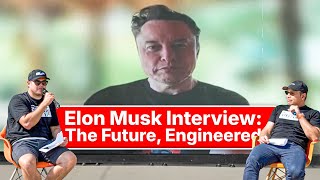 20251:05:06
 20241:23:09
 202627:12