51 岁,每天工作 16 个小时,一周干满七天,满世界飞,会议一个接一个,社交媒体上每天都有人在骂他。罗恩·巴伦(Ron Baron)在第 29 届巴伦投资年会上把这个人人想问的问题直接摆到台面上:你在改变世界,你也在给自己找麻烦,为什么还要干?
马斯克没急着回答,先讲了一件家里的事。
我妻子问我,你为什么还在工作?你到底在这儿干什么?(马斯克)
他的答案分成两条线,一条通向能源,一条通向太空。
特斯拉这条线,他认为可以说得比较硬气:在特斯拉之前,没有人在认真做电动车,特斯拉出现之后,全世界几乎所有主要车企都在造电动车了。这件事本身的分量不小。但他紧接着补了一句,把全世界的能源结构真正转到可持续,路还长得很,活儿还多得很。
SpaceX 这条线的说法不一样,更像是在谈一件跟所有人都有关的事:未来得让人兴奋,人类的存在得在很长时间里被保住。
意识是巨大黑暗里的一根小蜡烛
马斯克在这里给了一段尺度很大的推演。
宇宙已经存在 138 亿年,地球诞生也有 45 亿年,人类的文字出现在大约五六千年前的古代苏美尔。也就是说,从有文字开始算,人类文明的全部历史,放在进化尺度上只是一眨眼。
他的结论是,得主动做点什么,让这盏灯别灭。
我们应该把意识看成巨大黑暗里的一根小蜡烛,它很容易就灭了。(马斯克)
这句话解释了他为什么要做 SpaceX。人类要成为多行星物种,要成为太空文明。听着像科幻,但在他那里是一条风险管理逻辑:单一星球上的文明,一次足够大的意外就能清零,分散到两个星球上,保险系数就完全不同了。
巴伦在这里插了一句很有意思的观察:你开始做 SpaceX 的时候,没想过卫星;开始做特斯拉的时候,没想过机器人;人手不够的时候,也没想过用机器人解决;自动驾驶同样不在最初的计划里。这些生意都是后来长出来的。
马斯克没否认。有愿景、有使命的人,做着做着就会撞上新的生意,这些生意不是凭空规划的,是被主线的需求拽出来的。
没有他,电动车可能晚十年
巴伦替他说了一段话,这段话说得比马斯克自己更直白。
没有埃隆,就不会有电动车。造车的人没一个想造电动车,他们是被逼的。每卖出一辆电动车,他们就少卖一辆赚钱的车,而且他们的钱全押在造燃油车的工厂里。所以除了他,没人想要这些车,所有人都认为这事会失败。(罗恩·巴伦)
这段话点出了电动车行业最初的真实处境:传统车企造电动车,等于用自己的新产品打自己的老产品,账怎么算都不划算。所以真正愿意从零开始干的,只有外来者。
接着是专利的话题。马斯克说过一句著名的话,专利是给弱者的。他自己承认这是玩笑,但玩笑背后有真东西。
他举了制药的例子。一家公司砸下重金开发一种新药,还要走完昂贵的三期临床试验,最后拿到批准上市,而药物本身的制造成本其实很低。这种时候,专利是合理的,否则没有人愿意去啃三期临床这块硬骨头。
特斯拉的情况完全不同。特斯拉的目标是把可持续能源这件事推进下去,这一家公司的力量远远不够,需要整个行业一起转向。所以特斯拉把专利免费放了出去,为的是让所有车企都能更快地做电动车。
巴伦接了一句,说这些公司拿到你的专利,也还是落后你两三年。这句话其实说明了开放专利的底气在哪儿:真正稀缺的不是图纸,是把图纸变成量产车的能力。
70 亿美元建一座厂,一年赚回 150 亿
轮到制造业的数字了。巴伦念了一串:造一辆车的成本大约 3.9 万美元;一座年产 100 万辆车的工厂投资 70 亿美元,一年能带来 150 亿美元的利润。
投资 70 亿,一年赚 150 亿,谁做得到?而且这是制造业,是真东西,是一辆车一辆车造出来的。(罗恩·巴伦)
马斯克的说法是,特斯拉现在大概是汽车行业里制造能力最强的一家,这一点在整个人类历史上大概都没人预料到。
他怎么解释这件事?一辆车由一万个不同的零件和工序组成,想把成本压下来,靠的不是某一个绝招,是一整套把零件和工序一个个往外删的方法。
巴伦提到一体压铸:现在压铸半个车身,很快要压铸另一半。他还讲了个细节,另一家车企的高管想让他引荐,带着工程总监去奥斯汀工厂参观,他猜马斯克会答应。他补了一句,等你答应完,人家还没抄完,你已经在做下一件事了。
一辆车一周只开 12 小时,剩下 156 小时在贬值
巴伦问,2 万美元一辆的车要怎么造出来。
马斯克说,下一代车型还没正式发布,不能多谈,但方向明确:会做比 Model 3 和 Model Y 更便宜的车。至于成本能降下来最大的那块,他的回答不在车本身。
目前的车一周大概只开 10 到 12 个小时,一天一个半小时左右。一周有 168 个小时。如果车能自动驾驶,它一周能跑 50 到 60 个小时。(马斯克)
这就是五倍的差距。同一辆车,同一笔钱,能产出五倍的运输服务。这个算法一旦成立,车的价值评估方式就变了:买的不再是一台闲置 90% 时间的机器,而是一台能自己出去挣钱的资产。
他还顺手算了环境账。自动驾驶普及之后,需要的车会少很多,需要的停车场也会少很多。车少了,造车消耗的资源就少了,土地也不用大块大块地铺成水泥。
反直觉的地方在这里:一辆更贵的车,如果用得更充分,单位服务的成本反而更低。便宜不便宜,从来不只是标价的事。
先把需求变蠢一点,再动手删零件
访谈里最有实操价值的部分,是马斯克讲他的一套设计制造算法。他说这套东西用在任何东西的设计和生产上都管用,在场的人可能都用得上。
第一步,把你收到的需求变得不那么蠢。
原话是,无论什么约束和需求,交到你手上时,多少都带着点蠢。你要做的是把它改得没那么蠢。这一步如果跳过,你会非常高效地回答一个错误的问题。
还有一条附加规则:需求必须来自一个能解释这个需求的人,不能来自一个部门。因为部门不会开口解释,你根本不知道该去找谁对质。
第二步,删掉那个零件,或者删掉那道工序。
听起来极其显然,但马斯克说,他们一次又一次发现:有些零件根本不需要,只是当初"以防万一"加上去的,或者干脆是加错了;有些工序是某个人以为需要,其实并不需要。他们从车上删掉了大量什么也不做的零件。
三个玻璃纤维垫和一根没人认领的横梁
他讲了两个例子,都发生在产能爬坡最要命的阶段。
第一个是电池包上的三个玻璃纤维垫。它们粘在电池包顶部,只盖住一部分,是整个电池包产线排名第一的堵点。马斯克当时就守在那条产线上,看着这三个垫子把生产卡死。
他去查这三个垫子是干什么用的。负责噪音和振动控制的团队说,这是电池安全团队要求的,用来防止电池起火的。他去问电池安全团队,对方说,哦,那是噪音和振动团队要的。
于是他安排了两辆车,每辆车里放一支麦克风,一辆有垫子一辆没有,开起来对比。听不出任何差别。
一个根本不存在的需求,撑着一个不该存在的零件,卡住了一整条产线。
第二个例子在 Model 3 的车身产线。有一个激光焊接工位,专门焊乘客脚窝位置的一根小横梁。整个工厂停在那里,就为了把这个焊点做出来。马斯克盯着那根横梁看,想不出它能有什么用。
生产团队说,这是为了碰撞安全。他打电话给碰撞安全团队,对方说,哦,那个早就不需要了,应该删掉。
他们忘了告诉生产团队。
马斯克用了一个词形容这类事:像活在《呆伯特》(Dilbert)漫画里。他说任何一家公司都有一个"呆伯特比例",这个比例不会是零,能做的就是尽量把它压低。
他承认自己把顺序做反了
讲完这两个故事,马斯克做了一段自我检讨,这段比前面所有的成功叙事都值钱。
他第一次处理这些问题时,顺序是反的:先想办法把那个工序自动化,再想办法让它加速,再想办法把流程简化,最后才发现这玩意儿应该直接删掉。
正确的顺序应该倒过来:质疑需求,删掉零件或工序,简化,加速,最后才是自动化。
把顺序做反的代价是什么?你会花大量工程资源去自动化一个本来就不该存在的工序。删掉它省下的时间和钱,比你优化它省下的多一个数量级。
这也是为什么他说,每次自己都要把这套算法念一遍。人是会本能地先优化眼前的东西,而不是先问这东西该不该存在。
睡在桌子底下,是为了让换班的人看见
巴伦问他,这些事都是你亲自干的吗?
马斯克说,他在 Fremont 和内华达的两个工厂里住了三年,那是他的主要住所,不是开玩笑。他在屋顶的帐篷里睡过沙发,后来干脆睡在工厂开阔区域的办公桌底下。醒来的时候身上一股金属粉尘的味道,地板硌得人难受。
本来有个小会议室,里面有沙发。
我后来不用那张沙发了,就睡在桌子底下。这样换班的时候,整个团队都能看见我。(马斯克)
他解释得很清楚,这不是自虐。
如果团队觉得他们的领导在别处享福,在热带岛屿上喝迈泰(Mai Tai),我本来完全可以那么做,而且我更愿意那么做。我不是受虐狂。但团队能看见我睡在地板上,他们就知道我在,这带来了巨大的差别。然后他们就开始拼命了。(马斯克)
这段话把领导力说得很朴素。不是喊口号,不是画大饼,是让在最苦的岗位上的人抬头就能看见你。做法本身没有什么技巧,难的是真去做。
公司变富以后,最难的是让人还想上班
巴伦问了个更尖锐的问题:十年后你不在了怎么办?五年后呢?
马斯克先给了个乐观的数据:全世界顶尖工科院校的毕业生,最想去的地方就是特斯拉和 SpaceX。人才的供给不是问题。
巴伦追问,那怎么让人说"我可以买那栋很贵的房子,但我不买;我可以去度假,但我不去"?
马斯克承认,公司确实有这个麻烦。公司繁荣了,很多人变富了,一旦越过财务独立这条线,有些人就没法让自己继续工作了,或者干脆不想工作了。他说这完全可以理解,不做评判。
他还讲了自己的朋友。有些人非常有才华,早年取得过一些成功,然后就决定到此为止,因为那些创伤已经够多了。
我一个好朋友说,创业就像吃玻璃渣,同时凝视深渊。(马斯克)
所以当有人问他,怎么鼓励更多人去创业,他的回答很硬:如果你还需要被鼓励,那就别创业。
这句话听着不近人情,但它筛掉的是那些把创业当成一条体面出路的人。真正会去做的人,不需要别人给他打气,他会被某个问题逼得睡不着觉。
整场对话到这里,那条线索就闭合了。他 51 岁还在每天干 16 个小时,不是因为他不喜欢热带岛屿,是因为他相信那根蜡烛值得守住,而且他知道守住它的方式,是在产线旁边睡三年地板,是把一万个零件一个个问过去"你到底有什么用"。
把这几条拿回自己的工作里
这场访谈的信息密度不低,能直接用的部分集中在方法上。下面几条可以这周就试。
- 挑一个你手上正在优化的流程,先别优化。找出它最初的需求是谁提的,把那个人找出来问一句:这个需求现在还成立吗?找不到具体的人,这件事本身就是一个信号。
- 列出手头流程里的所有零件、字段、审批环节和会议,逐个问"删掉会怎样"。删不掉的写清楚原因,写不出来的先停一周试试。
- 警惕跨部门交接处,也就是马斯克故事里那三个玻璃纤维垫出现的位置:A 部门以为是 B 部门要的,B 部门以为是 A 部门要的。找一条这类流程,让两个部门当面对一次。
- 算一遍你手上关键资产的利用率。车一周开 12 小时是极端案例,但设备、场地、服务器、你自己的时间,闲置率大概率都比你以为的高。
- 如果你在带团队,别只在群里发消息。在最难的那个环节待上几天,让干活的人抬头能看见你,这比任何动员都有效。
- 在动手自动化之前,先确认这道工序该不该存在。顺序错了,你会用最先进的技术,高效地生产没人需要的东西。
- 如果你正在犹豫要不要开始一件事,先诚实回答一句:你是在等鼓励,还是在等一个让你睡不着的理由。
这套算法的门槛不在智商,在于愿不愿意一遍遍问那些显得很蠢的问题。马斯克在产线上守了三年,问了几百次"这玩意儿到底有什么用",才有资格说自己删掉了那些什么也不做的零件。
0:00hey everyone today we bring you an inspiring interview with Elon Musk at the 29th annual Baron investment conference where he shares his vision for the future in this insightful discussion with Ron Baron musk talks about Tesla's role in accelerating sustainable energy the challenges of running multiple companies and his bold plans for Twitter he also opens up about his intense work ethic Innovation driven mindset and the impact of his Ventures on Humanity let's dive in and learn together say you're 51 and and you do 16 hour days
0:37and you work s hours a week and you fly all over the place and you go to these meetings constantly and and people constantly criticize you for every it's amazing to me I when you're changing the world and you're giving yourself why do you do this so my wife says to me why are you still working why are you still working what are you doing here well I think they what I'm
0:59working on has important has an important effect on the future you know in the case of Tesla I think it's fair to say that Tesla has significantly significantly accelerated the Advent of sustainable energy you know before Tesla no one was doing electric cars and now as a result of of Tesla I think almost every major car company in the world is is going is is building electric cars and and that's I think that's that's a pretty big deal but there's still a long way to go to transition the world to a sustainable energy economy and so so so we still have a lot of work ahead of us at Tesla but that's that's our goal there and then for SpaceX I think it's important for for the future
1:48for the future to be exciting and for Humanity's existence to be ensured over the long term I think we must become a multiplet species and a space bearing civilization you know I think the we we're here like 4 and a half billion years after Earth Earth Earth got started 13.8 billion years into
2:16the age of the universe and it's only now recently in the last 5,000 years that we even we invented writing I say date the first civilization by when we there was the first writing which was in ancient Samaria around five five or 6 thousand years ago so we're basically just been here for a very brief instant a blink a we're all of human civilization is a blink of an eye if there wasn't I in in in on an
2:49evolutionary time scale so so I think it's important we take the actions to ensure that the light of Consciousness continues and and because you we should really View Consciousness as as a a small candle in a vast darkness and it could easily go out so so you so we have these missions and somehow whenever you have the mission and you have this Vision and you are a Visionary then somehow whatever you do you develop other businesses so when you started Space X you didn't think about satellites when you started Tesla you didn't think about robots when you don't have enough people you didn't think about robots and so so you didn't think about autonomous driving and without Elon
3:36there would not be electric cars nobody who makes cars wants to make electric cars they're being forced to make them in fact every time they sell electric car they sell one fewer car that they make money on and so and they have all that money invested in plants that make those other cars so nobody wants to have these cars except for him and everybody thought it was going to fail so so and and one of the things you said is that patents are for the week and you share your patents and and with other companies of course on the other hand when they get your patents you're two or three years ahead of them well I I mean I joking about patents for the week I think there there
4:17is a role for patents you know let's say if somebody's spent if some company has spent a lot of money developing a particular medicine and had to go through the expensive you know stage three medical trials and then they they finally get something that that is approved but but where the drug itself is is cheap to manufacture then I think a patent in that case makes sense otherwise no one would go to the trouble of doing stage three medical trials so there are definitely roles for patents in the case of Tesla the you know our goal is to advance sustainable energy and so and and we can't just do by ourselves we need the whole industry to go that
4:56way so we gave them our patents for free in order to help them accelerate electric vehicles so it must be terrifying to other companies to realize that we we we make cars it's $39,000 in cost a car and we're making $155,000 $166,000 in profit a car and so we invest $7 billion and we make $15 billion a year I'm sorry yeah and
5:2415 rate 15 a million cars 15,5 year on a $7 million investment shocking so no one else does that and when we and here you're telling us how you want to make cars for $20,000 a piece how do you do that well we've we've not formerly announced our next car program so I can't talk too much about our upcoming vle program or or programs that have not been announced but we do expect to make cars that are more affordable than the current the model 3 or model y
6:07so and a big factor in this is yeah but I think by far the biggest factor is autonomy and the in terms of the value of a car because right now cars get driven for about 10 or 12 hours a week like maybe 1 and 1 half hours a day and so but there's 168 hours in a week and so if they were autonomous you could probably drive the cars could drive for 50 or 60 hours so You' see a fivefold increase in the utility of the
6:50car you know that can do autonomy this is a really really gigantic thing it would also mean that there was we wouldn't need anywhere near as many many parking lots and this would also be helpful for the environment because you would need far fewer cars so I misspoke it was A7 billion
7:10investment for a plant that makes a million cars a year that makes $15 billion a year in profits so you invest 7 billion and you make $15 billion a year who does that and for a plant that makes you know things manufacturing and so the way this is accomplished is so you're doing it with casting right now and casting half of the car you going soon cast the other half of the car and other companies why don't they try why don't they try to do do what we're doing in fact one of the executives of another automobile company wanted me to introduce her to you and you did that once at a meeting and now she wants to come visit with her director of engineerings are planted in
7:55Austin and I presume when I ask you you're going to say yeah bring around because you innovate so fast by the time anyone copies what we're doing it's on to something else what else is there how when you're casting what else is there that enables us to make it cheaper are we eliminating a lot of other parts are we eliminating functions what are we doing to do that to we how would we sell a car that's so cheap I I mean I think the full explanation or at least an accurate explanation would take a long time because first approximation a car is made of 10,000 unique parts and process steps and we've I mean Tesla is
8:37really I think at this point probably the best at Manufacturing in the Auto industry which I think what what nobody was expecting probably in history of the world probably yeah so well I I've got this like first principle algorithm that I find to be very helpful in and any in the design
9:08and manufacturing of of anything and people here may find it helpful the the first thing you should do is make the requirements that you've been given a less dumb whatever constraints and requirements were given they were to some degree dumb and you want to make them less dumb if you don't do start with this then you can you answer the right you get the right answer to the wrong question and the the requirements must be given from a person who can explain the requirement not from a department because then you don't know who to talk to then step two is delete the part or delete the process step this sounds extremely obvious and yet over and over again we have
10:01found that parts were not needed they were just put in there just in case or by mistake or there was a step that people someone thought was needed but was not actually needed the sounds insanely obvious but we've deleted so many parts from the car that were did nothing they were just there well yeah I mean I can give you like so many examples
10:31one example was there were three fiberglass mats on top of the battery pack they partially covered the battery pack and it was it was I was on the battery pack production line and it was the number one thing choking battery pack production with these with gluing on these three fiberglass mats to the top of the battery pack and so so so
10:54this is the reason I I repeat this algorithm myself is that I I first did things backwards first I try to automate it then I try to accelerate it just have the the this this go faster then I try to simplify it and only then did I delete it because it turned out that the the the the team of Tesla that does noise and vibration minimization so making making the car quiet thought that the F glass mats were there because of the battery safety team which for battery fire PR prevention and then I asked the battery fire prevention team what were they needed for and they said oh noise and vibration I'm like okay so so then we had two cars drive one with a microphone in the car in each
11:50car and you could not tell the difference so we went into all that trouble for a part that should not exist and then another another example was there was a an a again this was like these were choke points in the entire production system that's why they you know I'm running around the production line trying to fix the production line just like a maniac Tasmanian Devil just running around the factory like a lunatic and let's see we had the the body production line and model 3 was at one point stuck because we had a laser welding cell to to weld a small cross Cara beam in
12:31the passenger footwell of the of the front seats and I'm looking at this this sort of this beam and I'm like what the heck does that do cuz the entire Factory is stopped trying to put trying to get the the this laser weld cell to work and I'm like I I can't imagine what a useful thing it could do and then the team said the production team said oh that's for for crash safety so then I I called the crash safety team and said is this for crash safety they said oh no that that didn't do anything we should delete it that turned out to be totally useless they forgot to tell the production team so so honestly a bunch of these things just feel like you're living in a
13:12Dilbert cartoon like oh no what's our I mean any any given company you should like what's your Dilbert ratio okay it's not zero so so is this is this you or is this your Gilbert question try to keep it low so so so so is this you or is this so you do all these different things you literally me so do you someone else who did this I was in the I was living in the in the in the factory in Fremont and and the one in in Nevada for 3 years straight that was my primary residence not kidding literally did you keep the couch I actually stepped well stepped on a couch at one point on a in a tent on the roof and then but but for a while there I was just sleeping
14:02under my desk which is out in the open in the factory and and for an important reason and I was damn uncomfortable sleeping on that floor and I always when I woke up I'd smell like metal dust we went to visit and they bought him a new couch yeah but actually I stopped using the couch in the in because there a little conference room in a couch there I stopped using the couch and I just left on the floor under my desk so the so during shift change the entire team could see me and that's important because like you know the and the team it like if if if
14:38if they think that the the sort of their leader is is off somewhere having a good time you know drinking my Ties on a tropical island which I could definitely have have been doing and would much have preferred to do let I'm not a I'm not actually a masochist I think but but the thing is that since the team could see me sleeping on the floor during shift change was just not with
15:04nothing the they knew I was there and that made a huge difference and then they gave it their role so so the focus is on always lowering cost and providing leadership and and this company we're doing a million and a half Cars a year but you expect to do 20 and and so what happens in 10 years if you're not there what happens in five years if you're not there how's that work I mean are all these people so at all the engineering schools the top engineering schools the top choice of where everybody wants to work is Tes their SpaceX those two places so do do we have all these people coming up and fighting each other for the job or they're working together how
15:51do you get people to say gee I could buy that real expensive house but I'm not going to do that boy I could buy I could go on vacation I'm not gonna I well we do have that problem a little bit so you know as a company has Prosperity and then people become wealthy then for a lot of people you know that that once they become past sort of independently wealthy they they just can't bring themselves to work or they just they don't want to work and that's totally you know understandable on no judgment and and some I mean I have a lot of friends who who are extremely talented and they they you know had some success earlier in life and they just decided you know that was enough
16:36trauma I mean you know one my my good friend of mine saying like for for start starting a company is like eating glass and staring into the abyss so so my people say tell me like what can you do to encourage entrepreneurs to start companies I'm like if you need encouragement don't start a company [Applause]
资源与出处
- 视频在 YouTube 收看
- 档案silicon-valley.tech 档案页本页视频与文稿数据来自 Elon Musk Archive
- 精读本篇精读 Markdown 版
相关视频
同频道、同主题或相邻年份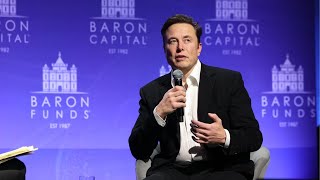 20251:00:20
 202557:36
 20251:01:02