80亿人,全部塞进纽约市的一层楼里。马斯克说这话时语气很平,像在讲一个常识。他顺带提了一句章鱼,说章鱼不介意被密密麻麻地挤在一起。
这个类比想说明的事很简单:人对“拥挤”的恐惧大多来自直觉,不是算术。他还有另一个版本的说法,如果你坐飞机横跨美国,目标是把一个水球准确砸到某个人头上,你一定会失败,因为地面大部分是空的。
“空”这个字,后面在他讲工厂的时候又出现了一次。这场和罗恩·巴伦(Ron Baron)的线上炉边对话,从机器人的数量一路聊到把知识刻进石头送上火星,中间夹着推特、OpenAI、芯片厂和一台五秒钟下线一辆车的总装线。
地球上最终会有300亿到400亿台人形机器人
主持人凯特琳抛出的问题很直接:Optimus 什么都能干,那人还剩什么可干?除了生活在你创造的丰裕里。
马斯克的回答先绕到了数量上。他说造出十亿台机器人需要一点时间,别急着戴护腕,但最终地球上会有几十亿台人形机器人。他的类比是《星球大战》里的 R2-D2 和 C-3PO,几乎每个人都想要一个,而且比电影里的更好:可以教孩子、遛狗、买菜、聊天,需要的时候还能保护你。
然后是工业场景。为人类生产产品的机器人数量,可能是人类的三到四倍。两边加起来,地球上机器人的总量可能高达300亿到400亿台。
罗恩追问了一个成本问题。日本那家做工业机器人的公司(他说的是 KUKA),一台卖5万、10万、15万美元。马斯克你讲的是2万美元。是不是得年产百万台甚至千万台才能做到?人们是买还是租?企业买走之后我们能不能拿到分成?
马斯克给的时间表是:在达到年产100万台稳态之后,大约再过一年,Optimus 的物料加工人成本能压到2万到3万美元,按当前美元计。他把这称作“一个相当稳妥的估计”。
为什么需要一年?因为降本本身要花大量工夫。这个逻辑和特斯拉造车一模一样:每个外购件的成本都算得清清楚楚,供应商赚太多就自己做。机器人理论上比车简单,除了一个部位。
一只手25个电机,两只手100个
罗恩问,是不是因为手,机器人反而比车难造。
马斯克的回答很干脆:手极其复杂。手加前臂一共50个执行器(actuator),一个执行器包括电机、齿轮箱和电力电子。每台机器人两只手,就是100个执行器,外加大量传感器。
为什么要这么复杂?因为灵巧操作需要人类手级别的灵敏度、精度和自由度。人类觉得容易的事,比如拿起螺丝刀、转动扳手、穿针、弹吉他,背后都是极高的灵巧度要求。
他还顺手更新了公司的目标。特斯拉原来的使命是加速可持续能源,这件事基本做完了。新目标是“可持续的丰裕”(sustainable abundance):人人享有丰裕,同时不破坏任何自然荒野。
罗恩开了个玩笑:那怎么决定谁得到什么?有人想买我的房子,直接搬进来住怎么办?
马斯克笑着接住:我自己确实有套不错的房子,能理解这种吸引力。但机器人能给任何人盖房子,只要你不坚持某个特定位置,想要城堡也给你盖。
你希望机器人能做手术,做精密医疗操作。那就想象一个世界,每个人都能用上最好的外科医生,字面意义上的每一个人。(马斯克)
Optimus 的精度会达到超人水平,能做非常复杂的手术,甚至包括人类医生因为难度太高而做不了的操作。这段话后面藏着他真正的论点:人们总说要消除贫困、提供优质医疗,但从没给出方案。钱解决不了这个问题,因为好医生数量有限,不会从树上长出来。现在,他们会在工厂里被造出来。
手机不联网都能赢卡尔森,国际象棋照样有人下
回到那个更哲学的问题:机器人什么都能干,人活着图什么?
马斯克举了两个例子。体育,机器早就能跑得更快、跳得更高,人类照样看比赛、照样自己下场。国际象棋,你手机不联网都能轻松赢马格努斯·卡尔森(Magnus Carlsen),但国际象棋的热度一直很高。
机器在某个领域比人强,不意味着人就不再从中获得满足。这句话他说得很轻,但它其实是整个“AI 取代人类”焦虑的一剂解药,至少是一部分解药。
让渐冻症患者跑得比人快,价格六万美元级别
罗恩提起一两年前他发给马斯克的一篇文章。主角是个叫“巴伦”的年轻人,33岁就当上了组合经理,因为食肉菌失去了双腿,是残奥选手。罗恩当时问马斯克,有没有办法让他离开轮椅。马斯克的回答是:有,三到四年,给他一副 Optimus 的身体,再在大脑里植入芯片,他就能像正常人一样跳舞、唱歌、走路、跑步。
这次对话里,马斯克确认了进度。Neuralink 已经有10多位植入患者。这些人原本手臂或腿完全不能动,有些人像霍金一样完全锁闭,现在能沟通,速度几乎和正常对话一样快,而且还会继续加速。
技术路径是:植入 Neuralink 从大脑运动皮层读取信号,同时向躯体感觉皮层回传信号,再接到 Optimus 的机械腿上。
我们真的在做“六百万美元先生”那件事。不过今天不用六百万,大概六万美元这个量级,而且他能跑得比人还快。(马斯克)
他提到那部老剧时还确认罗恩也看过。这个细节让整段话从技术发布变成了两个老朋友聊天,但里面的信息量不小:神经接口加人形机器人,正在把“残疾”重新定义成“配置问题”。
他买推特,理由和文明有关
话题转到 X。罗恩先讲了个故事。三年前马斯克收购推特,价格四百多亿美元,正在募资。罗恩主动打过去,说想投1亿美元,6000万来自基金,4000万是自己的。马斯克问了一句“真的?”。罗恩说,自己在特斯拉上帮投资人赚了80亿,不支持这个新 venture 说不过去。
然后他补了一句:钱付出去那天,我们把它减记了70%。
马斯克的回应是:这就是我知道你是真朋友的原因。友谊的考验,是谁在你落魄、所有人反对你的时候站在你这边。
故事还有下半段。一年后有对冲基金打电话来,想按罗恩当初买入的价格收购这笔股份,罗恩没卖。后来推特改名 X,业务重构,有了 Grok,又建了数据中心。罗恩说他们累计投入3.5亿美元,现在值7亿。
他描述那个数据中心时带着明显的惊叹:几个月内建成,规模是地球上任何同类设施的四倍。别人是2.5万颗 CPU,xAI 直接上了10万颗 GPU,现在要往几十万颗走。
然后罗恩问了那个所有人都想问的问题:你买推特,是不是为了数据?
其实不是。我买推特,是因为我觉得它对文明产生了负面影响,在推送反文明的观念。(马斯克)
他的说法是,这个平台被极左翼、被激进左翼俘获了,这些人的政治立场是旧金山和伯克利式的,用他的原话,“那是美国最左的地方”。平台因此不是个好的辩论场,很多右翼账号被停,包括一位在任总统,这在历史上没有先例。
他要的是一个真正言论自由的公共广场。逻辑链条他讲得很清楚:言论自由是民主的基石。没有言论自由,人们无法做出知情的投票;没有知情投票,就没有真正的民主。这也是为什么它是美国第一修正案。
他补充说,没有左翼声音被封禁或被压制,目标是让全国各地在平台上拥有同等权重,让人们交换观点,尽量不诉诸暴力。
再往下,他把这件事放到了更大的框架里:如果美国不强大,商业有什么意义?美国是支撑西方文明的中心支柱,柱子倒了,一切都倒。
拉里·佩奇在生日派对上叫他“物种歧视者”
罗恩提到了 OpenAI。他的版本是:马斯克是创始人之一,公司按慈善机构设立,后来另一位创始人拿到了控制权,提出让马斯克留下并给股份,马斯克拒绝了,转身离开了一个如今价值5000亿美元的东西。
马斯克的补充信息量更大。他创办 OpenAI 的起因,是和拉里·佩奇(Larry Page)的对话。佩奇曾是他的密友,但马斯克认为他对 AI 的危险不够重视。矛盾在一次生日派对上公开化。
他当着一大群人的面叫我“物种歧视者”(specist),因为我把人类置于计算机之上。这让我很不舒服。我当时想,老兄,你站哪一边?听起来你站在计算机那边。(马斯克)
他说,你得站在人类这一队。那天之后他决定,必须有一个东西来制衡 Google,因为佩奇似乎不在乎人类能不能过关。
“Google 的反面是什么?”他的答案是:一个开源的非营利组织。OpenAI 里的 Open,指的就是开源。
他提供了早期所有资金,A、B、C 轮,招募了伊利亚·苏茨克维(Ilya Sutskever)这样的关键人物,把自己知道的东西都教给他们,还促成了和微软的第一笔合作,让萨提亚·纳德拉(Satya Nadella)从 Azure 里捐出一些算力时间。这些事他没要任何财务回报。
至于为什么拒绝股份,他的解释很朴素:非营利组织不应该有股份,至少我上次查的时候是这样。非营利不该成为自我致富的工具。所以那个提议在道德上和法律上都说不通。
晚出发两年半,xAI 押三个变量
说到 xAI,马斯克承认起步晚。公司才两年半,从后面追,算是个弱者。但他的判断是,技术创业最终的赢家,是跑得最快的那个。
他给了三个变量。
第一,能不能吸引最好的人才。第二,能不能把最多的 AI 硬件上线,比别人更快把 GPU 跑起来。第三,有没有独特的数据。
第二点他手里有证据。英伟达的黄仁勋(Jensen Huang)公开说,Colossus 数据中心的建设速度让他震惊,还说地球上只有一个人能做到这件事。
罗恩接着这个话头开玩笑:那你到底是不是人类?马斯克说他一直跟人说自己是外星人,但没人信。然后补了一刀:我拿绿卡的时候,上面写的就是“外国人登记卡”(alien registration card),所以我有政府证明。
玩笑归玩笑,他给了一个严肃的自我定位:在美国,把硬件真正造出来这项技能,如今已经相对稀缺。二战后美国制造业最成功的两个案例,按他的说法,是特斯拉和 SpaceX。
数据这块,X 系统是全球最好的实时数据来源。至于具体要做什么,他说脑子里的想法多到自己都不知道怎么处理,会走一些“棋盘上没有的招”,别人预料不到的招。
他还顺手给 Grok 4 打了个广告,说就他所知,这仍然是目前最聪明的 AI。Grok 4 Heavy 会同时派生多个智能体并行工作,互相比较输出,像学习小组一样给出最终结论,而且还在变好。
Grok 5:六万亿参数,和一成的 AGI 概率
Grok 5 已经开始训练。马斯克给的参数是六万亿,Grok 3 和 4 用的是三万亿参数模型。
他提了一个自己很看重的指标:每 GB 的智能密度,以及每万亿次运算的智能密度。Grok 5 在这两项上都明显高于 Grok 4。训练数据的质量也更高,而且是原生多模态,文本、图像、视频、音频一起处理。
具体能力上,他说 Grok 5 会更擅长使用工具,甚至会自己造工具来回答问题、理解世界。视觉会非常强,能理解实时视频,这一点目前所有其他 AI 都做不到。他的判断是,如果做不到实时视频理解,就根本达不到 AGI,因为人类显然可以。
他还留了个悬念:有几样特殊的东西在推进,但不能在公开场合说。
发布的时候,它真的会让人感觉它有意识。(马斯克)
时间点是明年第一季度。罗恩追问,那是不是意味着从 Grok 3 到 4 到 5,再到有意识的版本,5、10、100万,一路往上没有极限?马斯克说对,而且这个“远”几乎难以理解。
至于 AGI,他给了一个罕见的数字。
Grok 5 是我第一次觉得,我们有不等于零的概率实现通用人工智能。不是高概率,我自己算大概10%。也就是说还有90%的概率做不到,说清楚。但我以前从没这么想过。(马斯克)
把知识刻进石头,送到月球和火星
和 Grok 5 相关的一个项目叫 Grokopedia,之后会改名成“银河百科全书”(Encyclopedia Galactica),致敬艾萨克·阿西莫夫和道格拉斯·亚当斯,两个人都写过这个名字。
它的定位是一个开源的、全部知识的仓库,是整个知识的蒸馏物。任何人可以访问、使用,其他公司想拿来训练也可以。
马斯克还想复制很多份,分布在地球各处,再放上月球、火星和深空。他把这称作现代版的亚历山大图书馆。亚历山大图书馆被烧掉是人类的大悲剧,所以要把知识用微缩字体刻在石头上,广泛分发,最坏的情况下,未来的文明也能看到我们学到了什么,然后从这里接着往前走。
每年往轨道送100吉瓦太阳能
罗恩问,Grok 5 的突破到底来自哪里,是速度,是算力,还是数据。
马斯克的回答指向了更远的地方。他说有一条路径,可以每年把100吉瓦的太阳能 AI 卫星送入轨道,而且这会是规模化供电和运行 AI 成本最低的方式。
参照系是:美国所有电源的平均用电负荷,大约是460吉瓦。100吉瓦差不多是这个数字的四分之一。他说这件事有明确的路线图。
罗恩顺势把话题拉到宇宙。可观测世界里有上万亿颗类似地球的行星,大爆炸发生在138亿年前,地球只有40亿岁,地球上生命已经灭绝过四次。那其他文明呢?那些生物是碳基的,还是碳和金属混合的?
我想知道答案。我的哲学就是好奇。宇宙开始时标准物理模型对不对?热寂是不是终点?有没有其他外星文明?我们能不能和他们说话?还有哪些关于现实的问题,是我们现在不知道该问的?(马斯克)
他把动机说得很清楚:扩展意识,更好地理解宇宙。
五秒钟下线一台车,那是快步走的速度
话题回到地面。罗恩回忆,他刚开始投特斯拉时,马斯克反复讲“制造机器的机器”。那时候平均节拍是50到60秒一辆车,现在是35秒。马斯克说目标是5000毫秒,也就是5秒。
这个数字听起来疯狂,他给了一个特别日常的换算:5秒节拍只相当于快步走的速度,1米每秒。车长不到5米,所以车会以步行速度驶出产线,你完全跑得开,不会像子弹一样射出来。
再算一笔账:一周大约1万分钟,如果24小时不停,每分钟10台车,就是每周10万台。
方法是用物理学分析工厂。他有一晚在产线上,把工厂切成一个个立方米,算有多少立方米在干有用的事,结果这个比例小得惊人,体积密度很差。零件和车的移动速度也很慢,通常被人装刹车灯、装座椅的速度卡住。
让工厂更密,缩短移动距离,效率就上来了。他的类比是芯片:把电路做得更小更密,缩短距离,再提高时钟频率,芯片就更快。工厂是同一种东西。
他还提了罗恩转述过的一个说法:如果我是比特,我会想怎么旅行?如果我是原子,在工厂里走的这段路合不合理?不合理就修。
至于别的公司为什么不这么干,他的解释很社会学:大多数公司是渐进主义者,管理层想的是比去年好5%或10%,不愿承担可能失败的大风险。有想法去试,成了要多干很多活,败了要被追责,理性选择就是不动。
周末在脑子里画芯片,因为建一座厂要五年
罗恩问他周末都在干什么。马斯克说主要是周六,最近周日也是,在弄 AI5 芯片。
这颗芯片的分量他说得很直白:整个特斯拉都押在它上面。它要进入下一代自动驾驶车,也是 Optimus 的关键。当时这个项目状态很糟,设计相当激进,找不到通向成功的路径。另一个 Dojo 项目做得还行,但没法跟英伟达竞争。他把两个项目合并成一个,所有人聚焦 AI5。训练继续用英伟达,但推理必须有自己的芯片。
AI5 的定位是性能强、功耗低,每瓦性能极好。他的估算是,在车和机器人的推理层面,比英伟达的方案好两到三倍,成本大约是英伟达芯片的10%。
投入到什么程度?他说现在整颗芯片的物理设计都装在脑子里,能可视化整个东西。
罗恩问了一个产业问题:那是不是得建一座巨型晶圆厂?几十亿美元那种?人从哪来?能不能不找合作伙伴?
马斯克先表达了对台积电和三星的极高敬意。特斯拉和 SpaceX 都跟两家合作过,他希望他们尽可能快、尽可能大规模地生产。问题在于不够快。他问建一座新厂从开工到量产要多久,对方说五年。他的反应是:五年对我来说是永恒,我的时间尺度是一年、两年、三年,三年以后我看不见。
目前的产能布局是四座厂:台积电台湾、台积电亚利桑那、三星韩国、三星德州。从对方的角度看,这已经是闪电速度。他还是觉得缺一点紧迫感。
结论摆在那:要么自己建一座非常大的厂,要么 Optimus 和自动驾驶车的产量被 AI 芯片卡住。
100亿英里之后,FSD 比人安全四倍
聊到全自动驾驶,罗恩问技术路线。传统做法是写代码枚举每一种情况,前方消防车挂着自行车,有人边开车边遛狗,都得一条条规则覆盖。马斯克确认,现在的做法是让 AI 学人类怎么开。
他给了两个数字。累计超过100亿英里行驶数据,开启 FSD 的安全性是人类驾驶的四倍。这是个大规模统计下的结论,用他的话说,“无可辩驳”。
硬件方面,现在由三星制造的 AI4 芯片,能做到无人监督下比平均司机安全两到三倍,可能更多。AI5 他预期能到十倍。
还有一个让罗恩意外的细节:很大比例买了 FSD 的用户从来没用过。所以特斯拉现在会坚持给客户做演示,出于安全考虑,让他们知道怎么开启、怎么使用。
你只要去任何一家特斯拉门店,他们就会演示给你看。这不是秘密。试过之后你会买的。(马斯克)
他没有度假屋,在星舰基地买了套五万美元的小房子
罗恩最后问了个私人问题:你就算再多一千亿、四千亿美元,又有什么区别?这些钱最后要干什么?你希望人们怎么看你?
马斯克的回答很实在。他需要在这些公司里有足够的所有权,才能继续引导它们的方向。至于个人消费,他没有度假屋,只有奥斯汀一套中等大小的房子,加上星舰基地一套很小的房子。
我那套小房子花了5万美元。朋友们来参观,以为我在开玩笑。我说是真的。我在前面铺了人造草皮,还装了一圈白色小尖桩栅栏。(马斯克)
再往前看,他的判断是,在良性情形下,AI 和机器人会走到一个临界点:它们把人类所有的欲望都满足完了,真的没别的事可做,然后得开始琢磨为自己做点什么。
至于最终目标,他说得很清楚:采取一整套行动,把意识扩展到未来,让意识的范围和规模大幅增长,去其他恒星系,像《星际迷航》那样去没人去过的地方,看看有没有活着的文明,或者早已死去的文明留下的废墟,读懂他们曾经是什么样子,然后,理解宇宙。
整场对话里他重复最多的一个立场,是那句被拉里·佩奇当成骂人的话。他认了:我毫无保留地站在人类这一边。
这场对话里,有五件事你现在就能做
- 去任意一家特斯拉门店要求演示 FSD。买了没用过的用户比例高得离谱,而这件事只有亲自坐一次才有判断力。
- 试用 Grok 4 Heavy,重点看它多智能体并行比较输出的方式,和单一模型的回答质量差在哪。Grok 5 预计明年第一季度发布,届时优先验证它的实时视频理解能力,这是马斯克自己划出的 AGI 门槛。
- 评估 AI 公司时,别只看榜单分数。按马斯克给的三个变量拆:顶尖人才的密度、GPU 上线的速度、有没有别人拿不到的实时数据。这三项比参数更能预测两年后的位置。
- 如果你在制造业或硬件行业,把“体积效率”当成一个可以立刻用的工具:把产线按立方米切分,数一数多少体积在做有用的事,再算零件移動的总距离。这个动作不需要预算。
- 关注两个时间节点做自己的判断锚点:Optimus 达到年产100万台后的成本数字,以及 AI5 芯片的量产落地。前者决定人形机器人是不是真的能进入家庭,后者决定特斯拉的自动驾驶和机器人业务会不会被芯片产能卡住脖子。
0:01Well, actually actually you can you can fit all of humanity on poor in the city. That's how small the humans are and and octopus doesn't mind being packed densely. So it it's always helpful to think how how much room do people take and and and this is why I think just having it in the back of your mind that all 8 billion people on earth can fit on one floor in the city of New York.
0:48So play another way of thinking about is is if you're flying across the country and your goal is to drop a water balloon on someone you will fail because it's empty.
1:04We we used to do that when we were in eighth grade.
1:08We got them though. [laughter] yeah.
1:12So So Kaitlin, don't worry. There's enough room. zero.
1:16So one of the things I think about when you talk about Optimus is that there's so many functions that it can perform. What's going to be left for humans? Is there a job that humans going to have other than just living in you know this this great abundance that that you're going to create? What what's going to happen?
1:37Well, I think there is this question of of how do you drive meaningful life if the robots can do everything but we see lots of examples where even though machines can do much better humans still like athlet athletics for example or let's take a mental sport like chess. U the computers are so good that your
2:14phone not even connected to the internet can beat Magnus calls easily. But yet chess is at all times popularity. So really machines being better us something doesn't mean we derive set action in doing it.
2:41By the way guys is the connection isn't that good with a phone. Is there some way we can do something else? Echo.
2:50We're not the connection isn't that good. I think it keeps cutting in and out.
2:54Can I what if I talk to this? So close. [laughter] Okay. Okay. You do that. You do that and I'll do this. [laughter]
3:10so so the function the function
3:13get closer to look at my novel. Sorry.
3:15The the functions that you see these robots doing is what? What are they going to do?
3:22And why is how are we going to have a billion of them when we have eight billion people? How really?
3:29Look, it's going to take us a minute to make a billion robots. So, you know, don't log your brace. but but I think we will there will ultimately be billions billions of humanoid robots on Earth. a way to think of it is, who on earth would not want their own personal R2-D2 C3PO? Like pretty much everyone wants, you know, 3PO, but even better.
4:07like a personal helper buddy robot, it would be great. you could teach your teach your kids take your dog for a walk, get the groceries, you know, chat, you know, protect you when when needed. Great. and then how many robots would there be in industry providing products? probably three or four to one relative to humans which which suggests that total number of robots will be somewhere around maybe as high as 40 billion 4040 40 billion maybe maybe 30 billion robots it's a lot
4:51so so the Japanese company I think it's Kuk those robots that are used in manufacturing are 50,000 100,000 150,000 and you're describing a robot is $20,000. Do we have to have a million a year to do that or 10 million a year to get to $20,000? And is that something that's going to be affordable for people? Are they going to be rented? They're going to be purchased corporations, are we going to get some kind of carried interest once they buy them from us? How is this going to work or don't we have the model yet?
5:25well my rough guess is that the cost of goods sold their labor and materials for Optimus after we reach a million units of steady state production. So call it a year after reaching a million units a year. because it takes a lot of effort to improve the cost. but at that point I would expect the the bullet the labor and materials to be 20 to $30,000 in current year dollars.
6:00I think that's that's a pretty I think that's a pretty safe estimate
6:02when you're improving costs. So with cars, your idea is that everything we buy from other people to use in our cars, we know exactly how much it costs and therefore we can tell someone how much we're going to pay for what we're buying from them. And if it doesn't if they're making too much then we make that stuff ourselves. Is that the same kind of idea we have in this robots where we're going to it should be much simpler to make than a car or am I wrong because of the hand?
6:32The hand is the hand is extremely complex. there are 50 actuators in the hand with the hand and forearm. Actuator is the motor.
6:44Yeah. actuator is the motor, gearbox, and power electronics. so that's 100 per robot. really a lot of blood actuators and sensors. Am I getting right approximately? so it's it's it's there's a lot of complexity.
7:12why is that important? Why is it important that we have such a complex hand? so in order to do dextrous tests, you you have to have a hand with the the sensitivity, precision, and degrees of freedom of a human hand because you know the so something that is we find easy to do like pick up a screwdriver or turn a wrench or even say thread a needle or play the guitar actually require a lot of dexterity.
7:52and one of the one of the paths but one of the reasons we we think we achieve sustainable abundance which is sort of the that new sort of revised version of the company's goal because it was accelerate sustainable energy which as you mentioned we've we've done that. our new goal is sustainable abundance. So that's abundance for all. and but but in a way that is sustainable that does not destroy any of the natural wilderness.
8:28How do we decide who gets what? Somebody wants to buy my house, they can just come in and start living there.
8:35Well, I'm not sure why. I mean, I do have a nice house, so [laughter] I can certainly see see the appeal. but the robots will be able to make anyone a house and you know as long as you don't insist on it being in a particular location you can have Roberts will be able to build you a castle if you want. So and but the
9:05reason for pant dexterity is you want to be able to do like surgery and precision medical actions and so imagine a world where everyone has access to the best surgeons literally everyone. And Optimus will have the level of precision that is frankly superhuman and will be able to do medical procedures of very sophisticated medical procedures, any any medical procedure perhaps things that that really humans can't even do because they're too they're too difficult. and that will be available to anyone. You know, people often talk about eliminating poverty and providing great medical care, but they never they never actually have a solution.
9:58and and money doesn't solve it because there are only so many there's a very limited number of of great doctors and surgeons. they don't grow on trees. but now they they will get built in factories. So, so, I sent you a year or two ago an article about a young man who was an interview in Barrens and he was 33 at the time and he'd become a portfolio manager and he lost his legs to a he
10:26was a parolympic performer and he lost his legs to maneing bacteria and he said, "Is there anything we can do to get him out of a wheelchair?" And you said, "Yes, there is. in three or four years we can give him an optimus body and then we can use you know transistors in his head in his brain to
10:47let him function as a normal person dance and sing and walk and run. Have we been able to make progress in that area?
10:57Yes. So that's a compliment of two of my companies. One is being your link and the other being Tesla. so Neuralink is also making good progress. now has I think over 10 patients with Neurolink implants. and and these people who didn't have the ability to move their arms or legs in some cases were completely locked in like like Steve Corking. and they can now communicate I think as quickly almost as quickly as we're communicating right now.
11:31which is very cool and that's that's going to continue to accelerate. so what we can do is use a neural link implant that is taking signals from the motor cortex of the brain and and also receiving signals from this semato smato sensory cortex and then you have someone who's lost their legs optimus legs and so you I mean we're
12:02really getting like the $6 million man here I mean from back in the I don't know if you watched that show, but I watched it. I watched I watched it.
12:09Yeah, I thought it was pretty fun. and and we we can actually give someone superhuman cyborg capabilities like the $6 million man, but less than $6 million [laughter] in this day and age. I mean, $6 million back then was a fortune. These days is like nothing. but but for much less than that I mean like for something that that would be reasonable and affordable you know it it might be
12:35well like $60,000 type of thing and and you can take signals from neurolink the mind that would be transmitting to the legs and transmit those to the attached optimus robot legs and and he would actually be able to run faster than a human. just just like six million man sounds really exciting. Sounds unbelievably exciting. let's switch to XAI. so
13:06three years ago you were here and you had either just purchased or about to purchase you know Twitter which you've renamed X and you were widely criticized for that. And yes, I was
13:20right. In fact, you you even mentioned here on stage that you didn't want to have anyone else be angry at you because you had enough people trying to kill you already.
13:30Yeah. Yeah. Totally. Right. So, so you were buying you were buying X and it was $42 billion I think and you were in the process of raising money and I called you up and you hadn't called me to solicit me and I called you up and I said I would like to invest with you $100 million in this and it
13:50was $60 million for one of our funds and $40 million for me. And and and you said, "Really?" I said, "Yeah." He said, "Where is he?"
13:59You said, "Really?" And I said, "Yeah." And and you told me that you thought I would make a double. And I said, "Well, I hope so." but to me, it felt like you made us $8 billion in in Tesla, and it'd be not very appropriate if I didn't support this new venture that you were doing. So we invested and and then the day that we paid the money we marked it down 70%.
14:26So man [laughter] this is this is how I know you're a true friend because this is a you know I I do regard you as as as a as a true a true and trusted friend. and you know the the test of friendship it
14:46I got more to the story. [laughter] Well, the test of friendship, the test of the test of friendship is is is who supports you
14:55when the chips are down and the times are tough and everyone's against you. That's a real friend and that's you, Ron.
15:01Thank you. so, so, so we did invest that 100 mark down to 30 and then about a year later, we started getting phone calls from hedge funds who always seem to know things they're not supposed to know. [laughter]
15:17Yeah. How do they do that?
15:19Right? And they started saying, "I'd like to buy your stock for what you paid for it." And I said, "I think I'd rather wait and stay in," which I did. And then and then change the name to X and change the configuration of business. And and then from that you bought Twitter and it came together and a social network along with this and and and all of a sudden we have a business that has incredible data. Did you buy this for the data that no one knew about but but the data with 600 million people talking with each other. So physical data that no one else has. And then you started Grock which is based on our data. and everyone else doesn't have that. They got digital stuff. And then
16:04when they have Grock then we need more data centers and you're building those and in a space of a very short time less than months you built a data center which is four times what as large as anyone else on the planet 25,000 what other people had in in CPUs and we built it in GPUs 100,000 more powerful and then you know now we
16:32have now we're going to go to hundreds of thou. But the bottom line is the investment that we made, we put up more money and we have a total of $350 million invested over the past two or three years and now it's worth $700 million. so everything you touch is like that. It's the most unbelievable thing I've ever seen. So, so everyone invested in technology and we investing in in the technology person the best engineer on the planet. So, thank you very much. So, so the vision is the question is did you buy X did you buy Twitter because of the data? Is that did you have all this in your head before you did it?
17:14not really. No, I I just bought Twitter because I thought it was having a negative effect on civilization. and just sort of pushing ideas that were anti-vilizational you know it sort of having been somewhat captured by the far left I' you know it's fair to say the radical left I mean they wouldn't regard themselves as such but it was captured by you know a group of people whose political beliefs are those of
17:50you deeply San Francisco and Berkeley which is about as dead as you get in America. so that that that meant it wasn't a good forum for debate because they suspended many people on the right including the president as you may recall a sitting president which is really unprecedented for president.
18:15so I think we need to have a public square where there's true freedom of speech. and freedom of speech is freedom of speech is is the bedrock of democracy. if there's not freedom of speech, people cannot make an informed vote. And and if you cannot make an informed vote, you don't have a real democracy. So that's the purpose of acquiring Twitter was to try to bring it more to the center. they've been no no leftwing voices have been banned or or anything like that or or suppressed. but what we're trying
19:01to do is give equal weight to all parts of the country so that they can be a public town square where people can exchange ideas and hopefully not present violence. and I think that's that's fundamental to I think it's it's one of the like you said free speech is the bedrock of democracy. It's why it's the first amendment because people came from countries where if they could be killed or imprisoned for what they said and in fact this is happening all around the world as we speak even in places like Britain.
19:42so that's that's anyway I I did it because I I felt like u if it's the civilizational risk had to be addressed and and I mean what if America is not strong then what do businesses matter the the America is the central pillar that holds up a western civilization and if that pillar falls everything falls
20:15so so so you were one of the founders the two founders of chatbt and you know open AI and and you had a disagree and it was founded as a charity and it was your idea that you wanted to make sure that you know freedom of speech and all the things that you deem important for good lives on our planet were followed safety and the the other founder what
20:49he tried to do and did was accomplished is that he got control even though it was your money and he got control and and you and he said Elon I'd like you to stay and you said I want to go I don't want to be a part of this and and and he offered you some ownership and you said I don't want it and so here you walk away from an ownership of chat GBT so you're obviously not doing all this stuff for money I mean you are but I mean it's that's not but I mean if you if it were only about money, you would have never left something that's worth 500 billion dollars by itself. And so here you're forming this new entity
21:35Grock to accomplish what you wanted chat GBT to accomplish, but you think that we have an advantage in this because of the data, because of the compute, because of what? And what are you going to do with this ultimately? You you talk about connecting physical worlds and digital. What does that mean?
21:56Yeah. Well, just going back to Open Eye for a second. the reason I founded Open AI was because I was concerned based on my conversations with Larry Page, who used to be a close friend of mine. that he was not sufficiently concerned about the dangers of AI. this really came to a head when at my birthday party he in front of a large group of people called me a specious for favoring humanity over computers.
22:32that I find that troubling. [laughter] I was like Mary what side are you on? sounds like you're on the side of the computers. but you really need to be on team humanity here, you know. so, after that I was like, okay, this is it. We got to have some counterbalance to, Google. because Larry
22:58doesn't seem to care if humans make it or not. so I thought, what's the opposite of Google? It would be an open-source nonprofit. And that's where the word open in OpenAI comes from. It means open source. and and then I I provided I provided all the money beginning like what are the series ABC rounds and recruited the key people like Ilas Sky and taught
23:27them everything I know and you know I actually even got them the deal with Microsoft with with Satcha initially to got I got Satcha to donate some time from Azure. and for all that I did not seek any financial reward whatsoever. and the reason I actually turned down the offer for shares is because I mean I felt like what do you shares and why like nonprofits supposed to have shares at least last time I checked. you know they're not space nonprofits are not supposed to be a vehicle for self-enrichment. So that's why I turned on the offer of shares because it it didn't seem morally or legally transible.
24:16so then then with with with XAI we and we are starting late with XI you know we're only I don't know two and a half years old basically u and so we're starting from behind you know we are somewhat of an underdog but you know pretty good with technology so I don't want pat myself in the back here, but I'm pretty good with technology. and and we are
24:51advancing faster than any other way. So, I think and the the for technology ventures the winner ultimately is the one that is able to move the fastest. So, so we think that so we're optimizing for the best technology and we're doing something different than others. Others in in a digital world and we're physical to digital with movements and visual and other people can't
25:22match that and also we have the real-time data. What does that mean? Why should we do better than everyone else? Why are we going to win or why are we going to at least be different than everyone else so we have a really strong business?
25:37Well, first of all, I think in terms of being a strong business, actually not too worried about that that because even even a small player that is successful in AI will be worth a lot because they will contribute so much in productivity to the economy. So and and so so it's actually pretty easy to achieve a not pretty easy but I mean it's it's not there there will be many companies that are worth sustainably several hundred billion dollars sustainably so then several question
26:17of like well how do we achieve the lead that comes down to three things. are you able to attract the best talent? are you able to bring the most amount of AI hardware online? Can you can you bring GPUs online faster than anyone else? And we've we've already demonstrated that we can do that.
26:44Jensen Monk himself said that he was blown away by how fast X= Colossus data center.
26:53So Jensen said there's only one human on the planet who could have done that. That's you.
26:59Yes, he did say that. that's very very kind.
27:07You made a speak about are you really human? [laughter] I keep I keep telling people I'm an alien, but nobody believes me. I mean, when I got my green card, it said alien registration card. So, I mean, you know, I have have proof from the government. [laughter] so aliens have to get registered.
27:28so, let's say I've got some some, like relatively rare skills these days in America in terms of of of getting hardware built. if you look at the biggest successes in manufacturing in America since World War II by far are Tesla and SpaceX. yeah.
28:00So so so to stay to stay on Grock for another minute. So the idea of connecting physical and digital is that that's different than digital digital figuring out who wants to buy what. We're doing something entirely different. Is that fair?
28:20I wouldn't say we're doing something entirely different. doing we're doing some things that are same, some things that are different. but it's if it's just saying like the the elements that define success for an AI company are going to be one, the talent, two, the hardware, [clears throat] how much AI hardware can you bring to bear.
28:40that that's actually a very big deal. and we've shown that we're the best at doing that at XAI. And then third, unique access to data. And for that, we've got the the X system, formerly the Twitter system, which is the by far the best source of real-time data in the world. So that that those are some pretty significant assets.
29:05and and I think we're going to come up with some very innovative ideas. but I have more ideas in my head than I know what to do with, frankly. so I think we'll make some moves that are not on the chess board. that people don't anticipate. some creative moves. and and and like I said, so so and I should point out Grock right now Debbie is
29:35still the smartest AI best of my knowledge. It's it's I recommend trying it out. rock for heavy is where we spawn several agents. They they they work in parallel and they compare their output like a study group and give you the final conclusion. And it keeps getting better. and now we've begun training on Grog 5. Grock 5, I think, will be the smallest AI in the world by a significant margin on every on every metric without exception.
30:10I might be wrong but I I think that will be the case and and that will be in Q1 sometime. Grock 5.
30:19Yes. And Grock 5 is the first time where I thought well we have a nonzero chance of achieving artificial general intelligence. not that it's a high chance. I I I sort of I calculate like 10%. That's what my biological neural network comes up with, which still means 90% chance that we don't to be clear. but I've never thought that before. And so for the first time, I think like, wo, this this this really could be general intelligence, at least a small chance.
30:56five will really be something special. and and it'll be both extremely intelligence extremely intelligent and extremely fast. so so one of the things that we're doing that I think is interesting is Graopedia. which we're going to rename down the road to in to to be encyclopedia galactic in honor of Isaac Azimov and Douglas Adams who both mentioned that books and the idea behind Galactica is to
31:36create an open-sourced repository of all knowledge like a distillation of whole knowledge and and open source meaning anyone can access it, anyone can use it and if if other people want to train on it, they can do so. and then we want to create copies of this and distribute these copies throughout Earth. and even put them on the moon and Mars and out in deep space. as
32:08in a way sort of a a modern day Library of Alexandria. You know, it was the great tragedy that the Library of Alexandria burned down or or was burnt down. and so in order to preserve this knowledge I think we we we want to literally etch it in stone and sort of stone stone like micro font and and and distribute it widely so worst case scenario future civilization can can see what we what what we learned and we pick things up from there.
32:42So is there a major breakthrough that you can describe that allows us to do this with GR 5? Is it just speed? Is it more compute and therefore we have more analys more you know information we can train on what is the breakthrough that allows us to to to have this 10% chance for AGI is there is there a breakthrough or is just speed and access to data not just but
33:12so there's a couple things it will be the largest model to best my knowledge So this is this is a six trillion parameter model. whereas Gro 3 and four are based on a three trillion parameter model. moreover the six trillion parameters will have a much higher intelligence density per gigabyte than Brock 4.
33:42I think this is an important metric to think about intelligence per gigabyte and intelligence per trillion operations. so we've learned a lot. so the quality of the data that we're training on with GR 5 is not error. it's also inherently multimodal. So it's text, pictures, video, audio.
34:12it's it's going to be much better at tool use and in fact creating tools to be more effective at answering questions and and understanding the world. its vision will be extremely good. It'll have real be able to understand real time video which is I think a really fundamentally important thing none of the other AIs can understand real time video and I think if you can't do that which is humans can obviously do you're you really can't achieve AGI
34:52by the way every one of these
34:54there's some special source items that I that there's some special source items that I I can't talk about in a public forum obviously you can't can't give away, you know, all all the secrets here and just between us. but but but we have a few a few other special things that are that are in the works for Rock 5. So it's it's
35:19it's it's really going to feel sentient.
35:25So but there is no when we rock five and you're talking about the advances There is no limit. So when we're Grock five is better than Grock four which is better than Grock 3. So so it keeps going. So once we get to sentient levels we go two sentient 5 sentient 10 sentient a million. Correct.
35:47The the sentience will grow. I mean what's really mind-blowing is can how far can the sentience grow to to your point? How far does it go? I think it goes immensely far. Almost almost incomprehensibly far. Almost does go incomprehensibly far. so the like like we see a path to to
36:26putting a 100 gawatts per year of solar powered AI satellite into orbit. and and having this be actually the lowest cost way to power and operate u AI at a very large scale. for reference, the United States consumes roughly 460 gawatt on average per year. I guess the average power load in the US is 460 g.
37:01The whole country. The whole country.
37:03All electricity of all sources in the US. Yes.
37:05And you're talking about 100 being added.
37:08Well, roughly a quarter of the US electricity output.
37:15and we have we have a plan mapped out to do that. It it gets crazy.
37:22So So there's what a trillion planets like Earth in the world in the solar system, whatever you call it. A trillion. And in that trillion, so Big Bang was 14 billion years ago, 13 half billion years big. And planet, our planet's only four billion years old. So there must be other planets that are like ours with all the minerals, oxygen, hydrogen, silicon,
37:53carbon. so life here has been extinguished four times and presumably you feel that other places other civilizations other planets then we'll get off of this ex exist and are they planets where the beings there are part human or part carbon and part metal?
38:18Well I think we'd like to find out. I'd like to find out. I mean my philosophy is one of curiosity. I I I just want to know what's you know what's going on in this universe. is the standard is the standard physics correct about the beginning of the universe? Is heat death the end of the universe? Are there other alien civilizations? Can we talk to them? And and what questions should we be asking about reality that we don't know to ask? So that's my motivation is to expand consciousness to better understand the universe.
38:55So so so let's go to away from the universe back to Tesla again. And so you said that [laughter]
39:02got to be back on the ground here.
39:04Back on the ground and so you said that our expertise is in making things better, faster, cheaper than other people. And when I started investing in Tesla, when we started investing in Tesla, you were telling us that that it's the machine that makes the machine that's most important. The machine that makes So you were into machine learning, machine technology then, which is 15 years ago. And so and now the
39:34average car I think is 50 minutes or 50 seconds, 40 seconds, 60 seconds and we're now 35 seconds. Every 35 seconds the car rolls off and then you say that we're going to get down to 10 seconds and you said it's a possibility we can go to five.
39:54I I five seconds every car is rolling off a line. How's that happening? I I I certainly see a path to achieving a roughly 5,000 millisecond sec time or 5 seconds. which is only that's only really walking speed. That's like sort of a fast walk. 1 m per second is a fast walk. The car is less than 5 m long. So 5second cycle time the the cars will will be exiting the line at walking speed. So it's it's you can run away from them. It's not it's not going to be like they're coming out like bullets or something. [laughter] So, but as a as a rough rule of thumb that's you know it's 10,000 minutes in a week if you run 24/7 operation and you get you know let's say 10 cars per
40:46minute you've got 100,000 cars a week. So, so but the question is how come we're able to do this? Do other people just not care or they think that gee if I do something if I have this idea and we try to implement it and it doesn't work then I'm not going to get promoted or I can get fired or I'll get blamed and if it works then I'm going have to do a lot of extra work that I wouldn't know how to do if it didn't work. So why don't other people have,
41:22you know, a mindset of making things better? Why the J the Chinese, they've been great at copying us and in some instances probably even done better than us after they've copied for the first time. But how how come do you think that other people haven't been able to make the advances we have? And even the guy from Ford just recently said, "Gee, those people in China wouldn't give us compliments, but he said the people in and the Chinese have copied us.
41:52those people in China are doing great, which is really a compliments us because the reason they're doing great is because of us. So why don't other people do this? Why doesn't he do that?"
42:04most companies are incrementalist. you know the management team wants to do I don't know 5% maybe 10% better than last year as opposed to take big risks that could fail. and obviously don't have a problem with taking big risks. Yeah, [laughter] I say
42:34so the and I like to use the tools of physics to analyze things and you know when I was in the factory one night I was I was looking at the factory and I was like you know this this could be much more efficient could be much faster. the you just trying to just rough math trying to calculate the volumetric efficiency of the factory. So if you divide the factory into cubic meters and say how many cubic meters are doing something useful and it's a surprisingly small percentage the volumetric density is not very good.
43:14and then the speed of the cars and the parts moving is quite slow. generally limited by the speed at which people can say attach brake lights or a seat or something like that. so if you densify the factory and improve the blind metric efficiency which is helpful for for for production efficiency because and things have less distance to move just like just like a chip you densify circuits in a chip make it more efficient. You think of a factory is a lot like drift. how do you make a drift faster? Well, you you bring circuits closer together, make them smaller, and you increase the clock speed.
44:01So, Robin told me that you told her once that I think of myself as a bit, and if I'm a bit, how would I like to travel? That makes sense.
44:12Bit or an atom. If it's if it's the I'm software, I software or if I'm on a ship, I say, "What's the journey of the bit? what am I doing? And if if this journey doesn't make sense, I need to fix it. And if the journey of the atom in the factory doesn't make sense, I need to fix it.
44:27So when you say you're working on weekends, I spend all my Sundays working on a chip. What does that mean? What do you do?
44:34it's Saturdays, but sometimes Sundays usually recent Sundays, too. yeah, just the the AI5 chip, which is going to be a great chip. you know, all all of TZ all of Tesla hinges on that chip. That's that's the chip that goes that go into our next generation of self-driving cars. And it's also essential for the Optimus robot.
45:07So that chip program was in bad shape. it it wasn't it wasn't closing because that it's it's it's quite an ambitious trip design and and it really wasn't on a path to success. and then we also had the dojo program which was doing it was also doing okay but but not on a path to be competitive with Nvidia.
45:31So I I collapsed I collapsed the two programs into just one program which is to get everyone focused on AI5 chip which is essential continue to use Nvidia for training but we need the AI5 inference chip which is it's a a very powerful chip but that but it's also a very low power chip so it's it doesn't use a lot of power so it's performance per watt is extremely good. we think you know it's probably going to be at least two to three times better than Nvidia informs for what at the at the inference level in the car and the robot and you know I don't know 10% of the cost of an Nvidia chip something like that. So, so the these are very important
46:21numbers to achieve and I had to get the ship program back on track. So, put a immense amount of time into it and and at this point I have the entire physical design of the chip laid out in memory. I can visualize the whole thing. But when you're when you're talking about chip chip manufacturing, you say we might have to build some kind of a giant fab. Presumably, we would have a partner with TSMC or with Samsung. We wouldn't do this by ourselves. And those guys have been doing this for we would do it by ourselves. And and these are things that cost 20 billion, 30, 40 billion.
47:01And where the people come from to do this? How could we not have partners? Is your thought to have a partner to do it by ourselves? Ultimate 10 years. You don't there's not going to be enough chips in the world to accomplish what we're trying to do.
47:17Yeah. First of all, I have immense respect for TSMC and Samsung and we we've we worked with both TSMC and Samsung at Tesla and at SpaceX. so TSMC and Samsung are great companies. and and and we want them to make our trip as quickly as they can and scale up to as high as possible volume that that they're comfortable doing.
47:46but but it's it it doesn't appear to be fast enough. and you know, when I ask how long will it take to from start to finish to get a new chip fab built, they tell me five five years to get to blank production. I'm like five years to me is an opportunity. I my my timelines to me by the way
48:13one year, two year and a year three scale it reels to infinity. So, so I I can't even see past three years. [laughter] so then I'm like, damn, okay, this is this is not going to be fast enough. So, you know, if they if they change their minds and say, "Yeah, they're going to go faster and they they want to provide us with, you know, 100 200 billion AI
48:44chips a year, in the time frame that we need them. That's great.
48:50But how could they not when they know that we're demand and we are going to use the product in our own product. How could they not want to be our supplier or how could they not want to be partners with us? I don't understand.
49:04Oh no. Well, they are partners. we're using both TSMC
49:09I mean to really expand capacity tremendously. Why don't they do that? From their standpoint, they are because we'll be using TSMC Taiwan, TSMC Korea, TSMC Taiwan, TSMC Arizona, Korea, Samsung, and the Texas back Samsung. So, we got four fab and you know, from their standpoint, they're moving like lightning.
49:42I'm just saying that nonetheless it would be a limiting factor for for us that they're going as fast as they can from this standpoint there's metal to the metal there just never someone with a company without sense of urgency so I that's it might just be that the only way to get to scale at the rate that we want to get to scale is to to build up a really big fat and or or be limited in output of optimize and self-driving cars by the AI chips.
50:25Obviously, you're not going to do that, right?
50:27Those are two choices. to go to FSD. We don't have too much more time, but FSD full surf full self-driving. the you know, we're making these tremendous breakthroughs, it seems. And you said recently that you didn't want to expand capacity for making cars until you were convinced that that was the case. You are now convinced that's the case. And again here we're making these exponential leaps in make in in these cars. And you said that a very large percentage of people who actually paid for full self-driving don't use it and have never tried it before. Yes. It's pretty well.
51:13Yeah. How Yeah. How we do it? How
51:15nice something you want to try it type of thing. it's amazing.
51:19Yeah. Yeah. So, so we're we're now kind of insisting with customers for safety reason that we demonstrate full self-driving because the numbers are unequivocable at scale that with with now over 10 billion miles driven that it's four times safer on full set driving than than than not.
51:49So, so it's actually a big improvement in in safety. And so, at this point, we're we're just insisting that we at least demonstrate self-driving to customers so they know how to use it and turn it on for safety reasons.
52:05So, it drives full self-driving drives just like a person as opposed to having to code to look for every circumstance that would happen. and you had a you know this this is a fire truck in front of us with a bicycle attached to it or someone walking his dog while he's driving along. They have to identify everything with a code. What AI does, what we do is we as I understand it is to make sure that it's just like us. Is that fair?
52:38Yes. said it it the key to achieving full self driving unsupervised full self driving much safer than a human is improving the AI software in the car. We're confident that the A4 hardware that that's a chip that we designed currently made by Samsung is capable of achieving a safety level unsupervised meaning if you're asleep in the car at least two to three times that of the average driver
53:12maybe more. and then with AI5 we think can achieve probably a 10x improvement in safety. so these these are really big deals. I mean I think this one these are very profound things that I'm seeing here. and I really encourage people to go out there and try self-driving and and see for yourself. And it's you can just go to any Tesla store. They'll they'll show it to you. You know it's it's not a secret.
53:43See, everyone here, you're benefiting if you try this and then buy it. But once you try it, you're going to buy it. You should try it.
53:56and so, so I want to close on what I mentioned this morning on CNBC was that you're not doing this so you can get enough money to buy a beach house. You're you're do you're doing this even mine. Yeah, that's really
54:17But but but [laughter] you're doing this because you know Larry Pageige was right. You're you're a specist that you think humans should survive.
54:30Yes. I'm pro I'm un I'm unabashably prohuman. [laughter]
54:37I mean so you're you're spending actually Whether you're worth another trillion dollars or 400 bill, it doesn't really matter. What are you going to do with all this money at the end? What what's what's your plan? How do you want people to think about you?
54:53Well, you know, mostly I need to have enough sort of ownership of the companies to be able to continue to direct their activities. but it's from a personal consumption standpoint. I I don't actually own any vocation. and I just one sort of, you know, mediumsiz house in Austin. so and and actually a tiny house at Star Base that I've
55:20I've seen that house. It's tiny. Yeah. Yeah.
55:24Yeah. I bought actually people like friends of mine have come to visit and they thought I was kidding. I'm like, "No, it's real." I bought it $50,000. But I I've done a lot with the place. artificial turf in front, little white pick of fence.
55:42Yeah. So, but but like like I said with with AI and robotics there will be abundance world. So it's people actually in fact in a benign scenario there's going to be interesting threshold that that AI passes and AI robotics pass where it's run out of things to do for humans [laughter] literally it's it's completely satiated all human wants
56:19and then I guess it'll have to start thinking about what to do for itself or I don't know but I but you know I overall I want to take the set of actions that expand consciousness into the future so that the scope and scale of consciousness grows tremendously and that we explore other star systems like in Star Trek go places nobody's ever gone before and find out if there are existing alien civilizations or maybe there's a long dead alien civilization and we can look through their ruins and try to understand what what they were like and just generally understand the universe.
57:07Where are you now right now?
57:10I'm in I'm in Silic Valley.
57:14Thank you very much for today. Welcome.
57:27Thank you for everything you've done for me, for our shareholders, and for humanity. Thank you, Ron.
资源与出处
- 视频在 YouTube 收看
- 档案silicon-valley.tech 档案页本页视频与文稿数据来自 Elon Musk Archive
- 精读本篇精读 Markdown 版
相关视频
同频道、同主题或相邻年份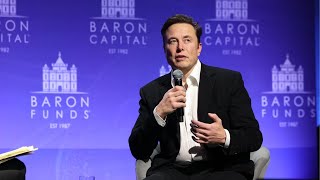 20251:00:20
 202211:58
 202517:10