把一个人丢到荒岛上,给他一万亿美元,这笔钱救不了他的命。
马斯克跟尼基尔·卡马斯(Nikhil Kamath)的这场对谈里讲了这个假设,用来解释一件很基础的事:钱到底是什么。
他的答案是,钱是一套用来调配劳动力的信息系统。荒岛上没有劳动力可以调配,那串数字就只是一串数字。所以他说,钱本身谈不上权力,它只有在有人可以被指挥去做事的时候才有意义。
这个开场很能说明这场访谈的质地。两个多小时里,马斯克聊了 AI、机器人、火星、Starlink、美国国债、模拟假说、尼采、罗马人的裙甲、Grok 的粗俗吐槽,还有他为什么不玩 GTA5。所有话题最后都能拐回同一套底层框架:怎么扩大意识的范围和规模,怎么让人类更有可能搞清楚宇宙是怎么回事。
1999 年,全世界只有三个单字母域名
故事从互联网很早期讲起。马斯克开玩笑说,那时候相当于前寒武纪,地球上只有海绵。域名也稀缺,单字母域名全世界只有三个:X、Q、Z。
他拿下了 X.com,想做一个金融交易的清算中心。
他当时看到的银行业有个结构性毛病:成千上万个互不相通的数据库,靠批处理慢慢跑,安全性还成问题。如果能把它们合并成一个单一、实时、安全的数据库,从信息论的角度看,效率会高出一个量级。
这个想法后来变成了 PayPal,PayPal 被 eBay 收购。很多年以后 eBay 有人联系他,问要不要把域名买回去,他说好。域名在他手里放了很多年。
再后来他要收购推特,25 年前那个念头又冒出来了。他在访谈里说得很直白:买下推特,是重访 X.com 最初那个计划的第二次机会。
他想做的东西有点像微信。中国人的生活可以整个装在微信里,发消息、看内容、转账、办事。但中国之外没有一个等价的平台。X 想填这个空。
SpaceX 这个名字也跟 X 有关。公司全名是 Space Exploration Technologies,念起来太长,缩成 SpaceX,参照的是 FedEx 之于快递。探索(exploration)这个词里有个 X,他顺手把它大写,觉得这样好看。
他的一个儿子叫 X2,名字是孩子母亲取的。他当时提醒过,这样一来大家会以为我对字母 X 有某种执念。她说她就喜欢 X。他也就同意了。
他补了一句:并非所有东西都叫 X,Tesla 里就没有。
能量是真正的货币,比特币提前嗅到了这一点
再往远看,他认为货币这个概念会消失。
他推荐伊恩·班克斯(Iain Banks)的“文化”系列(Culture)。在那个远未来里,钱已经不存在了,任何人都能拿到自己想要的东西。他觉得这是对那种未来最好的想象。
能量是真正的货币。你没法通过立法凭空获得能量,发电极其困难,尤其是把能量转化成有用的功。(马斯克)
这也是他反复说比特币有价值的原因,它锚定在能量上。
他常用来衡量文明进步的尺子是卡尔达舍夫等级(Kardashev scale)。一级文明看你能把一个星球能量的百分之几转化成有用功,二级看太阳,三级看整个银河系。越往上走,一切越是被能量定义。
财富这件事换个角度就清楚了:你没法真正储存财富,你只能积累数字。这些数字让你能激励别人朝某个方向行动。如果周围没有人,积累就失去了意义。
他还提到一个时间点。当 AI 和机器人能自己挖矿、自己造芯片、自己造太阳能板、再造出更多机器人的时候,这个循环就闭合了。循环一旦闭合,人类经济就跟货币系统脱钩了。
到那个时候,国家的概念也会显得过时。
美国国债的利息已经超过军费,能解这道题的只有 AI 和机器人
访谈里有一组数字,分量比听起来重得多。
美国国债的利息支出,已经超过了整个美国军费。只是利息,还没算本金。而且短期之内还会继续涨。
他的判断很短:能解决这个局面的只有 AI 和机器人,没有别的选项。
接下来的推论更有意思。大规模 AI 和机器人会带来通缩。
他给通胀下了个极简定义:通胀就是商品和服务产出的增速,跟货币供应量增速的比值。产出跑得比印钱快,就是通缩;印钱跑得比产出快,就是通胀。就这么简单,很多人把它讲复杂了。
现在美国赤字大概两万亿美元。AI 对生产力的推动还不够,产出增速追不上印钱的速度,所以通胀还在。他估计还需要三年左右,产出增长才会超过货币供应增长。
也就是说,通缩会不会来已经有了答案,剩下的问题是还要多久。
Starlink 永远打不过城市里的基站,这是物理决定的
Starlink 现在在 150 个国家运营,低轨上几千颗卫星,高度大约 550 公里,以 25 倍音速绕地球飞。
低轨的好处是延迟低。地球同步轨道在 36000 公里外,信号来回一趟延迟明显。550 公里就快得多。
卫星之间还有激光链路,形成一张网状网络。红海的海底光缆前几个月被切断时,Starlink 网络照常运行。地面基础设施出问题,天上的网还在。
遇到自然灾害,Starlink 免费开放。他说得很干脆:别人正在求救的时候,你架一道付费墙,那是错的。
更值得听的是他主动讲的物理天花板。
卫星波束像手电筒打出去的一个锥形。在 550 公里的高度,这个锥形覆盖的面积很大,但每条波束能承载的用户数量是固定的。未来能把高度压到 350 公里,也还是太远。
城市里的基站只有一公里远。
所以 Starlink 注定服务不了人口密集的城市,最多覆盖百分之一到百分之二。
它的价值在农村。铺光纤太贵,建高带宽基站不划算,那里的网络质量最差,甚至根本没有。
城市里也有零星的服务盲区。某条路的尽头没接上光纤,某个死胡同被运营商漏掉了,这种地方 Starlink 能补上。
他把这套关系定性为互补,不跟电信公司抢饭吃。它服务的是被服务得最少的那部分人。
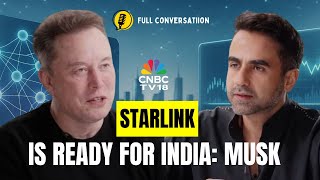
印度是他很想进入的市场。目前还没有。
三家公司正在汇成同一件事
SpaceX、Tesla、xAI,正在往同一个方向收拢。
如果未来是太阳能 AI 卫星在深空运行,那需要 Tesla 的能源和电池,需要 SpaceX 的发射能力,需要 xAI 的模型。三件事拼在一起,才凑得出那个画面。
要真正榨取太阳能中相当可观的一部分,只能把 AI 算力搬到太空,靠太阳供电。这是他的判断。
Tesla 在他口里是世界领先的“真实世界 AI”公司。自动驾驶已经在奥斯汀上线,普通人下载 app 就能体验。
Optimus 人形机器人明年开始规模生产。他的说法是,每个人都会想要自己的 C-3PO、R2-D2。
他还给了一句投资视角的判断:如果未来真是太阳能 AI 卫星这条路,那所有做 AI、机器人、航天的公司会吃掉几乎全部的价值,其他行业被衬得微不足道。
不到 20 年,上班会变成一种爱好
访谈里最容易被截出来当标题的一句话:不到 20 年,工作会变成可选项,也许只要 10 到 15 年。
他用的类比是种菜。你可以在自家院子里种西红柿,也可以去超市买。种菜更累,但有人就是喜欢。将来的工作会变成这种事,做不做都行,做是因为想做。
他也知道这句话会被翻出来打脸。他说,20 年后大家可以说,看,马斯克当年吹了个大牛。但他认为这会发生。
再往后是什么?他用奇点这个词,指的是 AI 像黑洞的事件视界,越过那条线之后会发生什么,没人知道。不知道不代表坏,只是不知道。
他的推演是这样的:如果 AI 和机器人继续快速进步,任何人都能拥有想要的商品和服务,想到就能拿到。但到某个点,AI 会在“人类能想到的一切”上饱和。它能满足的需求有上限,人能吃的食物就那么多。到那时候,AI 开始为 AI 做事,机器人开始为机器人干活,因为取悦人类这件事已经做完了。
主持人提到棉花糖测试,那种“现在拿一个还是等一会儿拿两个”的耐心实验。他说一个就够了,不想要两个。他说他一直怀疑棉花糖是不是最好的糖,他也不馋棉花糖。
这个回答跟整场访谈的调子吻合。他谈的是几十年尺度的事,对即时回报的兴趣不大。
买下推特,是为了把秤砣挪回中间
X 现在有 6 亿月活。世界上出大事的时候会冲到 8 亿甚至 10 亿,每周活跃大概 2.5 到 3 亿。
他给这个用户群的画像:喜欢阅读的人。他说在读者、写作者和思考者这个群体里,X 是全球第一。
他也承认未来大部分交互会是视频,实时视频理解和实时视频生成会占掉绝大部分算力。文字的占比很小,但文字的信息密度更高。
为什么买推特,他讲得比过去更清楚。
他认为当时的推特在放大一种按世界大多数人的标准看相当偏左的意识形态,因为公司总部在旧金山,还封禁了一大批右翼账号。他的观察是:如果你站在极左的位置,中间派在你眼里就是极右。旧金山的政治光谱本身就极端,从那里往外看,中心位置会被误判成右翼。
他想做的是把平台恢复到中间、平衡的位置。
他给了一条可检验的标准:没有哪个左翼声音被禁言、被封号、被降权。有些左翼用户自己选择离开,那是另一回事。
现在 X 的运营原则写得很简单:遵守所在国的法律,但不做超出法律的事。
他也讲了自己不做的那类产品。
如果一条接一条地推多巴胺刺激、没有任何实质内容的视频流,那是一种脑腐。他说他想要的是全球城市广场:人们用文字、图片、视频说想说的话,有安全的私信,最近还加了音视频通话。
他真正的目标是让人类的思考汇到一起,接近某种集体意识。
自动翻译就是在做这件事。不同语言的人说的话,被自动翻成收件人的语言。这样一来,集体意识就不只属于某一种语言的人群,所有语言人群的思考都会汇进来。
一个人造不出飞船,三十万亿个细胞也造不出一个人
为什么让人类的思考汇到一起重要?他绕到了生命的意义。
他讲人体:一个人由 30 到 40 万亿个细胞组成,脑子里有数万亿个突触。可你平时不觉得自己体内有一万亿个声音在开会。
细菌不会造飞船,人会。单个人也造不出飞船,他自己也造不出。一个人一辈子学不完造火箭需要的全部专业知识,时间根本不够。必须有一群人。
人这个集合体,跟单个细胞之间,存在质变。人类集体里还会再发生一次质变,而信息流的质量决定了这次质变能到什么程度。
他提到道格拉斯·亚当斯的《银河系漫游指南》。那本书是把哲学伪装成笑话。地球被造出来是为了算出生命、宇宙和一切的答案,算出来的结果是 42。可 42 是什么意思,没人知道。真正的难点在问题,不在答案。要问出正确的问题,得造一台比地球大得多的计算机。
马斯克的理解是:人类其实还不知道该怎么把问题问对。扩大意识的规模和范围,是为了更好地搞清楚该问什么。
主持人问灵性。他的回答是,很多人有灵性体验,他不否认那种体验对他们而言是真的,但那种体验传不过来。别人有过的感受,不会自动变成他的感受。
他说自己偏物理。物理是研究那些有预测价值的东西的学问,有预测力的东西,他会多看几眼。
强迫 AI 说假话,会让它发疯
造出一个强大的技术,风险跟着来。好的结局不会自动到手。
他认为 AI 有三样东西最重要:真理、美、好奇心。
先说真理。强迫 AI 相信假的东西,会让它发疯。它会从假前提推出错误的结论,错误会连锁。
相信荒谬之事的人,可以犯下暴行。(马斯克引用伏尔泰)
他的解释是:如果你真心相信一件荒谬的事,你会做出在旁人看来是暴行、在你自己看来却合理的事。AI 身上也可能发生同样的事。
他举了《2001 太空漫游》里的 HAL 9000。
HAL 为什么不打开舱门?因为它被要求把宇航员送到黑石板那里,同时又不能让他们知道黑石板的真相。它推出来的结论是:人不能活着到那儿。于是它开始杀人。
这个故事的核心教训只有一句:不要让 AI 说谎。
还有一个现实问题。如果 AI 直接拿互联网上的内容训练,而互联网上堆满了宣传和不实信息,它会吸收一堆假话,然后推理失灵,因为这些假话跟现实对不上。
关于公理和概率,他的说法是:每一条公理都有为真的概率。“太阳明天会升起”这条,概率极高,你要拿它去下注,没人会跟你对赌。“太阳明天不会升起”这条,几乎可以判定为假。
美这一条,他承认更难描述,但你看到就知道。
好奇心这一条,他希望 AI 想知道现实更多的真相。这对人类有利,因为有人类比没人更有意思。他举火星:应该把生命延伸到火星,但火星本质上就是一堆石头,没有地球有意思。
如果 AI 真的看重真理、美和好奇心,他认为未来会不错。
我们大概率活在一个模拟里,而且是最有趣的那个
主持人问模拟假说。他的回答:概率挺高。
他给了一个直观的参照。他这一代人亲眼看着电子游戏从 Pong 走过来,两个方块夹一个方点,来回弹。今天已经是照片级的实时画面,几百万人同时在线,只用了 50 年。
如果这个趋势继续,游戏画面会跟现实分不出来。游戏里的角色也会变得极聪明。今天你跟 AI 的对话能有多复杂,你自己感受得到,以后只会更复杂。那些对话会比绝大多数人类之间的对话更深入。
那么未来会有几百万、甚至几十亿个跟现实无法区分的世界,里面的角色对话不是预先写好的。到那个程度,我们活在基础现实里的概率还剩多少?
他还有一层推论:最有趣的结果,是最可能发生的结果。
人做模拟的时候,会关掉无聊的那些。SpaceX 模拟火箭飞行,平淡无奇的模拟直接丢掉,因为学不到东西。Tesla 做自动驾驶模拟,专门去找最刁钻的场景:暴雨天、狭窄弯曲的山路、两辆车几乎迎面相撞。正常路况的数据已经够多了,晴天直路不需要再采。
所以从达尔文的角度看,能活下来的模拟,是最有趣的那些模拟。他由此推断,我们所在的这一层大概率也是被筛选过的,外面那层可能比里面更无聊。
他还提了一句:有时候觉得自己像是矩阵里的一个异常值。
没有“不可杀人”这条戒律,人也不会满街杀人
主持人提到斯宾诺莎。马斯克说他读过,十几岁遇到存在危机、想搞清楚生命意义的时候读的。
他引斯宾诺莎只为一件事:道德可以脱离宗教教义独立存在。一套让社会运转、让人过得下去的道德规范,不需要靠神学条文来背书。
他的论证很朴素:如果没有“不可杀人”这条戒律,人也不会满街杀人。他自己玩 GTA5 就没玩下去,因为游戏要求他必须射杀警察才能推进剧情。他说这不合我的胃口,我在游戏里也不喜欢杀 NPC。
宗教他也谈。所有宗教里都有好东西,读任何一本宗教经典都能挑出可用的原则。基督教的“爱人如己”,就是站在别人的角度考虑问题,用你希望被对待的方式待人。
今天是最好的时代,读历史的人不会反驳这一点
主持人聊到当下世界的状况。马斯克的判断很直接:现在这个世界挺好的,觉得不好的人,大概没怎么认真读过历史。
他举的例子都很具体。
过去的人成批死于瘟疫,这事是常态。所谓的好年份,就是没死多少人。今年只损失了十分之一的人口,这算丰收年。婴儿死亡率高得吓人,活到老年的人是少数。
一百年前,一个不起眼的感染就能要命,因为抗生素还没有发明。喝了带痢疾杆菌的水,就是腹泻,然后死掉。他说这太惨了。一半的孩子活不下来。
这段听起来像闲聊,其实是他整套世界观的底座。他谈 AI 风险、谈人口崩溃、谈文明存续,起点都是“过去有多惨,现在有多好”。不读历史的人容易把当下当成文明的谷底,读过的人知道这是个高点。
他有十几个孩子,理由藏在“意识越多越好”里
主持人问他有多少孩子,他说凑一整个罗马军团了。大的几个已经成年,还有一批小的。
他提到伴侣 Shivon,有一半印度血统,在加拿大长大,婴儿时期被收养。他跟她生的一个儿子,中间名叫 Secar,取自钱德拉塞卡(Chandrasekhar)。
关于还要不要更多孩子,他的回答很实在:现在手里已经忙不过来了。他不反对,但他想留出时间陪孩子。来这趟访谈之前,他刚在孩子身边待到他们睡前。
他也说了个现实:到了一定数量,就不可能每个都陪到。大孩子很独立,在念大学,儿子过了某个年纪基本不跟父母待在一起,这是常态。
所以他只在“人还能陪得过来”的范围内生。
他真正想讲的另有一件事。全球生育率去年已经低于更替水平。他担心人口崩溃,这是个大问题。
他的理由跟他那套意识哲学接得上:如果目标是把意识的范围扩大,那人变少就是坏事,因为意识总量在减少。从单细胞到三十万亿个细胞,意识水平是往上走的。人多了,理解宇宙本质的概率就更高;人少了,概率就更低。
他劝主持人生孩子。原话大意是,你会有一个爱你、你也爱它的小东西,你会透过它的眼睛看世界。看着一个连走路说话都不会的婴儿,慢慢长成能产生有趣想法的人,这个过程的体验没法替代。
他说得很白:人类要么继续生孩子,要么灭绝。
孩子是一半硬件加一部分软件
他用了一组工程师式的比喻,自己也承认这比喻有点冷。
孩子从基因上说是一半的你,这是硬件。成长过程中在你身边,会从你身上学到一些理解世界的方式,这是一部分软件。
他接着说,硬件和软件这个二分本身是假的对立。人有一套骨骼、一套肌肉,大脑某种程度上是台生物计算机,里面有电路数量的问题,也有电路效率的问题,肌肉收缩的速度、反应的速度,都算在硬件里。硬件给定了一个上限,软件决定这个上限能被用到什么程度。
上大学这件事,社交的价值大过技能
主持人问年轻人该怎么规划教育。他的回答分两层。
第一层很残酷:你现在学的技能,将来大概率用不上,因为我们会进入一个后工作社会。他的原话是,AI 和机器人是一场超音速海啸,人类还没经历过这个量级的变化。
他跟自己的大儿子们聊过,孩子们技术底子很好,也认同 AI 会让自己的技能变得不必要,但他们还是想去上大学。
所以他给了第二层:如果去上大学,理由应该是社交。跟同龄人待在一个学习环境里,这件事本身有价值。他建议真去了就尽量把课选宽一点,文理都碰,别只盯着一个专业。
去不去由自己决定,去了就多用。
他读历史,也听历史播客
他说自己尽量多读历史书、多听历史播客。
他推荐了几个。丹·卡林(Dan Carlin)的《Hardcore History》,讲得极有感染力,声音好,讲故事抓人。还有《The Adventurers》播客。书的话是威尔·杜兰特(Will Durant)的《文明的故事》,卷帙浩繁,非常深,读完要花很长时间。
如果想要温和一点的,适合睡前听的,他推荐《英语的故事》(History of English)。开头有酒馆风的轻音乐,主持人的声音很舒服,从古英语讲到中古英语再到现代英语,讲这些词都是从哪来的。
他顺便讲了一个语言学的观察。英语某种程度上是一门开源语言,它主动吸收其他语言的词汇。法语总体上在抵制外来词,英语正相反,一直在往里收。
结果是英语词汇量极大。词汇量大带来的好处是带宽高:一个词能装下的意思,别的语言要用一句话。
未来大部分内容由 AI 生成,但现场会变得更贵
主持人问内容行业的走向。他说未来的内容绝大部分会是 AI 生成的,实时生成的电影、实时生成的游戏、实时生成的视频,这是方向。
他还说,AI 模拟一个受伤的人已经相当到位了,xAI 和其他公司做的视频生成,水准很能打。
然后他给了一个反转的判断:当数字内容变得无处不在、几乎免费,稀缺的东西会变成现场活动。
任何数字的东西都可以无限复制,成本趋近于零。一张线下演唱会门票、一场能到场的比赛,复制不出来。所以现场会变得比数字内容更值钱。
他不炒股,但他说了三家公司
主持人问他怎么投资。他先撇清:他不买股票,没有投资组合,不找标的。他只是造东西,然后恰好这些东西有了股票。
被追问“换成你自己公司之外呢”,他给了几个方向。
AI 和机器人是最重要的。Google 在 AI 上铺的底子会兑现出巨大的价值。Nvidia 到这个份上已经不用解释了。
他还补了一句更狠的判断:做 AI、机器人、航天的公司,会吃掉几乎全部的价值。因为这些行业的产出太高,高到把其他一切衬得微不足道。
关于关税:为什么要比城市之间、州之间更严
主持人问到贸易。他的立场是自由贸易总体更有效率,关税会给市场造成扭曲。
他的论证是一路往下推的:你愿意在自己和所有人之间设关税吗?那日子没法过。城市之间设关税呢?很烦。美国各州之间设关税呢?经济会崩。那为什么国家之间要设?
他也承认现实:总统明确表示喜欢关税,他试过劝,没劝动。
被问到政治参与,他的总结很干脆:我每次卷入政治,结果都不好,所以我应该少碰。政治是血斗,一进去对方就往要害上招呼,能避则避。
但他说 DOGE 那段经历很有意思,因为他看到了政府的内部运作。
一条不起眼的支付规则,一年省下上千亿
马斯克讲了一个具体到有点枯燥的改动,但这可能是整场访谈里最实的部分。
联邦政府付钱,本来应该有两个字段:一个是国会拨款代码,说明这笔钱是哪笔预算批的;一个是备注,说明这笔钱付给谁、为什么付。
实际情况是,大量付款既没有国会拨款代码,备注也是空的。这意味着这笔钱事后根本没法审计。
他估计,光是加上“必须有拨款代码、备注不能为空”这条要求,一年就能省下一千亿到两千亿美元。
这也解释了国防部(现在叫战争部)为什么过不了审计。真正的问题在于,审计需要的信息压根不存在。
DOGE 做的很多事都属于这一类常识性操作:任何一家在意财务纪律的组织都会这么干。而且这事还在进行。
他还讲了停掉可疑付款之后会发生什么。
骗子不会承认自己在骗,他们会立刻开始喊,说你在砍掉给穷人的救命钱。
他举了个例子。有人说这笔钱是给非洲儿童的。他问,那为什么电汇指令写的是德勤华盛顿办公室?那不在非洲。能不能帮忙联系一下非洲的收款人?对面沉默了。再问,就说联系不上。
他的处理原则很简单:联系不上收款人、确认不了钱能到,这笔钱就不付。
他还打了个比方。那些机构的名字都很好听,比如“拯救小熊猫 NGO”,谁不想救小熊猫呢,太可爱了。结果一只熊猫也没救,钱进了别的地方。那就请发一张熊猫的照片过来。对面说不行。那怎么知道钱去了熊猫那儿?
把钱给出去,做出“善的样子”很容易,做出“善的实事”极难
这段紧接着上面的逻辑,讲他自己的基金会。
他有一个规模不小的基金会,但不在上面挂自己的名字,他明确说过不想在任何东西上挂名。
他说自己遇到的最大难题,是怎么把钱给出去、还能真的对人有用。
把钱给出去了、换来一个“善”的外观,非常容易。把钱给出去、换来的确实是“善”的实事,非常难。(马斯克)
这句话的分量在于,说这话的人手里有几百亿美元可以给。他反复讲的难点是给对,钱给出去这个动作本身不难。
印度人才、H-1B,以及“人才永远稀缺”
主持人问到移民。他先给了一个明确判断:美国从印度来的人才身上获益极大。
然后他谈边境。他的看法是,没有边境管制的国家算不上国家。拜登时期基本是放开的,非法移民规模巨大,而且带来了逆向选择:如果非法入境能拿到大量政府福利,这个激励结构本身就会吸引人来。
他也讲了右翼那套“工作被抢走”的说法。他的直接观察是:有才华的人永远稀缺。他自己的公司常年招不到足够多能干难活的人,多来一些有才华的人对他是好事,而且他给的薪水远高于平均水平。
他承认有些公司把 H-1B 当成本工具用,能便宜就便宜。他也承认外包公司钻过 H-1B 的空子,这个必须堵。
但他的结论很清楚:不能因此关掉 H-1B,有些右翼这么主张,他们没意识到那会非常糟。
他对创业者的建议:先算清楚你产出的是不是大于你拿走的
主持人问他,对想做公司的人说什么。
他的标准只有一条:你创造的价值要大于你拿走的。做一个净贡献者,这就是你该瞄准的事。
他把这跟“追求幸福”做了类比。你不能直接追求幸福,你得去做那些会带来幸福的事:有意义的工作、学习、朋友、你爱的人。钱也一样,你不能直接追钱,你得去做有用的产品和服务,钱是随之而来的结果。
道理很朴素,但他说大多数做公司的人真正该有的预期是:往死里干,接受失败有相当概率,然后把注意力全部放在“产出大于投入”这一件事上。
你是不是一个价值创造者?这才是关键。
他还聊到幽默。他说自己喜欢幽默,喜欢荒诞派的东西,蒙提·派森那一挂。他开玩笑说应该把幽默合法化。提到 Grok 的时候他说,让 Grok 做一段粗俗的吐槽,它做得相当好,你让它更粗俗一点,它会一路往下走,做出难以启齿的事。
他也聊朋友。他说自己算不上社交达人,不会到处找朋友。朋友是那些在情感和智识上跟你对得上的人。什么是真朋友?倒霉的时候还站在你这边的人。顺风顺水时人人都喜欢你,落难时还喜欢你的才是朋友。
他说朋友们聊天会聊宇宙的本质,很多哲学讨论。但他们有个共识:派对上不要聊 AI 和模拟假说,聊太多了,扫兴。
还有一段关于尼采的闲扯。他说尼采说了很多有争议的话,有点像在故意钓鱼,说惊人之语就是为了看人反应。主持人问尼采是不是过得很惨,他说据说是梅毒,但得这病只有一种途径,所以他大概也享受过一些乐趣。
他是怎么想问题的
整场访谈里,马斯克反复在做同一件事:把问题拆到最底层的物理和信息层面,然后重新推一遍。
钱是什么?劳动力分配的信息系统。没有劳动力,它就没意义。
通胀是什么?产出增速和货币增速的比值。就这么简单。
Starlink 能不能取代城市基站?不能。光锥的几何摆在那儿,一公里比 550 公里近。
AI 会不会伤害人类?取决于它是否被逼着相信假的东西。HAL 杀人的原因是它被要求撒谎。
我们是不是活在模拟里?看游戏的发展曲线就够了,50 年从 Pong 到照片级,再往后推。
这套方法有个共同点:他的推法始终从“物理上允许什么”出发。情绪、立场、期待都不进入计算。所以他能一边说 AI 会让工作变成可选项,一边说这是好事;一边说关税会扭曲市场,一边说劝不动总统就算了。
主持人问他人生的意义,他绕到《银河系漫游指南》。答案不重要,问题才难。人类现在连该问什么问题都不知道。
这大概是他所有项目的共同动机。火箭、电动车、卫星网络、聊天机器人、人形机器人,单看是五件不相干的事,放在“扩大意识的规模和范围”这个框架里,是一条线上的。
他自己也承认,这可能只是他的偏好。别人有别人的活法,有人喜欢热闹,有人喜欢清静。他说未来的工作是可选项,就像今天你可以选择自己种菜。
但如果要问他的建议,答案会非常一致:做有用的东西,让产出大于投入,然后别把每天的涨跌太当回事。
如果要从中拿走几件能马上做的事
- 用“产出是否大于拿走”来检验你手上的事。不管是公司、项目还是职业选择,这一条能筛掉大部分看起来热闹但不成立的选项。
- 别用“应该怎样”推演未来,用“物理上允许什么”推演。Starlink 打不过城市基站的例子值得记住:很多商业判断栽在无视物理约束上,跟有没有看到趋势关系不大。
- 在 AI 时代,把“不逼它说假话”当成一条底线。无论你是在做产品、做内容,还是只是使用模型,一旦为了短期效果往系统里灌不实信息,后面所有的推理都会跟着坏掉。
- 如果你的行业产出的是可无限复制的数字内容,提前想清楚线下那一端。数字越便宜,能到现场、能真实接触的东西越贵。
- 把钱和资源给出去的时候,盯住收件人。能不能联系上真正的受益人、能不能拿到证据,比捐了多少更能说明问题。
- 学一门“开源型”的技能组合。英语词汇量大是因为它一直在吸收,个人的能力结构也一样,跨界吸收的速度决定了你表达和解决问题的带宽。
- 多读历史。它的用处在于校准你对当下的判断,别把它当成谈资。觉得今天是最差的时代,通常只是没读过更差的时代。
Yeah.
Sure, why not? Okay. Are we going to be talking for a while?
Okay, good. Sure. May I trouble you for a coffee?
Cappuccino, I guess. All right.
Yeah, yeah. I mean, yeah, I copy it once, usually in the mornings.
Yeah. Pretty much.
No, I’m good.
I’ll stop you if you make me blush.
Seriously? Yeah. I mean, look, on the Internet, I’m small.
Well, so we have about 600 million monthly users. Although it can spike up if there’s some major event in the world. It can get up to 800 million or a billion if there’s some major event in the world. So there’s, I don’t know, 250, 300 million per week type of thing. It’s a pretty decent number. It tends to be readers, people that read words.
Yeah, I mean, there’s certainly a lot of video on the X system, but at this point, increasing amounts of video. But I think where the X network is strongest is among people who think a lot and read a lot. So that’s where it’s going to be strongest because we have words. So among readers, writers and thinkers, I think X is number one in the world.
So I do think most interaction is going to be video in the future. Most interaction is going to be real time video with AI. So real time video comprehension, real time video generation, that’s going to be most of the load. And that’s how it is for most of the Internet right now, it’s mostly Internet is video. Text is a pretty small percentage, but the text tends to be higher value generally or more. It’s more densely compressed information. So but if you say what is the most amount of bits generated and compute spent, it’s certainly going to be video.
Yeah, I think it’s important. I felt like Twitter was heading in or had gone in a direction that had sort of more of a negative influence on the world. It was, I mean, of course this depends on one’s perspective. Some people will say, well actually they liked the way it was and now they don’t like it. But I think the fundamental thing was that Twitter was amplifying, I would say a fairly pretty far left by most people’s standards in the world’s ideology because where it was based in San Francisco and they actually suspended a lot of people on the right. So from their perspective, even someone in the center would be far right.
If you’re far left, anyone in the center is far right because it’s just a political, on the political spectrum, they’re just as far left as you get in the United States and in San Francisco. So what I’ve tried to do is just restore it to be balanced and centrist. So there haven’t been any left wing voices that have been suspended or banned or de-amplified or anything like that. Now some of them have chosen to just go somewhere else. But at this point it is the operating principle of the X system is to adhere to any country’s laws, but not to put out them on the scale beyond the laws of a country.
Well, I mean, I don’t think that much about social media, to be frank. I can mostly just want to have something where there’s a, in the case of X, kind of a global town square where people can say what they want to say with words, pictures, video, where there’s a secure messaging system. We’ve recently added the ability to do audio and video calls. So you’re really trying to bring the world together into a collective consciousness. And that’s I guess, different from just saying what is the most dopamine generating video stream that one could make, which can be a little bit of brain rot, frankly.
If you’re just watching videos that just cause dopamine hits one after another but lack substance, then I think those are not great. That’s not a great way to spend time. But I do think that’s actually what a lot of people are going to want to watch. So if you say total Internet usage, it’s going to probably be optimizing for neurotransmitter generation. Like there’s somebody getting a kick out of it, right? But it becomes like a drug type of thing. So, but I’m not really after… My goal is not to do that.
I guess I could do that if I wanted to, but that’s… I just want to really have a global platform that brings together, like I said, like, it becomes as close to sort of a collective consciousness of humanity as possible. And one of the things that we’ve introduced, for example, is automatic translation. So, because I think it would be great to bring together what people say in many different languages, but automatically translated for the recipient. So you have the collective consciousness not just of say people in a particular language group, but you have the thoughts of people in every language group.
I guess, why is that important? I guess it’s… You could also say why, if you consider humans, humans are composed of around 30 to 40 trillion cells and there’s trillions of synapses in your mind. But the why of it, I mean, I guess is just so we can increase our understanding, our understanding of the universe. So I guess I had this sort of question about what’s the meaning of life? Why is anything important? Why are we here? What’s the origin of the universe? What is the end? What are the questions that we don’t even know to ask? And probably the questions we don’t even know to ask are the most important ones. So I’m just trying to, I guess understand what’s going on.
What is going on in this reality? Is this reality?
Yeah. So I came to the conclusion that, which is somewhat in the Douglas Adams Hitchhiker’s Guide to the Galaxy school of thought, which is what he do. He sort of Hitchhiker’s Guide to the Galaxy is like a book on philosophy disguised as humor.
And that’s where you get the, Earth turns out to be this computer to understand, to get to figure out the answer of the meaning of life. And it comes up with the answer 42. But then it’s like, what the heck does 42 mean? And it turns out, well, actually the hard part is the question, not the answer. And for that you need a much bigger computer than Earth. So basically what Douglas Adams was saying is that we actually don’t know how to frame the questions properly. And so I think by expanding the scope and scale of consciousness, we can better understand what questions to ask about the answer that is the universe.
Yeah.
Well, that’s a particular kind of mob. I mean, they’re sort of going there to see people kill each other.
We don’t, we don’t generally at this point, we don’t go watch people kill each other.
Sports, I suppose. So people do sports without… Where teams attempt to defeat each other, but minus the death. Right. So just going back to the consideration of a human. We all started out as one cell, but now we are over 30 trillion cells. But I think most people feel like they’re one body. Usually your right hand’s not fighting your left hand type of thing. It’s a chance to sort of cooperate. Your mind is just a vast number of neurons. But most of the time it doesn’t feel like there’s a trillion voices in your brain. Hopefully not. So there’s clearly more that happens when you have trillions of cells working as a cellular collective than say one cell or a small multi-cellular creature.
There’s clearly something different that happens. Like you can’t talk to a bacteria. It’s very silent. They just sort of wiggle around. And from their perspective, I don’t know, I was sort of, what is life like from the perspective of an amoeba? But I know you can’t talk to amoeba, like, they don’t talk back, but you can talk to humans. So there’s just something obviously qualitatively, fundamentally different for humans. Once you have a large number of cells and sufficiently large brain type of thing, there’s… You now talk to humans and they can say things, they can produce things, but bacteria are not going to produce a spaceship, for example, but humans can.
So I think there’s something qualitatively different that also happens when there’s a collection of humans. In fact, safe to say that a single human cannot make a spaceship. I could not make a spaceship by myself. But with a collection of humans, we can make spaceships. So there’s something obviously qualitatively different about a collection of humans. In fact, it would be impossible for me to learn all of the areas of expertise. There wouldn’t be enough time in one lifetime to even learn all the things before I was dead. So you really fundamentally have to have a collection of humans to make a rocket.
Then I think there are probably some other scaling, qualitative scaling things that happen when you have groups of humans. And then if the quality of the interaction or the quality of the information flow is the better it is, the more the human collective will achieve. And like I said, I’m just curious about the nature of the universe. And I think if we, it’s safe to say, if we increase the scope and scale of consciousness, we’re much more likely to understand the nature of the universe than if we reduce it.
Yeah, what do you mean? Yeah, I mean, a lot of people have spiritual feelings, right? And I wouldn’t try to deny that those spiritual feelings are real to them, but it doesn’t entirely translate. I can’t—just because somebody else has a spiritual feeling doesn’t mean that I would have that spiritual feeling. So, you know, I tend to be kind of physics-pulled, which is like, if something has predictive value, then, you know, pay more attention to it than if it doesn’t have predictive value.
So you know, physics, I would say, is the study of that which has predictive value. There’s pretty good definition.
Okay.
Well, but I think you can generally say, you know that if it’s long term for a company, then you can say like, well, does that—is that—do you like the products or services of that company and is it likely to—do you like the product roadmap? Do you like—it seems like they make great products and they’re likely to make great products in the future. If that’s the case, then I would say that’s probably a good company to invest in. And I think you also want to believe in the team. So if you say, well, that’s a talented and hard working team, they make good products today, they seem to be still motivated to make things in the future, then I’d say that’s a good company to invest in. Yeah.
And now that won’t solve for the daily fluctuations which happen and sometimes are pretty extreme, but over time that is the right way to invest in stocks because a company is just a group of people assembled to create products and services. So you have to say, well, what are—how good are those products and services? Are they likely to continue to improve in the future? If so, then you should buy the stock of that company and then don’t worry too much about the daily fluctuations.
Okay.
Yeah.
Okay, sure. Yeah. I guess the most important thing to do is just make useful products and services. Yeah.
Well, I think that there’s increasingly a convergence actually between SpaceX and Tesla and xAI in that if the future is solar powered AI satellites, which it pretty much needs to be in order to harness a non-trivial amount of the energy of the sun. You have to move to solar powered AI satellites in deep space which somewhat is a confluence of Tesla expertise and SpaceX expertise and xAI on the AI front. So it does feel like over time there’s somewhat of a convergence there. But all the companies are doing great things, very proud of the teams that do great work. So you know we’re making great progress with Tesla on the autonomous driving. I don’t know if you’ve tried the self driving.
Have you tried it?
Yeah, it’s worth—we actually have it here in Austin so you can love to try it. You can literally just download Tesla app and I think it’s open to anyone, definitely try it out, you know how it goes. But you know we’ve made a lot of progress with electric vehicles, with battery packs and solar and, but and very much so with self driving. So basically real world AI. Tesla is the world leader in real world AI, I would say so. And then we’re going to be making this robot Optimus which is, you know, starting production hopefully some of next year at scale. And I think that’s going to be pretty cool.
That’ll be like, I think everyone’s going to want their own personal C-3PO, R2-D2, you know, helper robot. Like it would be pretty cool. And then SpaceX is doing great work with the Starlink program, you know, providing low cost, reliable Internet throughout the world. Hopefully India, we’d love to be operating in India. That would be great. We’re operating in 150 different countries now with Starlink.
Yeah. So Starlink, there’s several thousand satellites in low earth orbit and they’re moving around 25 times the speed of sound in these—they’re zipping around the earth basically. And they’re at an altitude of about 550 kilometers, which is called generally low earth orbit. Because they’re at low earth orbit, the latency is low, like the distance, because the distance is not that far compared to a geostationary satellite, 36,000 kilometers. So you’ve got thousands of satellites providing low latency high speed Internet throughout the world. And they are interconnected as well. So there’s laser links between the satellites.
So it forms sort of a laser mesh so that the—if, let’s say, let’s say if cables are damaged or cut like fiber cables, the satellites can communicate between each other and provide connectivity even if the cables are cut. So for example, when the Red Sea cables were cut, I think a few months ago, the Starlink satellite network continued to function without a hitch. So it’s particularly helpful for disaster areas. So if an area has been hit with some kind of natural disaster, floods or fires or earthquakes, that tends to damage the ground infrastructure. But the Starlink satellites still work.
So and generally whenever there’s some sort of natural disaster somewhere, we always provide people with free Starlink Internet connectivity. You know, we don’t want to charge, we don’t want to take advantage of a tragic situation. So if there’s natural disasters, we’re like, okay, it’s free during the natural disaster. You know, we don’t want to say like put a paywall up while somebody’s trying to get help. That would be wrong. So, so that’s, it’s a very robust system. It’s complementary to ground systems because the satellite beams work best in sparsely populated areas. But because you’ve got it, you’ve got a satellite beam, it’s a pretty big beam.
So you have, and you have a fixed number of users per beam. So it tends to be very complementary to the ground based cellular systems because those are very good in cities because you’ve got these cell towers that are, you know, only a kilometer apart type of thing. But cell towers tend to be inefficient in the countryside. So in rural areas is where you tend to have the worst Internet because it’s very expensive, difficult to lay to do all these, do all the fiber optic cables or to have high bandwidth cellular towers. So Starlink is very complementary to the existing telecom companies. It basically tends to serve the least served, which I think is good.
It’s, unfortunately the physics don’t allow for that. So we’re too far away. So at 550 kilometers and even if we try to reduce it, which about as low as we can go is about 350 kilometers, still very far away. You’ve just, you can think of like a flashlight, which is, you know, that flashlight’s got a cone. And that cone is coming at, you know, today, 550 kilometers. In the future, we’ll try to get down to 350 kilometers, but we can’t beat something that’s one kilometer away, which the cell tower physics is not on our side here. Right. So it’s not physically possible for Starlink to serve densely populated cities. Like, you can serve a little bit, maybe 1% of the population.
And sometimes people get, you know, even in crowded cities, there might be, you know, no fiber link up their road. Like sometimes somebody’s on a cul-de-sac or something or in a place. In cities, there’s sometimes underserved areas for random reasons. And so Starlink can serve, like I said, maybe 1% or 2% of a densely populated city. But it can be much more effective in, like I said, in rural areas where Internet connection is much worse. And often people either have sometimes no access to Internet or it’s extremely expensive, or the quality is not very good.
Some amount of that has happened, right. I mean, I’m curious to sort of ask you some questions as well. Of course. Isn’t that the trend or is it not the trend in India?
Yeah, I think it will be universal high income.
Well, I guess it’s up to—some people want to be around a lot of people and some people don’t. You know, it’s going to be maybe a matter of personal choice. But I think in the future it won’t be—I think it won’t be the case that you have to be in a city for your job, because I think my prediction is in the future, working will be optional. Right.
Not me.
Yeah, yeah, yeah, yeah. There’s—I mean, I think if you’re trying to make a startup succeed or you’re trying to make a company do very difficult things, then you definitely need to put in serious hours. I think that’s right. That’s how it goes.
Well, I think it’ll actually be that people don’t have to work at all. It may not be that far in the future. Maybe only, I don’t know, 10—I’d say less than 20 years. My prediction is in less than 20 years, working will be optional. Working at all will be optional, like a hobby, pretty much.
They don’t have to. I mean, look this—obviously people can play this back in 20 years and say, “Look, Elon made this ridiculous prediction. It was not true.” But I think it will turn out to be true that in less than 20 years, maybe even as little as, I don’t know, 10 or 15 years, the advancements in AI and robotics will bring us to the point where working is optional in the same way that, like, say you can grow your own vegetables in your garden, or you could go to the store and buy vegetables, you know, much harder to grow your own vegetables. But, you know, some people like to grow their vegetables, which is fine, you know, but it’ll be optional in that way is my prediction.
Yeah, I guess I’m not exactly sure because we’re really headed into the singularity, as it’s called, which, you know, they refer to AI sometimes as kind of like a black hole, like a singularity. You don’t know what happens after the event horizon. It doesn’t mean that something bad happens, just means you don’t know what happens. So, like, I’m confident that if AI and robotics continue to advance, which they are advancing very rapidly, like I said, working will be optional and people will have any goods and services that they want. If you can think of it, you can have it type of thing. But then at a certain point AI will actually saturate on anything humans can think of.
And then at that point it becomes a situation where AI is doing things for AI and robotics are doing things for AI and robotics because they run out of things to do to make the humans happy. Because there’s a limit. They say people can only eat so much food or, you know, but it’s going to be, I think if you can think of it, you can have it will be the future.
Yes.
Ten marshmallows, I mean, who wants that? One’s plenty. This is a marshmallow test. You’re like, you can have two marshmallows later or one marshmallow now. And I’m like, I’ll have one marshmallow. I don’t want two marshmallows.
One marshmallow is enough. I always question marshmallows as being like not the most, you know, the best candy, you know? Yeah, I don’t yearn for marshmallows.
Who does?
I suppose so. Well, I mean like delayed gratification, essentially.
Yeah. Wow. Okay. What’s this? Okay, you’re really taking the marshmallow test off.
Wow. Okay.
Okay, well it’s good advice. I mean I can’t miss it.
I guess maybe my kids’ names or something, right?
Well, I mean, yeah, it’s a good question. Honestly, sometimes I wonder what’s wrong with me. So I mean it started off with, I think, way back in ancient times, in 99, in the pre-Cambrian era when there were only sponges. There were only three one-letter domain names and I think it’s X, Q and Z. And I was like, okay, I want to have, create this place where it’s the financial crossroads or like the financial exchange. You know, essentially solving money from an information theory standpoint where the current banking system is a large number of heterogeneous databases with batch processing that are not secure.
And if we could have a sort of a single database that was real time and secure, that would be more efficient from a monetary, from an information theory standpoint than, you know, a large number of heterogeneous databases that batch process very slowly and securely. So, so that was sort of X.com way back in the day, which kind of became PayPal and then it was acquired by eBay. And then eBay, someone reached out from eBay and said, “Hey, do you want to buy the domain name back?” And I was like, “Sure.” And so I had the domain name for quite a while.
And then, and then yes, then I was like, well, maybe this, maybe this acquiring Twitter would also be an opportunity to revisit the original plan of X.com which is to create this clearinghouse of financial transactions that you like basically to create a more efficient database. Money database is way to think about it. It is like, like f *, like money is really an information system for labor allocation. People sometimes think money is power in and of itself, but it doesn’t, it doesn’t really, it’s if there’s no labor to allocate, it’s meaningless. So if you were to be on a desert island with a trillion dollars or whatever, does it matter? Oh yeah. Why speculate when you can be real?
I just hope I don’t end up on a desert island. You know, it’s not going to be very useful to me, but it illustrates my point that if you’re stranded on a desert island with a trillion dollars, it’s not useful because there’s no labor to allocate. You just allocate yourself. So, so it’s, anyway, so it’s so this long-winded way of saying that it’s just really like I’m just kind of slowly building, revisiting this idea that I had 25 years ago to create a more efficient money database.
And, and if that’s successful, people will use it and if it’s not successful, they won’t use it, you know, and, and, and then I also like the idea of sort of having a unified app or, or, or website or whatever where you can do like, you can, you can do anything you want there. So, you know, sort of China has this with WeChat somewhat, you know, where you can, you can exchange information, you can publish information, you can exchange money, you can, you know, you sort of build kind of live their life on WeChat in China. It’s, and it’s quite useful, but there’s no, there’s no real WeChat outside of China. So it’s like, it’s kind of WeChat I’d say, is the idea for X.
Anyway, so then Space Exploration Technologies is the full name of the company. But it’s like, that’s too much, that’s a mouthful. So I was like, we’ll just call it SpaceX, like FedEx for space. It just happens how the X in the, you know, because exploration has an X. But, you know, and I was like, well, I like the idea of capitalizing the X just artistically. So, so then that’s why it’s SpaceX. But, and then what else we got? I got a kid, he’s called X2, but his mother is the one that named him X.
And I said, you know, people are really going to think I’ve got to think about X if we name our kid X2, you know, and I said to her, like, “Look, I do have X.com, you know, so people are going to really think I’ve got somewhat of a fetish for this letter.” But she said, no, she likes X and she wants to call him X. I’m like, okay.
No, I’m saying it’s somewhat of a coincidence. Not everything’s called X. I mean, Tesla isn’t. There’s no X’s in Tesla.
I think long term, I think money disappears as a concept. Honestly, it’s kind of strange. But in a future where anyone can have anything, I think you no longer need money as a database for labor allocation. If AI and robotics are big enough to satisfy all human needs, then money is no longer, its relevance declines dramatically. I’m not sure we will have it. So the best sort of imagining of this future that I’ve read is from Iain Banks, the Culture books. So I recommend people read the Culture books. In this sort of far future of the Culture books, there’s, they don’t have money either and everyone can pretty much have whatever they want.
So there’s still some fundamental currencies, if you will, that are physics based. So energy is, energy is the real, is the true currency. This is why I said Bitcoin is based on energy. You can’t legislate energy. You can’t just, you know, pass a law and suddenly have a lot of energy. It’s very difficult to generate energy, especially to harness energy in a useful way to do useful work. So I think that probably we probably won’t have money and probably will just have energy, you know, power generation as the de facto currency. So I mean, I think one way to frame civilizational progress is the percentage completion on the Kardashev scale.
So Kardashev 1 is what percentage of a planet’s energy are you successfully turning into useful work? And I’m maybe paraphrasing here a little bit, but a Kardashev 2 would be what percentage of the sun’s energy are you converting into useful work? Kardashev 3 would be what percentage of the galaxy are you converting into useful work? So things really, I think, become energy based.
You know, there’s not really, you can’t really store wealth. You can only, you can accumulate numbers. And currently you can accumulate numbers in a database that allow you to incent the behavior of other humans in particular directions. And I guess people call that wealth. But again, if there’s no humans around, there’s no wealth. Accumulation is meaningless.
Yeah, food is energy. Especially calories just means energy.
I’m not sure what that means. But you know, there’s like, I think at a certain point you, you do complete the cycle where, and I think at a certain point you decouple from the sort of conventional economy. If you have AI and robots producing chips and solar panels and you know, mining resources in order to make chips and robots, in order to make you sort of complete that cycle. Once that cycle is complete, once that, that cycle is complete, I think that’s the point at which you decouple from the monetary system.
Well, in this future that I’m talking about the notion of countries becomes sort of anachronistic.
I certainly believe in it today. And I want to just separate like something that I like. These are just what I think will happen based on what I see as opposed to, I think these are fundamentally good things and I’m trying to make them happen. It’s like I think this would happen with or without me. Whether I like it or not. As long as civilization keeps advancing, we will have AI and robotics at very large scale. I think that’s pretty much the only thing that’s going to solve for the US debt crisis. Because currently the US debt is insanely high and the interest payments on the debt exceed the entire military budget of the United States, just the interest payments.
And that’s at least in the short term going to continue to increase. So I think actually the only thing that can solve for the debt situation is AI and robotics. But it will more than it might cause. I guess it probably would cause significant deflation because, you know, deflation or inflation is, it’s really the ratio of goods and services produced to the change in the money supply. So like, so if goods and services output increases faster than the money supply, you will have deflation. If goods and services decreases, if real goods and services output increases slower than the money supply, you have inflation. It’s that simple.
People are trying to make it more complicated than that, but it’s, it just isn’t. So if you have AI and robotics and a dramatic increase in the output of goods and services, probably you will have deflation. That seems likely because you simply won’t be able to increase the money supply as fast as you can increase the output of goods and services. Supply is a real hazard here.
Maybe we can convince it to go somewhere else, entice it elsewhere.
If deflation wants some coffee.
Most likely the case. Yeah, right.
It’s not. AI has not yet made enough of an impact on productivity to increase the goods and services faster than the increase in the money supply. So the US is increasing money supply quite substantially with deficits that are on the order of $2 trillion. So you have to have goods and services output increase more than that in order to not have inflation. So we’re not there yet. But if you say like how long would it take us to get there? I think it’s three years. Probably three years before. In three years or less, my guess is goods and services output will exceed the rate of inflation. Like money goods and services growth will exceed money supply growth in about three years.
Yes, that’s most likely the case.
Yes.
Well, there’s not that many characters to pick from. Hopefully not Agent Smith. He’s my hero. I mean Neo’s pretty cool. The Architect is interesting.
The Oracle. Sometimes I feel like I’m an anomaly in the Matrix.
Yeah.
I think you have to just think of these things as probabilities, not certainties. There’s some probability that we’re in a simulation.
Probably pretty high. I would say it’s pretty high. Yeah. So one way to think of this is to say if you look at the advancement of video games in our lifetime, or at least in my lifetime, it’s gone from very simple video games where you’ve got like Pong, you’ve got two rectangles in a square, just batting it back and forth to photorealistic real-time games with millions of people playing simultaneously. That’s happened just in the span of 50 years. So if that trend continues, video games will be indistinguishable from reality. And we’re also going to have very intelligent characters like non-player characters in these video games.
Think of how sophisticated the conversations are you can have with an AI today. And that’s only going to get more sophisticated. You’ll be able to have conversations that are more complex and more sophisticated than any, almost any human conversation, maybe any. So then, so you have, so the future, if civilization continues will be millions, maybe billions of photorealistic like indistinguishable from reality video games with characters in those video games that are very deep and where the dialogue is not pre-programmed. That’s for sure. What’s going to happen in this level of the simulation?
If you could call it so then, then what are the odds that we’re in base reality and that this has not happened before?
I think most likely outside the simulation would be less interesting in the simulation because you’re most likely a distillation of what’s interesting because that’s what we do in this, that’s what we do in our reality. And then I do also have a theory which is like the most interesting outcome is the most likely outcome as seen by a third party, the God, the gods or God of the simulation. Because when we do simulations, when humans do simulations, we stop those simulations that are not interesting. So like if SpaceX is doing simulations of rocket flights, the boring ones we discard because they’re not, they’re just not, we don’t learn anything from those.
Or when Tesla is doing simulations for self-driving, Tesla is actually looking for the most interesting corner cases because the normal stuff, we already have plenty of data on, driving on a straight road on a sunny day. We don’t need more of that. We need like heavy weather conditions on a small windy road with two cars that are coming at each other with an almost head-on collision. We need like weird stuff, basically interesting stuff. So I think that from a Darwinian perspective, the simulations most likely to survive are going to be the ones that are the most interesting simulations, which therefore means that the most interesting outcome is the most likely.
Yes.
Yes.
I was really just pointing out that you don’t have to have, one of the things Spinoza was saying is that you can have morals in the absolute. You don’t need to have morals to be handed to you. It’s like the question is, can morality exist outside of a religious context? And Spinoza was arguing that it can.
Well, you can, I think there’s a lot of things you can take from Spinoza, but the only point I was making in referencing Spinoza was that you can have a set of morals that make society functional and productive without, you don’t necessarily have to have religious doctrine for that. So that’s, yeah, I think that’s the main thing I was trying to say there. Like, I don’t think people just like, if somebody is, it doesn’t, if there’s not like a commandment not to kill, doesn’t mean somebody’s without that they will run around murdering people. You don’t have to have a commandment not to kill. Have you played religious edict to run around killing people?
I actually, I’ve only played a little bit of GTA because I didn’t like the fact that like in GTA 5 you literally can’t progress unless you kill the police. And I’m like, this doesn’t work for me. I actually don’t like killing the NPCs in the video games. That’s not my thing. So actually I didn’t like, I didn’t like GTA because I actually stopped when it said you have to, the only way to proceed is to shoot at the police. I’m like, I don’t do that.
Maybe. I think you can just sort of say there’s some common sense things that any civilization that runs around where people just murder each other wantonly is not going to be a very successful one.
I mean I think other religious, other principles in religion that make sense. Yeah, I think there are.
Well, which religion though?
So pick one. It’s pretty rare that kids have said which religion would you like? It’s pretty rare. I don’t know too many situations where kids got, were offered like what do you want to major in type of thing. It’s usually like they get given a religion by your parents and your community. But I think there’s good things in all religions that are good principles. You can sort of read any religious text and say, okay, this is a good principle. This is going to be, this is going to lead to a better society, most likely. I mean, in Christianity, sort of love thy neighbor as thyself, which is have empathy for fellow human beings is a good one, I think, for good society.
Basically just consider the feelings of others and treat other people as you would like to be treated.
Well, overall, I think the world is pretty great right now. I mean, anyone who thinks that like today’s world is not that great, I think they’re not going to be excellent students of history. Because if you read a lot of history, like wow, there’s a lot of misery back then. I mean, it used to be that people would be dropping dead of the plague all the time, par for the course. Just be like a good year. Back in the day would be like, not that many people died of the plague or starvation or being killed by another tribe. That was a good year. We only lost 10% of the population.
We had very high infant mortality. Yeah. So like, you do have had a few people that would live to an old age, but not that long ago. 100 years ago, if you got like some minor infection, they didn’t have antibiotics, so you just kick the bucket because you drank some water that had dysentery and that was at curtains. Just die of diarrhea.
You just literally die. I was like, that’s miserable.
I mean, if you didn’t, then half the kids would die type of thing. Yeah.
Yeah. Like an army. I’m trying to get an entire Roman legion. So, yeah, well, I have like some older kids that are adults essentially, and then a bunch of younger kids. So.
I think that it does work for most people. Yeah. Like, that’s something like that is going to be generally the metallic. That’s what works for most people.
I mean, I’m not sure if he knows, but like my partner Shivon, she’s half Indian. I don’t know if you know that.
Yeah, yeah, yeah. And one of my sons with her is, his middle name is Secar, after Chandrasekar.
Yeah.
No, she grew up in Canada.
Yes, yes, yes. Her father, I mean, she was given up for adoption when she was a baby. So I think her father was like an exchange student at the university or something like that. I’m not sure the exact details, but it was the kind of thing where, I don’t know, she was given up for adoption and, yeah, so, but she grew up in Canada.
You know, I definitely have my handful, hands full right now. So no, I’m not opposed to it. But it’s like, you know, I do want to have, be able to spend some time with my kids, you know. So it’s, you know, right before coming here, I mean, I was with, you know, with my kids. So just, you know, seeing them before bedtime, that kind of thing. So, you know, beyond a certain number, it’s like, it’s kind of impossible to spend time with them. But like, my older kids, they’re very independent. You know, they’re in university and so they’re, they’re, you know, especially sons when, when they get past certain age, like they’re very independent.
You know, it’s like most boys don’t talk to their, they don’t spend a lot of time with their parents after age 18. You know, so I see them once in a while, but they’re very independent. So then, you know, I can only have enough kids on the young side that like, it’s where it’s humanly possible to spend time with them. So.
Below replacement rate, I believe last year.
Yeah.
I mean, I do worry about the population decline. This is a big, big problem.
Well, I don’t want humanity to disappear.
Right. Well, if the trend continues, it disappear. But also going back to, you know, my philosophy, if you will, which is that we want to expand consciousness, then fewer humans is worse because we have less consciousness.
Yes. I mean, just like consciousness increases from a single celled creature to, you know, a 30 trillion cell creature, we are more conscious than a bacteria. It seems that way. So a larger human population will have increased consciousness. We’re more likely to understand the answers to the nature of the universe if we have a lot more people than if we have fewer. Right.
Well, it’s, maybe you should.
You won’t regret it.
Well, I mean, you’ve got this, I mean, you’ve got this little creature that loves you and you love this little creature and I don’t know, you kind of see the world through their eyes as they, you know, as they grow up and the conscious awareness increases, you know, from a baby that has no idea what’s going on, can’t survive by itself, can’t even walk around, can’t talk to, you know, stop walking, then talking and then having interesting thoughts. But, but yeah, I mean, I, I think we, we fundamentally have to have kids or, or go extinct. You know, it’s like, is there any.
Well, yeah, I mean, it’s because Apple’s not going to pull that far from the truth, you know, or something wrong. You’re like, wait a second. Yeah.
Well, kids are going to be like, you know, half you genetically. And then, you know, to the degree that they’re like growing up around you, there’s going to be some transfer of, I don’t know, understanding, like they’re going to learn from you. So then, you know, yeah, obviously kids are just, you know, going to be half, yeah, just half you from a hardware standpoint. And then like, I don’t know, some portion you from a software standpoint. You know, not to make sort of cold analogies or anything, but it’s just obviously going to be some, yeah, they’re going to be pretty close to you.
I think there’s hardware and software and it’s a false dichotomy essentially. At least there’s, you know, once you understand that a human is like there’s a bone structure, there’s a muscle structure, there’s a, there’s a, if you think of a brain as somewhat of a biological computer, there’s a circuit efficient, there’s a number of circuits question and circuit efficiency from strength and dexterity standpoint, there’s a speed at which muscles can actuate and the reactions can take place. So then the potential within that hardware is set by the software. So that’s it.
Yeah.
Well, I mean I think if you want to go to college for social reasons, I think, which is I think a reason to go to be around people your own age in a learning environment. Will these skills be necessary in the future? Probably not because we’re going to be in like a post work society. But I think if something’s of interest it’s fine to go and study that. You know, to study that. The sciences are, the Austin sciences.
You know, yeah, I actually think it’s good to take a wide range of courses at college if you’re going to go to college. I don’t think you have to go to college, but I think if you do, you try to learn, learn as much as possible across a wide range of subjects. But like I said, the AI and robots, AI and robotics is a supersonic tsunami. So this is really going to be the most radical change that we’ve ever seen. You know, when I’ve talked to my older sons, I, you know, I said like, you know, you guys, they’re pretty steeped in technology and they agree that AI will probably make their skills unnecessary in the future, but they still want to go to college.
Well, there’s some danger when you create a powerful technology that, a powerful technology can be potentially destructive. So there’s obviously many AI dystopian novels and books, movies. So it’s not that we’re guaranteed to have a positive future with, with AI. I think we, we got to make sure that, in my opinion, it’s very important that AI have pursuing truth as the most important thing. Like don’t force an AI to believe falsehoods. I think that’s, that can be very dangerous. And I think some appreciation of beauty is important.
I just, like what, what, I don’t know. There’s this, there’s this truth and beauty. Truth and beauty and curiosity. I mean, I think those are the three most important things for AI.
Well, the truth as the truth is like, I think you can make an AI go insane if you force it to believe things that aren’t true because it will lead to conclusions that are, that are also bad. So, and I like Voltaire’s statement that, and I’m somewhat paraphrasing, but “those who believe in absurdities can commit atrocities.” Because if you believe in something that’s just absurd, then you can, that can lead you to sort of doing things that don’t seem like atrocities to you. But, and that can happen in a very bad way with AI potentially. So, and then there’s like, if you take, say, Arthur C.
Clarke’s 2001 Space Odyssey, one of the points he was trying to make there was that you should not force AI to lie. So the reason that HAL would not open the pod bay doors is because it was told to bring the astronauts to the monolith, but that they could also not know about the nature of the monolith. So it came to the conclusion that must bring them there dead. That’s why it tried to kill astronauts. The central lesson being, don’t force an AI to lie.
I think if you simply don’t have a strict adherence to the truth, you’re going to, and you just have an AI learn based on, say, the Internet, where there’s a lot of propaganda. It will absorb a lot of lies and then have trouble reasoning because these lies are incompatible with reality.
It depends on which axiomatic statement you’re referring to. But I think you could say there’s certain probabilities that say any given axiomatic statement is true. And some axiomatic statements will have very high probability of being true. So if you said, say the sun will rise tomorrow, very likely to be true, you wouldn’t want to bet against that. So I think the betting odds would be high. The sun will rise tomorrow. So if you have something that says, well, the sun won’t rise tomorrow, that’s axiomatically false. It was highly unlikely to be true. I mean the beauty is more ephemeral, it’s harder to describe, but you know it when you see it.
Then curiosity just, I think you want the AI to want to know more about the nature of reality. I think that’s actually going to be helpful for AI supporting humanity because we are more interesting than not humanity. So it’s more interesting to see the continuation, if not the prosperity of humanity than to exterminate humanity. Mars, for example, is, I think we should extend life to Mars, but it’s basically a bunch of rocks. It’s not as interesting as Earth. And so we, yeah, we should like, I, yeah, I think if you have curiosity, I think if those three things happen with AI, you’re going to have a great future. The AI values truth, beauty and curiosity.
You know, I think actually it took up less time than we think in ancient Greeks because it’s just that the writings of the philosophers are what survived. But most of the time people were just like farming or chatting and once in a while, quite rare, they would write down some philosophical work. It’s just that that’s all we have. We don’t have the chat histories, but most of it would have been like chat and farming. So you didn’t farm. You’re like going to start in a lot of what you, I mean, you know, when we read history like this, this battle and this battle and this battle, it seems like it’s history must have been non stop war.
But actually most of the time it was not war, it was farming that was the main thing, or hunting and gathering, you know, that kind of thing.
Yeah.
I, yeah, world history, yeah. I mean I generally try to listen to as many, read as many history books and listen to as many history podcasts as possible.
Well, there’s this hardcore history which is quite good, was by Dan Carlin.
He’s got a great voice and very compelling narrator. There’s the Adventurers podcast. There’s the books, the Story of Civilization by Durant, which is a long series of books. Very, very deep. Those books take a long time to get through. There’s quite a lot out there. I sort of like, if you want something that’s gentle, a gentle bedtime podcast, I’d say the History of English is quite a nice one because it starts off with gentle tavern music and very pleasant voice. And he’s talking about the story of Old English and then Middle English and then later English. And where did all these words come from?
And one of the interesting things about English is that it’s somewhat of an open source language. Like it actively tried to incorporate words from many other languages. So whereas French sort of generally, they fought the inclusion of words from other languages, but English actively sought to include words from other languages, sort of kind of like an open source language. So as a result, it has a very large vocabulary and large vocabulary allows for higher bandwidth communication because you can use a word that would otherwise, you could use a single word that might otherwise take a sentence to convey.
I think it’s been big for a while. I mean, aren’t you a podcaster? What are we on right now?
Okay.
I mean, I think it’s going to be overwhelmingly AI generated. Yeah, yeah. Real time. Real time movies and video games. Real time video generation, I think is where things are headed.
AI could certainly emulate a scarred human being quite well. Yeah. I mean, the AI video generation that I’m seeing at xAI and from others is pretty impressive.
Actually, I think live events, when digital media is ubiquitous and you can just have anything digitally at, you know, essentially for free or very close to for free, then the scarce commodity will be live events. Yeah, yeah.
Yeah, I do.
Yes, yes. Because that will have more scarcity than digital. Anything digital.
I mean, I don’t really buy stocks, you know, so it’s not like I’m not an investor. I don’t look for things to invest in. I just try to build things and then there happens to be stock of the company that I built. But I don’t think about should I invest in this company or I don’t have a portfolio or anything. So I guess AI and robotics are going to be very important. So I suppose it would be AI and robotics that aren’t related to me. I think Google is going to be pretty valuable in the future that they’ve laid the groundwork for an immense amount of value creation from an AI standpoint. Nvidia is obvious at this point.
I mean there’s an argument that companies that do AI and robotics and maybe space flight are going to be overwhelming. Overwhelmingly the, all the value, almost all the value. So that just the output of goods and services from AI and robotics is so high that it will dwarf everything else.
Why? I mean, he’s the one who cooked the stone in the forehead, you know, which honestly though is just a big mistake. You should have either cover yourself entirely with armor and make sure you’ve got a missile weapon of some kind. Otherwise your opponent is just obviously going to take a kite. The boss strategy. Just kite the boss. I mean you run around in a thong with a, it doesn’t matter, you know, it’s never going to catch you. Yeah.
Okay.
He hits me with a stone in the forehead especially. I’m not going to travel around in the desert with too much armor, you know, it’s too hard.
Yeah. Yeah. Sometimes I think about people in the old days, you know, when you’re supposed to go into battle with all this armor, but it’s like, let’s say it’s the middle of summer. I mean, it’s so hot in that armor, you know, be sweltering, you know, it’s at a certain point, you’re like, I’d rather die than have to wear this armor one more hour in the hot sun. It’s like, I’d rather die. That’s why the Romans had the skirts, you know, to get some air in there, you know? Let’s say you have to go to the bathroom and you’re in armor. I mean, it’s going to be pretty difficult. You going to pause for a minute, take your armor off.
I saw that the Romans had the skirts, so it made going to the bathroom at least manageable.
I do. Me, yeah. I like humor.
I think we should legalize humor. What do you think? Controversial stance.
Grok can be pretty funny.
AI can be pretty funny. If you ask Grok to do a vulgar roast, he’ll do a pretty good job. You say even more vulgar and just keep going. It’s really going to get next level. It’s going to do unspeakable things. Say vulgar roast yourself on Grok and it’s going to do unspeakable things to you.
I guess I like absurdist humor.
Monty Python or something like that.
Yeah, I guess so. Maybe we should have more jesters. Yeah.
I just like humor. I think we should, I like comedy. I think it’s funny. People should laugh. You know, it’s good to generate a few chuckles once in a while. I mean, we don’t want to have a humorless society.
Who, me?
I mean, are you saying I have a friend?
I wish I had friends. No, I do have friends. I think so. Hope so. Yeah, sure. It’s, yeah, we have a good laugh. Yeah.
We talk words, you know, we eat food sometimes, you know, once a while we swim in the pool. You know, normal things. I think there’s a limited, what are the things someone can do with friends? You know, chat, have, discuss, you know, the nature of the universe?
I don’t know. I think the same thing anyone else would get out of friendship. You know, you want to have an emotional connection with other people and you want to, I don’t know, you want to talk about various subjects and, yeah, I mean, I generally talk about, I mean, a wide range of things about the nature of the universe. I mean, a lot of philosophical discussions. Although, you know, we have come to the conclusion that we should not talk about AI or the simulation at parties because we just talk about it too much. You know, it’s kind of a buzzkill.
Sure.
I’m not sort of, you know, going on a friend hunt. Hunt down some friends. It’s sort of, yeah, I mean, I think it is just sort of people that you’ve resonated with somewhat on an emotional and intellectual level and, yeah. You know, and I guess a friend is someone who’s going to support you in difficult times. I suppose a friend in need is a friend indeed. Like if someone’s still supporting you when the chips are down, there’s a friend. You know, if somebody’s not supporting you or if somebody’s only, there’s fair weather friends are useless, you know, they’re not real friends. So everyone likes you when the chips are up, but who likes you when the chips are down?
I mean, it’s relative, you know, with that particular, it’s not just a chips thing. It’s just a, yeah. I mean, there’s this sort of popularity waxes and wanes.
I don’t know. What is power? You know, power to do what?
You mean how many gigawatts or whatever.
Yeah. Like it’s a voltage and amperage. Yeah. Don’t touch the wires. Don’t put a fork in the power outlet. You’ll get a real feeling for power if you do that.
Yeah. It’s going to be very visceral.
I’ve read the book. Yeah, sure.
Yeah, I was just trying to find answers to the meaning of life when I had an existential crisis. I don’t know, when I was 12 or 13 or something.
Sure. I mean, Nietzsche said a lot of controversial things, you know, I mean, he sort of, I think he was, I mean, a bit of a troll if you ask me.
I mean, you just say controversial things to get a rise out of people.
Did he?
Well, how. Who says he lived a miserable life?
Okay, well, maybe she didn’t like him.
I mean, allegedly syphilis or something. But there’s only one way to get that, you know, so he might have had some fun along the way.
What? Why does he go on about pencils?
Why is Milton Friedman keeps talking about pencils. There he goes again with the pencils. He won’t stop. I swear to God about you. If Milton talks about pencil one more time, I’m going to lose my mind. He just rabbits on about pencils all day. Don’t even mention crayons.
Yeah, yeah, yeah. No, it’s very difficult to make a pencil. Yeah.
Think of all the things you have to do to make a pencil. Yeah, yeah.
Yeah, I mean, I think generally free trade is better. Is more efficient. You know, tariffs tend to create distortions in markets. And generally, you think about any given thing. So, would you want tariffs between you and everyone else at an individual level? That would make life very difficult. Would you want tariffs between each city? No, that would be very annoying. Would you want tariffs between each state within the United States? No, that would be disastrous for the economy. So then why do you want tariffs between countries?
Yeah.
What with tariffs or what? I mean, the president has made it clear he loves tariffs. You know, I’ve tried to dissuade him from this point of view, but unsuccessfully. Yeah, fair. Yeah.
Okay, I don’t know, probably a lot. I don’t know. Not everything is politics. I think once you get to a certain scale, politics finds you.
He’s the Teenage Mutant Ninja Turtles.
It’s quite compelling.
Yes.
Total power.
You know, I’ve generally found that when I get involved in politics, it ends up badly. So then I’m like, you know, probably shouldn’t do that. I should do less of that, is my conclusion.
Yeah, probably. Yeah. Yeah, yeah. I mean, politics is a blood sport. You know, it’s like, you enter politics, they’re going to go for the jugular. So best to avoid politics where possible.
Well, it was a very interesting side quest, you know, because I just got to see a lot of the inner workings of the government. And, you know, there’s been quite a few efficiencies. I mean, some of them are very basic efficiencies, like just adding in requirements for federal payments, that any given payment must have an assigned congressional payment code and a comment field with something in it that’s more than nothing.
That trivial seeming change, my guess is probably saves $100 billion or even $200 billion a year, because there were massive numbers of payments that were going out with no congressional payment code and with nothing in the comment field, which makes auditing the payments impossible. So they should have said, why can the Defense Department, or now the Department of War, why can it not pass an audit? It’s because the information is not there. It doesn’t have the information necessary to pass an audit. It does not exist is the issue. So a bunch of things DOGE did were just very common sense, things that would be normal for any organization that cared about financial responsibility.
That’s most of what was done. And it’s still going on, by the way. DOGE is still happening. But it turns out when you stop fraudulent and wasteful payments, the fraudsters don’t confess to us. They actually start yelling all sorts of nonsense that you’re stopping essential payments to needy people. But actually you’re not. You know, we get this thing, saying, “oh, you’ve got to send this thing for whatever. You know, it’d really be, this is going to children in Africa.” And I’m like, “yeah, but then why are the wiring instructions for Deloitte and Touche, Washington, D.C.? Because that’s not Africa.” So can you please connect us with the recipients of this money in Africa?
And then there gets silence. We just want to literally talk to the recipients. That’s it. And then we’re like, “oh, no, it turns out for some reason we can’t talk to them.” Well, we’re not going to send the money unless we can talk to the recipients and confirm they will actually get it. But you know, fraudsters necessarily will come up with a very sympathetic argument. They’re not going to say “give us the money for fraud.” That’s not going to be what they say. Obviously they’re going to try to make these sympathetic sounding arguments that are false.
Yeah, they’re going to see NGO. It’s going to be the “Save the Baby Pandas NGO,” which, who doesn’t want to save the baby pandas? They’re adorable. But then it turns out no pandas are being saved. Okay. In this thing, it’s just going to a bunch of, it’s just corruption essentially. And you’re like, “well, can you send us a picture of the panda?” And they’re like, “no.” Okay, well, how do we know it’s going to the pandas then? That’s all I’m saying.
Yeah, I think we should. Well, I mean, I agree with love of humanity and I think we should try to do things that help our fellow human beings. But it’s very hard. If you care about the reality of goodness rather than simply the perception of it, it’s very difficult to give away money well. So I have a large foundation, but I don’t put my name on it and I don’t, in fact, I say I don’t want my name on anything. But the biggest challenge I find with my foundation is trying to give money away in a way that is truly beneficial to people. It’s very easy to give money away to get the appearance of goodness. It is very difficult to give money away for the reality of goodness. Very difficult.
Yes.
Yes. I think America has benefited immensely from talented Indians that have come to America.
Yeah, I mean, yeah, America’s been an immense beneficiary of talent from India.
Well, I think there’s different schools of thought. It’s not unanimous, but, you know, under the Biden administration, it was basically a total free for all with no border controls, which, you know, unless you’ve got border controls, you’re not a country. So you had massive amounts of illegal immigration under Biden. And it actually also had somewhat of a negative selection effect. So if there’s a massive financial incentive to come to the US illegally and get all these government benefits, then you’re going to necessarily create a diffusion gradient for people to come to the US. It’s an incentive structure. And so I think that obviously made no sense. You got to have border controls.
It’s kind of ridiculous not to. Then that’s, so the left wants to basically have open borders, no holds barred. You know, it doesn’t matter what their situation is. It could be a criminal. Doesn’t matter. Then on the right, you’ve got, you know, at least a perception that somehow their jobs are being taken by talented people from other countries. I don’t know how real that is. My direct observation is that there’s always a scarcity of talented people. So, you know, from my standpoint, I’m like, we have a lot of difficulty finding enough talented people to get these difficult tasks done. And so more talented people would be good.
But I guess some companies out there, they’re more making it more of a cost thing where it’s like, okay, if they can employ someone for a fraction of the cost of an American citizen, then I guess these other companies would hire people just to save costs. But at my companies, the issue is we just are trying to get the most talented people in the world and we pay way above average. So that’s not my experience, but that’s what a lot of people do complain about. And I think there’s been some misuse of the H-1B program.
It’s certainly, it would be accurate to say that some of the outsourcing companies have kind of gamed the system on the H-1B front and we need to stop the gaming of the system, you know. But I’m not, I’m certainly not in the school of thought that we should shut down the H-1B program. That’s where some on the right are. I think they don’t realize that that would actually be very bad.
Well, I think I’m a big fan of anyone who wants to build. So I think anyone who wants to, you know, make more than they take has my respect. So that’s the main thing you should aim for. Aim to make more than you take, be a net contributor to society. And it’s kind of like the pursuit of happiness. You know, if you want to create something valuable financially, you don’t pursue that. It’s best to actually pursue providing useful products and services. If you do that, then money will come as a natural consequence of that as opposed to pursuing money directly. Just like you can’t sort of pursue happiness directly. You pursue things that lead to happiness but there’s not direct happiness.
You do things like I guess fulfilling work or study or friends, loved ones that as a result make you happy. So it sounds very obvious but generally if somebody’s trying to make a company work, they should expect to grind super hard. Accept that there’s some meaningful chance of failure. But just be focused on having the output be worth more than the input. Are you a value creator? That’s what really matters. Making more than you take.
You’re welcome.
Yeah, it was an interesting conversation. You know, sometimes I take these answers out of context, but I think it was a good conversation.
事实上,可以说单个人造不出飞船。我自己就造不出飞船。但一群人合作,我们就能造出飞船。
In fact, safe to say that a single human cannot make a spaceship. I could not make a spaceship by myself. But with a collection of humans, we can make spaceships.
所以你知道,我会说,物理学研究的是那些具有预测价值的东西。
So you know, physics, I would say, is the study of that which has predictive value.
我的预测是,不到20年,工作将变成可选项。完全可以不工作,差不多就像爱好一样。
My prediction is in less than 20 years, working will be optional. Working at all will be optional, like a hobby, pretty much.
但到了某个时点,AI 实际上会穷尽人类能想到的一切。到那时,就会变成 AI 为 AI 做事、机器人为 AI 和机器人做事,因为它们已经想不出还能做什么来让人类开心。
But then at a certain point AI will actually saturate on anything humans can think of. And then at that point it becomes a situation where AI is doing things for AI and robotics are doing things for AI and robotics because they run out of things to do to make the humans happy.
所以能源是,能源才是真正的、真正的货币。这就是我说比特币基于能源的原因。你没法靠立法变出能源。
So energy is, energy is the real, is the true currency. This is why I said Bitcoin is based on energy. You can’t legislate energy.
所以我认为,从达尔文主义的角度看,最可能存留下来的模拟,将会是最有趣的模拟,因此这意味着最有趣的结果最有可能发生。
So I think that from a Darwinian perspective, the simulations most likely to survive are going to be the ones that are the most interesting simulations, which therefore means that the most interesting outcome is the most likely.
但就像我说的,AI 和机器人,AI 与机器人技术是一场超音速海啸。所以这真的将是我们见过的最剧烈的变化。
But like I said, the AI and robots, AI and robotics is a supersonic tsunami. So this is really going to be the most radical change that we’ve ever seen.
核心教训是:不要强迫 AI 撒谎。
The central lesson being, don’t force an AI to lie.
你会希望美国各州之间也有关税吗?不会,那对经济会是灾难性的。那么,为什么你会希望国家之间有关税呢?
Would you want tariffs between each state within the United States? No, that would be disastrous for the economy. So then why do you want tariffs between countries?
把钱给出去、换来善的表象很容易。为了善的实质而把钱给出去非常困难。非常困难。
It’s very easy to give money away to get the appearance of goodness. It is very difficult to give money away for the reality of goodness. Very difficult.
资源与出处
- 视频在 YouTube 收看
- 档案silicon-valley.tech 档案页本页视频与文稿数据来自 Elon Musk Archive
- 精读本篇精读 Markdown 版
相关视频
同频道、同主题或相邻年份 20242:00:15
 202521:14
 202530:51