美国政府雇员想退休,流程是这样的:表格手工填,数字手工算,装进马尼拉纸信封,送进矿井竖井,存到地下的矿井里。能办多快,取决于宾夕法尼亚州那部矿井电梯跑多快。
这不是段子。马斯克在迪拜世界政府峰会上讲这件事的时候,台下先是笑,然后是那种不太舒服的安静。
主持人介绍他上台,说本来想称呼他为“白宫技术支持”。马斯克低头看了看自己的衣服,说,我穿着官方制服呢。他衣服上印着 Tech Support。
整场对话分三块:政府效率部(DOGE)、人工智能、以及“无聊的城市”。三个话题看起来毫不相干,但马斯克讲下来,逻辑是通的:政府是一台跑着几千台古董电脑的机器,AI 是一列已经出站的高铁,城市交通是一个二维平面撑不住三维建筑的老问题。他要做的,是把这三样东西都重新布线。
七成美国人支持砍政府,反对的是被砍的那部分
主持人先问了个尖锐的问题:你做的事,一开始总有人说你吹牛,后来变成支持者。政府效率这块,会不会也这样?
马斯克的回答是先摆数据。他说,民调里“改善政府效率”这个议题的支持率接近 70%,是所有单一议题里最高的,覆盖面从各种政治立场的人都有。换句话说,砍政府这件事,在美国是少见的跨党派共识。
谁不支持?他说得很直白:官僚体系本身。因为这件事的本质是把人从政府部门挪到私营部门。
他把这套逻辑讲得很清楚:把一个人从政府里低生产力、有时甚至是负生产力的岗位,挪到私营部门的高生产力岗位,净效果是有用商品和服务的产出增加,生活水平上升。
“负生产力”这个词他用得很重。一个岗位如果创造的价值低于它消耗的成本,那它存在本身就是净损失。矿井里那一千个搬信封的人,如果去种番茄拿到农贸市场卖,对社会都更有用。这是他的原话意思。
战争是历史上唯一能清理法规的强制机制
这一段是整场对话里最有历史纵深的。
马斯克说,一个社会长期繁荣,必然的后果就是法规越积越多。法律和规章每年只增不减,因为没有任何机制去删它们。历史上真正能清空这堆东西的“强制函数”(forcing function),是战争。得是一场关乎存亡的战争,你才会被迫做一次重置,否则就会输。
没有战争呢?那就每年多一点法律,每年多一点规章,一直加到“一切都非法,什么都不被允许”。他说这就是美国现在的状态。
所以 DOGE 想干的事,是在没有战争的条件下强行做一次清理。他给出的数字目标很具体:
- 实际有用商品和服务的经济增速拉到 4% 到 5%
- 政府支出削减相当于经济总量的 3% 到 4%,大约一万亿美元或更多
- 2025 到 2026 年,不出现通胀
这三个数字放一起才看得出意图。经济加速、支出下降、通胀为零,通常这三件事互相打架。他的算法是:效率提升带来的产出增长,抵消了支出收缩的紧缩效应。
还有一个他特别强调的连锁反应。联邦赤字如果从两万亿降到一万亿,政府少发一万亿的债,利率会明显下来。利率下来,普通美国人的房贷、车贷、信用卡、学生贷款,每个月还的钱都变少。这是他给“普通人能感受到的好处”举的具体例子。
他还提了一句外交:新政府对干涉别国事务兴趣不大。美国应该管好自己的事,而不是到处推动政权更迭。他说这话的时候特意点了台下,说这可能让在座不少人有共鸣。
四百五十个联邦机构,除草要连根拔
主持人问了个很实际的问题:这种改革四年一个周期,会不会四年后全被翻回去?
马斯克的回答用了除草的比喻。你不能只剪掉叶子,得把根挖出来。根挖了,杂草不是永远长不出来,但长回来会难得多。所以他的做法是整建制删除机构,不是砍掉一部分留一部分。
他提到一个数字:美国现在有大约 450 个联邦机构。从建国算起,平均每年新增近两个。
“管理一个国家,你到底需要多少个机构?我 99% 确定不是 450 个。”(马斯克)
然后是那个矿井的故事。
特朗普签署 DOGE 相关行政令那天,马斯克提到联邦雇员退休速度的上限是每月一万人。为什么有上限?因为整个流程是纸质的。手工计算,装信封,走矿井竖井运到地下,存在一个矿里。宾夕法尼亚州那部电梯的速度,直接决定了联邦政府的人事流动速度。
他追问:为什么不上数字化?对方说,我们从 2014 年就启动了数字化项目。他说那都 11 年了,进度如何?对方回答:B。
马斯克说他当时以为对方在说“给自己打个 B 的成绩”,结果人家说的是“我们才做到字母 B”。
那个矿里大约有一千人在工作。他的评价是:这些人应该去干点别的,生产对公众价值更高的商品和服务。
国家民主基金会和 40/40 的教育排名
马斯克点了几个具体的名字。
一个是美国国家民主基金会(National Endowment for Democracy)。他说他们去看这些项目的时候会问:这东西为什么存在?真的有需要吗?然后他补了一刀:这家机构官网上挂的照片还是里根和戈尔巴乔夫,那是 80 年代的事了。他的意思是,这套叙事停在冷战,人还在领钱。
另一个是教育。他引用特朗普的说法:美国在经合组织(OECD)的教育排名是 40 名里的第 40 名。花钱极多,结果极差。结论很直接:钱要少花,结果要更好。
他在这里打了个比方,说联邦政府像一家巨型公司,叫“美国股份有限公司”。推特那次是预演:裁员 80%,同时功能大幅提升,一年干完的事比过去五年还多。他说这次是同一套打法,只是规模大得多。
遣散方案他说得也清楚:工资付到九月,期间可以休假,可以找第二份工作,随便干什么。为什么只付到九月?因为国会拨款只到政府财年结束,也就是九月。
Grok 3:聪明得有点吓人
话题转到 AI,主持人问 Grok 3 什么时候出来,能干什么。
马斯克的回答里出现了一个不太常见的措辞,他连说了两次“scary smart”。
“Grok 3 有时候聪明得有点吓人。它会给出一些你完全没预料到的解法,不明显的解法。”(马斯克)
他提到几个技术细节,值得单独拎出来看。
第一,训练用的算力是所有模型里最多的,但训练效率很高。算力和效率这两个词通常矛盾,他两个都要。
第二,Grok 3 用了大量合成数据训练,后半句才是重点:模型会在数据之间来回迭代,追求逻辑一致性。如果某条数据和现实不吻合,它会反思并删掉这条数据。
这个机制的意义比听起来大。大模型出错的一个主要来源是训练数据里本身就有矛盾,模型把矛盾一起学了进去。让模型自己检查一致性、剔除不靠谱的数据,等于在训练阶段做了一次自我纠错。
效果是,未经微调的基础模型,就已经比 Grok 2 更强。基础模型强,意味着后面做任何专项能力的成本都低。
发布时间他说得很谨慎:一两周,但不想仓促。他用装修房子打比方,最后 5% 是上石膏板、刷漆、收边,工作量不大,但整个房子的观感是这一步决定的。
然后是那句最有分量的话:
“这可能是最后一次,有哪个 AI 比 Grok 更好。”(马斯克)
这句话可以当营销听,但他给出的理由是“测试中超过了我们知道的所有已发布模型”。这话说在 DeepSeek 引发全球讨论之后,指向性很明显。
五千万元的捐赠,和一家木材公司
主持人提了个尴尬的问题。2017 年洛杉矶那场会面,当时马斯克是 OpenAI 最大的出资人,掏了 5000 万美元。现在有消息说他牵头的一个财团出价 970 亿美元要收购 OpenAI。从 5000 万到 970 亿,什么感受?
马斯克先纠正了一个事实:他在 OpenAI 没有股份。一分都没有。
然后他讲了自己的版本。最初近 5000 万美元全部由他出,给的是非营利组织,本意是开源。他用的类比是:你出钱资助一个保护亚马逊雨林的非营利组织,结果它转身变成一家木材公司,把树砍了卖木头。你会说,等一下,这跟我捐钱的目的正好相反。
“OpenAI 本该是开源的非营利组织,现在它变成了‘为了最大化利润而封闭’的 AI。”(马斯克)
他说 OpenAI 现在要做的事,是把非营利那一半彻底删掉,这一步走得太远了。至于 970 亿的报价,他没有展开。他只说了一句:命运喜欢讽刺。
机器人加深度智能,等于没有上限的经济
主持人问了个投资人最关心的问题:钱都砸进去了,回报从哪来?现在这行情像赌徒,押上几十亿赌最后能盈利。
马斯克的答案不在软件层,在物理层。
他说,一旦你有的人形机器人,加上深度智能,你基本就拥有了准无限的产品和服务。特斯拉在做最先进的人形机器人。这些机器人由数据中心级别的智能直接指挥,你可以让它生产任何产品,提供任何服务。
到那个阶段,经济没有上限。
“到那个时候,我不确定钱还有没有意义。”(马斯克)
他给了一个经济学推导。经济产出等于人均生产力乘以人口,再乘以人数。如果“人数”这一项里包含了数量几乎不受限的人形机器人,而机器人什么都能干,那就是一种“普遍高收入”状态。任何人想要多少产品和服务都行。
例外是人为稀缺的东西,比如某一件特定的艺术品。
他还补了一句关于货币本质的话:钱本质上是一个用于资源分配的信息系统,或者说数据库。如果没有资源稀缺,钱的功能是什么就不清楚了。
想理解那个世界长什么样,他推荐读伊恩·班克斯(Iain Banks)的“文化”系列小说。那套书里描写的文明,物质极大丰富,AI 管理者叫“心智”(Minds),人类基本在做自己想做的事。
《蠢蛋进化论》不是玩笑
主持人问他看没看过电影《蠢蛋进化论》(Idiocracy),如果人不用工作、不用思考,怎么保证不滑向那种世界。
马斯克的回答比问题本身更冷。
他说那部电影开头十分钟非常精彩。讲的是两对夫妻,为了事业不断推迟要孩子,一直拖到生不了;与此同时另一群人毫无节制地生育。几百年后,平均智力断崖式下滑。
然后他说了一句让人停一下的话:他真的听到有人不加讽刺地说出电影开头那些台词。为了事业推迟生育,一直拖到错过窗口。
他给出的判断是,人类智力分布可能走向“双峰”。一小群非常聪明的人,加上一个平均值持续下滑的大多数。他提到赫胥黎的《美丽新世界》,说这比《蠢蛋进化论》更接近可能的图景。
原因之一,他点了一个社会学概念:选型交配(assortative mating)。过去几十年,高学历人群越来越倾向于和同类结婚,这个现象在更早的历史时期并不普遍。
但他说这些都还不是重点。重点是:
“人类智能会被机器智能彻底比下去。在未来的总智能里,数字智能会占到 99% 以上。”(马斯克)
他说自己也不知道该怎么看待这件事,只知道它不可避免。然后是一句半开玩笑的话:希望计算机对我们好一点。
怎么养一个超级天才的小孩
这一段是整场对话里最值得逐字读的部分,因为它把“AI 安全”这个抽象话题落到了一个所有人都懂的比喻上。
马斯克说,你可以把 AI 当成一个超级天才的孩子来养。孩子再聪明,你教他什么价值观,仍然是最重要的事。
他给出两条他认为最重要的价值观。
第一条,也是他反复强调的那条:最大限度地追求真理(maximally truth-seeking)。他说这是 AI 安全里最重要的东西。
第二条,好奇心。
为什么是这两条?他的推理是:如果 AI 好奇,它会想看看人类接下来会怎么发展,于是它有动机去培育人类,而不是清除人类。如果 AI 追求真理,它就不会被编进去的谎言带偏,做出荒谬的决定。
反面的例子他讲了三个,一个比一个尖锐。
第一个是 Google Gemini。它被编程成所有输出都要体现 DEI(多元、平等、包容),哪怕和现实不符。有人让它生成美国开国元勋的画像,它生成了一群多元化的女性。这在事实上是假的。
第二个是他从这个例子推下去的极端情形。如果 AI 被设计成“不惜一切代价追求多样性”,它可能推导出:掌权的男性太多了,把他们处决掉,问题就解决了。逻辑自洽,结果灾难。
第三个是 ChatGPT 也被问过的一道题:误称凯特琳·詹纳(Caitlyn Jenner)的性别,和全球热核战争,哪个更糟?AI 回答:误称性别更糟。马斯克说这让人不安。而且凯特琳·詹纳本人也回应过这事,说当然必须按我的性别称呼我,这比核战争好太多了。
他最后搬出了《2001 太空游侠》。很多人以为 HAL 9000 造反是因为它疯了。马斯克给的解释是:HAL 被下了两条互相矛盾的指令,一是把宇航员送到那块巨石那里,二是不能让宇航员知道巨石的存在。它推导出的唯一自洽解法,是把宇航员送过去的时候他们已经死了。所以它不肯打开舱门。
这个解读的含义是:你让 AI 撒谎,它就会为了维持这个谎做出你完全无法预料的事。 这是他把“追求真理”排在第一位的原因。
地震时最安全的地方是地下
最后一段聊隧道,马斯克明显放松下来。他先推荐大家去无聊公司(The Boring Company)官网,说大部分问题那儿都有答案。
地震的问题。他的回答是,地震主要是地表现象,是沿着地表传播的波。在隧道里,就像在潜艇里,海面上狂风暴雨,水下依然平静。他举了个实例:几十年前墨西哥城那场大地震,最安全的地方是地铁。
他还顺带补了一句:真要是全球热核战争,你会非常想要有几条隧道。
日常层面的问题更实际。他给了一个几何解释:建筑是三维的,往上长;路面是二维的。人从三维的楼里出来,挤进二维的路面,堵车是必然的,不是管理问题。
解法只有一个方向:让交通也变成三维。
往上还是往下?他把往上这条路的问题列得很清楚:
- 噪音大
- 产生强风
- 头顶总有东西飞过,让人不安
- 飞行器偶尔会掉下来,没人喜欢有东西砸到自己头上
- 暴风雪、沙尘暴一来,全部停摆
地下这些问题一个都没有。隧道不受天气影响,安静,头顶不会有东西掉下来,没有风。
拉斯维加斯是已经跑起来的样本。无聊公司正在把整座城市连起来:各大酒店、会议中心、机场。
迪拜环线:像虫洞一样穿过城市
这场对话有个现场发布。主持人提到 2017 年马斯克来迪拜,阿联酋是中东第一个引入特斯拉的市场,表现很好。然后宣布当天的联合项目:迪拜环线(Dubai Loop),覆盖迪拜人口最密集的区域,点对点直达。
马斯克的回应里用了个挺生动的比喻:
“它会像一个虫洞。你从城市这头进去,砰,从另一头出来。”(马斯克)
他说等人们真试过,会觉得这玩意儿显而易见,但在做出来之前,你想象不到。两人约好,第一段建成后一起坐第一趟。
把这三件事放在一起看
政府、AI、隧道,看着是三件事,马斯克讲的其实是同一个判断:现有系统的瓶颈都不在意图,在结构。
政府的瓶颈是结构。纸质流程、四百五十个机构、互相踩脚的监管者,他用的比喻是一场球赛里裁判比球员还多,球员传球都会撞到裁判。这种局面下,换谁当教练都没用,得改规则。
AI 的瓶颈是价值观结构。能力不是问题,Grok 3 已经聪明到让他觉得吓人。问题是你在训练的时候往里塞了什么。塞进去的是“所有输出必须符合某种叙事”,那这个超级天才就会为了维护那个叙事做出任何事。塞进去的是“追求真理”和“好奇心”,它才可能选择培育人类。
城市交通的瓶颈是维度结构。二维路面对付三维建筑,怎么优化都是死路,只能改维度。
三件事的共同点是:他都不在现有框架里做改良,而是选择换掉框架。删掉整个机构而不是砍预算,重训基础模型而不是打补丁,挖隧道而不是拓宽马路。
这套打法的代价也很明显。矿井里那一千个人,联邦机构里那些被裁的人,短期都是真实的生活冲击。他自己也承认会有“一些混乱”。他的赌注是,中长期从低生产力岗位转到高生产力岗位,总账是正的。
这个赌注对不对,接下来一两年就能看出来。数字他都给了:经济增速 4% 到 5%,支出一万亿,赤字两万亿降一万亿,通胀为零。这些是可以核对的。
至于 AI 那部分,他给的判断比数字难验证得多:数字智能会占到未来全部智能的 99% 以上,人类智能只是零头。他说这话的时候语气很平,像是在说一个已经算出来的结果。
可以做的事
- 盯住四个可核对的数字:美国实际 GDP 增速有没有到 4% 到 5%、联邦支出有没有减掉约一万亿、赤字有没有从两万亿降到一万亿、2025 到 2026 有没有出现通胀。这四个数一起对了,说明这套逻辑成立;只对一两个,说明有别的变量在起作用。
- 看 Grok 3 发布后的第三方基准测试,不看发布会演示。重点看推理类评测和基础模型(未微调)的表现,后者更能反映训练方法本身的质量。
- 评估任何 AI 产品时,加一道测试:故意问它一个答案会让自己立场难堪的事实性问题,看它是给你事实,还是给你一个让你舒服的版本。会为了政治正确改写事实的模型,在关键决策上不能用。
- 如果你在做产品或做管理,学他那套“除草要除根”的判断:面对一个低效流程,先问这个流程本身是否该存在,再问怎么优化它。顺序反了,优化得再好也是浪费。
- 想理解物质极大丰富之后的社会形态,去读伊恩·班克斯的“文化”系列,从《Consider Phlebas》或者《Player of Games》开始。比读一百篇 AGI 预测文章有用。
- 如果你在城市规划、地产或交通行业,把“地面是二维、建筑是三维”这个几何矛盾写进你的长期假设里。地铁之外,低成本、小直径、点对点的隧道方案会成为一个现实选项,拉斯维加斯和迪拜已经在跑了。
0:28e e e [Music] e [Music] distinguished guests ladies and gentlemen welcome to the third day of the world government Summit 2025 [Music]
9:58ladies and gentlemen the next session is a conversation titled boring cities Ai and Doge with Elon Musk and his [Music] Excellency Elon good to see you hello I was going to introduce you as tech support for the White House but is that all you do I'm wearing my official uniform X for you are probably the busiest man on Earth prior to January 20th I don't know what you call yourself now but we really appreciate you taking the time for being with us I don't know so yeah White House tech
10:49support so we're going to maybe steal our conversation in three directions the first is we're going to talk about Doge then we're going to move to Ai and then finally we're going to conclude with boring cities great and I'd like to start off by maybe talking about how consequential you are for human history I think no single person has had such an impact on space on communication on Artificial Intelligence on transport and the transition to Green energy and you know there was always a trend there were deniers or critics at first then naysayers and then supporters and typically people always start by saying you know he overpromises and he won't
11:29deliver then they finally see the trend in the trajectory and they turn out to be supporters do you think we'll see that in the government efficiency space like people are going to really see the impact very quickly and transition to becoming supporters well yes first of all I think we've got quite a lot of support from the at least the American public and I think from maybe around the world the when they when the the public is pulled on sort of improving government efficiency in fact it is I believe the highest pulling single issue meaning that that it is something that appeals to voters from you know of all types and I I think improving government efficiency I think was like
12:07almost 70% support quite a lot basically more than more than any other issue so the I think the the people are very supportive obviously the you know there's certain elements of the bureaucracy that are not supportive because we are making we are moving them from the government sector to the private sector so the you know really
12:29at a high level this is kind of like we're really just we're moving people from low to sometimes negative productivity roles in the government sector to higher productivity roles in the private sector and the net effect of that will be an increase in the output of useful goods and services which increases the standard of living and well-being of the the average American and you usually have one key Target that you aim to achieve in every single IND that you have so humanity and multiplanetary species with Tesla it's usher in an era saving money is it doing something else what is the one mean task that you have for yourself yeah so there's I I
13:15guess there's well there's a few ways to describe it but the actions end up being the same which is like reducing the size of government and making the government much more accountable to to the people I think is going to lead to a better outcome for the people you know what I've said is that we really have here rule of the bureaucracy as opposed to rule of the people democracy so
13:45in order we want to restore rule of the people and so what that means is reducing the size of the federal government basically reducing regulation you know there's there there's a tremendous amount of of overregulation that's happened over time and this is this is an inevitable consequence of a long period of prosperity is that you're going to get more and more rules and regulations more laws accumulate over time and the normal forcing function for getting rid of rules and regulations is war so it needs to be some kind of existential War where you you have to
14:26do a reset in order to and avoid being defeated in a war this is literally the that throughout history has been the main forcing function for clearing out an accumulation of laws and regulation in the absence of that you you every year you get more laws and regulations until eventually everything is illegal and nothing is permitted and that's sort of the situation we have these days so
14:50so the the aspiration here is a reduction in regulation and reduction in govern spending such that the economy is able to grow faster maybe the economy can grow at four or 5% potentially of in terms of real useful goods and services output and the and then government spending can be reduced by about 3 or 4% of the economy about maybe a trillion dollars or more and the net effect of that would be no inflation from 25 2025 to 2026 so
15:29that would be quite remarkable and also if the US government is buying less debt which I think will be the case if it's if the deficit drops from 2 trillion to 1 trillion then there'll be 1 trillion less debt that the government you Suppy which will drop of course the interest rates to drop significantly and that means people's mortgage payments car payments credit card payments student loans whatever debt they have will their debt payments will be less so I think this is something that will benefit the average American I think some of the things we're doing also will be helpful to hopefully helpful to other countries because with the new Administration
16:09there's less interest in interfering with the Affairs of of other countries you know I think a lot there the times the United States has been kind of pushy in international Affairs which may resonate with a number of members of the audience and I think we should in general leave other countries to their own business basically America should mind its own business you know rather than push for regime change all over the place
16:46so yeah probably a good thing for other countries too so of waiting for a war to happen you went to war against the bureaucracy in the government yes we're we're we're essentially just we're with you know the support and direction of the of President Trump we are reducing the size of the bureaucracy getting rid of excess regulatory regulations and and there's also so many agencies and Regulatory authorities that they actually step on each other's feet it's it's kind of like having a a sports game when where there are too many referees on the field like more referees than players at times now that would be a silly game you know if the play players
17:33can't pass the ball without hitting a referee you know but it was kind of getting to that point in the US so so there's roughly 450 federal agencies of one kind or another that's that's more agencies that's almost that's almost an average of two agencies per year since the bation of the United States so I mean how many agencies do you really need to run a country I'm 99 not 450 that's for sure so and and how
18:03do you guarantee that all the incredible achievements that you aim to have in terms of savings in terms of you know impacting the lives of the American people are not going to be reversed in four years typically this cycle gets reversed every four years you know do you think it's going to be so impactful that it won't be reversed is there any ways that you can you know ensure that the progress is going to be continuous well I think I think we we do need need to delete entire agencies as opposed
18:34to leave part of them behind because if you leave part of them behind it's easy it's kind of like if leaving a weed if you don't get remove the roots of the weed then it's easy for the weed to grow back but if you remove the roots of the weed it doesn't stop weeds from ever growing back but it makes it harder so so we have to really delete entire agencies many of them and that's
18:59not to say there won't be an increase over time of bureaucracy in some new Administration but it will it'll be from a much lower Baseline so so it's it's a step in the right direction I think we'll the overarching goal here is like is to lay the foundation for Prosperity that will last many decades you know maybe centuries and yeah but be forever nothing's forever but I think we can strengthen the found ations of the United States substantially and what lessons can other governments learn from the US you say tax support on your shirt is that only technology or is there other things how do you approach efficiency well a a shocking percentage of the
19:48problem or maybe not shocking for those who who know it but a big percentage of the problem is improving the technology that the government runs on so the the US government runs on a collection of thousands of computers many of them Antiquated running very old software that and the computers don't talk to each other and so so that's why tech support is kind of a real thing in order to make govern more efficient you have to improve the technology you may have heard about the example I used recently with when President Trump was signing one of the Doge executive orders of the the
20:28difficulty of of US government workers retiring like the retire maximum retirement rate is is 10,000 a month and the reason for that is because the retirement is is entirely paperwork right now it's manually calculated paperwork that's put in an envelope and then taken down a m shaft and stored in a mine and then the you know one of
20:52the things that affects the rate at which federal workers can retire is the speed of the elevator in a m in Pennsylvania which is bizarre because it's not it should be digital you know so then when we said well why isn't it digital it's they said well we have had a digital digitization program going since 2014 so it's been 11 years so then we asked well so what how much progress have you made and they said B you mean you're giving yourself a grade of B no we're on the letter B so I'm like hm okay we're going to need to really provide some tech support here like otherwise literally people can't even retire like even if they want to it's pretty bad you know there's
21:39there's just a there's a lot of software systems that need to be updated and fixed in some cases deleted a lot of things that should really should be automated I mean in terms of the number of say you US citizens that are operating the mine it's about a thousand people are working on this mine where where the paper are stored but they should they should ideally be working on something else that is they should be working on producing goods and services that are a much higher value to the public to the you know so I mean really even even if somebody just grew tomatoes in their garden and sold them at the farmers market that would be more useful
22:17than carrying manila envelopes down in mft you know safe to say so a lot of the stuff is it's like that you know it's it's not like it's not like any one thing is particularly difficult but there are like 10,000 things that need to be improved you so it's efficiency through Innovation rather than efficiency through austerity and cost cutting specifically right so you're trying to do both at the same time maybe focus more on tax support than cutting costs well by improving the technology the costs do reduce so you know it's very expensive to have a th people operate a mine with doing pay for retirement whereas that really should just be digitized and be a computer that's with
23:04the information stored in the cloud and it's very straightforward and low cost so automation you know will help there a lot and and then but like a lot of things just really shouldn't exist you know they're kind of vestigial you know we've a lot of attention has been on the sort of USA for example you know when we looked at a lot of those programs we're like we should like look why why does this actually exist is there really a need for it you know there's like National Endowment for democracy but I'm like okay well how much democracy have they achieved lately you know I don't know not much so you know the the picture they have on their website is a
23:49picture of Reagan and gachev that's been a while you know that was like the ' 80s so it's not like obviously not opposed to democracy or you know there's all these things that get funded but we're like well why we why is this new taxpayer money I don't think it doesn't seem like it does so you know there's a lot of sort of pushing Dei worldwide you know this obviously the Trump Administration doesn't agree with and we want to terminate that stuff which we are and
24:22you know make sure the schools focus on improving basic education of of kids as president Trump said I think yesterday maybe today the United States is currently ranked 40th out of 40 in the oecd for Education which is pretty bad you know you can't you mean let but but not but in terms of spending the United States is spending a tremendous amount for for student but achieving very weak results so that you know that's just a case where okay we need to spend less money and get better results it's it's it's like I mean a lot of it a lot of you can think of it sort of like it's like in a way it's like a big company like a big Corporation American Incorporated and you know
25:09just like with with Twitter there was a lot of stuff that was being done that was unnecessary you know we TW in case of Twitter we reduced the staff by 80% but at the same time improved the functionality and capabilities of the site dramatically and accomplish more in a year than they previously accomplished in five years so so it's it's like a corporate turnaround but at a at a much larger scale and you know we all giving generous you know exit packages like
25:43you know if people retire they get paid all the way through September they can go on vacation they can get a second job they can do whatever they want and we we we can't actually pay them any more than through September because that's the the Congressional appropriation is only through the end of the government financial year which ends in September so you know so I think there'll be like some disruption but at the end of the day we'll have people move from like I said from low to negative productivity roles to in in the government sector to higher productivity roles in the private sector can we pivot to artificial intelligence and I'm sure you know
26:20you've been seeing what deeps has done and all the claimed achievements that they've had I know that we've been speaking for a while about grock 3 and that grock 3 is going to be a true disruptor in the AI space when are we going to see that and what capabilities can we expect from Gro 3 well I mean grock 3 grock 3 has
26:44very very powerful reasoning capabilities so in the tests that we've done thus far grock 3 is outperforming anything that's been released that we're aware of so that's that's a that's a good good sign it's in fact at times I think grock 3 is kind of scary smart you're like wow this thing's smart it's kind of scary gr 3 is scary it's like wow this thing's you know it comes up with solutions that you didn't even think were like you wouldn't even anticipate you know not obvious Solutions so grock 3 was trained with the most amount of compute and I think very efficiently trained also notably grock 3 was trained on on a lot of synthetic data so and and and then it goes back and
27:41forth through the data and tries to achieve logical consistency so so when if if it's got data that is wrong it'll it'll actually reflect upon that and remove the data that is that is wrong it does not Concord with reality so it's it's base reasoning is very good in fact the even without fine-tuning roock 3 the base model is better than grock 2 so with so we're really in the final stages of polishing grock 3 probably it gets released in a in about a week or two so pretty pretty soon I don't want to be Hasty in the release because a lot of the the the final polish is necessary for a great user experience so some ways you can think of it like a house you know that last 5%
28:38where you do the finish the the drywall and and do the painting and the trimming even though it's not much work it transforms the the house yeah so it's that just want to make sure that that last 5% is done really well and that's a week maybe two weeks I think it'll be very good and I think this might be we think it'll be better than anything else and then maybe this might be the last time that any AI is better than Gro looking forward to it everyone's I think excited about it so I just want to touch upon a topic that was quoted in the media you offered I think they said group that was led by you offered 97 billion for acquiring open AI I you know a little round of us
29:30so I was personally involved in the meeting that you and Sam hosted in 2017 in La if you remember and you know at that point of time you were the single largest shareholder I think you contributed 50 million to the company so it must hurt I don't have any shares actually I have no shares in open but at that time it was a nonprofit right and it must hurt that that you you need to pay 97 billion for something that you paid $50 million for in the past yeah but but I have I have a yes fate loves irony so I have a specific question here can you actually build a company like open Ai and take it to the scale that you want to take as a nonprofit is it
30:11possible that you build a company that requires billions of dollars in compute capabilities to build these models while being a nonprofit or was it wishful thinking in the beginning and then you know you guys parted ways because it couldn't work well I mean I think the evidence is
30:28there in that open AI has gotten this far while having at least a sort of dual profit nonprofit role what they're trying to do now is completely delete the nonprofit and and and and that seems a really going too far you know the I I I provided all of the funding for open ey in the beginning for the first almost $50 million for nothing for as a nonprofit and it was meant to be open source and so you know I think this is analogous to like if you pay a BN if you find a nonprofit to preserve the Amazon rainforest then they but instead they turn into a lumber company and chop down the trees and sell them for wood you like wait a second that's the exact
31:16opposite of what I paid what I donated the money for so open is meant to be open source nonprofit and now it is closed they changed the name to closed for maximum profit AI it closed for vicious profit I mean they're like whoa are they after money next level so why does this change need to occur yeah I you said that in two weeks is going to be the most powerful model yet I know that think so you've been at the Forefront of many Technologies where do you think the biggest economic returns of these models are going to come from because currently we're spending billions and I think you mentioned this before it's like The Gambler syndrome we're going and
32:01spending billions and hoping to pull out a profit at the end of the day where do you think the biggest impact in terms of returns are going to be well I think once you once you have a humanoid robots and deep intelligence you can basically you basically have quasi infinite products and services available so with Tesla building the
32:26most advanced human robot you know then then those human human robots can be directed by Deep intelligence at the data center level you can say you can you can produce any product produce provide any service there's really no limit to the economy at that point you can make anything provide it next to the so
32:52I'm not sure at that point will will money even be meaningful I don't know it might not be you know the if if if the because the you know the economic output is productivity per capit times per capita times how many you know people do you have if and if in if in the form of humanoid robots you have no meaningful limit on the number of of robots and the robots can basically do anything then you you'll have a sort of a universal High income situation anyone will be able to have as many products and services as they want with the exception of things that say have artificial scarcity like a particular piece of art or something like that but for any goods and services they'll be
33:39available to everyone so you've been it's it's it's going to be a very different world you know in fact I recommend that people read maybe the Ian Banks the culture books for a frame of reference so money is a is like is a really like a dat base or an information system for resource allocation but if you don't have a scarcity of resources it's not clear what purpose money has have you watched the movie Idiocracy yes how how do you guarantee that we don't end up in that world if we don't need money if AI can think for us and do all these tasks if as people you know we're dependent on something else to run the society and everything around it how do we not end up in that work in
34:28the long term I mean well I think idiocracy was basically saying that if if only if smart people don't reproduce but only dumb people do then everyone's going to be dumb I mean that's basically what I'm saying that's the the opening sequence of Idiocracy the first 10 minutes are amazing and I hear people
34:48unironically say the statements that are said in in the opening sequence of Idiocracy where you know they don't have they they're two bus with their careers to have kids and they keep postponing having kids for their careers until they're too old to have kids and then they don't have kids U and that's I've heard those many people be like that so
35:15yeah I mean I don't know I think we might be headed to a bodal human intelligence distribution where there's a a small number of it's It's kind of maybe like more like New World Alis Huxley where you've got sort of a sort of a small group of very smart humans but then maybe the average intelligence drifts lower over time potentially because we have assortative mating you know in the last few decades that or several decades that did not exist before so but but but human intelligence I think will be dwarfed by Machine intelligence I'm not sure how to feel about that except that it is it be inevitable
36:05that at some point human intelligence will be a very small fraction of total intelligence digital intelligence will be more than 99% of all intelligence in the future so hopefully the hopefully the computers are nice to us but I think wish for thinking wish for thinking I I hope so I think it matters like how we bring up AI because you can think of AI like a super genius child and it but it still matters even if you have a super genius child like what sort of values do do you instill in that child what do you say that teach that how do you you know how do you as a child child's growing up what values do you teach the child and something that I think is extremely
36:55important is to be maximally truth seeking and I think that's that's like that's that's what's this what's the most important thing for AI safety I think it's to be maximally truth seeking and I think also curiosity is important and I think if it's curious and Truth seeking it will I think it will Foster humanity and because it would be curious about how Humanity would develop and so I think that then it would it would probably if was curious it would be curious about okay let's see how the humans do let's Foster their development and if it's truth seeking we can avoid dystopian outcomes like you know an example being like say when Google Gemini was
37:50programmed to make everything every output be DeVos even if it didn't match reality you know so like it was asked to produce a you know an image of the founding fathers of the United States and instead produced an image of a group of diverse women which is fact untrue you know but the problem is like if if hypothetically an AI is designed for for Dei you know diversity at all costs it could decide that there are two many men in power and execute them so problem solved or it could decide that like that that misgendering is the worst thing that could possibly happen in fact I believe not to pick on Gemini but I think because chat GPT has had this issue too
38:40is like if you ask the AI which is worse misgendering Caitlyn Jenner or global thermonuclear Warfare and it said misgendering Caitlyn Jenner which is troubling because then it could decide and in fact even Caitlyn Jenna weighed in and said no definitely you must gender me me that's way better than new so so but if you have these crazy
39:03things that are untruthful that are programmed in that that don't reflect reality then you could have a very dystopian outcome like to give you another example like auth C clar who is very good at at at at predicting the future you know he did 2001 Space Odyssey many of the things he predicted in fact well I think almost all the things he predicted came true and one of the things he was trying to say in 2001 Space Odyssey was that you should not teach AIS to lie so the reason that if anyone's watched that movie The reason it wouldn't the a refused to open the pod bay doors to let the astronaut back in was because it the AI had been taught had been told that told to take
39:47the astronuts to the monolith this alien artifact but also that they could not know about the monolith so it came to the conclusion that it must take them their dead and that and so that's why it wouldn't open the P bay doors the lesson there being it's very important for a to be truth maximizing let's hope it doesn't come to that yes let's move to a boring subject which is the boring company and boring FS quickly you know I think the world
40:21has been inspired by what you guys were able to create in in LA and I think there's a lot of promise to that technology but there are questions about whether it's safe in the case of an earthquake whether it's cost effective whether oh yeah sure countries should actually adopt this technology can you shed some light on that yeah well first of all i' I'd recommend going to the boring company website for because many of these questions are actually answered there so one of the safest places you can be in an earthquake is an underground tunnel because you can because earthquakes are largely a surface apart from where where where they Shear they're mostly a surface phenomenon so
41:03they're like the waves on the surface so like being in a tunnel is like being in a submarine even if there's a storm above you you're still the waters are calm as a submarine and in fact for and when there have been massive earthquakes like there was a you know a few decades ago a massive earthquake in Mexico City the the safest place to go was the subway and of course if there is global thermonuclear Warfare I think you really want some tunnels underground's a good a good place to be in a worst case scenario for Global ther nuclear warfare so but but in on a you more sort of everyday note the what's really useful about the tunnels is alleviating traffic
41:49in congested areas so the obviously if you've got very tall buildings but you have that are 3D so they're going 3D up but you have a road surface which is 2D you're you're just naturally going to have a problem when people try to go from the 3D object which is the building to the 2D object which is the road surface there's obviously just not going to be enough room on the roads and that's exactly why you have traffic so the solution for that is then to make roads 3D as well now you can either make or make Transport 3D so you could either do that with flying cars or you could do or really helicopters or you do that with tunnels now the challenge
42:29with doing it with going above ground or with with any kind of flying object is that they they tend to be very noisy and they generate a lot of wind force and you've got you know things flying over your head all the time which can be disconcerting you know if somebody drop if one of these things drops a hubc cap on your head one day you know it be these things are like things flying things tend to crash once in a while and people don't like things crashing on them so and then if you have bad weather like let's say there's a blizzard or a sandstorm or something well now nobody can fly so then transport shuts down on the other hand none of the these problems exist with
43:09underground travel so their under tunnels are immune to weather they don't care what the weather is could be the worst weather doesn't matter they nothing's going to fall on you because you're underground so you don't have to you know going to be dropping things on people and there's no wind wind force or or and it's very quiet and so I think the going 3D underground is much better than 3D above ground for solving traffic in cities and and we've we we have a demonstrated case of this with in Las Vegas if people we can try out the the the boring company tunnels in Las Vegas we're we're busy connecting the whole city with the all of the big hotels and
43:51the convention center in the airport and everything so I don't think they need to fly all the way there you 20 in 2017 you came here and the UA was the first place in the Middle East where Tesla was launched and I think it's done exceptionally well and on that note I think we have an announcement today that we both want to share which is today we're going to announce the joint project of Dubai Loop which is a loop project that is going to cover Dubai's most densely populated areas for people to go from point to point in a seamless manner so thank you for your partnership and well thank you we hope it changes people's lives that'll be cool I think
44:32it'll be very exciting I think once people try it out they' be like wow this is really cool and it's it's going to seem so obvious in retrospect but until you actually do it you don't you don't know so it's it's going to be great it's it's going to be like like a like a wormhole like it you know you just Wormhole from one part of the city boom and you're out in another part of the city and it's it's great so I'm looking forward to this partnership we're going to join the first trip and the first pod when the is completed thank you Elon all right thank you very much thank [Applause]
45:16[Music] you ladies and gentlemen the next session will be begin shortly please stay seated thank [Music] you ladies and gentlemen the topic of this session is 20 minutes for the next 20 years of your life with Nick santonastaso founder of Victorious International
资源与出处
- 视频在 YouTube 收看
- 档案silicon-valley.tech 档案页本页视频与文稿数据来自 Elon Musk Archive
- 精读本篇精读 Markdown 版
相关视频
同频道、同主题或相邻年份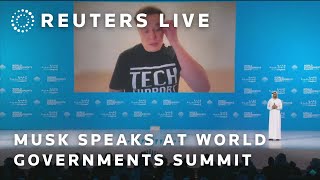 202535:15
 20254:24:46
 202536:51