2015年,英伟达的开发者大会上,黄仁勋把马斯克请上台。开场第一句话他就调侃:我从没见过谁走路这么慢。台下一片笑声。但接下来聊的内容,一点都不轻松。
马斯克几年前说过一句话,被媒体反复引用:人工智能可能比核武器更危险。他还打过一个更狠的比方,说发展 AI 就像在召唤恶魔。现在他坐在英伟达的场子里,身边全是做深度学习、做 GPU、做自动驾驶的人。黄仁勋没有绕弯子,直接把这个问题甩了出来:你怎么解释这个矛盾?你一边说 AI 是恶魔,一边又要靠它做自动驾驶。
马斯克的回答,把整场对话切成了两个世界。一个是他真正警惕的,另一个是他觉得没什么好担心的。
他警惕的是那种“说不清”的智能
马斯克先纠正了一个词。媒体引用的“比核武器更危险”,他原话里加了限定词:potentially,有可能。这个限定不改变他的立场,但他显然在意别人把他的话说得太满。
然后他划了一条线。自动驾驶属于“窄人工智能”(narrow AI),只干一件事,把车从 A 开到 B。这种 AI 他不担心。他甚至觉得它不难。
“我不认为我们需要担心自动驾驶汽车,那是窄形态的 AI,不属于我觉得很难的东西。把自动驾驶做到比人安全得多,比人们想象的要容易。”(马斯克)
他真正绷着神经的是另一种东西。他自己用的词是“深度智能”(deep intelligence)。窄 AI 只在一个封闭任务里超越人,深度智能是在开放世界里什么都能干,而且能自我迭代。这两者之间隔着一道鸿沟,他担心的是跨过鸿沟之后的事。
他在这场对话里说了一句耐人寻味的话:我们居然活在 AI 诞生的时代,这本身就挺奇怪。人类存在了十几万年,偏偏是这一代人赶上了通用智能的门槛。在他看来,这更像一件需要小心应对的事。他还加了一句,AI 可能有很多种“味道”(many potential flavors of AI),意思是它未必按人类设想的那条路长出来。
所以那个“矛盾”其实不矛盾。他反对的是失控的通用智能,支持的是被关在具体任务里的窄智能。自动驾驶正好落在后一个格子里,而且是最能救命的那个格子。
拿电梯讲明白的事,他觉得汽车也该这么简单
黄仁勋问,自动驾驶到底难在哪,台下的工程师都在等一个技术答案。马斯克给的是一个人人都见过的场景:电梯。
几十年前,电梯里有专门的 operator,一个活人站在里面,帮你按楼层、关电梯门。后来人们做了一套简单电路,电梯能自己到你这层,你按个按钮就行。没人再需要电梯操作员。现在的电梯还更聪明,它会预判哪层有人要用,提前把轿厢调过去。
马斯克说,汽车就是这个逻辑。你上车说一句“带我回家”,它就把你送回去,比人安全一个数量级。没有玄学,就是一套能被工程化解决的问题。
他甚至往前推了一步,说了一句当时听着像科幻的话:在不远的将来,人类开车可能会被立法禁止。理由很直接,你不能让一个人去驾驶一台两吨重的死亡机器。这句话后来被无数人引用,但在 2015 年的语境里,他是认真的。
这个判断背后有一串连锁推论。如果车真的不会撞,那车上那一堆为了“扛撞”而设计的东西就可以拆掉。现在车越来越重,塞满了各种吸能结构、安全气囊、加强钢梁,全是为了在碰撞里保住人。假如碰撞本身被消灭了,这些重量就都是浪费。车能变轻,能更省油,能更好开。黄仁勋顺着这个思路问:那是不是可以放松一些安全法规?马斯克说可以,但那是很久以后的事,因为路上会长期混着大量“旧车”,你没法一夜之间换掉。
二十亿辆车,二十年的替换周期
这场对话里最有信息量的一段,是马斯克给汽车工业算的账。很多人对技术革命的想象是“一夜普及”,他用数字把这个幻想按了下去。
全世界路上的轿车和卡车加起来,大约二十亿辆,而且还在增加。
全球汽车和卡车的年产能,大约一亿辆。
两个数字一除,结论就出来了。哪怕明天所有出厂的新车都变成自动驾驶,把现有的二十亿辆全部换掉,也需要二十年,前提是车队规模不变。如果自动驾驶让车的利用率变高、车队总量缩小,那也得十五年左右。
电动化是同一个道理。就算明天所有车都变成电动的,替换整个车队还是要二十年。而现实是,当时电动车占的比例还不到百分之一。
这段账的意义在于,它同时解释了乐观和悲观。乐观的一面是,方向一旦确定,产业会朝那个方向走几十年,谁都拦不住。悲观的一面是,你别指望它快。任何“明年就满街自动驾驶”的说法,都过不了这道算术题。
特斯拉的打法:先把硬件铺满,软件慢慢解锁
黄仁勋自己开的是 Model S P85D。他描述了自己车上的车道检测、限速牌识别,用的都是计算机视觉。他问马斯克:大家都是这么起步的,你的路线图跟别人有什么不一样?
马斯克的答案很“特斯拉”。他说,先把硬件基础打好,传感器和算力先堆上去,然后靠软件一次次更新,把硬件的能力一点点释放出来。这套打法能成立,靠的是特斯拉的车一直联网,所以能持续推送新版本。
他报了当时的硬件配置:360 度超声波传感器,探测距离五米多一点;一个前向摄像头;一个前向雷达。就这么一套东西。他的说法是,哪怕只用这套现有硬件,也能在自动驾驶上走出很远。高速上让车自己转向、自己变道,完全做得到。
车上已经在用的主动巡航,靠的是雷达和摄像头的融合(radar and camera fusion),盯着前车。接下来的更新会让它开始“读”前车的刹车灯,前车刹车灯一亮,它就提前预判。这些能力都来自软件迭代,没换过硬件。
黄仁勋补了一个细节,特别能说明这套打法的威力。最早那台特斯拉用的 Tegra 芯片,当时大家都觉得性能绰绰有余。结果两年不到,几轮软件更新下来,算力就不够用了。原因很简单,你想加的功能越来越多,而现在的功能大多是软件定义的。需求追着算力跑,硬件永远先被吃满。这也是英伟达的机会。
自动驾驶的难度,是一条两头低中间高的曲线
整场对话里技术含量最高的一段,是马斯克把自动驾驶的难度拆成了三段。这个拆法很朴素,却把问题说透了。
时速五到十英里,最简单。超声波传感器就能覆盖,发现前面有东西,刹住就行。这个速度下,刹车距离落在传感器范围内。原则也很简单:你为什么非要撞上去呢?
时速五十英里以上的高速,也简单。因为可能性变少了。大家都在同一方向、同一车道、相对规矩地开,变量不多。高速巡航是容易的。
最难的是中间那段,时速十到五十英里,复杂的郊区环境。这才是真正的战场。这里什么都可能发生:道路突然封闭,井盖被打开,小孩冲到路上,自行车横穿。变量是爆炸式的,而且每一种都要求车在瞬间做出正确判断。
所以真正的门槛出现在最混乱的城区:车要在那里认出眼前发生了什么,然后做出对的决定。让车在高速上跑直线,这件事早就不难了。这也解释了为什么需要更强的传感器组合和更大的算力,现有那套超声波加单摄像头单雷达,在城市复杂场景里的可靠性不够。
有意思的是马斯克对这件事的态度。他说,这听起来可能有点自满,但他几乎把自动驾驶看成一个“已解决的问题”(solved problem)。他的意思很清楚:路径已经完全清楚,剩下的只是走过去,需要几年。他的原话是,我们知道该做什么,几年后就会到那儿。
黄仁勋接了一句很妙的话:就像火星一样。这里有个背景,马斯克一直在推火星殖民计划。黄仁勋的意思是,在你脑子里,再离谱的事只要路径清楚,就都算“快解决了”。这大概就是创新者共同的思维方式:把不确定的问题拆成确定的步骤,然后一步步走。
监管这道关,用“影子模式”打赢
技术上能实现,不等于法律上能上路。黄仁勋问得很实在:法规今天不允许车自己开,这座桥怎么过?他还半开玩笑说,自己想边开车边处理邮件,但想合法地做这件事。
马斯克给了一个时间表和一个方法论。
时间表是:车明确比人安全之后,监管大概还要再等两到三年才会放行。因为监管机构不想只看到“和人一样安全”,他们要看到“安全得多”的大量统计证据。
方法论是“影子模式”(shadow mode)。车还是人开,但系统在后台默默记录:这个场景下,如果是电脑来开,它会怎么做,会不会撞,哪些是误报,哪些是漏报。跑出足够大的样本量之后,拿一份清清楚楚的统计论证去跟监管机构谈。他们消化一阵,观察一阵,最后会同意,因为证据会压倒一切。
马斯克还补了一句,其实证据现在已经相当压倒性了。高速上前车刹车灯亮了,你没撞上去,这类数据每天都在积累。
他对监管的态度不算对抗。他说在公共安全这件事上,谨慎是有道理的,先确认没问题再改规则,这个逻辑他认可。他也澄清了一个常见的误解:当时并不存在一套成熟的完全自动驾驶系统被监管卡着不让上路。那种“技术早就好了,是法规拖后腿”的说法在 2015 年并不成立。真正的全自动驾驶,还要几年才做得出来。
车变成软件平台,黑客这道题怎么解
黄仁勋抛出了最后一个、也是最让普通人不安的问题。车越来越像一台装了四个轮子的电脑,而电脑平台是会被人攻破的。安全怎么办?
马斯克的回答分了两层。
第一层,是当下的设计哲学。车上每一个系统,都假设它可能出机械故障,也可能出逻辑故障。所以刹车永远能被你的脚踩过,方向盘永远能被你的手扳过。人的物理介入是最后一道保险。这也是为什么现在还不算真正危险。
第二层,是真正的危险什么时候到来:等到车上没有方向盘、没有刹车踏板的那天。那时候人失去了物理兜底的能力,软件的安全等级就得顶上去。
他们真正花力气的方向,是防有人远程攻破任意一辆车,或者一批车。这种做法属于系统性风险,跟“有人拿到你的车搞破坏”完全是两回事,后者就像有人拿到你的电脑,能做的事很多,但影响范围有限。
思路是照着手机和笔记本电脑来的:让系统级的大规模入侵变得极其困难。他们会请第三方来攻击自己的系统,主动找漏洞。同时给关键部件加了一层独立的防护,比如驱动单元控制器、转向控制器,这些直接关系到物理安全的部件,安全等级比别的地方更高。
结果是分层的。就算黑客攻破了车载信息娱乐系统,最多在屏幕上显示一句奇怪的话,他没法顺着这条路去控制转向或者电机。娱乐归娱乐,性命归性命,中间是隔开的。
这场对话真正说清的事
回过头看,2015 年的这场对谈,很多判断后来被验证了,也有一些被现实修正。
被验证的是方向。特斯拉确实把“软件定义汽车”这条路走通了,OTA 更新成了行业标配,自动驾驶成了所有车厂的必答题。马斯克说的“硬件先铺满、软件慢慢解锁”,后来成了智能汽车的通用范式。
被修正的是时间表。他说自动驾驶是“已解决的问题”,几年就到。实际上从 2015 年到现在,完全无人驾驶的落地比任何人预期的都慢,中间那段“十到五十英里的复杂城区”,比想象中难啃得多。他低估的正是他自己划出来的那块最难的地方。
这场对话里最有价值的东西,在于马斯克拆问题的角度。
他把“AI 危不危险”拆成窄 AI 和深度智能,两个问题分开谈。他把“自动驾驶难不难”拆成低速、高速、中速三段,指出难点只在中间。他把“监管能不能过”拆成技术、证据、审批三步,用影子模式去攒证据。他把“车会不会被黑”拆成物理兜底和分层防护,先保住最要命的那部分。
这种拆法本身,比任何结论都更值得学。面对一个听起来吓人的大问题,先别急着站队,先把它切成几块,看清哪块真难,哪块其实不难。
给读者的几条可操作建议
- 遇到“某技术会毁灭人类”这类判断,先问一句:说的是哪种形态?窄 AI 和通用 AI 是两个问题,混在一起讨论只会让讨论失焦。
- 评估任何“改变世界”的技术,先算一遍存量替换周期。年产能和保有量一除,你就知道它最快能多快普及,这比任何发布会都靠谱。
- 看一个技术路线图,重点看它怎么处理“最难的那一段”。自动驾驶的中间速度区间、AI 的通用能力边界,真正的门槛都藏在被一笔带过的复杂场景里。
- 做产品时学“硬件先铺满、软件后解锁”这套打法。先把能力上限留足,再靠迭代一点点释放,比一开始就精确匹配需求更抗得住时间。
- 评估安全性,先分清“直接接触”和“远程大规模”两种威胁。前者防不住也不必全防,后者才是系统性风险,资源要压在这上面。
- 面对监管,别指望靠情怀过关。攒数据、做对照、给统计论证,用证据说话,比讲愿景有效得多。
0:00ladies and Gentlemen please welcome Tesla CEO founder Elon Musk you come on up I've never seen anybody walk this slow how are you you welcome welcome guys Elon Musk here now now you know we made it a point not to not to rehearse anything and so as I just want to just as a as a as a just reminder you're you're my last thing okay okay could you not ruin the whole thing all right all right so no speaking of that speaking of that I think everybody would like to before we get into all of the good stuff okay and they want to go directly to the juicy stuff okay okay and the juicy stuff is this look you know you were quote as a saying that that artificial intelligence
1:13is more dangerous than nuclear weapons I said potentially and and well it goes on it goes on and go you you say you say that it's like summoning the demon could be how do you consolidate rationalize the the that conflict between artificial intelligence of course deep learning that that obviously is going to be very important to self-driving cars how do you think through that well I I don't think we have to worry about autonomous cars because that's sort of like a narrow form of AI and in not something that I think is very difficult actually I think the to to do autonomous driving to a degree that's much safer than a person is much easier than people think yeah
1:58right and yeah I I I think it's going to just become normal like it' be like an elevator like no they used to have elevator operators and then we you know we developed some simple circuitry to have elevators just automatically come to the floor that you you're at and you can just press the button nobody needs to operate the elevator the car is just going to be like that and the elevators these days are even smart I mean it knows it knows where to position an elevator so so that if you were to need an elevator it's pretty close to you cars in the future will be pretty smart about that too yeah you'll be able to tell your car like take me home go
2:38here go there anything and it'll just do it yeah and an order of magnitude safer than a person MH and in fact in the in the distant future I think it's probably going to be people may Outlaw driving cars because it's too dangerous like you you can't have a person driving a two-ton death machine now if we if we have the right type of intelligence in a car we we also don't have to make the cars that heavy I would think you know cars are getting heavier and heavier and it's got more and more stuff in it because it needs to survive all these incredible collisions and things like that if I wonder if if we were to to to design cars that that just simply don't Collide as much I wonder
3:22if we could we could relax on some of those laws and and to make cars more fuel efficient and lighter and better to drive you could definitely do that if you could count on not not having an accident then you can get get rid of a huge amount of the crash structure and the airbags and it'll be we're a long way from that because there's always going to be some for a very long time there'll be some amount of Legacy cars on the road and and I think it is important to just appreciate the size of the automotive industrial base like it's not as though like when somebody makes an autonomous car that suddenly all the cars will be autonomous it's like there's two billion of them
4:00okay so the the total total number of cars and trucks on the road is is two billion in climbing the capacity of car and truck production is about 100 million a year so if tomorrow all cars were autonomous it would take 20 years to replace the fleet assuming the fleet stayed the same size arguably it could get smaller if things are autonomous but still it's and it's still you know maybe 15 years or something and it's not all going to transition immediately it'll take quite a while so I mean and it's the same for electrification of cars changing that industrial base to be electric I mean if if all cars were suddenly if all cars produce were electric tomorrow it would still take 20
4:44years to replace the the fleet and right now it's less than 1% so now you you you're you mentioned just now about about self-driving cars being easier than people think now you you have a your vision of of how to go from where we are today now my model my p85d has Lane detection and so it gets a little you know when I get close to a to a lane it detects the the the speed signs and it uses uses computer vision technology to do that and but and that's today's Adas what is your what is your road map you know how is that different than other people's road map how do you think about how to get to self driving cars yeah well you you kind of need the the the
5:28hardware Foundation to sort of sensor and Computing foundation and then you can keep uploading new software at least you can with a Tesla cuz it's it's always connected so the the car that you have you'll notice like it it's the features are steadily improving we now you know have active cruise control so it'll it'll use radar and Camera Fusion to track the car in front of you it's also looking at with the some of the things that are coming out it's it looks at the brake lights so it anticipates that the car's got the brake lights are active it's going to get basically smarter and smarter even with the current Hardware Suite so the current Hardware Suite is 360°
6:05ultrasonic sensors that go up to about just over 5 MERS it's a Ford camera and a Ford radar so we'll we'll make even with just just that sensor Suite we can actually make huge progress in autonomy we can certainly make the car steer itself on on a a freeway and you know do Lane changes it it's really autonomy is about what level of reliability and safety do you want
6:35even with the current sensus Suite we could make the cargo fully autonomous but only to but but not to a level of reliability that would be safe in say a complex Urban environment at 30 mph where the lane markings aren't there and children could be playing and things could be coming at you from the side so in order to solve that you need a a bigger sensor Suite and you need more computing power and I think what you're doing actually with the the ters in the future is super interesting and will really be a big enaa for autonomous driving so I think you know Nvidia is doing really great stuff on that front I appreciate that yeah and so some of the challenges that you see what
7:19are the what are some of the technological hurdles that and there's all kinds of researchers in the room there all kinds of engineers in the room what are some what are some of the technological hurdles that you think are really important for us to go tackle surely surely we're going to get to some better cruise controls on highways but beyond that what are some of the things that you would like us to go focus on the tackle for the car industry well it's it you know where it gets tricky is is just the is is that sort of urban environment around 30 or 40 miles an hour so so like right right now it's it's fairly easy to deal with say things that are sub 5
8:01to 10 m hour because we can do that do that with the Ultrasonics we just make sure it doesn't hit anything right you know because you can always which is the right thing to do largely why would you want to hit anything with your car exact so at at 5 to 10 miles hour you can stop within the range of the Ultrasonics and then then from let's say 10 m hour to you know call it sort of 50 m
8:25hour that that that that area in in complex Suburban environment that's that's where you can get a lot of unexpected things happening like let's say there's a like a road closure or a manhole cover open children playing is a big issue bicycles once you get about 50 mph and you're in kind of a freeway environment then it also gets easier again like the the the the set of possibilities is much reduced so like so high highway cruise is easy low speed is easy intermediate is hard and so being able to recognize what what you're seeing and make the right decision in in the Suburban environment in that 10 10 mph to 50 mph zone is is the challenging
9:13portion but but I really think like it's I mean I almost this may sound a little complacent but I almost view it as like a solved problem like we know exactly what to do and we'll be there in a few years M right just just like Mars but that's that's kind that's kind of the the the the the spirit of of innovators I mean in in a lot of ways in your mind you kind of you kind of see things solvable or arguably arguably solved and and a lot of it is is really about getting there yeah we'll take autonomous cause for granted in in quite a short period of time it's amazing how comfortable you get and how quickly you get comfortable with it so now what about
9:58government government policies like one of the things that I would like to do is I would I would just like to keep working on my email as I'm driving to work sure you know there's there's a 30 some people do that already like I said I would like to do it without without without breaking the law so so where where where do you where
10:21do you think government intervention Falls in in some of this stuff because you know obviously if you car drives by itself and it does it even better than people M you would like it to drive by itself but largely the laws don't allow you to do that today right absolutely so how do we cross that bridge and and and how do you think about government intervention regulations right so I think it'll be from the point at which a car is definitely safer than a person
10:48there's probably at least another two or three years after that before Regulators will allow that to be the case because they all want to see a large amount of statistical proof that it's not merely as safe as a person but much safer MH so I think what you can do is you can run run it in Shadow mode and essentially say okay this is this is what the computer would have done in all these circumstances and was there a crash or was there not like what are the false positives F false negatives and
11:17then you know achieve a large population group and then and then make a really clear statistical argument with the regulators and then they're going to digest that observe it for a while see if agree with it and and then I think they will because the evidence will be overwhelming yeah and the evidence is actually already quite overwhelming that if you if you if you would have would have noticed a brake light in front of you in the highway and you didn't you didn't crash into a rearend Collision right a lot of lies are safe you know ideally ideally hopefully people don't don't overreact with this with this unknown technology and and prematurely regulate no Prem
11:59regulations if you well I mean regul I think when it comes to Public Safety I think there's there's an argument for being you know quite cautious and and making sure that things are okay before before there's a change and I mean and I don't think it's the case that right now there's a fully autonomous system and Regulators are not approving it that that that really be a substitute for people but there will be in a few years M now as we get more computerized technology into these cars and this car becomes really a softwar defined car I mean a lot of your engineers are software Engineers I mean that's one one of the great things about Tesla you guys right here in in Silicon
12:44Valley you're rich with software engineers and and you have that youve that computer sensibility about architecting a computer properly designing the software properly designing the software for many generations of cars so it refines and gets better and better and it has been getting better I mean the software from the first time you sent me my Tesla to the now it's just like it's unrecognizable software right big improvements I that's why the first thing we try to do is establish the the hardware platform make sure that we have the the sensors and compute power and and so we do that first even though the software is only taking advantage of a
13:20small percentage of the sensors and computer power and then we we do continuous updates to make the car more and more capable and we're going to see a lot of that happen later this year if I didn't have an announcement on Thursday morning I would be saying a lot more but yeah the audience doesn't understand why they have to wait until Thursday morning you tweeted it already you you're announcing you're going to do an otaa what kind of announcement is that I'm going to do an otaa on on Thursday that's like a new product announcement these days it's just it's just that well it's just saying that there's going to be a call on Thursday morning and I
13:57describe what's it's going to be in version 6.2 for anyone who's interested that's so awesome though I'm interested I I get excited every time I get an OTA and and it's you know one of the things that was really interesting is in the beginning when we first built the first Tesla together the Tegra in it we thought was more than enough and recently you said can we just squeeze more performance out of that platform and it just happened in literally 2 years you know several versions of your software updates all of a sudden the Computing platform is not powerful enough right and and it's because you want to add more features and a lot of features these days are
14:33based on software true yeah and so so what one last question and it's it has to do with I guess something that that a lot of people are very concerned about which is your car becomes a software platform and software platforms get hacked how do you think about that how do you think about security and what are some of the things that we could do to try to make make make the car more resilient to to security attacks yeah I think that that becomes really important when the cars are fully autonomous I mean the way the cars work right now every system in the car it's assumed could actually have a mechanical failure of some kind or or a logic failure a fundamental
15:11logic failure so you can always overwhelm the the the braking of the car with your foot and you can overwhelm the steering wheel with your hands so but but when when there isn't a steering wheel or there isn't you know brake pedal or something like you know many years from now then it's really the really dangerous you know because but even as it is right now where we spend most of our time on is making sure that it's it's very difficult to do a multi-car hack like if you have direct access to a car just like if you got direct access to a computer or or even a conventional car you can do a lot of things to it but but that that's less of a concern than somebody being able to
15:51hack an arbitrary car or multiple cars so that's what we we focus our energy on is making sure that that in that way it's it's it's a lot like a like a cell phone or or a laptop you know you focus on making sure that they they can't or that it's very difficult for there to be any kind of systemwide hack so we put a lot of effort into that and we have third parties try to attack it and and and then certain parts of the the car at at the very fundamental level like the Drive Unit controller or the steering controller have an additional level of security MH mhm so somebody able to you know H hack something that's cosmetic but it's much harder to hack something that's that's actually
16:37physically dangerous there's multiple levels of security and so this way if you if you were to able to penetrate maybe the infotainment system it doesn't allow you quickly as a result of that right right I it may display a funny message or something but it would not you would not be able to then control the steering or the the motor yeah well the future of cars is so exciting and the work that you guys are doing are so exciting and it's it's it's great to see you guys pioneering these computerized cars I mean a lot of people think about think about Tesla as the electric car and I but I think it's obviously more than that it's an electric car but it's it's
17:11a whole computer platform on top of that yeah I think I think Tesla's I mean Tesla is sort of the leader in electric cars but I think will also sort of be the leader in autonomous cars at least autonomous cars that people can buy and and so we're I mean if there's anybody's interested in working on autonomous cars we'd love to have you work at Tesla by the [Laughter] way so we're going to put a lot of effort into Automotive autonomous driving because it's just going to be the the default thing yeah and it could save a lot of lives yeah so save a lot of lives and hopefully hopefully one of these days I it would be nice if Nvidia campus has no parking lot yeah
17:49right that it drops us off and it meanders off to a place where the the land's a little cheaper and you know and Parks a whole bunch of cars there and and when it's time to go home we summ it to come it it will be extremely transformative that's for sure but yeah I mean when it comes to AI I'm not really worried about sort of narrow narrow AI like like autonomous cars or like you know a a smart air conditioning unit at at the house or something it's more like sort of the deep intelligence stuff that is where we need to be cautious I actually think there's many potential flavors of AI and you know it's odd that we're at we're so close to the Advent of AI like it's
18:30seems strange that we would be alive in this in this time well come back every year come back every year and you'll see the the work that this this group is going to do I mean there's so much deep learning work being done here you you have a lot of Engineers here as well and I they're they're it's fantastic to see the the the whole Community focused on advancing this field and along the way we're going to spin off a whole bunch of new capabilities as you know that's going to make cars just safer and more fun to drive long before we have to get get to to essentially a self-driving car there's going to be a lot of versions along the way that's just going to bring
19:04joy to a lot of people yeah absolutely I just hope there's something left for us humans to do well I'm not going to let let go of my steering wheel you know I've got mine on on the crazy mode and the sports steing mode is that the way you have it how do you you get driven to work now no no I well I I drive half the time actually and which mode do you have it in I always have it in insane mode yeah all right all right you thank you all [Applause]
19:35[Music] right the Eng the engineer of Engineers Elon Musk
资源与出处
- 视频在 YouTube 收看
- 档案silicon-valley.tech 档案页本页视频与文稿数据来自 Elon Musk Archive
- 精读本篇精读 Markdown 版
相关视频
同频道、同主题或相邻年份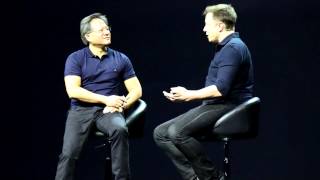 201511:03
 202530:06
 20251:25:46