2016 年 10 月那场发布会上,马斯克上台后先讲了一段电动车的旧账。
早年那些电动车,样子难看,续航很短,性能也差,基本上就是一台加了外壳的高尔夫球车。买它的人得先克服很大的心理障碍,开出去还得跟人解释为什么买这么个东西。
太阳能板当时的状态几乎一模一样。转换效率年年涨,成本年年降,可装上屋顶就像贴了一块补丁。房主装完不太愿意让人看见,更不会主动招呼别人来看。
这段开场把整场发布会的判断标准定下来了:一项能源技术能不能大规模铺开,既要算清物理上的账,也要过心理上那一关。马斯克在台上反复说的一句话是,要让太阳能板变得像今天的电动车一样有吸引力。
然后他指着身后那几栋房子说,你们看到的这些房子,屋顶全是太阳能的。
电动车当过高尔夫球车,太阳能板还站在那个位置
现场摆了几栋改造过的独栋住宅,从外面看是四种不同风格的屋顶:粗陶质感的、法式石板的、现代平滑的、托斯卡纳橙色的。台下的人看过去,分辨不出哪一块是太阳能瓦,哪一块是普通瓦。
整场发布的核心命题就落在这四条标准上:太阳能屋顶要比普通屋顶更好看,寿命更长,隔热更好,安装成本要低于一块普通屋顶加上未来几十年电费的总和。
最后一条是整个论证里容易被忽略的地方,也是最要紧的地方。
房主换屋顶,本来就要花一笔钱。这笔钱装不装太阳能都得花出去。所以真正要比的账,是太阳能屋顶的安装价,和普通屋顶安装价加同期电网电费的总和。前者更低,后面就只剩一个问题:你为什么要买别的?
这句话马斯克在台上问了两遍。一半是商业上的反问,一半是工程上的目标函数。所有设计决策最后都要回到这个不等式上。
台上放的第一张幻灯片是一张 NASA 的二氧化碳浓度曲线。马斯克说,我们正在垂直爬升,全球变暖已经是一场严重的气候危机,能做的一切都要做,去加快向可持续能源的转换。
特斯拉的完整目标,写在每一场发布会里
很多人把特斯拉当成一家电动车公司。马斯克在台上纠正了这个印象。
世界上并不缺汽车公司,好的汽油车公司有很多。缺的是好的电动车,那才是当时真正需要的东西。(埃隆·马斯克)
这句话解释了特斯拉为什么先做车。车并非终点,它只是那个时间点上最缺的一环。先把车做到让人愿意买、愿意开、愿意推荐,电动车才有资格谈普及。
现在轮到屋顶。
马斯克给出的完整方案是三件东西的组合:一块足够好看的太阳能屋顶,一套家庭储能电池,一台电动车。三样凑齐,一个家庭的能源问题基本闭环,而且这套组合可以复制到全世界。
他在台上强调,方案一点也不复杂。太阳白天照,晚上不照,这是物理常识。所以你既需要发电,也需要存电。白天屋顶把电发出来,一部分自己用,多余的充进电池;傍晚和夜里,家里用电从电池走。就这样。
发布会进行的那一刻正好是黄昏。马斯克顺势说了一句:我们此刻正处在过渡点上,房子正从屋顶供电切换到电池供电。这个时间点多半是巧合,但它把整套逻辑演示得非常具体,观众坐在台下,看的正是这套切换在真实时间里的发生。
他还专门提了一句,家庭储能的价值不止在省钱。屋顶发电、电池储电、车子用电,这三样东西连起来,一户人家对电网的依赖就降到了很低的水平。电网出问题的时候,冰箱和灯还能亮着。
太阳晚上不照,所以电池是必需品
第二代家用电池 Powerwall 2 是这场发布会的主角之一。
参数是这样:14 千瓦时(kWh)的储能容量,7 千瓦(kW)的功率输出。相比第一代,能量翻了一倍,功率提升超过一倍。
马斯克给了一个换算:一台 Powerwall 2 能撑住一套四居室的冰箱、插座和照明一整天。如果屋顶装了太阳能,这个支撑可以无限期持续下去,只要太阳还在照。
这里有个细节容易略过。功率提升的幅度比容量更大,从第一代的三点几千瓦级别到 7 千瓦,翻了一倍还多。容量决定你能用多久,功率决定你同时能开多少东西。家庭的用电峰值往往出现在傍晚,空调、电热水器、微波炉、吹风机一起开着,瞬时功率会远高于平均值。功率不够,容量再大也带不动。两个数字必须一起看。
商用侧的产品叫 Powerpack 2,单机容量 210 千瓦时,功率输出 50 千瓦,可以无限并联扩展,做到任何规模。家用和商用共用一套电芯和一套控制逻辑,差别只在堆多少组、配多大的逆变器。
马斯克现场报了两个正在推进的项目。一个与南加州爱迪生公司(Southern California Edison)合作,80 兆瓦时(MWh)的电池阵列正在建设中,是当时全球最大的公用事业级电池安装。另一个是当年早些时候宣布的夏威夷项目,52 兆瓦时。他说,后面这类项目会越来越多。
从一台家用电池的 14 千瓦时,到一座电站的 80 兆瓦时,规模差了几千倍。同一套电化学技术,从一户人家的车库墙,一路铺到变电站旁边。
分布式和公用事业,两边都在长
发布会里有一段判断值得单独拎出来。
太阳能行业里有一种流行叙事,把屋顶光伏说成是对公用事业的替代,甚至是颠覆。马斯克明确否定了这个框架。
他的推论是这样:如果要把全部能源都转成电力,需要的总电量大约会是现在的三倍。交通占三分之一,供暖占三分之一,剩下三分之一才是今天已经在用的电。三者相加,电网总负荷翻三倍。
如果你把所有的能源都转向电力,需要的电量大约变成三倍。交通占三分之一,供暖占三分之一,剩下三分之一是我们现在已经在用的电。所以公用事业和分布式发电的未来都很光明。(埃隆·马斯克)
负荷翻三倍,只靠屋顶撑不住。马斯克的估算是,未来的电力结构大致是三分之一来自分布式本地发电,三分之二来自公用事业级电站。
这个判断的分量在于,它把能源转型重新定义成了一个增量游戏,跟存量争夺无关。
总盘子只涨一点的时候,分布式多发一度电,集中式就少发一度电,两边必然对立。总盘子涨三倍的时候,分布式从几乎为零涨到三分之一,集中式从现在的全部涨到未来的三分之二,双方的绝对发电量都在涨。屋顶铺得越多,电网需要调度的电量也越大,储能、调峰、跨区输电的需求跟着起来。
站在 2016 年看,这个判断乐观,也务实。它解释了特斯拉为什么同时做家用电池和公用事业电池:两块业务并非两条战线,它们构成同一个方程的两半。屋顶铺得越多,电网侧的储能需求越大;电网越稳定,屋顶并网的门槛越低。
四种屋顶,每一种都在解一道美学题
发布会的重头是屋顶本身。现场演示了四种风格,每一种的技术路线都不一样。
第一种是纹理玻璃瓦。粗陶质感,表面有起伏。凑近看,玻璃后面能隐约看到太阳能电池片的轮廓。难点在于,既要保留纹理的立体感,又不能把太多光挡在电池外面。最后的效果是:离远看是一块普通瓦,走近了才看出端倪。
第二种是法式石板瓦。马斯克说这是最难做的一种,法式石板被公认是屋顶里最好的一类,坡度、厚度、边缘切割都有讲究。特斯拉用的是水转印工艺(hydrographic printing),每一片瓦在转印过程中形成的纹理都是随机的。
这件事的意义不在工艺本身,在结果:任意两个装了同款瓦的屋顶,看起来都会不同。传统石板瓦的价值有一部分就来自天然石材的不均匀,水转印把这个特性搬到了量产件上,绕开了批量生产那种整齐划一的塑料感。
第三种是现代平滑瓦。这个做法最巧妙。瓦片表面覆了一层带微透镜(micro-louvers)结构的薄膜,视角一变,透光性跟着变。
从街道上看,或者从房子周围任何一个低角度看,这层膜完全不透明,就是一块实心的深色瓦。从太阳的方位往上看,薄膜变透明,光能打到下面的电池上。马斯克在台上转了视角演示这个切换,效果很明显。
第四种是托斯卡纳玻璃瓦。现场放了两版方案,深色瓦和浅色瓦交错铺设,深色的那些里面藏着太阳能电池。太阳角度高的时候能看见电池;视角压到接近水平,瓦面就回到一种偏橙的陶土色。
四种瓦对应美国住宅市场里最主流的四种建筑风格。特斯拉没有发明一种新屋顶,它把已经存在的四种屋顶改成了能发电的版本。这个选择在商业上很克制,也很聪明:房主不需要接受一种陌生的美学,只需要接受自己本来就喜欢的风格里,多了一个能发电的选项。
一块玻璃瓦砸下去,碎的是水泥瓦
外观讲完,马斯克放了一段对比视频。
重物分别砸向一块传统屋顶瓦和一块太阳能玻璃瓦。传统瓦碎了,玻璃瓦没事。
这段演示要说明的是,玻璃在这里同时干了两件事:透光,承力。传统瓦靠烧结的黏土或水泥受力,脆,怕冲击,怕冻融。玻璃的强度可以做得比它高得多,表面致密,不吸水,不老化。
马斯克列的四条标准里,寿命和隔热占了两条。玻璃瓦能做得更耐用,中间的空气层和背板能带来额外的隔热。屋顶隔热省下来的空调和采暖开支,本身就进了成本对比那一栏,跟省下的电费叠加在一起。
把几条合起来看:更好看、更耐用、隔热更好、安装成本低于普通屋顶加电费。四项同时成立,才有那句"你为什么要买别的"。
让邻居来看你的屋顶
马斯克在台上说了一段跟工程无关的话,可能是整场发布会最重要的一段。
人们真的很在意自己的房子,他们爱自己的家,希望它变得更好。所以真正的抓手是让太阳能变成一件让人想要的东西。如果你装了太阳能屋顶,你会很骄傲地把它放在房子最显眼的位置,你会叫邻居过来看。(埃隆·马斯克)
他还补了一句:这话不太常听到。
确实不常听到。太阳能行业过去十几年的营销语言,基本围绕省钱、环保、补贴三个词转。省钱是被动动机,环保是道德动机,补贴是政策变量。三个都不回答一个问题:为什么这块东西值得出现在你家门面上。
屋顶是房子最显眼的表面。任何装在屋顶上的东西,都在参与房主对外的自我表达。产品让人想藏起来,市场就只能靠省钱的账慢慢推,一户一户磨。产品让人想展示,市场就多了一个传播引擎,而且是免费的。
马斯克给了一组市场数据。美国每年有 400 万到 500 万个新屋顶,全球这个数字大约是美国的 20 倍,也就是八千万到一亿个。
他把市场切成两块。一块是新建或者换屋顶,这时候太阳能瓦是自然选择,屋顶本来就要花钱,边际成本最低。另一块是屋顶还新,那就加装传统太阳能板。两块市场的产品、渠道、报价方式都不同,第一块的规模足够大,值得为它专门做一套产品。
更长远的变化发生在社区层面。人们大约每二三十年换一次屋顶。时间推移,一户接一户换,整条街都是太阳能房。马斯克的说法是,在这样的社区里,美学反而会变好。你环顾四周,看到的就是你希望发生的那个未来。
这种扩散带着典型的网络效应特征,驱动力却是视觉上的,跟功能无关。邻居装了,你看见好看,换屋顶的时候就会想起它。整个过程不需要说服,只需要一条街被看见。
发布会最后,马斯克说,这就是我们要去的方向,希望你们同意这是我们想要的未来。台下一片欢呼。
这套框架今天还能用
回到 2016 年看,这场发布会给出的判断很清楚:太阳能普及的瓶颈已经从发电成本挪到了别处,挪到了屋顶好不好看、装上去划不划算、房主愿不愿意主动展示。这三件事决定了太阳能能不能从补贴驱动的小众选择,变成换屋顶时的默认选项。
后来的事实是,Solar Roof 的量产比预期慢得多,成本也远高于发布会上给出的口径,这条产品线走了好几年才真正铺开。那个判断本身没有错:一项能源技术走进千家万户,光有效率曲线不够,还得有让人愿意抬头看的外观,和一笔算得过来的总账。
发布会给出的最实用的东西,是那套成本对比的口径,和判断一套能源方案是否完整的框架。下面几条可以直接拿去用。
- 算屋顶账的时候,把换屋顶本身的钱算进去。正确口径是太阳能屋顶的安装总价,对比普通屋顶安装价加未来二十到三十年电网电费的总和。任何只讲度电成本、不讲屋顶替换成本的分析,都会高估太阳能方案的实际支出。
- 配储能按关键负载算,不按全屋峰值算。冰箱、照明、插座、网络设备,撑住一天的容量大约十到十五千瓦时起步。同时要盯住功率参数,空调和电热水器同时启动的瞬时功率,往往比容量更早成为瓶颈。
- 功率和容量分开评估,做工商业项目时尤其如此。调频、削峰、备电对这两个参数的要求完全不同。只看兆瓦时容量去投储能,很容易买到一套带不动负载的电池。
- 抓住屋顶施工的窗口期。新建、翻修、换瓦这三个时点,光伏的安装成本可以和屋顶工程合并,边际成本最低。屋顶还很新的时候硬装,等于白扔一次施工费。
- 评估建材型光伏产品,先看耐久性测试,再看转换效率。抗冲击、抗冻融、防火等级、防水年限,这些决定了它能不能真的替代一块瓦。效率再高,撑不住二十年冰雹,账也是不划算的。
- 把分布式和集中式放进同一个增量框架里思考。全电动化会把总用电量推高三倍左右,两边的绝对规模都会增长。做能源规划时把它们当成互补的两块,比当成互相替代的两块,更容易算出可行的方案。
0:08Hey everybody My name is London arrive on the CEO of Solar City. I'm very excited about the products we're gonna be announcing today The products you'll see is a joint collaboration between Solar City and Tesla I want to thank the team for really putting this together and such a certain amount of time really appreciate their help and getting this done
0:28But to really understand the vision it's welcome Elon Musk Yeah, no fuzzy Jack at this time So I was sort of by just talking about the reason why we're doing this, which is, as you may have read, we're reaching records CO2 levels. Global warming is becoming a serious crisis, and we need to do something about that. But just like with electric cars, where electric cars
1:18electric cars originally, they didn't look good. They had low range. They didn't have good performance. They were like a golf cart. And some people had a real hard time buying electric cars. And I think something similar needs to happen to solar. We really need to make solar panels as appealing as electric cars have become.
1:40And the interesting thing is that the houses you see around you are all solar houses. I don't know if you know that. Or if you did you notice? Yeah. Yeah. Yeah. So we're talking in detail about each of them. But the goal is to make, have electric solar roofs that look better than normal roof,
2:06generate electricity, have lasts longer, have better insulation, and actually have a cost, an installed cost that is less than a normal roof plus the cost of electricity. And then why would you buy anything else? So let's get into the details here. So obviously, you saw the chart there probably familiar with
2:29that chart that came from NASA about how we're in vertical climb on CO2 levels. And we need to do everything we possibly can to accelerate the transition to sustainable energy. Save a sea lawn. So the goal of Tesla, people sometimes think of Tesla as an electric car company, but really
2:52the whole purpose of Tesla was to accelerate the advent of sustainable energy. It's not like there was a shortage of car companies in the world, there were plenty of good gasoline car companies, but there weren't good electric cars. That's really what was needed. So there are really three parts to the solution.
3:13So we go to what is the future that we want? It consists of a really appealing solar roof. Then combined that with storage and with electric cars. So it's an obvious three-part solution. Yeah, three-part solution. It's really not that complicated. Now, you need battery packs because the sun does not shine at night.
3:44And the point that we're at right now is in fact, obviously, a transition. We're transitioning from day to tonight, it's dusk. And so what's happening is that the houses are transitioning from the roof generating power to the battery pack, the power wall, producing power. So during the day, you fill up the battery, and then at night, and in dusk and dawn, you use the battery.
4:14It's pretty straightforward, really. It's like, not that complicated. You just need both. But if you have a great solar roof, and you have a battery affecting your house, and you have an electric car, that's something that scales worldwide. That you can solve the whole energy equation with that.
4:37So yeah. Obviously, next slide, please. So we'd like to introduce the power wall too. This is a big step above the power wall one. It has twice as much energy, more than twice as much power. So it's a 14 kilowatt hour energy storage, 7 kilowatt power output. And just to put that in basic terms, you can take a four-bedroom house And you can have, you can power your fridge, the sockets and lights for a day.
5:16And if you have solar on your house, you can power it indefinitely. So that's just with one. And then on the utility side, we've got the power pack two, which similarly doubles the energy. So it's a 10 kilowatt hour capability, 50 kilowatt power output. And this can scale to unlimited size.
5:46So it's, in fact, we've recently announced the biggest utility battery installation in the world, which is going to be with Southern California Edison. Let's go to the next slide. So we have an 80 megawatt hour battery installation that's being built right now. And then we announced one earlier this year, which is for utility in Hawaii doing 52 megawatt hours, you can see a lot more of these announced over time.
6:21And I think it's important to, I sure people appreciate that the solution is both local power generation and utility power generation. It's not one or the other. Sometimes the solar roof is positioned as a sort of a competitor to utilities, but we're actually gonna need utility power to increase,
6:43And we're going to need local power generation, because if you transition all energy to electric, that roughly triples the amount of electricity that's needed. So you need about a third for transport, about a third for heating, and about a third for what we currently use as electricity.
7:01So the future is bright for utilities and for local power generation. I would expect it to be roughly a third local power generation, roughly two-thirds utility. So it's, I think, a very bright future for utilities and for rooftop. So let's take a look at some of these roofs. As I mentioned earlier, what we're really looking for here is how do we have a solar roof that
7:28is better than a normal roof? That looks better, lasts longer, has better insulating effect, and where the cost of roof plus electricity is less than that of a normal roof. Now this is sort of the integrated future. You've got a electric car, a power wall, and a solar roof. And the key is that it needs to be beautiful, affordable, and seamlessly integrated.
8:01And then if all those things are true, why would you go any other direction? So yeah. So we're going to show you this is the before shot of that house over there. So that's what it looked like before. Now that's all solar. Yeah. I think we've got some close-up shots that we can show.
8:40And if you look carefully, you can actually see the solar cells behind the glass. So this is a textured glass tile. If you look carefully, you can see the solar cells. Yeah, you can see that. So we have a malfunction on the LED. So take a look at the next house. That house is also solar.
9:16And that's sort of a style of a French slate, which is one of the hardest things to do. It's considered one of the best roofs you can possibly do is a conventional roof. So he said, well, can we make a French-late roof that's solo that looks as good or better than a conventional French-late roof?
9:37And we're able to do that as well. That's done with hydrographic printing. So each tile is unique. So the production process itself makes each tile special unique, a special flake tile. But the nice thing is that no two roofs will be the same. So it's not just cookie cutter. You can take any two roofs like that and they will look different because they are different.
10:15This is what the French-led hydrographic looks like. Let's see that.
10:33And then the third house is really transformative. Because believe it or not, that's what it looked like before. So we changed the roof and it's like, whoa, put that roof on, we've got to change the house too. So that tile is more of a modern look.
11:11And here you can really see as the angle changes that you can see the solar cells. So here we put a film with micro-lubers on it so that as the angle changes, it goes from transparent to opaque. So from the vantage point of the street or anywhere near the house, it looks completely
11:35opaque. But from the sun, it's transparent. And then probably the most surprising one is the Tuscan glass. So this is also solar panels. We put two versions of the Tuscan glass approach. All of the dark tiles have solar panels. So we interleave dark and light. And then the dark ones are the ones with solar panels.
12:35Again, you can see that the transparency changes quite a bit. So from the sun's vantage point, which tends to be high angle, you can see the solar cells. But as you change the angle to a shallow angle, it reverts to sort of an orangey color.
13:05So one of the other advantages of glass is that we can actually make it a lot tougher and last lot longer than a conventional roof. So just as a demonstration video, I'll show you what happens if you drop a big weight on a conventional roof tile and one of our glass tiles. So the solar roof went just, we wanted to look better,
13:41last longer, provide better installation, and cost less, all things considered, than a conventional roof. The solar is a huge market for the current solar systems, because if you're building a new house, or you're redoing a roof, then this is the way to go. But if you have a new roof, then you'd want to put solar panels on that roof.
14:05So there's two very distinct markets. And there's about four to five million new roofs in the US every year. And I think 20 times that number are worldwide. So you can imagine over time, as people replace their roofs with solar roofs, that the whole neighborhood, everyone would have solar.
14:25Like, why wouldn't you? Over time, every house would become a solar house. And it's a neighborhood where the aesthetics actually get better. So where you look around your neighborhood and that's what you want to have happen. So the key is really to make solar something desirable where if you install a solar roof
14:50in your house, you're really proud that you want to put it on the most prominent part of the house. You want to call your neighbors over and say check out the sweet roof. It's It's like not a phrase that you hear often. But that's the key to it. People really care about their homes.
15:09They love their homes. And they really want them to be better. And I think taking this approach, it can be. So that's where we're headed. And I hope you agree that's the future we want. Woo!
全球变暖正在成为一场严重危机,我们必须对此采取行动。
Global warming is becoming a serious crisis, and we need to do something about that.
我们真的需要让太阳能板像电动汽车一样有吸引力。
We really need to make solar panels as appealing as electric cars have become.
所以,特斯拉的目标——人们有时把特斯拉看作一家电动汽车公司,但特斯拉的真正目的是加速可持续能源的到来。
So the goal of Tesla, people sometimes think of Tesla as an electric car company, but really the whole purpose of Tesla was to accelerate the advent of sustainable energy.
现在,你需要电池组,因为太阳在夜里不会发光。
Now, you need battery packs because the sun does not shine at night.
所以我们要介绍 Powerwall 2。这是比 Powerwall 1 迈进的一大步。它的能量是两倍,功率是两倍多。
So we'd like to introduce the power wall too. This is a big step above the power wall one. It has twice as much energy, more than twice as much power.
所以你需要大约三分之一用于交通,大约三分之一用于供暖,大约三分之一用于我们目前当作电力使用的部分。
So you need about a third for transport, about a third for heating, and about a third for what we currently use as electricity.
所以玻璃的另一个优势是,我们实际上可以让它坚固得多,并且比传统屋顶耐用得多。
So one of the other advantages of glass is that we can actually make it a lot tougher and last lot longer than a conventional roof.
而且美国每年大约有四五百万个新屋顶。我认为全球的数量是这个数字的 20 倍。
And there's about four to five million new roofs in the US every year. And I think 20 times that number are worldwide.
随着时间推移,每座房子都会变成太阳能房子。
Over time, every house would become a solar house.
你会想把邻居叫过来,说看看这漂亮的屋顶。
You want to call your neighbors over and say check out the sweet roof.
资源与出处
- 视频在 YouTube 收看
- 视频在 B 站收看UP 主「瀟湘亱雨」搬运
- 视频原始视频文件
- 档案silicon-valley.tech 档案页本页视频与文稿数据来自 Elon Musk Archive
- 精读本篇精读 Markdown 版
相关视频
同频道、同主题或相邻年份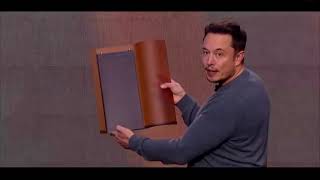 201624:34
 201622:44
 201413:48