世界上最快的隧道掘进机,比一只蜗牛慢14倍。
2019年,The Boring Company 在洛杉矶霍桑办了一场活动。马斯克站在一个直径不大的竖井旁边,开口就抛出这个对比。台下的人当晚可以坐车穿过这条隧道,他也先把体验说清楚了:有点颠,边缘还没打磨好,换上更好的铺路机之后会像玻璃一样顺滑。
隧道挖在洛杉矶。地震带、地下有石油和天然气、土壤砂石混杂、监管机构多到数不清。马斯克的说法是:能在洛杉矶挖隧道,就能在任何地方挖隧道。 他把这座城市叫作隧道工程的百老汇。
整场活动信息量很大,落到最后其实就两个问题。堵车怎么解。以及一个更少被问的问题:为什么修隧道这件事,一百年来几乎没进步。
堵车从第七层地狱变成第八层地狱
马斯克在洛杉矶住了16年。他对堵车的描述没有半点修饰:
“交通是灵魂毁灭级的,就像酸液腐蚀你的鞋底,太可怕了。我们一定要让它消失。我在洛杉矶住了16年,这里的交通从第七层地狱变成了第八层地狱。”(马斯克)
这种话听起来像情绪,其实是他整个论证的起点。因为接下来他给出的解释,跟管理好坏、红绿灯配时、限行政策全都没关系。
三维建筑配二维路网,堵车是算出来的
城市里的建筑是三维的,几十层上百层,所有人还想在同一时间进出。可给这些人用的道路网络是二维的。
三维的楼配上二维的路,堵车就是数学上必然的结果。 你不改这个前提,光在二维平面上做优化,怎么调都是在挪疼痛的位置。
那就只剩一条路:让交通本身变成三维。上天,或者入地。
飞行汽车是带轮子的直升机
每次聊未来交通,飞行汽车都会被端出来。马斯克的判断很干脆,它就是一辆带轮子的直升机。
三个绕不过去的缺点。噪音大,旋翼产生的风力在城市里根本藏不住。风险高,天上一堆飞行汽车,突然掉到你头上的概率比没有它们的时候高得多。怕天气,下雪下雨刮飓风,你哪儿也去不了。
隧道把这些缺点全绕开了。往地下挖的深度几乎没有限制,而且隧道对天气完全免疫。地面上是龙卷风还是冰暴,跟你没关系,你在地下是安全的。
还有一个容易被忽略的好处:施工几乎无感。他讲了个具体的故事。这条示范隧道的入口,基本就在某户人家的后院里。掘进机从另一侧破土而出的时候,那户人家的邻居正在看电视,连电视都没停。
对比一下地面修高架或者修快速路,它会把社区切成两半。隧道可以织进城市的肌理里,不改变社区的性格,不挡谁的视线,不占谁的窗景。城市还是那座城市,只是地下多了一套交通系统。
每英里十亿美元,一年挖一英里
既然这么好,为什么没人挖?因为传统隧道贵得离谱,慢得离谱。
他给的数据:一般隧道每英里要挖三到六个月,某些情况下一年才挖一英里。造价最高可以到每英里10亿美元。例子有两个。洛杉矶刚完工的地铁延长线,2.5英里花了20亿美元。纽约有一条地铁延长线,1英里20亿美元。
然后他放出了那个著名的对比:现在世界上最快的隧道掘进机,速度是蜗牛的十四分之一。
他现场请出了一只蜗牛,叫 Gary the Sixth(加里六世)。他说蜗牛活不了太久,这已经是第六代了。而公司的目标说穿了很朴素:比蜗牛快就行。
“我们讲的不是《沙丘》里那种沙虫,”马斯克说,“它还是很慢,只是跟蜗牛一样快,你能逃得掉。”
一小时里只有十分钟在真正挖土
The Boring Company 真正下场之后,才搞清楚慢在哪里。答案让人意外。
一个小时的掘进时间里,只有大约10分钟是真正在挖土。剩下50分钟,都花在拼装隧道支撑管片、铺设轨道、处理后勤和各种杂事上。
这个发现改变了整个思路。只把管片拼装自动化,再把后勤物流理顺,掘进速度就能提升大约五倍。马斯克说,这些事拆开看,没有一项需要诺贝尔奖级别的突破,都是难但可解的工程问题。
第二件事是同步作业。传统掘进机挖一段、停、做加固、再挖、再停。如果让掘进和内部加固同时进行,又是一层叠加的提速。
第三件事更直接:他们把钻头功率提到了三倍。
这几项乘在一起,对比现有最先进的掘进机,理论上的净速度提升大约十五倍。再加上重新设计的刀盘、连续出渣系统、双车道代替单车道,他们对15倍这个数字很有信心,能实现它的机器已经在造。
把挖出来的土做成砖卖掉
提速只是一半,另一半是降成本。这里有几个听上去朴素到好笑、行业里居然没人做的做法。
隧道造价里大约15%花在把土运出去上。传统做法是:把挖出来的土用卡车运走,再花钱把新的土运进来做混凝土。马斯克说这完全说不通。
他们的做法是:直接用隧道里挖出来的土,加一点水泥和钢筋,在现场做钢筋混凝土管片。 这种管片七成材料就是挖出来的土,还省掉了长途运输。
还有一件事,卖砖。挖出来的土做成砖,每块10美分,Home Depot 卖25美分。马斯克半开玩笑地说,欢迎来买折扣砖,如果是为了经济适用房项目,砖免费送。他还提到会做各种砖块套件,砖与砖之间能互相咬合,像巨型乐高,你能拿它搭各种东西。
这门生意的分量不小。砖卖得足够多,隧道本身就能靠卖砖收回成本。
另外几个降本细节。隧道直径不做巨大,做成刚好适合车辆通过的尺寸。掘进机用电力机车,因为传统隧道用柴油机车,在密闭空间里会消耗氧气、排放有毒气体,这种事显而易见该改。
一千万美元挖出这条隧道,三代机器排队
示范隧道的造价是1000万美元左右。对比一下,一般这种隧道要2亿美元。中间差了一个数量级。
他们把机器排了三代。
- 第一代 Godot(戈多):挖出了这条演示隧道。
- 第二代 Linestorm:对比现有最先进水平大约三倍提升,很快开始掘进。
- 第三代 Prufrock(普洛弗洛克):目标15倍提升,第二年年初开始建造,零件已经在陆续到货。
命名逻辑值得留意。Godot 是《等待戈多》里那个永远等不来的人。Prufrock 来自 T.S. 艾略特的诗《J. 阿尔弗雷德·普洛弗洛克的恋歌》。给机器起这些名字,多少透露了他对这件事的态度:等是等不来的,得自己挖。
Loop:普通电动车加一对可收缩的轮子
讲完挖洞,才是产品。公司有三条产品线。
- Loop:运送乘用车舱的交通隧道,也就是当晚大家体验的那个。
- 公用事业隧道:城市挖一条大隧道,把水管和电缆放进去。水管爆了,维修人员直接进隧道修,不用把主街淹了再刨开路面。
- 水、污水等物资运输隧道。
Loop 的核心设计,是让普通电动车在隧道里跑出高速。
车是自动驾驶的电动车,车上加装一套可展开的导向轮。平时在路上开,导向轮收在车底,你看不见。进了隧道,导向轮展开,抵住隧道两侧,把车牢牢卡在中间。
这套轮子的意义在安全冗余。哪怕车辆突然断电,哪怕驾驶员失控,哪怕出现机械故障,导向轮都能保证车不偏出隧道中线。 有了这层保障,才敢在窄隧道里跑很高的速度。
马斯克特别强调,这套东西不限于特斯拉,任何自动驾驶电动车都能加装。他自己用特斯拉只是因为方便,“不然也太蠢了”。这套方案不设围墙。
地铁平均时速只有10英里,问题出在站站停
这是整场演讲里最关键的一段类比。
地铁的麻烦在于它站站停。算上停靠时间,平均速度通常只有每小时10英里左右。轨道造得再快,停得太多,平均下来还是慢。
Loop 的逻辑完全不同。它有一条主干道,车在上面持续以每小时150英里行驶,相当于地下高速。只有接近自己的出口时才减速驶出匝道。 整段旅程绝大部分时间都在全速推进,中途不停。
再配合自动从一个隧道切换到另一个隧道,它本质上就是一套地下的三维高速路网。
运力上,自动驾驶带来的差距很直观。普通高速公路上人类驾驶大约每两秒过一辆车。有自动驾驶和基于雷达、视觉的制动,他们认为至少能做到每秒一辆,而且刹车反应极其安全。
还有一个容易被忽略的点:这套系统跟现有道路完全兼容。 你正常开着车,需要横穿洛杉矶或者纽约的时候,找个入口下去,像跳进一个虫洞,从另一头出来,继续正常开。
车站只要两个停车位那么大
Loop 能不能用起来,很大程度看车站。地铁站动辄占地巨大,把周边交通全吸过去。Loop 的思路正好反过来。
车站数量目标是地铁的10到20倍。为什么要这么多?车站分散在城市各处,每个人离目的地都更近,不会有一个巨型站点把周边交通全打结。
形态可以灵活。空间小的地方用电梯,一部电梯只占两个路边停车位的位置。空间够的地方用螺旋坡道或者长坡道,甚至能接到地下车库里。
电梯本身也是产品化思路。工厂预制,一个自包含的钢结构,拆成几段运到现场。施工时快速在地上挖个洞,把预制段吊下去,连接起来,完工。不是那种一修修半年、把整条街围起来的工程。
加一条车道会更堵,地下没有这个天花板
这是关于这套方案最常见的反驳。修了隧道,大家都来用,很快就满了,然后呢?
马斯克的回答分两层。
第一层,他承认这个逻辑在地面成立。高速公路加一条车道,交通量会迅速把新容量填满,回到原样。
第二层,三维空间给的是上限极高的扩展余地。 地面你只能加一条车道,地下你可以往同一个方向修六条、十六条隧道。想修多少修多少。他半开玩笑地说,我基本确定不是所有美国人都想搬到洛杉矶来,但你理论上能修足够多的隧道,把全美国的人都在洛杉矶运一遍。
这个可扩展性,是他认为这套方案跟以往所有交通方案最本质的区别。系统能持续扩容,没有天花板。
跟公共交通不冲突,没车的人也能用
马斯克特意停下来澄清了一件事。公共交通的倡导者经常质疑,你搞这个是不是反对公交。
“我们绝不是要否定其他公共交通方式。我的态度是,让所有交通方式都上,每个方向都尽力去做,让人们能回家、能上班,不用在路上耗几个小时,什么办法都行。”(马斯克)
他还补了一个具体设计。Loop 里会持续运行无人车辆,专门服务没有车的人。行人和骑行者在这套系统里有优先权。 没有车,也照样能用。
一个不起眼的零件决定成败
整场活动里,马斯克花了不少时间讲那对可收缩的导向轮。他自己也说,这东西小,但极其关键。
逻辑是这样。要在窄隧道里跑高速,车必须被约束在中心线上。可车平时还要在普通道路上开,不能挂着突出的轮子到处跑。所以导向轮必须能收能放。收起来看不见,进隧道展开,车就像一节小火车,稳稳贴着隧道壁高速通过。
这个小零件撑起了整个系统的安全假设。没有它,窄隧道高速行驶的冗余不成立;没有它,普通车也进不了隧道。
Hyperloop 是下一步,但不是今天要讲的事
演讲末尾,马斯克提了一句:未来某一天,这套系统会跟 Hyperloop 连起来。他没有展开,只说那是另一个话题。
整场活动他反复回到同一句话。这是能真正解决交通这个灵魂负担的方案,它可扩展,他们有一条能演示的隧道,接下来会把它推到全世界更多城市,让人们多出一些时间给朋友和家人。
说完他就下台了。
回到那14倍
整场活动最值得记住的,其实就那个对比。人类最快的隧道掘进机,比蜗牛慢14倍。
这个数字之所以重要,是因为它指向一件事。隧道少,原因不在需求不够。过去几十年,这个行业几乎没被认真优化过。挖一小时只有十分钟在真挖,土运走再买新土运回来,柴油机车在密闭空间里烧氧气。这些事全摆在明面上,但没人去改。
马斯克做的事,说穿了是把一个被默认“就该这么慢、就该这么贵”的行业,重新拆开算了一遍账。理顺流程、自动化管片、同步加固、加大钻头功率,速度就能快15倍。用挖出来的土做管片、卖砖、做小直径,成本能降一个数量级。
这套方法本身比隧道更值得借鉴。任何一个“大家都这么做、所以只能这么贵”的领域,都值得被重新拆开看一遍流程。
给你几条可以直接用的东西。
- 碰到一个“行业惯例就是慢和贵”的领域,先问一句:一小时里到底有多少时间在干正事。 Boring Company 量出来的答案是六分之一,这个比例在很多传统行业里都能复现,量一次就知道钱漏在哪。
- 把“运走再买回来”这类蠢事挑出来。 挖出的土运走、再买新土运回来,每一行都有同款操作,找到一件就能省一大笔。
- 用数量级思维看成本。 示范隧道1000万美元,行业常规2亿美元。先判断这个数字有没有被流程锁死,再谈优化几个百分点。
- 先找到那个不解决就全盘不成立的关键件。 一对可收缩的导向轮,撑起了整个 Loop 的高速安全假设。方案再漂亮,关键件没过关就上不了路。
- 效率的提升常常来自做减法。 不做巨型隧道、不做巨型车站、中途不停站,Loop 之所以快,靠的是砍掉多余环节,跟引擎强不强关系不大。
- 想验证一个方案能不能成,挑最难的地方试。 选洛杉矶,因为地震、油气、砂石、监管全齐了。最难的地方跑通,别处才有说服力。
0:07[Music] all right welcome everybody thanks for coming to this hole in the ground so let's see I think some of you've had a chance to right through the tunnel but we're gonna make sure everybody has a chance to ride through the tunnel by the end of the night I do warn you it's gonna be a slightly bumpy ride it's a little rough around the edges but as we smooth it out and get a better paver it will be smooth as glass so I think the fastest we've taken the car thus far is around 110 miles an hour through the tunnel but that's a little a little scary right now so probably your trip you'll meet you maybe go 40 50 miles an hour but the system is designed to do over
4:57150 miles an hour through the tunnel and I mean what are being incredible if you could travel around LA New York DC Chicago Paris London anywhere at at 150 miles an hour they'll be phenomenal I mean traffic is soul-destroying it's like acid on the sole it's horrible we must must go away and it's I think I've lived in LA for 16 years and traffic is
5:29going from like just like seventh level of hell to like the eighth level of Hell and you know it's terrible so this is this is I think finally finally finally there's something something that I think it's solved got down traffic problem yeah seriously that's what you see in traffic and worse so the thing is like white tunnels you
5:59know sometimes people say what about like flying cars and all these other things and what about mass transit I want to be clear we're not opposed to mass transit we think mass transit is fine like let's try every solution possible but the thing about tunnels is that you can go 3 D underground but the inherit problem with the way cities are constructed is that you've got all these tall buildings that are in 3d and then a road network in 2d and then everyone wants to go in and out of the 3d building at the same time necessarily this will result in traffic this is no way or no two ways or no way around it you have to make Transport 3d and and you you could go with a flying
6:44car but there are some drawbacks to flying cars they are essentially it's a helicopter with wheels and they make a lot of noise there's a lot of wind force and the probability of suddenly falling on your head if if they're a bunch of flying cars around is much higher than if there are not so high but I think the great thing about tunnels is that there's there's no limit to how deep you can go they're weatherproof that's the other thing about flying cars if there's like snow or rain or hurricane or
7:18something suddenly you can't go anywhere but tunnels are immune to weather it does not matter if there's a tornado it doesn't matter if there's like an ice storm it doesn't matter what's going on above ground if you're a tunnel you're safe and secure the other thing is you you can't see hear or feel the construction when you when you ride a tunnel you'll see the the entrance that's basically in the backyard of a house okay but the neighbor of that house when we broke through went with a boring machine broke through the through the other side was watching TV the neighbor did not even stop watching TV okay but that's how subtle it was so you
8:01will not hear see or feel the tunnels being created and unlike freeways or any kind of surface transit it will not divide communities you know it's you don't have to like basically railroad through communities you can just you can weave at the boring system tunnel network into the fabric of a city without changing the character of the city the city will still feel the same you're not gonna get in anyone's way you're not gonna obstruct anyone's view it you'll have this revolutionary transport system and your city will still feel like your city and laris of course
8:40forgot to mention layers floral so so what's the problem with tunnels there they usually take a very long time to build and they're very expensive so typically a tunnel will take three to six months per mile in some cases will take a year per mile and and they can cost up to a billion dollars per mile in fact the LA subway extension that just got completed cost two billion dollars for two and a half miles there was a subway extension in New York that I think costs two billion dollars for a mile so clearly something needs to be done to revolutionize tunneling technology we need to build to build tunnels way faster and for health at less money in
9:26fact just to characterize it currently the fastest tunneling machine in the world right now is fourteen times slower than a snail okay so when I said like yeah we're gonna have like this tunneling machine that can do a mile a week we're not talking about the sandworms of doing here okay it's still slow it's just as fast as a snail you
9:52will be able to escape it all right there's a snail this is Gary Gary the sixth yeah it turns out snails don't live that long so this is Gary the sixth but this is our goal we must be faster than a snail so what are we doing to increase the speed of tunneling as we got into it we learn more about tunneling and why they take it why it takes a long time the first of all it in
10:33a given hour of tunneling only about 10 minutes of the hour is spent actually digging then the other 50 minutes are spent erecting the the tunnel reinforcements laying down racks doing logistics and a bunch of other stuff so just just automating the segment placement and solving the logistics issues will actually give you about a five-fold increase in in tunneling speed it's like and a lot of these things like when you boil it down it's not actually it's hard to do it's no it's difficult engineering but this there's no new Nobel Prize required here this is its work but it's very solvable the other thing that needs to happen is simultaneous drilling and internal
11:19reinforcing so you need field to grow and reinforce at the same time right now old telling machines drove stop do a bunch of reinforcements then drill stop do bunch of reinforcements so the combination of what make automated segment placement and and being able to drill while tunneling like this is about a five-fold increase in in speed then without design we've also tripled the power of the drill so it so it can drill three times faster but the common that that results in a in a theoretical net speed increase of about fifteen compared to the next best tunneling machine so and hopefully we'll beat our snail so aspirationally we should be slightly
12:06faster than a snail after doing those things yeah and yeah and there's some other things we've we've modified the cutter design the the dirt removal is continuous there are two lanes instead of one lane and we're very confident of of the interesting engineering disclose for achieving a 15 X improvement and we're actually building the machine that could do that right now so and a few other things that decrease the costs of on-site integration meaning like building the tile reinforcing segments on site instead of having them be built far away and trucking them in using the the dirt that we dig out of the tunnel to form the concrete before the reinforcing segments so the steel
13:00reinforced concrete segments are seventy percent just dirt but amazingly in other tunneling situations they actually truck the dirt run tunnel out and truck new dirt in which makes no sense so we just used the dirt from the tunnel add some cement and some steel and create this reinforcing segments on site like a lot of these things are really quite Elementary but are not done then we're having a narrow tunnel diameter not having a gigantic tunnel but just having a tunnel that sort of it is just right for vehicles is also important we developed an electric locomotive of course it seems it's obvious but other tunnelling efforts use diesel locomotives which is problematic in a
13:43tunnel because it absorbs all the oxygen and admits noxious gas this is an obvious thing to make electric and then selling bricks so that that's I'll get into more to that so about 15 percent of the of tunneling is cost is just trucking the dirt out so well what can we do on site that would alleviate that
14:14dirt cost so we actually are just making bricks so we're gonna make bricks out of the dirt from the tunnel and then sell the bricks and we should be able to completely get rid of the ruble costs and actually depending on how many bricks we sell the tunnel could actually pay for itself with just bricks so yeah so what we
14:39selling breaks at ten cents of a brick which is less than at Home Depot which I'm told is 25 cents a break so get your discount bricks here it's very great and and then if anyone shows up and it's nice bricks for affordable housing is free yeah we're gonna do all sorts of brick kits with bricks that fit into each other and like have like giant sized Lego kits so you can like yeah anyway you'll be able to build all such things that breaks so we don't we drove
15:19this tunnel with our first generation machine gadot we're we'll start drilling soon with our second generation machine line storm which is about a three fold improvement over the current state of yard and then Prufrock will be a third generation we'll start building that up early next year the parts are starting to arrive and that'll be a 15 fold improvement over the state-of-the-art so don't normally
15:50it's the tunnels cost like sit on up to a billion dollars so like a discount tunnel would be sort of two hundred million dollars but we're able to build this tunnel for about 10 million dollars so so I think that this is very important to prove a concept for the technology and ended by building a tunnel I mean la is like the the tunnel equivalent of Broadway we've got earthquakes we've got oil and gas and methane in the soil like this little drill oil in LA and you've got sort of sandy rocky soil there's about a
16:33million regulatory agencies that you have to satisfy I mean essentially if you can tunnel here you can tunnel anywhere and and we have three three tunnel products one is the loop that is for transportation pods and you guys will try it out later today and that's that does transport tunnel we're also seeing a lot of interest in just utility tunnels where a municipality can get a big tunnel and then put water mains and electricity lines inside the tunnel and then they can actually service like if they're a water main break instead of it flooding the main street in the city they can actually go in and into the boring company tunnel and fix the water
17:25main so it actually saves cities a lot of blood of grief and then just transport of like water and sewage and stuff now we're just dig holes in the ground so this but this fundamentally is what we're trying to solve UOP we've all been there many many times we must so solve the solve the soul destroying traffic situation so the the
17:50loop that we're talking about it consists of autonomous electric vehicles the combination of tarnis electric vehicles with a deployable guide wheels so that it braces itself against the side of the tunnel so that it's safe even if the car loses power or even if somebody if somebody goes crazy or there's like a mechanical failure those guide wheels keep the car centered in the tunnel and sure that you can go through the tunnel very fast and still be safe then in terms of of stations these are the intent here is to have many more stations than you'd have in a subway so at least 10 or 20 times more stations then you'd have with a subway this is also very important
18:31because then you can intersperse the stations throughout the city and not dump a ton of traffic in one location so by by distributing by having many many stations you you you ensure that people get closer to their destination and you don't disrupt the traffic pattern around where these where the the loop exits and then you depending upon how much room you have you can have an elevator which only takes up a few parking spaces you can have like a a spiral ramp or or a long ramp and you combine that with fast low-cost tunnels and and I think you read it very exciting transport solution
19:13yeah now the thing about going 3d as I was mentioning earlier is that you can you can just keep expanding the number of tunnels so one of the questions you're often asked is well sure if you build this tunnel then people will use it and then I'll just get full and and then we'll be back to where we started and and it's like adding a lane on the freeway you add the lane but then the traffic expands to fully available volume but the thing about going 3d is that you could have like three you could have six you could have sixteen tunnels going in the same direction so you can have as many tunnels as you want and I'm pretty sure everyone in the United
19:49States is not going to move to LA but you could literally build enough tunnels to transport everyone in the United States in LA there is no limit this is very important so the system can be improved and expanded indefinitely and and it's really about about making a transport 3d so and then also the way it
20:12works is there'll be a main artery for the for the tunnel which travels at 150 miles an hour it's kind of like an underground highway so if you can say as the way a subway works a subway is like a bunch of stop streets you keep stopping so the average speed on a Subway's typically including stops is about ten miles an hour but the way the loop would work is that you'd have you have main arteries that are traveling at 150 miles an hour and only when you want to go to an exit where you have an off-ramp tsuki so you can travel the vast majority of your journey without stopping at 150 miles an hour and only slow down when you get to your exit and
20:53then automatically transfer from one from one tunnel to another it's like a 3d highway system underground basically [Applause]
21:25[Music] [Applause] [Music] [Applause] [Music] [Applause] [Music] [Applause] [Music] [Applause] [Music] [Applause] [Music] so that that's the actual thing you will experience tonight yeah so and and for the elevators the way we're doing the elevators is we construct them off-site so the elevators are prefabricated self-contained steel structures and so the it went in order to insert the elevator all you do is dig a hole in the ground real fast then bring the prefabricated elevator in sections drop it down connect the sections and you're done there's not like some extended construction project but I think that's also important so that you don't have
22:49these like construction projects that disrupt the city all over the place and I do want to say like this we're in no way saying this shouldn't be other means of public transport because we get like a lot of the public transport advocates like saying well you must hate other public transport no it's like I say like let all transport let us do everything we can along every direction to leave a traffic allow people to get get get home it get to work and not spend hours on the road whatever it takes and and this should say also we
23:25will have continuously operating cars in in the loop for those that do not have a cars this will be will actually have priority to pedestrians and cyclists with with cars that are continuously circulating in the loop so even if you don't have a car you can still use the system this is I really want to emphasize that this is what these are
23:49the wheels that we were talking about so the this is really a small but very important element is having retractable wheels that when when you're driving down the road normally they retract and go under the car you don't even see them but when you get into the tunnel they deploy and allow you to go through a narrow tunnel very quickly and effectively like like a little train so
24:19this this even though it's like a small thing it's a small but very important elements of the technology and this is something that we can be applied to any autonomous Evi so to be clear this is not intended to be restricted to a Tesla obviously for convenience sake I use the Tesla right every silly if I didn't but the this this is not intended to be some sort of walled garden or just for Tesla's or something like that any autonomous BB can be outfitted with these guide wheels yeah and why
24:57autonomous will you in it it means you can go very very fast and brake very quickly like we expect that you can probably do a one vehicle per second through the tunnel typically on a on a freeway you can do without autonomous vehicles you can do a car every two seconds but with autonomy we think you can do a car at least every every second and with a rate radar based vision based
25:24braking you can do so very safely it's and it's it's backwards compatible with the road system just as important and and it can take you you can literally go I mean you can think of these like they're sort of like wormholes and like it's just like you drop down the world like you're driving around I need to get to the other side of LA or New York whatever drop down the wormhole pop out the other side and then you can just drive lonely I mean I think this is like really a panacea as i mentioning
26:00elevators prefabricated you can also do a passive star a spiral ramp and you can stall you sold ease anywhere parking lots garages little alcoves the elevator itself only takes as much as two parking spaces on the street so if you can just have a station in exchange for two parking spaces
26:25but tunnels need to be cheap very important and that's what I mean that's that's basically the size of a station so you can you can interleave these stations throughout the city throughout cities wherever there's you know a couple parking spaces or a little little patch or road pretty much anywhere you can actually even have them come up in underground garages and then one day
26:55will connect to the Hyperloop but so that's for another time and what I think this really amounts to is is an actual solution to the soul-crushing burden of traffic this is just something that I think what will actually work its scalable and we have a demonstration tunnel here and we expect to expand this over time to many cities all around the world and and give people more time for their friends and family
27:34all right sorry that concludes our presentation thank you [Applause] [Music] [Applause]
资源与出处
- 视频在 YouTube 收看
- 档案silicon-valley.tech 档案页本页视频与文稿数据来自 Elon Musk Archive
- 精读本篇精读 Markdown 版
相关视频
同频道、同主题或相邻年份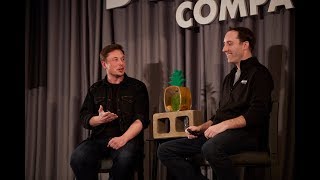 20181:12:05
 202057:03
 20221:09:25