“长期看,工作会变成可选项。”
马斯克说这句话的时候语气很轻,像是在说一件已经发生的事。他把“长期”定义为 10 到 20 年。到那时候,上班大概会像打篮球或者玩电子游戏,想去就去。
他给了个类比。你可以去超市买菜,也可以在后院自己种。种菜累得多,但还是有人种,因为喜欢。工作以后大概也是这样,可选。
这段对话发生在 2025 年 11 月 19 日的美沙投资论坛(U.S.-Saudi Investment Forum)。前一天,两国刚签了 AI 战略合作框架。台上坐着马斯克和黄仁勋(Jensen Huang),一个造火箭和机器人,一个造算力。主持人来自沙特方面。
同一场对话里,马斯克还扔出了另一个时间表:不超过 5 年,成本最低的 AI 算力会来自太空里的太阳能卫星。
一个说 20 年后工作可选,一个说 5 年后算力上天。这两个时间表之间,藏着这场对话真正的信息量。
他先纠正了一个词
主持人开场就把马斯克的方法论摆了出来:一阶思维,黄仁勋有时候叫一阶规模化。证据是电池。马斯克把每千瓦时的成本从 1000 美元压到了 100 美元以下,现在用同一套办法做机器人的执行器、伺服电机和马达。
主持人用了“颠覆”(disruption)这个词。
马斯克说,主要是创造。颠覆这个词他用得少。
可回收火箭。SpaceX 之前,世界上没有可回收火箭。但要让太空旅行真正发生革命,可重复使用是绕不过去的一环。火箭每次扔掉,进入太空的成本就永远降不下来。这笔账是物理的。
电动车。特斯拉开始造的时候,市面上基本买不到电动车。目标是让电动车有吸引力,而且买得起。
人形机器人。现在没有真正有用的人形机器人。有一些噱头,但没有一个真能干活的。他认为特斯拉会造出第一个真正有用的人形机器人。
三个例子是同一个结构:一个尚不存在的品类,一个物理上绕不过去的成本约束,然后把约束拆掉。可复用的约束是火箭一次性报废,电动车的约束是电池太贵,机器人的约束是执行器太贵。
黄仁勋在旁边补了一句更精确的说法,他说这是一阶规模化(first order scaling)。把最贵的那一个零件拆开,算出它的理论成本下限,然后一路往下压,直到整机价格跟着掉下来。
人形机器人会是史上最大的产品
马斯克对机器人市场的判断很直接:人形机器人会成为有史以来最大的产业,或者最大的产品,比手机还大。
理由不复杂。每个人都会想要一个,可能不止一个。工业里还会有很多。这就是需求侧的全部逻辑。
“谁不想有个自己的 C-3PO、R2-D2?”(马斯克)
主持人插了句玩笑,说他只想要 C-3PO 的灵魂装在 R2-D2 的身体里。马斯克回:人形机器人会比 R2-D2 和 C-3PO 加起来还好,好十倍。
然后是那段关于贫困的话,值得单独拎出来。
人们谈消除贫困谈了很久。各种 NGO 一直在做,各种项目一直在推,但没成功。马斯克说,证据就摆在那儿。但 AI 和人形机器人会真正消除贫困。特斯拉会是这个领域的先驱,但不会只有特斯拉,会有很多公司造人形机器人。
“让所有人变富,基本只有一条路,就是 AI 和机器人。”(马斯克)
这句话放在投资论坛上说,听起来像口号。但把它和前面那句“可重复使用是太空旅行的本质”放在一起看,逻辑是一致的:他谈的重点在供给端。商品和服务的边际成本趋近于零之后,贫困的定义本身会变。
这也是他后面谈“货币会消失”的伏笔。
从检索到生成,AI 工厂为什么必须建
黄仁勋接过话题,讲了个对照:沙特过去建石油炼油厂,现在建 AI 工厂。
他把 AI 叫作基础设施。原因在于它的渗透率:它会进入每一个领域,被每一家公司、每一个行业、每一个国家使用。到这个程度,它已经越过了某个行业的工具的界线,成了底座。
从计算机科学的角度看,新东西到底在哪?
过去的计算大部分是检索式的(retrieval-based)。有人写好一个故事,有人画好一幅画,有人做出四个版本的广告图,这些都是预先做好的,系统负责从中挑出合适的那一份送到你面前。Hadoop 和很多上一代的框架、操作系统,都是为检索而设计的。
打个比方,以前的软件像中央厨房。菜提前做好,摆在窗口,你点单,服务员去取一份给你。菜单是有限的,味道是标准化的。
现在的软件是现场做的。基于上下文、基于情境、基于你是谁、基于你问的问题、基于你给的提示词(prompt)。每次生成的内容都不一样,给每个人都不一样。
你用 Grok,每次打开都是新的。
既然是生成的,每次都不一样,那就必须有一个地方实时把它算出来。这就是 AI 工厂存在的理由。推理有明确的物理位置,它要耗电,要散热,要占地。
好处也在这儿:一切现场生成,贴着上下文走,内容对眼前这个人才成立。黄仁勋说,正因为贴合上下文,它才叫智能。
这句话听起来像文字游戏,但它解释了一件事:为什么这一轮 AI 的建设规模,比上一轮互联网大出一个量级。互联网是把已有的信息连起来,AI 是每次都要重新生产一份信息。
沙特的两个化学故事
主持人在这里插了两个案例,用来回应“技术会不会只是替代人”的担忧。
第一个是奥马尔·亚吉(Omar Yaghi)教授,第一位拿到诺贝尔奖的美国籍沙特裔科学家,做的是新化学。他用了英伟达的 AI 加速器和 Grok 这类模型来设计新的材料:金属有机框架(metal organic frameworks,MOF)。带正电的金属离子加上有机连接体,做出孔径约 33 纳米的“海绵”,能从空气里捕获水,也能捕获二氧化碳。
第二个是纳米机器人,尺寸 500 纳米乘 1000 纳米,用 CRISPR 做基因编辑,目标是去掉镰状细胞病。
两个项目的研究起点都在 20 年前。卡了 20 年的东西,AI 把出结果的时间压缩了,让它们能走进新的价值池。
主持人的判断是:每一次技术趋势,每一种通用技术,对人类整体都是净新增的正向。这个判断后面被黄仁勋用一个职业的例子坐实了。
10 到 20 年后,工作变成可选项
话题转回就业。沙特王储前一天提到,要用数千万台机器人扩充劳动力。台下很多人关心的是自己的饭碗。
马斯克的回答分两层。
长期,10 到 20 年,工作变成可选项。
但到那之前,其实有大量工作要做。这句话他说得很平,容易被忽略,但它才是对当下有用的部分。通往“工作可选”的路上,需要建厂、修电网、造机器人、写软件、铺供应链,这些活儿一个都少不了。
他推荐了一套小说:伊恩·班克斯(Iain M. Banks)的“文化”系列(Culture books)。想了解一个可能的、积极的 AI 未来长什么样,读这套书。有意思的是,书里没有钱这回事。
马斯克顺着这个设定猜了一句:如果 AI 和机器人持续进步(看起来很可能),钱在某个时点会不再相关。但约束还在,电力和质量还在,基础物理的限制还在。只是货币会退出。
黄仁勋的反应是全场最好笑的一段。
“顺便说一句,英伟达的财报电话会今天晚些时候开。”(黄仁勋)
然后补一句:“而且,目前货币还是相关的。”
马斯克说:你会看到它来的。我们经常发短信,到时候发我一条。
玩笑归玩笑,黄仁勋给出的近期判断更值得记:每个人的工作都会不一样,学生的学习方式会不一样。很多现在做得枯燥、费劲、极其困难的事会变得很简单,生产力会因此提高。
但有个反直觉的地方。他和马斯克都会因为 AI 更忙,不会更闲。原因是想法太多。公司内部有太多一直排不上队的项目,生产力提高只是让他们更快够到那些事。这个观察对普通人也成立:省下来的时间,通常不会用来闲着。
放射科医生没有消失,反而更多了
黄仁勋举了个具体的例子,用来证明“效率提高导致岗位减少”这个直觉有问题。
放射学这两年的变化是这样的:影像判读已经基本转成 AI 驱动,有几家公司做得很好。当初业内的预测是,放射科医生会是最先消失的职业。
结果正相反。现在雇的放射科医生更多了。
原因要退一步看。放射科医生要解决的核心问题是诊断疾病,看片子只是手段。当看片子这件事变得极其高效之后,他们能看更多片子、更多模态(CT、MRI、超声),能花更多时间和病人待在一起,于是接了更多病人。
全世界做的放射学总量在增加,诊断质量在提高,误诊在减少。
这个案例的洞察在这儿:当一件事的成本大幅下降,被释放出来的往往是原本被成本挡在外面的需求,未必是空闲。看片子便宜了,原来不值得查的人开始查了,原来只做一个模态的现在做三个。需求是有弹性的,它一直在门外等着。
当然,这是近期。长期会怎样,黄仁勋说他也不知道。他只在“货币不重要”那一天到来之前,希望马斯克提前打个招呼。
500 兆瓦,Omniverse 和量子纠错
然后是一串具体公告。
马斯克宣布,xAI 和沙特合作建 500 兆瓦的算力,跟英伟达一起做,第一阶段 50 兆瓦起步。说到投资额的时候他开了个玩笑:“8 个十亿十亿万亿美元。”又补一句“500 吉瓦的事以后再说”。
黄仁勋介绍了与 Humain(沙特主权基金支持的 AI 公司)的合作。英伟达帮着把这公司从零做起来,现在有了马斯克这个大客户。一家年收入约百亿美元的初创公司,要给马斯克建 500 兆瓦的数据中心,这个体量很大。他说这公司“刚起步就已经爆表”。
AWS 也来了。起步 100 兆瓦,目标是 1 吉瓦,而且还在往上数。
还有 Omniverse。英伟达和 Humain 合作做数字孪生。黄仁勋在这里特意澄清了一件事:AI 不只是智能体(agentic AI)、聊天机器人和认知 AI,虽然这些很重要。AI 也应用在化学、蛋白质、基因、物理、流体力学、粒子,当然还有机器人。
Omniverse 是一个基于物理定律的世界。机器人可以在里面学习怎么当一个好机器人,学完再放到真实的数字工厂、仓库和产线里去。为什么必须基于物理?因为一个不懂重力和摩擦的机器人,学到的技能没法迁移到现实。
量子这块也提了一句。英伟达在沙特建超级计算机,用来模拟量子计算机。量子纠错需要海量计算,所以用英伟达的机器做控制器。这是把 GPU 当成量子计算机的“外挂纠错器”,一个很少被讲到的用法。
太空里的 AI 会便宜到不讲道理
主持人最后一个问题给马斯克:太空里的 AI 可能吗?
马斯克的回答有个固定前缀:如果文明延续下去,而它大概率会,那么太空 AI 是不可避免的。
这个前提他每次都要加。任何学过历史的人都知道,文明不总是往上走的,文明有生命周期。所以不能把文明的存在当成理所当然,得用心维护它向上的弧线。他觉得现在还在上升,但不能自满。
然后是能量账。
要成为卡尔达肖夫 II 型文明(Kardashev Type II)意义上的文明,哪怕只用到太阳总输出能量的百万分之一,也必须在地球深空部署太阳能 AI 卫星。
地球接收到的太阳能,大约只有太阳总输出的二十亿分之一。
如果你想要比地球能产生的能量多一百万倍,只能去太空。
“这时候有个太空公司就挺方便的。”(马斯克)
黄仁勋补了一句:太空里给芯片散热更容易。
马斯克说太空里没有水,只能靠辐射散热。但他算过账:太空 AI 的成本效益会压倒性地优于地面 AI,而且远早于地球能源耗尽。他甚至给了时间表,4 到 5 年内,成本最低的 AI 计算方式会是太阳能 AI 卫星,不超过 5 年。
为什么这么有把握?黄仁勋给了一个具体的画面:现在这些机架每个两吨,其中 1.95 吨大概是散热系统。地面上,芯片大部分重量和成本都花在给它降温上。
马斯克接着算电。假设要做每年两三百吉瓦的 AI 算力。美国平均用电大约是每年 460 吉瓦。300 吉瓦就是美国年发电量的三分之二。没有可能按这个速度建电厂。如果做到每年 1 太瓦,地面上根本不可能。
太空的好处列一下:太阳能是连续的,不需要电池,因为太空里永远是晴天;太阳能板不需要玻璃和框架,重量和成本都降下来;冷却是辐射式的,直接往宇宙里散热。
这套推理的落脚点其实很朴素:AI 的瓶颈在电和热,芯片只是其中一环。而电和热在地面上是有限资源,在太空里近乎无限。所以只要发射成本降到某个阈值以下,最优解就会自动漂到轨道上去。可回收火箭做的就是把那个阈值压下来的事。
泡沫问题的三层答案
最后一个问题给了黄仁勋。主持人说得很小心,因为英伟达当天有财报电话会:我们会有一个 AI 泡沫吗?
黄仁勋没有回答“有”或“没有”,他把正在发生的事拆成三层。
第一层,摩尔定律走到头了。通用计算能提供的算力增长,和需求之间的差距越来越难填。世界转向加速计算已经有些年头,英伟达推了二十多年。他给了个数字:六年前,全球 TOP500 超级计算机里 CPU 占 90%;今年不到 15%。加速计算从 10% 涨到 90%。这个拐点已经过去了。
第二层,数据处理。这是云里最密集的计算之一,全世界有几千亿美元的计算花在原始数据处理上,跟 AI 一点关系都没有,就是 SQL 处理、数据框。所有人的姓名、地址、性别、年龄、住址、收入,都躺在数据框里。今天的世界由这些数据框驱动:银行、信用卡、电商、广告推荐,全都建立在它上面。光算这些数据框就要几千亿美元,而它原来跑在 CPU 上。
第三层,生成式 AI。过去 15 年最重要的应用是推荐系统。社交信息流里推什么内容,给谁推什么广告、什么书、什么电影。互联网太大了,没有推荐系统,我们手里那块小屏幕根本没机会看到对的信息。推荐系统是今天互联网的引擎,它正在从 CPU 迁到 GPU,正在变成生成式 AI。
在这之上才是智能体 AI,Grok、OpenAI、Anthropic、Gemini 这一层。
黄仁勋的结论是:不要只看大家今天叫作 AI 的那一层。它底下有一整场从通用计算往加速计算的迁移,这场迁移有明确的理由,也有明确的账单。把这件事算进去,留给智能体 AI 革命的增量投入,比你以为的少得多,而且每一分都站得住脚。
这个回答的巧妙之处在于,他没有否认估值高,他把估值放到了一个更大的迁移里去看。买 GPU 的钱,很大一部分流向了 SQL 换引擎这类老活计,AI 只占了其中一块。泡沫论者盯着最上面那一层,他指给你看底下两层。
主持人最后收尾,说这是从能源时代走到数字时代、再走到智能时代的一次结盟,两个国家合作,为人类创造新经济、新工作。
散场。
把这 40 分钟里的判断按时间尺度排一遍,会看到一个挺清楚的形状:5 年内,算力搬到天上;10 到 20 年内,工作变成可选项;而在这中间的每一年,都要建厂、铺电网、造机器人、修供应链。
宏大的判断和当下要做的事,在这里不矛盾,反而互相解释。正因为终点那么远,近处才有那么多活要干。
- 如果你在做技术选型,把“推理的物理成本”写进架构评估。算力有物理位置,它要电、要地、要散热。哪天真出现轨道上的低价算力,能迁移的系统和不能迁移的系统会立刻分出高下。
- 如果你在担心岗位,先分辨你的工作里哪部分是“看片子”,哪部分是“诊断疾病”。被自动化的永远是手段,被保留和放大的是目的。放射科医生变多,因为他们卖的是诊断,读片只是过程。
- 如果你想读懂这一轮 AI 的资本开支,别只看聊天机器人。往下看两层:通用计算换加速计算,数据框从 CPU 迁到 GPU。这两层的钱跟 AI 热度无关,跟摩尔定律到顶有关。
- 如果你在选行业或换赛道,注意“需求弹性”这件事。一件事变便宜之后,被释放出来的往往是被成本挡在门外的需求。去找那些现在因为太贵而没人做的领域。
- 如果你只想读一本书来理解可能的积极未来,去读伊恩·班克斯的“文化”系列。马斯克自己推荐的就是这套。
0:00of SpaceX, founder of XAI, and Jensen Huang, founder and CEO of Nvidia. [music] Please have a seat. Now, I'm sure we can do a bigger round of applause for one of the greatest two leaders of our history. Let's go ahead. So, we're talking about I lost count, you know, 7 to8 trillion dollars worth of market cap comp. I lost count. But
0:36right now, we're here to celebrate a historic moment. A moment that yesterday during the dinner and thank you for for joining us under the patronage of the honorable president and his royal highness the crown prince Musedi where we had the pleasure to hear firsthand this is the greatest alliance between the kingdom of Saudi Arabia and the United States where we have joined hands and you have helped us build our energy-based economy fueling and energizing izing the industrial age and now fast forward going to the intelligence age where we can fuel AI factories, robotics, eaves and all of
1:22the rest. Speaking of that, let's start with you, Elon, if you don't mind, Jensen. Feel free to chive in you have a big fascination of something all of us have admired, first order thinking, which Jensen sometimes calls first order scaling, which is an opportunity for how you have dropped the cost of batteries from a,000 for kilowatt hour to subund
1:47bucks. And right now you're doing the same thing with robotics for actuators with servo rotors and motors. So I want to hear from you. How do you manage to always disrupt every single industry with that thinking?
2:04Well, it's mostly not disruption, it's creation. So with say SpaceX with reusable rockets, there really weren't any reusable rockets. but the essence of getting of revolutionizing space travel is reusability. If you throw the rocket away every time, the cost of access to space is extremely high. with respect to electric cars, there there weren't any electric cars when we started making them really. You couldn't buy any to the best of my knowledge.
2:40so with Tesla, we wanted to make electric cars compelling and affordable. That was the goal. the you know with respect to humanoid robotics, there are no useful humanoid robotic robots at this point. there are sort of gimmicks, but there are there are no actually useful humanoid robots. and I think Tesla's going to make the first actually useful humanoid robots. and this will be quite a revolution and I think something that will that everyone will want. because I always think of like who who wouldn't want their own personal C3PO R2-D2. Oh yeah,
3:17of course everyone would want one, right? And and then there would be many in industry providing products and services. This is why I say that humanoid robots will be the biggest industry or the biggest product ever. bigger than cell phones or anything else because everyone's going to want one and or maybe more than one and there'll be many in industry.
3:41I just want R2-D2 in C3PO's body.
3:45Yeah, there you go. [laughter]
3:47well, I mean, a humanoid robot would be better than R2-D2 and C3PO combined. Yeah. Times 10.
3:52Yeah. So the it and and you know people often talk about sort of eliminating poverty and that kind of thing but really the there's how long have they been talking about that? there's lots of talk you know there's lots of NOS's sort of trying to do these things but but really not succeeding. and and and you know the evidence speaks for itself. but but but AI and humanoid robots will actually eliminate poverty.
4:22And Tesla won't be the only one that makes them. I think Tesla will pioneer this. But there will be many other companies that make humanoid robots. But there there is only basically one way to make everyone wealthy and that is AI and robotics. And we can't talk about robotics without AI factories. And yesterday was such a historic day for the two nations but also for all of us where we celebrate the AI strategic partnership with the US s signed witnessed by the honorable president and his royal highness about how we are committing our capital energy land to energize the AI US ecosystem to
5:04be able to build inference node training nodes and to be the most AI enabled nation. With that announcement, tell me what's what's next in AI factories. Jensen,
5:14there there's a there's a beautiful story about how Saudi Arabia's building AI refineries now building AI fac or oil refineries to AI factories. I love that.
5:24I you know I've said that that AI is an infrastructure and the reason for that of course we understand AI from the perspective of the technology and how it's revolutionizing every industry. Digital intelligence of course has applications into every every field and so it's going to be used by every company, every industry, every country.
5:44In that way it's foundational and therefore it's part of infrastructure. What is new about AI from a computer science perspective is that the way computing was done in the past was largely retrievalbased computing. Somebody typed in a story or somebody created a a piece of art or came came up with four versions of a digital ad or it's all pre-built by somebody which is then using a system to retrieve the appropriate version for you. It's a retrievalbased computing model. Hadoop and many of the the the frameworks and operating systems of the past all designed to retrieve the appropriate information for you. But today software is going to be generated in real time.
6:33It's generative based on the context, based on the circumstance, based on who you are, based on the problem you ask that based on your prompt. It will generate unique content for you every single time for everybody. It's unique. When you use Grock, every time you use it is different based on the right based on based on the based on the prompt that you give it and based on the circumstance and and so therefore it used to be retrievalbased today it's generative and if it's generative then and every time is different then you need AI factories all over the world to generate the content in real time which is the reason why you need AI factories and and this is a
7:12unique way of doing computation but the benefit of course is that everything isn't preconceived and pre-documented and it's it's contextually contextually sensible and and therefore intelligent.
7:23So AI factories and robotics and we heard it yesterday from his royal highness his vision how to augment our workforce with roughly tens of millions of robotics to be able to infuse the next wave of productivity and progress. But this scares a lot of folks here when it comes to the future of jobs. So let's hear about your thoughts Elon and Jensen on that.
7:49sure. Well if you say like in the long term where will things end up longterm? I don't know about what long term is maybe it's 10 20 years something like that. For me that's long term. my prediction is that work will be optional. Optional. so we'll take that.
8:12Yeah. I mean it it'll be like playing sports or a video game or something like that. if you want to work you know in the same way like you can you can go to the store and just buy some vegetables or you could grow vegetables in your backyard. It's much harder to grow vegetables in your backyard but some people still do it because they like growing growing vegetables. that will be what work is like optional.
8:38now between now and then there's actually a lot of work to get to that point.
8:42Mhm. and I always recommend people read read Yin Banks culture books to get a sense for what a probable positive AI future is like. and interestingly in those books, money is no longer doesn't exist. It's kind of interesting. And I I my guess is in in if you go out long enough assuming there's a continued improvement in AI and robotics which there seems likely the money will will will stop being relevant at some point in the future.
9:17now there will still be constraints on power like in it like electricity and mass. the fundamental physics elements will still be still be constraints. but I think at some point currency becomes irrelevant. Jensen, any thoughts?
9:42[laughter] by the way, the Nvidia earnings call is later today. [laughter]
9:49And by the way, since currency is relevant. [laughter]
9:53Cheers. Elon just wants to share with you some breaking news. [applause] [laughter] The two of us who like to share some breaking news. let's see. I I would say I would say there there's different horizons you could look at. Everybody's jobs will be different. That I think that that's for sure. how how the students learn will be different.
10:23how people do their work will be different obviously because a lot of the things that that we do mundanely or arduously or very difficultly are going to be done very simply and and so we're going to be more productive from that s from that sense one of the things that I will say is that for most people or a company if some if your life becomes more productive and if the things that you're doing with great difficulty becomes simpler it is very likely because you have so many ideas, you'll have more time to go pursue things. It is my guess that Elon will be busier as a result of AI. I'm going to be busier as a result of AI.
11:01And the reason for that is because we have so many ideas we want to pursue, so many things that that we still have in our backlog inside our company that we can go pursue. If we were more productive, we can get to those things faster. And so in the near term I would say that that there's every evidence that that we will be more productive and yet still be busier because we have so many ideas. One thing that I will say give you give you some evidence is that and I was just telling Elon about this earlier radiology for example has largely been converted to AIdriven radiology and there's some really great companies doing that and the surprising
11:40thing is the prediction that all radiologists would be the first jobs to go was exactly the opposite. The trend shows that there are more radiologists being hired now as a result of AI. And the reason for that, if you take a step back, it's because the goal of a radiologist is not to study the images.
12:00The goal of a radiologist is to diagnose a disease. Now, the studying of the images became so productive, they could study more images, study more modalities, spend more time with the patients. And as a result, they were actually accepting more patients. We're doing more radiology all around the world. We're doing a better job with diagnosing disease. And so that's that's kind of the the nearterm near outcome
12:25of of AI and productivity. And and we'll see we'll see what happens long term. You know, I I when when currency doesn't matter anymore, just, you know, let me know right before.
12:39You'll see it coming. [laughter]
12:41You'll see it coming. like like we text often so just Yeah, we do.
12:46Yeah, just text it off. Yeah, let me know.
12:48I kind of I kind of agree with with both of you because if you look at every technological trend, every general purpose technology has been net new positive for for the globe for humanity and so forth. And let me share with you two and your excellency I think it's precisely the reason the reason for that is because all the great ideas from from innovators like Elon that you have so many good ideas that as well. Yeah. Well, thank you.
13:16So let me share with you two stories from two Saudi innovators in collaboration with a lot of great the great work that Nvidia does that Gro does. One is professor Mararyyagi. All right. Say that again. Professor Omaragi who is I might need to
13:39I might need to move the mic. All right.
13:43Okay. Come on. We'll share this one.
13:45All right. [laughter] So now get close.
13:49Let's let's let's try this one more time. So one of them is Professor Omaragi who's the first American Saudi to win a Nobel Prize in creating new chemistry. And the way he has done that, he has leveraged your AI accelerators and models like Grock to be able to create new chemistry when it comes to metal organic frameworks. Those are metal ions that are positively charged with organic linkers to be able to effectively create a sponge with 33 nanometers pores to capture water from air and also to capture carbon dioxide.
14:26The second story has also to do with AI accelerated by Nvidia and with models like Brock which is nanop which is effectively creating a nano robot 500 nanome by 1,000 nanometers to be able to do gene editing leveraging the crisper technology to take out sickle cell disease. Now in both these instances they originated 20 years ago in research but AI was able to really accelerate the outcomes and the outputs such that we can move into new value pools. So I think with every technological trend humanity is going to always manage to shift to new value pools when it comes to workforce and productivity. But we have some great announcements to talk about here today. Let's begin with you
15:14Elon. the things that we're doing with XAI. yeah, we're excited to announce that we're doing a a a a 500 megawatt I mean yeah 500 sorry 500 megawatt 500 megawatt yeah
15:29we're doing [laughter] 500
15:31we're doing [clears throat] 500 megawatt sorry
15:35yeah yeah 500 g one will have to wait so that that'll be 8 bazillion trillion dollars [laughter] It's not bad.
15:49[laughter] so yeah, we we're we're doing a XAI and the Kingdom of Saudi Arabia are doing a a
15:59Humane 500 megawatt starting with 50 megawatt phase one and we're doing it with Nvidia. Congratulations to the Humane team to target team. Such a fantastic job. Jensen, I think we're also doing some great announcements this week.
16:14We are. Yeah. [laughter] Well, we're we're announcing we're announcing all kinds of things. our partnership with Humane is is going incredibly well. First of all, we we work together to get this company started and off the ground and just got an incredible customer with Elon. could you imagine a startup company approximately 0 billion in revenues now going to build a data center for Elon? 500 megawatts is gigantic.
16:43this company is off the charts right away. in addition to that, we're working working AWS as you know is also
16:52congratulations to the humane team with AWS starting with 100 megawatts with a gigawatt ambition and counting.
17:02So AWS is also coming to Humane. we're working with Humane on Omniverse digital twins. as you know that AI is not just well just agentic AI and chat bots and cognitive AI is incredibly important to the world. but AI applies to everything chemicals and proteins and genes and physics and fluid dynamics and particles and of course robotics and activation and and we created this world called Omniverse where robots can learn how to be good robots and and it's physically based. It obeys the laws of physics and so robots can learn in these environments and we're working with humane to apply Omniverse to all kinds of digital factories and robotics and
17:46warehouses and things like that. And so that's that's another we're we're also working in Saudi Arabia to build supercomputers to simulate quantum computers and and using our computers to be the controller and the error correction quantum error correction requires an enormous amount of computation and so so we're doing a lot of great work there too. So a big partnership with Humane they're off the charts off the ground and off the charts at the same time. This is how we walk the talk in the Kingdom of Saudi Arabia in partnership with the US.
18:19Yesterday, the president and his royal highness announced the AI strategic framework and partnership. Today, we're going big with Elon and Jensen. So, thank you for those opportunities. [applause] Now, they they told me I have time for two last questions. So last night at the dinner I got a number of questions because it seems that the schedule leaked and everybody was giving me hints about the last two questions I'm going to do. So the first one was for you Elon and there's a big one for you Jensen. So prepare for that one. AI in space is
19:00that possible? yes, if if civilization continues, which it probably will, then AI in space is inevitable. [laughter] you know, I always have to like preface that, you know, we shouldn't take civilization for granted. We we need to make sure to take care to ensure that civilization has an an upward arc. I mean, any student of history knows that civilization does not always have an upward arc. And in fact, civilizations have life life cycles. So hopefully we are in a strong upward arc.
19:36I think we are for now. but we don't want to take that for granted or be complacent. but the in order to the way to think of AI in space is that in order to achieve any meaningful percentage of a cartev 2 scale civilization where you're using even a millionth a millionth of the sun's energy you must have solar powered AI satellites in in deep space. so so
20:02that once you realize like once you think in terms of a cadv two scale civilization which is what what percentage of the sun's energy are you turning into useful work then you then it becomes obvious that space is overwhelmingly what matters overwhelmingly the the sun only receives one roughly 1 billionth of the earth only receives roughly u two billionth of the sun's energy So if you want to have something that is say a million times more energy than Earth could possibly produce,
20:38you must go into space. It's and and so you know this is where it's kind of handy to have a space company, I guess, sell the book.
20:50Easier to cool chips in space, too. Yes.
20:53Easier to cool chips in space. Yeah.
20:55Yes. There's definitely no water in space, so you're going to have to do something. Yeah.
20:58that doesn't involve water. Just hang out.
21:00Well, it's you just got to radiate. That's right.
21:04so my estimate is that actually that that that the cost of of electricity like like the cost effectiveness of AI in space will be overwhelmingly better than AI on the ground. So far long before you exhaust potential energy sources on on Earth. Long long before meaning like I think even perhaps in the four or five year time frame the lowest cost way to do AI compute will be with solar powered AI satellites.
21:39So I'd say not more than 5 years from now.
21:43Wow. And just look at the supercomputers we're building together. Let's say each one of the racks is two tons. Out of that two tons, 1.95 of it is probably for cooling, right? Oh, yeah.
21:56Just imagine how tiny that little supercomput is, right? Each one of these GB300 racks will just be a little tiny thing.
22:02And and just electricity generation is is already becoming a challenge.
22:06so if if you start doing any kind of scaling for both electricity generation and cooling, you realize, okay, space is incredibly compelling. so like let's say you wanted to do I don't know two or 300 gawatt per year of of AI compute. Yeah. [clears throat]
22:28it's very difficult to do that on Earth. the so the the US average electricity usage last time I checked was around 460 gawatt per year average usage. so so something like say you know at three 300 if you're doing 300 gawatt a year that would be like 2/3 of US electricity production per year.
22:52There's no way you're building power plants at that level. and then if you take it up to say a terowatt per year impossible. Yeah.
22:59Like you have to do that in space there. There just is there just is no way to do a terowatt per year on Earth. and and and in space you you've got continuous solar. you've got you don't you actually don't need batteries cuz it's always sunny in space. Right. Exactly.
23:19and and and the solar panels actually become cheaper because you don't need glass or framing. and the cooling is just radiative. So that's that's why I think that's the dream. Yes,
23:32that's the dream. So Jensen, everybody last night was asking me and I'm mindful it's a earnings call for you today. So I'm going to say this delicately. Everybody has been asking me to ask you are we going to have an AI bubble? [laughter] That's the last question. All right, let's all right let me well let me just hear you what we see. Okay, so so I I think it's really important when you look at what's happening around the world and go back to first principles of what's happening in computer science and computing. There are three things that that's happening. The first thing is that we all know that Moore's law has run its course and the ability that the
24:09amount of demand for computing versus the amount of computation we can get out of general purpose computing is really challenging and so the world's been moving to accelerated computing for some time. We've been pushing this now for some over 20 years. Let me give you one statistic. I was just at supercomputing six years ago.
24:28CPUs were 90% of the world's supercomputers, top 500 supercomputers 6 years ago. This year, less than 15%. Went from 90% to 10%. And meanwhile, accelerated computing went from the other way, 10% to now 90%. Okay, so you're seeing that inflection point, the transition in high performance computing from general purpose computing to accelerated computing. Well, one of the one of the most data inensive one of the most intensive computation things that the world does in cloud is data processing. Several hundred billion dollars of computation is done on just raw data processing. Has nothing to do with AI, just SQL processing, data frames, you know, everybody's names,
25:10address, their their sex, their their age, where they live, you know, how much money they make. All of that sits into a data frame. And that data frame drives the world today. whether it's in banking or you know whether it's in credit cards or of course e-commerce and everything from ad recommendation and everything is driven off of that data frame that data frame costs hundreds of billions of dollars to go compute and so that's the number one thing end of mors law the second thing is generative AI what the the the most important application of the last 15 years is called Rexus recommener systems how do we know what information to recommend to us in a
25:49social feed. How do you know what ad to recommend to somebody? what book to recommend, what movie to recommend? The world is the internet is so gigantic without a recommener system that a little tiny phone of us will have no chance of ever seeing the right information. That Rexus is the engine of the internet today. That's going generative AI. It used to be running on CPUs, now runs on GPUs. Which then says the third thing when if you just look at those two applications many of the internet companies can build enormous number of GPU supercomputers just doing that of course then it creates this the third opportunity on top of it which is agentic AI this is
26:29grock and this is open AI this is anthropic you know this is Gemini agentic AI sits on top of that but don't you know don't forget to think about what is happening above underneath what everybody sees as AI today. There's a whole movement of computing from general purpose computing to accelerated computing. And that if you just if you take that into consideration, you'll come to the conclusion that in fact what is left over to fuel that revolutionary agentic AI is not only substantially less than you thought and all of it justified. Well, I was just informed by the team that my boss and your bosses is going to talk next, the honorable president and his royal highness the
27:13crown prince and hence we ran out of time. But in essence, [applause] this is our such so much love for you Elon and and Jensen. But this in essence is a 92 alliance that shifted from energy to digital to the intelligence age powered by pioneers such as Elon and Jensen to serve humanity and create on a net new basis new economies, new jobs and a better future for humanity powered by the Kingdom of Saudi Arabia and the United States. Thank you for our lifetime partnership and friendship. Thank you Elon. Thank you Jensen. Thank you. [applause] [music] [music] Ladies and gentlemen,
资源与出处
- 视频在 YouTube 收看
- 档案silicon-valley.tech 档案页本页视频与文稿数据来自 Elon Musk Archive
- 精读本篇精读 Markdown 版
相关视频
同频道、同主题或相邻年份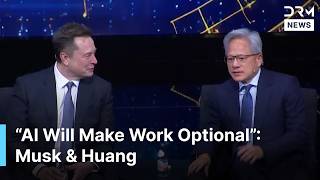 202520:26
 20251:55:41
 20257:57