2010年4月,NPR《科学星期五》(Science Friday)的直播间里坐了三个人。美国大学教授霍华德·麦柯迪(Howard McCurdy),华盛顿智库阿特金斯战略的总裁比尔·阿特金斯(Bill Atkins),还有SpaceX的CEO埃隆·马斯克。
主持人艾拉·弗拉托(Ira Flatow)刚放完一段录音。前一天,奥巴马在肯尼迪航天中心宣布了美国太空计划的新方向。
这个嘉宾阵容本身就值得琢磨。一个私人火箭公司的老板,被请来和两位太空政策专家平起平坐地讨论国家航天战略。阿波罗时代,坐在这个位置上的是波音、北美航空、格鲁曼的副总裁,他们不会上公共广播谈政策,他们直接和NASA局长吃饭。
奥巴马刚参观过SpaceX在加州霍桑的发射场,看了准备下个月首飞的猎鹰9号(Falcon 9)。马斯克在节目里承认,总统来访让他意外:“我们只是提前一天才知道。”
这期节目聊的是预算,但真正在聊的是:一个国家还要不要自己造火箭,把人送上天。
“我们已经去过了,干过了”
奥巴马演讲里最刺耳的一句话,是针对重返月球计划的。
“我理解有些人认为我们应该先重返月球表面,就像之前计划的那样。但我得直说,我们已经去过了,干过了。”(奥巴马)
这句话激怒了一批人。第一个踏上月球的尼尔·阿姆斯特朗(Neil Armstrong)和其他几位宇航员公开批评这个计划,用的词是“毁灭性的”。
但第二个踏上月球的巴兹·奥尔德林(Buzz Aldrin)站在奥巴马这边。
奥巴马要砍掉的是星座计划(Constellation)和战神火箭(Ares)。这个计划2004年由小布什提出,目标是2020年前重返月球,然后去火星。已经花掉了数十亿美元,进度严重落后。
砍掉它,等于承认过去六年的钱和工程白费了。
麦柯迪提醒听众,还有一层背景。2008年奥巴马竞选总统时,有一份泄露的提案建议从NASA预算里砍掉50亿美元,转投教育。很多人因此怀疑,他昨天在肯尼迪航天中心的演讲是狼披羊皮,真正的目的是终结载人航天。
麦柯迪说,写演讲稿的人非常努力地想表达一个意思:总统完全致力于太空计划,而且采用了和1961年肯尼迪总统一样激进的策略。
肯尼迪的三分球
1961年4月,肯尼迪给副总统林登·约翰逊写了一份备忘录,让他研究太空计划,核心问题是:怎么才能打败苏联人?
能在载人航天上赢吗?不行,加加林已经上天了。
能抢先建成空间站吗?约翰逊咨询了太空界的人,回话说不行。
能绕月飞行吗?不行。
唯一能赢的方式是登月。跳过所有其他可以完成的事情,走得更远。
麦柯迪把这个逻辑比作篮球比赛里的三分球:既然两分球追不上,那就投三分。
奥巴马用的是同一招。跳过月球,直接去小行星和火星。
所以演讲里那句“把人送入火星轨道并安全返回地球”,几乎是肯尼迪演讲的原话。麦柯迪说,这种表述是直接从肯尼迪那里拿来的。
阿特金斯补充了奥巴马面临的另一个难题。几个月前他提出新方向时,批评者说这套方案缺乏总体目标和时间表。所以昨天那场演讲,一个关键任务就是把这些目标、目的地和时间表摆出来。
阿特金斯认为他做到了,至少在平衡近期目标和长期愿景上。短期靠商业部门完成近地轨道运输,长期靠技术投资走得更远。
为什么先去小行星
奥巴马演讲里有个大家没预料到的目标:2025年之前,设计出适合长途旅行的新飞船,然后开始人类历史上第一次小行星载人任务。
主持人问阿特金斯,为什么选小行星?
阿特金斯的回答很实在:在小行星上着陆比在月球上着陆容易得多。月球有很深的重力井,要挣脱它、要落下去,都要付出巨大的能量代价。小行星引力微弱,靠近和离开都简单。
而且小行星本身就是科学富矿,是太阳系起源的钥匙。
阿特金斯说,设定可实现的目标是这套计划的关键。目标定得太高,期望值拉满,最后完不成,整个计划就崩了。小行星任务是一个恰当的平衡。
这段话背后有一个没明说的教训。星座计划定的目标就是重返月球,时间表卡得死,预算不够,技术没准备好,最后变成一场烂尾。奥巴马换了个思路:先挑容易的做,一步步往上走。
马斯克把自己比作航空公司
主持人问马斯克:你的公司和私人航天企业,在总统的计划里处于什么位置?
马斯克说,在中心位置。
“当我说我们,我指的是私人商业太空运输,不只是SpaceX,在总统的愿景和战略里处于核心位置。”(埃隆·马斯克)
他解释了这个判断的底层逻辑:NASA不会像阿波罗时代那样拿到巨额预算增长。如果还想取得重大进展,还想为人类迈出下一步,就必须用负担得起的方式做。
唯一的方式,是像所有其他交通方式一样,借助自由企业的力量。
主持人追问:所以NASA会变成客户,雇你们这样的人上去,做近地轨道任务?
马斯克的回答:
“把我们想成一家太空航空公司。不过我们也运营任务,所以大概是飞机制造商加航空公司的结合体。”(埃隆·马斯克)
这个比喻背后有一个事实,很多人没注意到。
马斯克说,外面很多人搞不清什么是商业、什么不是商业。波音和洛克希德·马丁早就合并了火箭业务,成立联合发射联盟(United Launch Alliance,ULA)。国防部所有的卫星,NASA的星际探测器和太空望远镜,都是他们发射的。
换句话说,NASA早就在买商业发射服务了。奥巴马做的事,是把这套已经用了很多年的模式,从卫星扩展到载人航天。
麦柯迪同意这个判断,还补了一个历史类比。1925年,美国骑兵部队不再负责送邮件,把生意交给刚起步的航空业,直接催生了商业航空的爆发。NASA现在要做的,是从“经营航空公司”的位置上退下来。
但麦柯迪也点出了最大的风险:私人企业能不能用30亿到60亿美元,做到NASA原本打算花300亿到350亿美元才能完成的事?也就是开发下一代载人往返近地轨道的运载工具。
赌注很大。
一场失败的竞标,反而成了健康样本
节目进行到一半,一个叫查克·劳尔的听众从密歇根州兰辛打进来。他是火箭飞机基斯特勒公司(Rocketplane Kistler)的人,COTS计划第一阶段的另一个赢家。
COTS是NASA的商业轨道运输服务计划,简单说就是出钱让私人公司开发货运飞船。
劳尔讲了自己公司的故事。他们和NASA签了合同,需要完成一系列技术和财务里程碑。2007年中期,他们要向市场融资5亿美元。正好赶上全球金融危机的开端,华尔街没人愿意接。他们筹到了3.5亿,但合同规定是全有或全无。NASA有权取消,就取消了。
劳尔的结论是:商业系统本身是可行的。如果当时他们手里有NASA后来给SpaceX和轨道科学公司(Orbital Sciences)那种30亿美元级别的货运合同,融资根本不会是问题。问题出在COTS最初的结构上:第二阶段的常规发射服务合同发得太晚,华尔街在2007年很保守,没有订单簿就不投钱。
主持人问马斯克怎么看。
马斯克说,这其实是健康政府合同的一个例子。
NASA搞了一场竞赛,两家公司赢了初始投标,火箭飞机基斯特勒和SpaceX。双方和NASA一起定里程碑。SpaceX完成了,很难,但完成了。火箭飞机基斯特勒没完成。NASA说,好,把资金拿回来重新竞标,给了轨道科学公司。
马斯克同意有一点应该改:
“如果你成功完成了这些里程碑、走到了最后,政府应该保证有生意给你做。这一点未来的合同应该改。”(埃隆·马斯克)
但他认为整体流程是健康的。
“通常政府采购会长时间陷在一种状态里,成功不是可能的结果之一。”(埃隆·马斯克)
这句话值得停一下。政府大型项目最常见的毛病,是拖,是超支,是没人敢叫停。COTS至少做到了一件事:没完成里程碑的公司真的被踢出去了,钱重新分配了。在华盛顿,这算稀罕事。
重型运载火箭的疑云
新罕布什尔州曼彻斯特的听众罗恩打进来,问了一个技术性很强的问题。
奥巴马保留了星座计划的指令舱,砍掉了把它送入近地轨道的助推器。这可以理解,近地轨道交给商业公司。但他也砍掉了重型运载火箭项目。星座计划本来是要靠重型运载去火星的。砍掉重型运载,又谈火星目标,逻辑上说不通。
阿特金斯回答:总统在演讲里说要投资30多亿美元研究先进重型运载火箭,2015到2016年锁定设计。短期内投资研发,尤其是大推力推进技术,这对美国是有好处的。他不认为总统放弃了重型运载。
但这里有一个时间差的问题。重型运载火箭从研发到首飞,通常需要十年以上。2015年锁定设计,首飞可能要到2020年代末。而奥巴马说的是2030年代把人送入火星轨道。时间表卡得非常紧。
主持人还问了一个更现实的问题:那些担心失业的航空航天从业者呢?
阿特金斯的回答很直接:总统提出了一个在全国创造一万个工作岗位的计划。但在太空计划目前的阶段,没有无痛的出路,资源就是不够。一个可实现、可持续的计划,长期会创造更多就业。载人航天探索,如果有哪个计划是长期的,就是这个。
被略过的航天飞机和韦伯望远镜
奥巴马演讲里提到要造一台“后哈勃”望远镜。主持人问,这是韦伯望远镜(James Webb Space Telescope)吗?
嘉宾们说应该是,但奇怪的是总统没有点名。麦柯迪说,也可能是指干涉测量任务,那种能收集系外行星数据的设备。但大家都倾向于认为就是韦伯。
阿特金斯补了一句:韦伯望远镜从零开始设计要好几年,不是一夜之间能拼出来的东西。
还有一个被略过的话题:航天飞机。
麦柯迪说,之前有传言奥巴马可能延长航天飞机计划几个航班,国会也有立法提案。但他在演讲中对这个问题明显沉默。
这个沉默有代价。航天飞机2011年退役,之后美国有几年时间完全依赖俄罗斯的联盟号飞船送宇航员上国际空间站。每张座位票的价钱一直在涨。
华盛顿的政治算术
主持人问了一个不太客气的问题:这场演讲有多少是为了在佛罗里达拉选票?
麦柯迪的回答没有回避:很多是政治转型。他刚看到光明,对太空探索产生了兴趣,这是佛罗里达政治过程的一部分。可以追溯到初选期间,像洛里·加弗(Lori Garver)这样的人终于让他理解了问题,他很接受。
加弗后来成了NASA副局长。
然后主持人问:国会会怎么塑造这个政策?钱袋子在国会手里。
麦柯迪给了一个历史规律:从1961年肯尼迪发表那场著名演讲以来,国会有跟随总统的历史。国会倾向于默许总统说的话。现在总统往前进而不是往削减的方向走,国会大概会塑造细节,但总体上跟着走。
但阿特金斯不同意“这不激进”的说法。他认为这就是激进改变,从星座计划转过来是激进改变。不过他补了一句:这其实是回归2004年愿景文件的核心原则。那个文件是布什时期的,奥巴马的计划和它共享很多内容。
麦柯迪还抠了一个字眼。总统说的是2030年代把人送入火星轨道并安全返回。注意,是轨道。他没说着陆,也没说什么时候着陆、什么时候把人带回来。
火星着陆是非常非常难的技术问题。进入、下降、着陆,每一步都可能失败。好几个机器人探测器都没能活下来。轨道和着陆之间的难度差距,是数量级的。
主持人提到,火星车那么成功,为什么演讲里没多提机器人任务?
阿特金斯说,演讲里有一些提及,科技政策办公室的情况说明表里也有相关内容,可以谷歌到。但那不是演讲的重点。昨天的演讲更像啦啦队。
麦柯迪不同意“只是啦啦队”的说法。他认为总统摆出了实质性的目标,这些目标在最初预算方案里是缺的。
然后他说了一段很有意思的观察:
“每个当过参议员或众议员的总统,谈削减太空计划时都很起劲。上台之后,没人想在人航天计划关闭的决定上留下指纹。这就是你看到的奥巴马的转变。一旦他承担了决定的责任,他就往前进。所以他看到了光明。”(霍华德·麦柯迪)
这段话解释了华盛顿的一个规律:批评一项政策,和亲手终结它,是两回事。坐在参议院里说NASA浪费钱很容易,坐在椭圆形办公室里签取消载人航天的文件,没人愿意。
“阿波罗以来最好的太空政策”
节目最后,马斯克给了一个评价。
“我们真正看到的是,奥巴马坚持了他的立场。坚持他在2月提交给国会的预算里发起的相当激进的改变:取消星座计划,发展有竞争力的商业太空运输,发展去火星及更远地方所需的核心技术。这是阿波罗以来最好的太空政策。至少就载人航天而言,这是我见过的唯一有可能取得重大成功的政策。”(埃隆·马斯克)
这句话从马斯克嘴里说出来,要打一点折扣。他的公司是这套政策最大的受益者之一。商业货运合同救了SpaceX,这一点他自己在节目里也承认了。
但把时间拉长看,他说对了一半。
2010年之后,猎鹰9号首飞成功,龙飞船2012年首次访问国际空间站,2014年拿到NASA的商业载人合同,2020年把宇航员送上去。商业航天的成本确实降下来了,猎鹰9号的可复用技术把每公斤入轨成本压到了历史低点。
奥巴马砍掉星座计划时被骂得很惨。阿姆斯特朗的批评不是没有道理:一个搞了六年的大项目被取消,几万人的饭碗没了,供应链断了。
但如果不砍,NASA会继续在预算不够、进度落后、目标模糊的泥潭里再耗十年。星座计划的真正问题,是用阿波罗时代的组织方式,去完成一个预算只有阿波罗时代零头的任务。
这件事对今天有什么用
2010年的这场辩论,讨论的是一个很具体的问题:政府该做什么,市场该做什么。但它的逻辑可以迁移到很多地方。
- 当资源不够的时候,跳过去,别硬啃。肯尼迪跳过了空间站直接登月,奥巴马跳过了月球直接去小行星和火星。两分球追不上就投三分,这是资源配置的基本常识。硬啃一个注定完不成的目标,消耗的不只是钱,还有组织的信心。
- 区分“批评者”和“决策者”。麦柯迪那段话值得记住:议员骂NASA浪费钱很容易,总统签字关掉载人航天很难。判断一个政策会不会真的发生,看谁在承担后果,不看谁在说话。
- 固定价格合同适合成熟技术,不适合前沿开发。阿特金斯的提醒到今天仍然有效。让私人公司竞标已知需求,能压成本。但让私人公司用固定价格开发一个谁都没做过的东西,风险会转移到承包商身上,最后要么偷工减料,要么中途撂挑子。
- 合同结构决定行业生死。火箭飞机基斯特勒的故事说明,一个技术过硬、里程碑按时完成的公司,可以死在融资环节。技术没问题,是合同结构让它必须在错误的时间去市场上找钱。设计激励机制时,要把这一层想进去。
- 看一个国家的航天政策,别看演讲,看预算表。奥巴马演讲里说了火星、小行星、重型运载、韦伯望远镜。真正决定这些东西能不能成的,是接下来几年国会批了多少钱,以及NASA把多少钱放在了哪一行。
- 给技术路线留一条撤退通道。星座计划的问题不在于目标错,而在于没有阶段性验证和止损点。做长期项目时,先把“什么情况下停”写进合同,比写“什么时候成”更重要。
最后说一句马斯克在节目里没说的话。
2010年4月,猎鹰9号还没首飞。马斯克坐在NPR的直播间里,用“飞机制造商加航空公司的结合体”来形容自己的公司。那时候SpaceX成立八年,发射失败过三次,差点破产。
十六年后,NASA要靠SpaceX的龙飞船把宇航员送上天,要靠星舰把人类送上月球。
奥巴马那场演讲里争议最大的部分,最后成了现实。
0:00this is Science Friday from NPR I'm Ira Fato I am 100% committed to the mission of NASA and its future that was President Obama speaking yesterday at the Kennedy Space Center in Florida but we're not sure exactly what is the future of NASA that's what we're going to be talking about today President Obama laid out his plans for the agency yesterday and in a nutshell I guess you could say he's counting on private companies for short trips into low earth orbit and is charging NASA with developing the Technologies to go into deeper space like like Mars and Beyond president it also questioned why anybody would want to go back to the Moon I understand that some believe that we
0:41should attempt a return to the surface of the Moon first as previously planned but I I I just have to say pretty bluntly here we've been there before been there done that the president seems to be saying so his vision calls for the cancell of the Aries Rockets and the constellation program say goodbye to that return trip to the moon and while the president said he's 100% committed to the agency and calls it a transformative Agency for NASA not everyone has characterized the president's plan that way Neil Armstrong the first person on the moon and some other astronauts have decried the plan as devastating buz Aldren who followed Neil was not among them he he backed the
1:26president's plan so what's your take what's in the stars for NASA is is is it the end of the Glory Days or is it a much needed rebirth give us a call our number is 1 800-989-8255 18989 talk you can tweet us at s Friday SE go to our website at science friday.com and start and follow a discussion that's going on there let me introduce my guest if I may Howard mcer he's professor at American University Washington DC currently a visiting professor at the Evans School of public affairs at the University of Washington in Seattle and he joins us from KU there welcome to Science Friday good day thank you Professor Bill Atkins is the president of the think tank Atkins
2:08strategies in Washington and former staff director of the house space and Aeronautics subcommittee welcome to Science Friday thank you Ira you're welcome Yan musk is the CEO of space exploration technology Corp that's SpaceX a private commercial rocket company in Hawthorne California and the president toured spacex's launch complex and viewed the Falcon 9 Rockets scheduled for its major as maiden voyage next month Elon welcome back to Science Friday oh thanks for having me were you were you surprised the president came out for a visit yeah it actually was surprising we only learned about it the day before so it was certainly a great honor and yeah was that his way of
2:46saying this is this is the direction I want to go in do you think you know I I can't speak for the president I I don't know the the the underlying reasoning but I think certainly it it's it's some level of of of support and endorsement I think M Howard mcer is the president basically just saying that then near Earth orbit we're going to go to private companies anything out we we'll design our own Rockets it was quite a transformational speech when you think back a couple years ago to when he was running for the presidency and there was a proposal leaked that in which he suggested cutting five billion out of the NASA budget and spending it on
3:26education which is why I think a lot of people including NE Armstrong are fearful that this is wolf and sheep's clothing that it's really the end of the human space flight program so the people who wrote his speech yesterday tried very hard to say no no he's fully committed to the space program and has adopted as radical a strategy as President Kennedy adopted in 1961 when he decided to go to the moon and I'd be glad to explain that if you want me to well let let me play a cut of that because when he talked about Mars he had almost an identical language to President Kennedy's speech by the 2030s I believe we can send humans to orbit Mars and return them safely to Earth and
4:06a landing on Mars will follow and I expect to be around to see it that that return them safely to Earth is directly right out of the Kennedy speech is it not that's right in in April of 1961 President Kennedy wrote a memo to Lynden Johnson and asked Johnson to research the space program and said how can we beat the Russians can we beat them in putting a human in space well no Yuri gagaran had already done that can we beat them to put up a space station Johnson said no after Consulting with some people in the space Community can we beat them by flying around the Moon Johnson said no the only way we can beat them is by landing on the moon by leapfrogging all these other things that
4:41can be done in space and going further and this is like a three-point shot in a basketball game for Barack Obama he's leapfrogging the moon and other suggestions and going deeper into space which is what a lot of people had suggested and what constitutes the flexible path option in the Augustine report Bill Atkins do you agree I think the president had to address the the concerns of his critics that the New Direction he proposed a couple months ago lacked overarching goals and destinations in a time frame and so I think a key point of the speech was to to lay out those those goals the destinations and the time frames and I think he really did answer the critics
5:22well the he needs to balance the near-term goals with a vision for the long-term and I think the program that he's proposed is a balance between investment and Technology For the Long Haul and meeting the nterm goals by engaging the commercial sector let's let's talk about some of those definite goals that he had made and and and let's let's begin by talking about something that none I don't think anybody had expected and that was going to an asteroid Landing land Landing an astronaut on an asteroid this is something that he out saying that that by 2025 we expect a new spacecraft design to Long New Journey let's listen to him say it himself by
6:092025 we expect new spacecraft designed for long Journeys to allow us to begin the first ever crude missions beyond the moon into deep space so we'll start we'll start by sending astronauts to an asteroid for the first time in history how do you how do you why would he do that bill well I think he laying out a plan of increasingly complex goals and landing on an asteroid is a lot easier than landing on the moon because the the the Deep Well of the gravity of the Moon and so it's an easier goal and asteroids themselves are interesting objects and are are in fact keys to the the origin of the of the solar system and and I think laying out achievable
6:51goals is a critical part of this plan and not to to set goals so high that they're unachievable and raise expectations too high so I think that was an appropriate balance Elon Musk where do you fit in your company and private companies like yours where do you fit into the president's plan well we're actually pretty Central when I say we I mean private private commercial space transport not just SpaceX are are really Central to to the president's vision and strategy I think what what this new policy recognizes is that NASA isn't going to get some huge increase in its budget as occurred with the in the Apollo era so if we're to make great progress and make
7:37the the next giant leaps for mankind then it has to be done in an affordable manner and the only way to do that is by harnessing the power of free enterprise as we use in all other modes of Transport so you're going to be like a customer then that NASA will hire people like you to go up and do near Earth orbital missions for them yeah think of us like a space line you know but I guess we we we operate the mission as well so so I guess we're kind of like an aircraft company and an air and a and Airline combined well what what was left unsaid in This president's speech was what about the military gentlemen I mean the military you know are they going to
8:17fly their giant satellites on their own Rockets or are they going to use commercial vehicles well you know the funny thing is that they they already do use commercial vehicles that there's a lot of confusion out there as to what's commercial and what's not commercial but Boeing and led have have two families of rockets called the Atlas and Delta and they merge their business so it's one that operates as one company called United launch Alliance and they they are the ones that launch all of the defense department satellites as well as the the NASA
8:51spacecraft missions like you know going to the interplanetary missions space telescopes and that kind of thing so it's it's on in one way it's perhaps less radical than people think because it's really taking the approach that NASA already uses for their satellite missions which is to buy commercial launch services and extending that to human space life but Howard
9:17is is are they going to continue to do that model will the military still use these other rockets that were not mentioned yeah well I think I think that the model applies equally as well to the military and civil space What's Happening Here is a globalization of the of the launch industry it's sufficiently mature now that at least NASA can get out of the business of running an airline in the similar way that the US Cavalry got out of the business of delivering the mail in 1925 and spurred the development of the aviation industry the big risk in all of this is whether or not Private Industry with the incentives that competition provides can do for say3 to6
9:56billion doar what NASA was planning on doing for about 30 to35 billion developing the next generation of launch vehicles to get humans to and from low earth orbit that's a big risk Bill do you agree well I I think there's a part of the problem in having a debate about this policy is it's a lot of it's a debate about labels about what is commercial and I I'd like whenever anybody ask that to ask them what does it mean to be government because I'm not sure that that that debate really serves a purpose I think the real question is is is how will NASA implement this policy and the devils in the de details and there are lots of nuances so one area of concern is if NASA as they've
10:40proposed is to put industry up to bid on fixed price contracts and this program is still at beginning stages and and no one truly understands the requirements and the technical complexity of it and it's very difficult to put a fixed price on a complex development there's a long history of problem in the defense department with fixed price complex contracts and I think the debate about commercial versus government is really the way to look at it and they really need to look beyond that and exactly how does NASA plan to implement that program and does it balance the risks appro so you're waiting for the details to come out the devil's in the details the devil's
11:19always in the details and we don't have those details yet when would we start to see them well I think the as I said the president did a good job of addressing the critical concerns about the overall goals of the program next week Senator molski is going to have a hearing with administrator Balden who I think will follow up with additional details and it will take some time for NASA to to lay roll out those details and for members of the Congress to become comfortable that with the plan but I think one of the problems again is that it's it's a false dichotomy between programs that are driven by the government and the government is the prime contractor role versus we're just
12:00going to Outsource everything there's a lot of ground in the middle that that could work for the program all right we'll take a short break come back talk more with Howard MCC Bill Atkins Elon Musk and your calls 1800 989 8255 stay with us we'll be right [Music] back I'm Ira Flo this is Science Friday from NPR you're listening to Science Friday from NPR I'm Ira F we're talking this hour about President Obama's speech to NASA down there in Florida 1800 989 8255
12:40let's get some calls in Ron in Manchester New Hampshire hi Ron hi thanks for taking my call something that's been bothering me about this whole thing Obama retained The Command Module from the constellation program he killed the booster That was supposed to take it into lowth orbit I understand the whole thing using commercial vehicles to take into low earth orbit but he also killed the program for getting heavy lift for getting us to Mars constellation was supposed to get us to Mars and everywhere else including the moon I can understand taking moon off of constellation itinerary but to cancel the heavy lift vehicle that's supposed to get us to Mars and at the same time
13:25talking about that's how he get his goal it just doesn't make any sense get an answer because the president did say in his speech that he's going to invest more than $3 billion to conduct research on an advanced heavy lift rocket Bill what does that mean to you can you answer Ron's question well I think the president's speech I don't have it in front of me but laid out to to lock in a design I think in the 2015 2016 range for a heavy lift vehicle in the near term he intends to invest in R&D and frankly in one of the areas that the United States need to invest in technology is in propulsion in large propulsion so I think there's a lot of benefit to that and I don't think he
14:05walked away from heavy lift did the president an his critics who were worried about all the jobs that would be lost in the Aerospace industry well he identified a program to create 10,000 jobs across the country and I don't think the stage where the space program is today I don't think there's a painless way out of the current dilemma there just simply Aren't Enough resour ources but I think having a a program that is achievable and sustainable will create more jobs over the long run and the Space Program if there ever was a program that's longterm it's human space exploration Chuck Low in Lancing Michigan hi welcome to Science Friday yeah hi I'd like first
14:46of all I'd like to point out that the commercial system even as it was before Obama and general Balden took over the Reigns actually worked my company rocket plan kler was the other cat One winner and in our case we had some pretty heavy duty Financial Milestones that we had to meet and unfortunately we were going out into the marketplace in the middle of 2007 to go raise $500 million essentially when the Global Financial meltdown was just starting to hit Wall Street and long before it was generally recognized how bad the The Firestorm of Financial hemorrhaging was so in our case we we won a contract we got through all of our initial technical milestones and our First
15:35Financial Milestone and then when we had to go show the $500 million private sector matching check and nobody from Wall Street was willing to complete the deal we actually had 350 of the 500 million raised but it was an All or Nothing proposition under the terms of our agreement NASA had the right to cancel the contract and they did so what's your point well the point is that commercial does work and in the when we were we had a good reception to Wall Street for raising money for U private sector servicing the government needs and that was on a much thinner Market than is out there now you now have Bigalow Aerospace looking at 15 or 20 private launches per year for humans and
16:16cargo for private commercial space stations you have crew plus cargo and you have NASA having demonstrated that they dished out $3 billion of commercial cargo launch services to SpaceX and to or Sciences if we had had one of those contracts we wouldn't have any had any trouble raising the rest of our money but the way the C's program was originally structured they were not dishing out the phase 2 routine launch Services agreements until later and Wall Street in 2007 was conservative and they said well if you had an order book you'd be okay but we didn't so the system works and let me ask Elon Musk if he agree the system working Elon yeah I actually think this is a this is a a
16:59sort of an example of of healthy Government Contracting or mean or aspect of it at least in that for the for the NASA Cuts cargo missions which is was basically a competition to demonstrate the ability to take cargo to the space station and back NASA put out a competition there were two companies that won the initial bid rocket PL kler and SpaceX and we we both worked with NASA to come up with mutually agreed upon Milestones we were able to to meet those Milestones it was very difficult but we were able to meet them a Rog plane K was not and
17:37NASA then said okay if if if U Ro plan Kista can't make Milestones then we need to U cut them from the contract recompete the funds and award it to a second company which is what they did and and awarded the funds to orbital Sciences I I I do agree that there there should have been you know a change to the the way the program was structured in that it should have been if you succeed in completing these milestones and get to the end there should be essentially guaranteed business from the government so I think that that is something that should be changed in the future for how these contracts are done but overall I think it was an example of of a fairly healthy
18:16process where because usually what happens in these in these government procurements is that they they really get the prolong a situation where success is not one of the possible outcomes for far too long m one 989 8255 is our number we have just a few more minutes I want I want to go through another few points of the president's speech he talked about a post Hubble Telescope telescope is is the web telescope what he's talking about or are we mentioning something else here anybody want to chime in on that I I think he's talking about the web I think he's talking about the web surprised he didn't name it yeah I mean I'm trying to think what don't we have
18:55the web lined up isn't that coming or has he got something else different well he could be referring to interferometry missions which would give capability for Gathering data from extrasolar planets but I I assumed he was talking about the web yeah so I I mean I that take a few years to design from scratch if he was talking about it's not something you can just put together overnight anything else surprising to you gentlemen that the president left out or
19:26included well there was a rumor that he may try to extend the space shuttle program by a few flights and there's been legislation introduced to try to do that but he was noticeably silent on that issue and how much of this do you think politically was was to try to help him Shore up voters in Florida the speech I think a lot of it's a lot of it is a political transformation that he's he's just seen the light and become interested in space exploration as part of a political process in Florida and this went back to the primary campaigns when he was responsive and people were finally getting to him and explaining what the issues were people like Lori
20:03Garver and I think he was very receptive to that and how how much will Congress try to shape this policy now because they they control the pur strings are they going to go along with this or we have a history we have a history of Congress following the president ever since John F Kennedy made his great pronouncement in 1961 that Congress tends to acques in what the President says and since the president's now moving in a in a forward Direction and instead of a cutting Direction they will probably shape the details but go along generally with the idea so none of you look at this as a really radical departure it's a change but not but not a radical I think it's I think it's a
20:43radical change I I think it's a radical change from the constellation program yeah but frankly I think it's R A returning to the core principles of the vision laid out in 2004 if you go back and read that document I think it it shares a lot of that so it's a change from constellation but it's and the and while the president said he wanted to get to Mars orbit I love the language I'm parsing the little words in the speech he wanted to get to Mars orbit by in his lifetime he didn't talk about when he wanted to land and bring people back landing on Mars is a very very challenging technical problem to do a entry descend and landing in fact we've
21:20had several robotic probes that have not survived that for various reasons so the level of difficulty of the problem of orbiting Mars as compared to landing on it is significant well I found that with the tremendous success and and reputation of all those Mars rovers that we didn't hear more about those kinds of robotic trips that might be in store and sending sending back wonderful pictures from other world there were few notations about robotic missions and and there is money in the program for expansion of those capabilities if you Lo look at the office of Science and Technology policy fact sheet which you can Google it refers to the robotic
21:58missions but that was not the point of his speech yesterday his speech was was was a was Cheerleading I think it was more than cheerleading I think he laid out substantive goals that were lacking in the original roll out of the budget you know what's amazing is that is that every president who was a Senator or a congressman who has talked about cutting the Space Program when they get into office do not want to put their fingerprints on a decision to close down the human space flight program and I think that's the transformation you saw with President Obama that once he's got the responsibility for the decision he moves in a forward Direction so he saw
22:32he saw the light as you say before yeah it's I think what what we really saw with the speech there was that Obama is sticking to his guns I mean sticking to to the The Fairly radical changes that he initiated in the the budget that was submitted to Congress in in February which was to obv cancel the consolation program to develop competitive
22:56commercial space transport and to develop the the core technologies that are necessary to go to to M and and and maybe even Beyond one day I think it's I think it's by far the best space policy that that we've had since Apollo I mean that's that's my honest opinion at least as far as you know human space SP is concerned it it's the only one that I've seen that has a possibility of significant success all right gentlemen that's a good place to leave it I want to thank you all for taking time to be with us Elon is the CEO of space exploration Technologies Corporation that's the SpaceX good luck is it on your launch next month is it y it is good luck Bill
23:38Atkins is the president of the global Think Tank Atkins strategies in Washington former staff director of the house space and aeronautic subcommittee thank you Bill Howard MCC professor of American University at Washington and a visiting professor of the Evans School of public affairs at the University of Washington in Seattle thank you will for taking time to be with us thank you Ira thank you thank you [Music]
资源与出处
- 视频在 YouTube 收看
- 档案silicon-valley.tech 档案页本页视频与文稿数据来自 Elon Musk Archive
- 精读本篇精读 Markdown 版
相关视频
同频道、同主题或相邻年份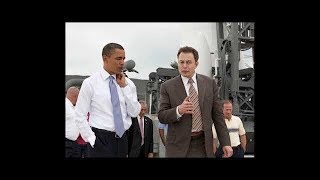 201247:24
 201128:23
 20151:00:33