2009年5月,国际空间发展大会(ISDC)的会场大屏幕上放着一枚火箭的动画。龙飞船(Dragon)点火、起飞、入轨,最后缓缓靠上国际空间站,对接、开舱,宇航员飘进去。
放动画的原因很直接:那时候猎鹰9号(Falcon 9)一次都没飞过,猎鹰1号(Falcon 1)也才成功过一回。台下几千名航天从业者和爱好者看的,是一份还没被现实检验过的计划书。
马斯克在台上讲的东西很具体:载人飞船还差什么、火箭怎么回收、一磅载荷的成本能压到多少、NASA 的商业运输合同能填上几年的空窗。这些数字后来被反复引用,因为放在2009年,它们听起来都不太像真的。
载人版龙飞船,只比货运版多一个逃逸系统
开场那段动画里,龙飞船是载人构型。马斯克说,团队花了很大力气让载人版和货运版保持最小差异,真正需要从头开发的只有一个东西:发射逃逸系统(launch escape system)。
这个取舍值得多说两句。飞船在发射台上或者上升段出问题时,唯一的活路是被一个装置瞬间拽离火箭。这个装置没法用货运版现成的东西改,必须单独做。除此之外,船体结构、推进、热防护、对接机构,全部共用。
把变数压到最少,是 SpaceX 那时候最核心的工程逻辑。货运版先把东西送上去,跑通流程,载人版只加一个救命的部件。马斯克在台上说这句话时语气很平淡,但这句话背后是整套成本结构的算计:每多一个需要单独开发的子系统,就要多一条供应链、多一套测试设备、多一轮失败的可能。
再往深一层想,这个选择还减少了另一类成本:认证成本。载人航天最贵的部分很多时候不在硬件,而在证明硬件可靠。两个版本共用同一套结构、同一套推进、同一套对接机构,那么货运版飞出来的每一次数据,都能算进载人版的可靠性账本里。这是把一次飞行的价值榨两遍。
一级回收:16到18个G,箭体被拍得稀烂
提问环节有人问火箭回收。马斯克先泼了冷水。
猎鹰1号的一级在再入时条件非常恶劣,箭体被拍得相当惨。过载能达到16到18个G,同时还承受不少热量。这两个数字放在一起意味着什么:一级不仅要扛住相当于自身重量十几倍的冲击力,还要在高温里保住结构完整。
所以2009年7月那次发射,也就是搭载马来西亚卫星的那一发,他们干脆把降落伞回收系统整个拆掉了。理由说得很直白:当时的热防护不足以让这一级活下来,带着降落伞也没有意义。要加够热防护,就得吃掉质量余量,那个阶段他不想冒任何不必要的风险。
真正的回收尝试排在猎鹰1号的第六次飞行。到那一次,热防护、降落伞全部装回去,团队会集中精力把一级捞回来。
这段话透露出一种很少见的克制:明明回收是公司最想证明的事,他却愿意为了保住一次商业发射的成功率,把降落伞拆下来。短期目标和长期目标分成两笔账来算,这在航天行业里是常识,在创业公司里往往做不到。客户的卫星在船上,试验品就不该上船,这个排序一旦颠倒,商业信誉就没了。
猎鹰9号首飞,就要试着把一级捞回来
猎鹰9号的情况刚好反过来。
首飞不搭载真卫星,只带一个配重假载荷,质量余量大得很,足够装一整套热防护系统。所以首飞就会尝试回收一级。马斯克还半开玩笑地预测了一句:猎鹰9号首飞的一级,有可能比猎鹰1号的一级更早被收回来。
他同时把边界划得很清楚:短期内,回收是可选项,长期看是必须项。为了试验回收而推迟整体进度、拿正式任务去冒险,这种事不做。
原本猎鹰9号首飞打算一级二级都回收。后来他们放弃了二级回收,把进度抢回来。长期目标仍然写得很完整:猎鹰9号的一级、二级,加上整流罩,全部都要回收。
把「可选项」和「必须项」这两个标签同时贴在同一件事上,是马斯克处理长周期技术风险的固定手法。技术路线不放弃,但时间表上不许它绑住主线。这条规则后来被 SpaceX 反复使用,星舰的迭代节奏里也能看到同样的影子。
还有一层隐含的判断:试验要看性价比。猎鹰9号首飞带的是假载荷,炸了也只损失一枚火箭;猎鹰1号搭载马来西亚卫星那一次,炸了就是客户的钱和公司的信誉。同一项技术,放在哪种任务上试,决定了它能承受多少次失败。
收回来不算完,得能便宜地再飞一次
「把级收回来」和「能重复使用」之间,隔着好几年的学费。
马斯克估计,光是搞明白怎么把级完好地收回来,就得三到四年。这还只是前半程。收回来之后还有一关:怎么让它重新适合飞行。热防护要加强,结构要补强,一堆细节要改,每一项都要重新验证。
他把这个过程描述成一个持续的循环:捞回来、检查、发现这里的防热要改进、那里的结构要加固、还有别的零零碎碎的问题,改完再飞,再捞,再改。每循环一次,复用成本降一点,直到某天这套流程在经济上算得过来。
光把火箭收回来是不够的,它必须能被高效地重复使用。(马斯克)
这句话是整场演讲里最容易被忽略的一句。回收是一个工程指标,复用是一个经济指标。火箭捞回来了,翻修成本比造新的还高,那这件事在商业上等于没做。他特别强调「高效」两个字,说明他很清楚奖杯和生意之间的距离。
他也承认这事没人做成过,SpaceX 只是希望能做成,离做成还有很长的路。这个态度和他讲成本目标时的态度一致:给出方向,不给保证。
航天飞机就是摆在眼前的例子。它能飞几十次,能带七个人上天,能把哈勃修好。可是每次飞完之后的翻修工作量惊人,发动机要拆、隔热瓦要一块块检查、各种系统要重新认证,最后每飞一次的成本比造一枚一次性火箭还贵。复用率是漂亮的,经济学是失败的。马斯克在2009年反复说「高效的复用」,脑子里大概就装着这个教训。
两千美元一磅,和三百美元一磅
有人问每磅载荷的成本。马斯克先拆了问题:这个数字取决于轨道高度和倾角,也取决于你要不要带一艘飞船。
往空间站送货,不能只把货扔到轨道上,得有东西飞过去、靠上去、对接。飞船本身吃掉不少运力。龙飞船送到空间站,运力大约是3吨。
如果只看运力,猎鹰9号往250海里、从卡纳维拉尔角正东发射的标准近地轨道,运力大约两万两千磅,也就是十吨出头。这样一枚火箭的造价大约四千万美元。
两个数字一除,大概是每磅两千美元。
然后是那个让全场安静下来的推论:如果复用能够成立,飞行器的资本成本可以被摊薄甚至抹掉,每磅成本有可能降到两三百美元。
从两千到三百,接近一个数量级。这个幅度足以改写所有关于太空经济的算法:卫星设计不用再为每一克重量讨价还价,空间站补给可以按需下单,载人飞行的票价能降一个量级。今天讨论的低轨卫星星座、在轨制造、商业空间站,在数学上都建立在这个降幅之上。
马斯克没有把话说满。他反复强调通往这个数字的唯一路径是「非常高效的复用」,而这是个非常难的问题,当时没有人解决过。他希望 SpaceX 能解决,但离解决还很远。
十年后回看,这个数字他其实说得偏保守。但2009年那个会场上,两三百美元一磅已经像是科幻小说里的报价。台下坐着的人大多清楚,这个报价一旦成真,整个行业的商业模式都要重写。
COTS 的钱、联盟号的座位,和2012年的空窗
话题转到 NASA 的商业轨道运输服务计划(COTS)。
马斯克给出的时间表是:从 COTS D 阶段被启动算起,大约两年半,SpaceX 就能同时向空间站运送货物和宇航员。他把落点放在2012年,并且说「2012年肯定能做到」。
2011年的联盟号(Soyuz)座位还是得买,这部分 NASA 已经规划好了。他还建议2012年也保留一些联盟号航班。理由来自 NASA 载人航天部门的要求:无论哪家商业公司延期,都不能出现没有交通工具往返空间站的空窗期。他们的要求本身就包含冗余,多买几个座位,等于给整个计划买保险。
这个细节值得停一下。2011年航天飞机退役,之后美国有整整几年只能买俄罗斯的座位上天,票价一路涨。马斯克在2009年就算过这个时间窗口,他给出的两年半承诺,正是冲着填这个缺口去的。
经济刺激法案里的钱当时还在变动。其中4亿美元划给探索项目,1.54亿是商业载人相关的混合资金,里面8000万有明确指向。马斯克特意说明自己只是看到了这个数字,具体怎么分还可能被重新洗牌,新上任的 NASA 局长和奥古斯丁委员会(Augustine Commission)都会影响最终结果。
这段对话记录了一个特殊的时间切片:政策、预算、技术路线三件事同时在动,谁也不知道半年后钱会去哪儿。SpaceX 当时能做的,只有把两年半这个时间承诺摆出来,让决策者有东西可以押注。
互联网、汽车、火箭:三种完全不同的资本门槛
有人让他比较互联网、汽车和火箭这三种生意。他从资本门槛讲起。
互联网的好处是启动资本可以很小。几个人、几台服务器、一间租来的办公室,就能把公司开起来,验证一个想法。汽车和火箭是重资本行业,同样的钱在互联网能撑起一家像样的公司,在这两个行业连门都进不去。
他也承认自己有一个别人不容易复制的优势:进航天之前,他已经从两家互联网公司拿到了资本。这是一条经验,也是一道门槛。后来的创业者听着像是被劝退,其实他讲的是行业事实:火箭行业的第一笔钱,通常来自别处。
他给的建议非常实在:想进航天或者造车,先想办法搞到钱,并且做好亏掉其中一大半的准备。他也补了一句,从资本回报看,SpaceX 和特斯拉最后大概率还行,但远不是确定的事。
接下来那句话更值得记住:做这些事需要有非经济的动机。如果把各行业的风险调整后回报排个序,火箭和汽车大概不会排在前面,有些地方能赚更多钱、承担更小的风险。但这些事对未来的意义不一样。
这段话没有煽情,说的是一个投资判断:重资本、长周期、高失败率的行业,靠纯粹的财务回报预期撑不住十几年。创始人得先想清楚自己为什么非做不可,否则第一次爆炸就会让人退场。2008年 SpaceX 的第三次发射失败之后,公司几乎破产,撑住他的正是这类说不清的动机。
比猎鹰9号重型更大的火箭,前提是有人付钱
SpaceX 的目标写在两行里:降低太空运输的成本和价格,提高可靠性,然后把规模做大。
猎鹰9号重型(Falcon 9 Heavy)已经在计划中。他还提到,团队想造比猎鹰9号重型更大的火箭。
前提是钱。持续的商业收入、内部研发预算,或者 NASA 和国防部愿意出钱搞一个大火箭项目。只要有后两者之一,事情会容易很多。
这句话在2009年听起来是愿望,十几年后回看,路径几乎一模一样:先靠商业发射和 NASA 合同养活自己,再用内部研发资金和军方合同把下一代运载工具推出来。NASA 后来搞的太空发射系统用了另一条路,SpaceX 则把这条路走成了自己的现金流循环。
太阳能公司:不到5%的时间,可能是最高的资本回报
谈到太阳城(SolarCity),马斯克先划清了时间账:他花在这家公司上的时间不到5%。
然后是定位。太阳城不生产光伏板本身。他用了一个类比:太阳城像戴尔,管客户关系、做系统设计、把部件组装起来、负责运维和服务,但不造 CPU,也不造硬盘。
所以太阳城有一部分是硬件生意,更多是服务生意。
他给出的判断出人意料:按资本回报算,太阳城可能是三家里最高的。SpaceX 和特斯拉的资本回报他持谨慎乐观态度,两家大概差不多,谁更高现在说不准。
这个排序很能说明问题。造火箭和造车是最吸引眼球的两件事,从资本效率看却排在有服务属性的光伏公司后面。资本回报和影响力从来不在同一张榜单上。光伏行业的资本周转快、技术迭代慢、客户是普通家庭和企业,和火箭那种一次性押上整枚箭的生意完全是两套风险模型。
冯·布劳恩奖,和那个黑花岗岩底座
演讲结束后,美国国家空间协会(NSS)把沃纳·冯·布劳恩纪念奖(Wernher von Braun Memorial Award)颁给了马斯克。
这个奖在奇数年由协会的评奖委员会投票产生,表彰两件事:在某个重要且成功的航天项目中的管理水平和领导力,以及项目负责人赢得了自己组建的强团队的忠诚。颁奖人特别提到,马斯克和 SpaceX 团队在猎鹰1号上做到了这一点,猎鹰9号和龙飞船正在重复这个过程。
奖杯的样子也有点意思:1950年代冯·布劳恩设计的渡船火箭(ferry rocket)模型,旁边立着一枚土星五号,底座镶着黑花岗岩。一个从未实现的载人登火构想,和一枚把人类送上月球的火箭,摆在同一个底座上。
颁奖人讲完,主持人提醒台下的人把盘子里的东西吃完,下午两点继续开会。整个场景朴素得有点可爱:一间会议室,一群人端着午饭,台上讲的是几千万美元一枚的火箭和十年后的火星。
十六年过去,这场演讲里的大部分判断被现实验证了,也有一部分被现实修正了。真正值得读的地方,是他在没有成绩单的时候,怎么把约束条件、成本结构和时间表摆在台面上,一条一条算给人听。
- 做产品迭代时,先把「必须新开发」的清单压到最短。龙飞船载人版只多一个逃逸系统,其余全部共用。每多一个独立子系统,就多一条供应链、一套测试设备、一轮失败可能。
- 把「回收」和「高效复用」当成两个不同的里程碑来管理。前者是工程指标,后者是经济指标,中间隔着三到四年和一长串翻修工艺的学费。任何以「降本一个数量级」为目标的项目,都要先问清楚省掉的是哪一块成本。
- 给探索性技术设双轨定位:短期是可选项,长期是必须项。可选项不许拖累主线进度,必须项不许因为短期挫折被放弃。猎鹰9号首飞拆掉二级回收、猎鹰1号拆掉降落伞,都是这条规则在起作用。
- 算成本要算到单位载荷上,并且把资本成本和运营成本分开算。四千万美元的火箭、两万两千磅的运力,得出每磅两千美元;复用抹掉的是资本成本那一半,燃料和人力还在。账算错了地方,目标永远达不到。
- 试验要放在输得起的任务上。假载荷、配重、无人飞行,这些是给新技术的合法试验场。拿客户的真卫星去验证未成熟的技术,省下的试验费会以信誉的形式加倍偿还。
- 进入重资本、长周期行业之前,先解决融资,并且预留亏掉一大半的空间。同时确认自己有非经济动机撑着,因为按风险调整后回报排序,火箭和汽车从来排不进前列。
0:07- 45 seconds and counting Dragon spacecraft is on internal power SpaceX's go for launch
0:34Stasia last second stage initiative did you buy more state emergency
1:34dragon is on an approach you so that's certainly what we hope to hope will come true at some point and you know as I mentioned we've really worked hard to make sure that the the crew version of the Dragon is minimally different from the the cargo version so we're really there's only one major develop an item that which is the launch escape system that that is needed full
4:49crew carriage all right I think that's sort of in a nutshell the situation with SpaceX and I'm happy to take any questions from people
5:29yeah it's a good question so it's but just about recovery of the stages so in the case of Falcon one we have we do intend to recover the first stage of Falcon one and in in the you know what we've discovered is that the the reentry conditions even for first stage are really quite quite difficult and so it
5:54really gets battered around pretty hard you know these loads up to you know 16 to 18 GS and that does see quite a bit of heat as well so in the upcoming flight of the the the the launch of the malaysian satellite Falcon we actually took the parachute recovery system off because we we know that we don't have enough thermal protection for the stage
6:25to survive so therefore this there's no point in having the parachute on and in order for us to put enough thermal protection on we would potentially affect the but we would affect that the the amount of mass margin and we just we just don't want to take any unnecessary risks at this stage of the game now full flight six which is the one after this one we will be putting on the thermal protection and the parachute and everything so we will make a concerted effort to recover Falcon one flight six of the first stage for Falcon 9 we do
7:00have we don't have any any real limitations for the first flight on payload March and because it's not carrying a you know a full payload or real satellite or anything it's just carrying a dummy payload so there's plenty of mass margin for thermal protection system so we are going to try to recover the first flight of Falcon 9 and it's possible that the first flight of Falcon 9 at may actually get recovered before the first of health and one but again these the that is sort of
7:30a very much an optional thing at this point in in a lot it's it's a requirement in the long term as far as I'm concerned but it's it's optional in the short-term so we don't want to have any development delays or risk any missions do to attempt to state a stage 2 stage recovery and we had
7:52intended to have the the first flight of Falcon 9 attempt to recover both first and second stage but we sort of gave up on recovering the second stage in the initial flights in order to bring bring bring in schedule module so but long term the intent was with both Falcon 9 first and second stages and the fairing is recovery and but this is going to be a tricky thing that takes us years to figure out and I wouldn't you know it
8:22could take us I don't know three four years to get it right and and then of course once you get the stage back you got to say okay now what do we need to do to get this thing ready for flight again and so there's gonna be learning across this even once we start getting the back which is okay we've better improve the thermal protection here we've got to strengthen parts there we've got a you know do do this that the other thing to make it an efficient recovery process because it's not enough that you recover it it's got to be efficiently reusable
9:23right well I wouldn't want to comment on on the prospects for another system but I can say for for Falcon 9 the the you have to say cost per pound Tullio well it there it depends on which you know what's your altitude and inclination and is that as part of a spacecraft system for example you know in in in transferring cargo to the space station you really need something that's going to go and and Dulko berth with the space station and then that that spacecraft itself takes up a quite a bit of mass so you know for Dragon for
10:03example it's about a three metric ton - of hailer capability to space station but if you were to say Falcon nines capability to to nominal Leo say 250 nautical miles launch due east from the Cape type of thing that would be about you know 21 22 tonnes I was sorry 22 21 or 22 thousands I should say and you're talking about about a approximately forty million dollar vehicle you know so maybe a couple thousand dollars a pound type of thing and yeah so now that just
10:49seems no reusability over time if we're able to make reusability work then you can to degree that you can make reasonably work you can get rid of the capital cost of the of the vehicle or reduce the capital cost and then ultimately you could see a cost per pound to overt that's measured in maybe a couple hundred dollars to three hundred dollars something like that but the only way to get there is with very efficient reusability and that's that's a very tough problem and and no one's solved that yet we're hoping to solve it and we're sort of aspiring to solve it but we've got a long way to go before we do that
11:58okay so we we took we do believe we can address the gap or at least a large part of the gap in our estimate is is somewhere around roughly two and a half years from from when cuts D is exercised or some version of cots D is exercised that's the point at which we could be delivering crew as well as cargo to the space station so you know we think we could probably do do this certainly in 2012 and you know so we wouldn't
12:41necessarily be able to that you'd still need kind of Soyuz activity for 2011 which is already planned by the way and probably the wise move would be to have also some Soyuz flights planned for for 2012 and I know NASA space operations wants to actually ensure that there is overlap of whatever the you know that there's there isn't any gap say between it if if we were late or some other system was late they won't want to make sure that there's overlap between creams so I think we can address most of the gap from KSA I take comfortably from mid
13:202012 onwards as far as the stimulus money I think that that's still in flux so we don't know exactly what what will happen with that and probably the the new NASA Administrator will have say in and how that money is applied but we don't currently have high visibility into what will occur with the the stimulus funds there was actually a 400 million allocated to exploration in the stimulus and then 154 sort of a mixture
13:56of Commercial Crew activity okay and then of that 80 was I saw it but I don't know the the deck could get reshuffled with the the NASA Administrator and also with the Augustine Commission
14:57how would I describe the you know the differences between to the internet cars and rockets okay well the advantage the Internet has is that you can you can create a company with with relatively small amounts of capital so you don't necessarily need to come into it with with a bunch of capital we dealing with cars and and
15:25rockets those are high capital activities so that's it's difficult to to create a company in in those arenas it comparatively speaking more difficult than it is in the in the internet arena so you know one of the advantages I had was you coming into the space arena with with capital from to sail to to Internet
15:47companies previously so I think that's probably it's probably a good idea to to try to acquire some capital by whatever it means before entering the either the spatial or cars business and probably be prepared to lose a large part of it but I think things will actually turn out okay for from a capital return standpoint on both the SpaceX and Tesla but it's certainly you know far from a certainty in in these endeavors that's you know and I think there needs to be some non-economic motivation as well is I think if you certainly for me and I think logically for most people if you said if you rank ordered the highest return on investment industries to go
16:40into you probably wouldn't have rockets and cars at the top of the list so you know there there are places where you could probably earn a higher return risk adjusted return and then the car business or the rocket business but I think they're also you know quite interesting and rewarding from you know because any I think these these are things that really matter to the future
17:47hmm well you know SpaceX we do want to like city improve the cost and reliability of space transport and we also do want to scale it up so you know we're gonna do the the Falcon 9 heavy we'd like to do vehicles that are even bigger than the felt 9 heavy but of course we need to be able to afford that so we're just going to sort of gonna try to keep trying to make progress and you know I think this there's a good chance that we will be able to afford to Purdue
18:23to do bigger Rockets than even felt tonight heavy but we need to have an ongoing business and and then be able to fund that either through internal R&D dollars or potentially if NASA or the DoD wants to fund a big rocket program then that would make it a lot easier
18:57right well the unfortunately I don't need to spend much time on the solar side of things I really it's left for less than 5% of my time on solar city and Solar City is actually not in the business of producing the panel's themselves but in it there's they're kinda like Dell computer you know were they they manage the in customer relationship they do the design of the overall system they put the pieces together and manage the service and all that but just like Dell they don't make the CPU or the hard drive or anything like that so so Solar City is partly a hardware business but probably more a service business than it is Hardware production and so actually
19:54on a return on capital basis Solar City will probably be the highest return on capital of old 3 and I'd like said I think you know I'm cautiously optimistic about both both SpaceX and Tesla on return on capital being being not bad I mean it not that not the best place that one could deploy capital but but but pretty good in the grand scheme of things I don't know which one will with it between SpaceX and Tesla which one will have a better return on capital but I would say probably comparable but it's it's hard to say at this point please
20:44don't step on me if I cook these bread Silcox come to the foyer the podium we'd like to present Ilan with the National Space Society's Wernher von Braun Memorial Award this is the seventh von Braun award with the winner decided by a vote of the NSS awards committee during odd-numbered years it's given to recognize let me get this right excellence in management of and leadership for a space related project where the project is significant and successful and the manager has the loyalty of a strong team that he or she has created Ilan you and the SpaceX team have certainly accomplished this with the Falcon one and you're well on your way to doing the same with Falcon 9 and
21:32Dragon the award consists of a representation of the von Braun ferry rocket design during the 1950's beside a Saturn 5 on a base inlaid with black granite the NSS is proud to present you with the Wernher von Braun memorial award congratulations
22:13continue eating if you still have food on your plate we'll start sessions again at two o'clock as I understand it so thank you for coming
资源与出处
- 视频在 YouTube 收看
- 档案silicon-valley.tech 档案页本页视频与文稿数据来自 Elon Musk Archive
- 精读本篇精读 Markdown 版
相关视频
同频道、同主题或相邻年份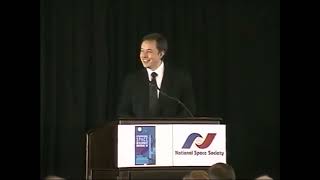 200530:34
 201111:15
 201724:02