一份 SEC 取证文件里,"or"(或)被定义为包含"and/or"(和/或),"and"(和)也被定义成包含"and/or"。
马斯克停下来,说自己得花点时间理解这些定义。理由很朴素:这跟他平时使用英语的方式不一样。
当有人说 or 这个词已经被重新定义成 and/or,and 也被定义成 and/or,这很不寻常。我以前没见过这种用法。(马斯克)
这场质询就这样开场。一边是 SEC 的律师,一边是当时同时掌管着几家公司的马斯克,双方先花了不短的时间,确认"或"和"和"到底是什么意思。
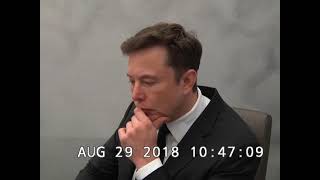
这份证词围绕 2018 年 8 月那条"考虑将特斯拉私有化、资金已到位"的推文展开。视频是取证录像的第一部分,内容从宣誓开始,一路问到特斯拉的创业史、他的头衔、他管几家公司的方式,以及他为什么删掉了 Instagram。
问答被剪掉了提问方,只留下马斯克的回答。所以读起来像一个人在自言自语,时不时冒出一句"是的""不是""我不记得了"。但把碎片拼起来,信息量相当大。
宣誓、文件,以及一场关于词义的拉锯
开头是标准流程。确认姓名:埃隆·里夫·马斯克(Elon Reeve Musk)。确认是否在政府机构做过取证:没有,只在民事案件里做过。
确认是否知道作伪证是犯罪:知道,接受。
确认昨晚做了什么:和律师一起看了文件,"大概就这样"。确认有没有人指使他来作证:没有。
中间有个小插曲。他忘了取证虽然有录像,同时也有文字记录,所以有些问题被重复问了两遍。他有点困惑,问了一句为什么,然后自己解释:"我有点纳闷为什么要重复,但明白了。"
真正让他停下来的是那些定义。取证文件通常会在开头列一长串术语解释,规范后面所有问答的用词。这份文件把"或"和"和"都指向了"和/或",连性别代词也做了扩张解释,阳性包含阴性。
马斯克说,这些定义跟标准英语的含义是相反的,他得先弄明白再往下答。他甚至补了一句,说这种把常用词重新定义的做法"挺有意思"。
这段对话看起来是程序性的废话,其实透露了一个信号:他打算逐字抠。后面几小时的问答里,这种抠字眼的习惯反复出现,凡是他不确定的地方,回答都是"我不记得""我不能确定""可能是"。
从比勒陀利亚到斯坦福,再到退学
简历部分是标准问答。出生地:南非比勒陀利亚。
先去加拿大皇后大学(Queen's University)念了两年,转学到宾夕法尼亚大学,在沃顿商学院拿了个本科双学位,物理加经济学。
然后到加州,进斯坦福读博士,方向是应用物理和材料科学。读了一半,把学位搁在一边,去开互联网公司了。
他对沃顿那段有个轻描淡写的评价:在那儿认识了很多未来的投资银行家,正是这些人说服他别往那个方向发展。
这句话说得很轻,但意思很清楚。商学院里最聪明的同学都奔着投行去了,他看完之后决定不干这个。
最好的头衔是没有头衔
问他现在担任什么职务,他答:公司的 CEO。紧接着补了一句,正在考虑改掉这个头衔。
律师追问改成什么。他说:什么都不写,字面意义上的什么都不写。
理由是这样的:
我觉得大家太关注头衔了。董事长、CEO,所有这些头衔,人们太在意,然后每个人都想要一个头衔。所以最好的头衔是没有头衔。(马斯克)
他被问到董事长这个位置,说那更多是个荣誉性的称呼,实际权力很小。他说自己也在考虑连这个头衔都不要。
还有一段自嘲。他说自己早年曾经很不好意思地管自己叫"首席产品官"之类的东西,那是过去遗留的产物,"一个悲惨的头衔"。
这段对话其实有法律意义。SEC 要确认他在特斯拉和 SpaceX 的实际角色,因为发推时的身份会影响那条推文算不算公司层面的公开信息。他的回答是:两家公司差不多,他都是 CEO 兼首席工程师,在 SpaceX 还兼火箭的首席设计师,直接管产品的技术方向,同时负责整个公司的运营。
换句话说,头衔可以不要,但技术决策权他要抓在手里。
那辆没有车门、卖 50 万美元的电动跑车
证词里最长的一段,是特斯拉的起源。
马斯克说这段历史"早晚得有人准确地讲一遍"。时间是 2003 年,他和 JB·斯特劳贝尔(JB Straubel)吃午饭,同桌还有另一个人,他一时想不起名字,只说那人在航天领域相当有名。那场会面是对方约的。
聊着聊着说到电动车。马斯克提到,他在斯坦福本来要做的博士课题就是高能量密度的电能存储,具体是给电动车开发先进的超级电容器,目标是让电动车真正能商业化,做到长续航和快充。
斯特劳贝尔建议他去试驾一台叫 Tzero 的车,出自 AC Propulsion,南加州一家小型工程作坊。
他去试了。那是一辆两座电动跑车,续航大约 250 英里,0 到 60 英里加速不到 4 秒。听上去很像后来特斯拉 Roadster 的指标,事实上它就是那个概念原型。
但这台车同时没有车门,没有安全气囊,没有任何安全配置,单台造价约 50 万美元。
这几个数字放在一起很关键。250 英里续航和 4 秒加速证明了电动车能行,50 万美元和零安全配置则说明它离一辆能卖的车还差着十万八千里。
马斯克去找了 AC Propulsion 的汤姆·盖奇(Tom Gage)和阿尔·科科尼(Al Cocconi),劝他们把 Tzero 商业化,理由是"世界真的需要看到电动车能做到什么"。
没劝动。对方对小作坊的现状很满意,不想往前走。
磨了几个月,他换了个问法:如果你们不做商业化版本,介不介意我来做?对方说,行。
盖奇还告诉他,另外有两个团队也有兴趣。马斯克没见过另一队,但被介绍的第一队是马丁·艾伯哈德(Martin Eberhard)、马克·塔彭宁(Marc Tarpenning)和伊恩·赖特(Ian Wright)。
这三个人手上除了一份商业计划书,什么都没有。计划书的内容就是怎么把 AC Propulsion 的 Tzero 商业化。
"你不能既拥有蛋糕又吃掉它"
接下来这段是整份证词里最坦率的部分。
马斯克当时在经营 SpaceX,他想的是:能不能通过投资或合流的方式推进电动车,而不用同时管两家公司。
他自己把这件事说破了:
这在某种程度上就是你想既拥有蛋糕又把它吃掉。每当你试图做一件事又想避开苦活累活,好东西不会从那儿来。(马斯克)
结果当然没成。他最后的选择是跟艾伯哈德、塔彭宁、赖特合流,同时把斯特劳贝尔拉进来,而不是自己和斯特劳贝尔单独开一家公司。
这里有个容易被忽略的判断。他手上其实有更好的牌:他自己有钱,有 SpaceX 的运营经验,斯特劳贝尔是电池和电驱动方面的技术核心,两个人从零开始做,控制权更清晰。
他偏偏选了加入一个只有商业计划书的团队。原因写在回答里:那三个人已经在推进 Tzero 的商业化,方向一致,合流比另起一摊更快。他想要的是速度,代价是后来的控制权纠纷。
证词里没有展开这段,但"想避开苦活结果没避开"这句自述,基本把结局说完了。
从原型到量产,中间隔着什么
马斯克在证词里专门解释了原型和量产车的差距,讲得很实。
Tzero 是一台一次性手工打造的车。它能跑,能证明电动跑车这件事成立。但它没车门,没气囊,没有通过任何法规认证,造价 50 万美元。
要做出一台合法上路、安全可靠、价格不是 50 万美元的车,中间要解决的问题包括:碰撞安全、整车法规认证、供应链、量产工艺、成本控制、售后体系。
他把这个差距称为"相当大的鸿沟"。
这段话在整份证词里的位置很微妙。SEC 问的是私有化推文,他答的是造车有多难。但对读者来说,这段的价值在于它说清了一件事:原型参数漂亮和产品能交付,是两个完全不同的能力。
看一家硬件公司,看它做出过什么原型,参考价值有限。看它有没有把原型变成合规、可靠、成本可控的量产件,那才是真本事。
五家公司,一个收件箱
律师问他一共管几家公司。他数了数:特斯拉、SpaceX、Boring Company、Neuralink,还有 OpenAI(他后来想起来忘了提,补了一句:那是非营利,他不在董事会)。
怎么分开处理?答案朴素得有点意外:靠邮箱。
他说手机挺好用,系统会自动分流。如果有人从特斯拉的邮箱给他发信,他的回复会自动用特斯拉的地址发出。反过来,他给特斯拉的人发邮件,默认也从特斯拉地址发出。
他承认偶尔会出错,但绝大多数时候会刻意区分每家公司的具体性。
问到 Boring Company,他的评价是"一家真正有趣的公司",并且给了一个很马斯克的指标:
到目前为止,那里的快乐与痛苦比非常好。至少现在是。这话会变成我的临终遗言。(马斯克)
挖隧道,卖周边,目前还没到什么凶险的阶段,所以这个比例好看。他自己也知道这话说早了。
问到 Neuralink,他讲了两层目标。近期是用电脑芯片解决脑损伤问题,包括中风、痴呆、帕金森、癫痫。远期是跟人工智能形成共生。
他把第二层说成"有点玄",但紧接着补了一句:从文明的存在层面看,这件事可能很重要。
一条八月初的笔记
问到私有化相关的通信,马斯克的回答很谨慎。
他说自己知道不该谈这个,但印象里只有一次跟私有化有关的沟通:托德·莫林(Todd Morin)发来的一条笔记。他说只有这一条,时间在 8 月初,早于那条推文。
他主动补了一句:这条信息影响了推文,所以他认为可能相关。同时又表示,这条笔记可能涉及保密特权,他不确定。
关于私有化的其他讨论,他强调"讨论得非常少","非常简短"。可能有几周时间跨度,但内容极少,而且跟本案无关。时间大概是 6 月。
他还提到自己的幕僚长贾斯汀·哈里斯(Justin Harris),以及另一位叫 Sam 的人,但这段问答很碎,他自己也说不清某个通讯软件的设置是谁弄的。
这段的价值在于它定了个调:他对"哪些通信可能被调取"有清楚意识,回答时在主动划定范围。哪些说了,哪些记不清,哪些可能有特权,分得很清楚。
删掉 Instagram 的理由
话题转到社交媒体,马斯克讲了一段跟商业无关的话。
他说自己确实装过 Instagram,但好几年没用了,一周前刚删掉。
删的理由是这样的:
它给人一种虚假的印象,好像别人都过着精彩的生活,实际上他们可能相当痛苦。然后人们拿自己的生活去跟别人看起来的生活比较,就感到难受。我觉得它可能真的助推了自杀率上升,这很糟糕。所以我不喜欢它,删了。(马斯克)
他对这个应用的使用记录也很淡。前后用了六年到六年半,平均下来一个月发一条左右。用途基本是给别人发张图配个"哈哈"。
但他其实是早期用户。Instagram 早期是 Twitter 上的一个照片滤镜插件,他是最早一批用的人之一。删之前,他把少数几张在意的照片存了下来,然后卸载。他说那些照片现在都拿不回来了。
问他是不是觉得早期版本更好,他说差不多是那个意思,但不确定。那个版本非常原始。
三次注册 Twitter
Twitter 的故事更长,也更像他。
第一次注册是在 Twitter 用户只有几千人的时候。一个朋友是 A 轮领投人之一。他注册完发现,这位朋友整天在上面说星巴克喝什么拿铁。他觉得荒谬,把账号删了。
后来有人占了他的用户名,开始以他的名义发东西。他没怎么管。
真正回去用是 2009 年或 2010 年前后。一个朋友建议他:Twitter 是直接对公众说话、绕开媒体的好办法。
他当时的想法是,这可以让他想说的话不必总是经过记者的镜头过滤。他自己也承认这是把双刃剑。
早期发的内容,用他的原话:
一开始我觉得我只是在发些没意义的东西。我在用我糟糕的幽默感折磨别人。(马斯克)
问他现在变了吗,他说没完全变。还是那种 whimsical 的烂笑话,中间夹着 SpaceX、特斯拉、Boring Company、Neuralink、OpenAI 的消息。
一篇被车辆日志拆穿的评测
问他为什么这么看重直接发声,他讲了一个具体的事。
《纽约时报》发了一篇评测,写一位记者试驾他们车的糟糕经历。马斯克的说法是:这篇评测明显失实,从根本上歪曲了那次试驾,属于彻底撒谎。
他们怎么知道的?因为车是他们的。车上有完整日志,记录了那台车做的每一件事。对照下来,记者的整个故事是编的。
他们把这件事公开指了出来。时间大概是 2013 或 2014 年。
这件事基本解释了他对媒体的态度:他要的不是话语权本身,是在被歪曲的时候有一个能直接说清楚的通道。
问他发推频率,他的回答很模糊。平均下来大概每周一条的量级,但起伏极大。有的整周完全不提特斯拉,有的某一天发很多。
问他是不是以特斯拉 CEO 的身份在发,他说:感觉上是作为公司的领导者。
没有正式政策,只有一条披露
SEC 关心的是制度。特斯拉有没有关于高管使用社交媒体的正式政策?
马斯克的回答:公司文件里有一处披露,说明他会使用 Twitter。正式的社交媒体政策,他不记得有。
有没有人帮他审核推文?他说偶尔会。如果某个人恰好在旁边,而他对某条推文不太确定,会问一句"你觉得这条怎么样"。大多数时候,他不问任何人。
问到他有没有拉黑过用户。他说拉黑过,数量不多,但后来把一大批都解除了。
他给了个操作建议:
用静音比拉黑好。被拉黑的人会特别兴奋。静音之后他们还能看到我的推文,只是我看不到他们的。(马斯克)
这句话说得像个天天跟评论区打交道的人。
这份证词真正有意思的地方
整份录像里,马斯克没有一次情绪失控,也没有一次长篇大论。他的回答短,遇到不确定的就说记不清。
但他有几处主动补充,信息量都不小。主动说那条笔记影响了推文;主动说想避开苦活结果没避开;主动说删 Instagram 是怕它推高自杀率。
这些补充都是他自己加的,没人追问。
另一个细节是那些数字。250 英里、4 秒、50 万美元、六年半、一个月一条、每周一条。他讲话时习惯挂具体数字,哪怕是在描述一段二十年前的午饭。
对读者来说,这份证词的价值不在八卦。它是一份少见的、由当事人逐句确认过的创业史口述,覆盖了特斯拉从一台没车门的概念车到量产车的路径,也覆盖了他管理多家公司、使用社交媒体的实际操作方式。
至于那条推文最后怎么判,是另一个故事。这份录像回答的是更基础的问题:他当时在做什么,怎么想的,为什么那么说。
可以带走的东西
- 看一家硬件公司,别只看原型参数。问三个问题:过没过法规认证,成本降下来没有,量产工艺解决没有。Tzero 有 250 英里续航和 4 秒加速,同时没有车门和安全气囊,单台 50 万美元。
- 想推动一个行业,直接下场做的成功率,通常高于说服在位者转型。马斯克劝了 AC Propulsion 几个月没成,最后是自己干。
- 合伙之前先想清楚控制权。他为了省事选择合流,结果还是被拖进去全职管特斯拉,绕开的苦活一样没少。
- 公开发言前,假设所有通信记录都会被调取。这份证词里,一条八月初的私人笔记成了关键证据。
- 管理多家公司,靠的不是分身,是清晰的隔离机制。他的做法是邮箱自动分流,发件地址跟着收件方走。
- 如果社交媒体让你频繁拿自己的生活跟别人比较,删掉它是有依据的选择,不是矫情。这是马斯克给 Instagram 的原话理由。
- 读官方文件时,先看术语定义那一节。"或"被定义成"和/或"这种事,会改变后面每一句话的含义。
1:26I do. Elon Reeve Musk, E L O N R E E V E M U S K.
2:28May I take an opportunity to review it again?
4:50All right. Take care. Are you referring to this? Yeah. General. yes. I do not. And and sorry, I forget that even though it's videotaped, it's also written, which which hence the clarification. I was sort of puzzled as to why it's being repeated, but yeah. Sure. Yes, I am.
6:30Yes. Mhm. but yes, we have so. transfer instruments transfer
7:34I mean not not before a a government agency, but I've done depositions in civil cases. Yes, yes.
7:57Sure. Got it. I accept that. It is a crime. I do. I accept Right there. Should I be answering these or just acknowledging them? I object. Okay. Wait for a pause. My apologies. You're going to make things difficult. If I'm making things difficult for the stenographer, stop me or please let me know. Sure. Yes. No.
9:47I I reviewed documents last night with counsel and that's pretty much it. No.
10:08Did anyone tell me to testify? So, yeah.
10:10Oh, oh, no, no. Well, concerning is broad. no. I know. Yeah, I was just walking on the definition of concerning being quite broad. Sorry. So so so the defining the word or to mean and/or. And the word and also means and/or. Sorry. The masculine gender includes the female gender.
12:15Okay. Yeah. No, it works now. But some of these definitions given that they are contrary to the sort of standard English meaning of the words, I I think maybe I I I should just spend a moment just understanding them because it is interesting that it defines words differently than one would use in common vernacular.
13:08Yeah, yeah, absolutely. Just if you know, when somebody says like the word or has been redefined to mean and/or and and has been defined to mean and/or as well is is unusual. I I haven't seen that before.
14:15All right, thank you. Got it. Yes. not of that nature. Yes. I do not. Yeah, no.
15:03So, then not that I can recall. I do not think so. Yes. not sure of the exact dates, but shortly thereafter. I think it was within a few days. Some may have been immediate. I'm not sure. I wrote on my phone and several computers.
16:18Yes. Yes, it is. Definitely not having them. So, yeah. I mean, of course, being Sure. I got it. Okay.
20:17All right. No. I believe so. No. Yeah.
21:13Pretoria, South Africa. I was I went to Queen's University in Canada. was there for 2 years, transferred to the University of Pennsylvania. completed a dual undergraduate degree in physics and economics at Wharton School. And then came out to California to do a PhD in flight physics and material science at Stanford.
21:50but ended up putting that on hold to start an internet company.
22:22I met a lot of future investment investment bankers. Mhm. Convinced me not to have a career in that direction.
22:47Yeah, yeah. That's No problem. I am the CEO of the company. Although I'm considering changing my title. Nothing. Quite literally. No, I just think there's like an There's too much focus on titles. And I think that you know, all these titles like chairman and CEO and sort of all the all these titles and people get too focused on titles and then everyone wants a title.
23:33so I think the best title is no title. Yes. Yes, I would Well, I'm considering just not having a title there either. But the title of chairman is somewhat of an honorific and has little in the way of de facto value. so
24:21No. I just think people are too concerned about titles. I hope not. I don't think so. Oh, well, yeah, but that's not really a title. I think I somewhat embarrassingly called myself chief product officer or something like that. that was in the vestiges of the past. It was a tragic title.
25:05Yeah, I think it might be, unfortunately. Well, so the origins are interesting. The At some point there should be some accurate recounting of this. But in 2003 I had lunch with JB Straubel and I another fellow who is his name I don't remember at the moment. but he's quite famous in space.
25:59and he he's one who requested the meeting. And in the course of the meeting in 2003, we got to the subject of electric vehicles. and I mentioned that my PhD at Stanford would have been in high energy high energy density electric electric energy storage for electric vehicles. Essentially, trying to develop advanced ultra capacitors for use in electric vehicles in order to commercialize electric vehicles and make them work and have long range and fast charging.
26:34Is this too fast? Is this okay? And so JB suggested that I have a test drive of the Tzero vehicle from that was made by AC Propulsion which is a small sort of a small engineering shop in Southern California. and so I got had had a test drive of the the Tzero, which was a sports car that had essentially the properties of what we later did at Tesla with the Roadster, where it where it had about a 250-mile range, a 0 to 60 time of under 4 seconds, and yeah, so it was it was a sort of a a proof of concept prototype, and I I talked to Tom Gage and Al Cocconi at
27:36AC Propulsion and tried to convince them to commercialize the Tzero and saying that the world really needed to see, what electric cars were capable of. and despite my best efforts I could not convince them to commercialize the Tzero. So, they they were just not interested in in going beyond this sort of small engineering shop.
28:01So, after a few months of trying to convince them to do that, I said, "Well, if if you if you guys are not going to create a productized commercial version of the of the Tzero, then would you mind if I did that?" and the they said, "Sure." and that it's important to note that the Tzero, while it was a two-seater electric sports car, it also didn't have any doors or airbags or any safety features and and was extremely expensive to to make, on a one-off basis. It was like half a million dollars. So, there's quite a big gap between a proof of concept prototype and creating a car that meets all of the regulatory requirements and is safe and reliable and and doesn't cost half a
28:56million dollars. so so when I suggested that to Tom Gage, I said he said, "Well, there are two other teams that are interested in doing this as well." I never met the other team, but the first the the one team he did introduce me to was Martin Eberhard, Marc Tarpenning, and Ian Wright.
29:26Wright, W O Ian? I A N. so now they didn't have anything except a business plan which involved commercializing the AC Propulsion Tzero. and I thought I'm running SpaceX at the time this is a maybe a way for me to advance the course of electric vehicles without having to run two companies.
29:59That didn't work out, obviously. I mean, like to some degree, it's sort of like a case of you know you can't have your cake and eat it, too. so like whenever you try to do something like and avoid hard work I mean, good things do not come from that. or at least too much work. So, I thought I would combine forces with Marc Martin and Ian. and then bring in JB rather than just create a separate company with JB and and me.
30:43Maybe more detail, I don't know. But I mean I think it was interesting.
30:49I mean how much detail do you want? Sure. Yes. I know that date well because it was June 28th, 2010. Yes. I I do. Is it legally the president or actually a CEO? I'm not sure about that. I think technically it's the president or something like that. But yeah, so head of the company.
31:57Approximately the same. it's similar. So I I'm the CEO and chief engineer, chief designer of the rockets. So it's really pretty similar both companies. I I drive the technical direction of the product, so I'm the overall head of engineering or design. and and also run the company.
32:34Yes, but they are the time allocation is minor. So, I am I have some small little companies. Yeah, well, I have the Boring Company. which digs tunnels. Bores tunnels. and that's a real fun company. I have to say the enjoyment to to grief ratio is very good there so far. The the enjoyment to to grief ratio is
33:17quite good. for now at least. Those are his last words. so, that's digging tunnels and and and the selling of our merchandise. and then there's Neuralink which is with with the goal is to help solve brain injuries. and you know, strokes, dementia, Parkinson's, just there's a whole range of brain epilepsy. and u- using computer chips to be able to do that.
34:04and and and this is a bit esoteric, but with a longer term view to potentially achieving symbiosis with artificial intelligence, which I think a- achieving symbiosis with artificial intelligence. which could be important for on an existential level for civilization. No. Yes. I just knew like Cuz I just the the the three four companies. Yeah. Yeah.
34:51I mean probably with a boring addresses. Yes. Yeah, but there there may there may be occasional mistakes, but it is almost always I I try to be quite careful about specificity of each company. Actually, the phone's pretty good. Essentially, if somebody emails me from Tesla, it's automatically going to be initiating email.
35:29The reply will automatically come from my Tesla address. Likewise, if I send an email to somebody and they're at Tesla, it will default to sending from my Tesla address. To the public, you mean?
38:21I mean the only one I know I'm not supposed to do this, but there's only one communication that I recall relating at all to the take private, which was Todd Moran sending me a note saying
38:51Yes, yes. Yes, it was just one one note, yeah. It may it may be privileged, I don't know, but it's not I mean I can just say it's not like it was just
39:29I'm I'm not sure exactly, but early August. It was prior it was prior to that, yeah. It informed it it informed the the the tweet, so that's why I think it may be relevant. How's that?
40:08Justin Harris is my chief of staff and is I don't know he is on the
40:31Yeah, I do want to emphasize very little was discussed at all. Yeah. I don't I don't think so. It's very brief. Maybe a few weeks, but this was very very little. And and yeah, and and was sort of unrelated to to this matter. Probably June. Yeah. I think so.
41:40Yeah. Yes. Yes. No. I'm I don't recall. don't know.
42:14I think Sam may have just set the setting, but I'm not sure. Sam tell us Sam tell real. I mean truthfully there was there was very little on what I like there was a you know, kind of communication there's very little on it.
42:58I don't recall him using any communications. Yes. I didn't I I was actually quite surprised to see a note from him online.
43:46unwise I did have it installed, but I actually not used it in years. and I don't use because I No.
44:26I have Twitter. Correct. Yeah, it's embarrassing. Why is this funny? Well That's just You know You know, I I think it sort of gives this false impression that people are having these amazing lives when in fact they can be quite miserable. And it then creates unhappiness because people compare their life to the apparent life of others and and then they feel bad.
45:21And I think it may actually contribute to an increase in the suicide rate, which is terrible. And so I didn't like it and deleted it. About a week ago. Yeah, already in the beginning when it was a filter for Twitter. It was a It was used to just be like a you know You'd have a It was on photo on Twitter It was like a plug-in and you'd like use it as a filter. I was one of the first people to use it actually.
45:54So I took snapshots of like the the few photos that I care about on and then deleted it. Yeah, kind of kind of close to it. An early version. Not sure if it's better for but it was like very early. You can't even get those photos anymore. I use it infrequently infrequently. I mean, I had it I think for six and a six or six and a half years.
46:28and in that entire time I did an average of one post a month or something like that. actually only realized about a year ago that there was one. but this is entirely for personal reasons. and generally involved sending some Instagram picture to somebody else with a you know LOL or something.
47:05Yeah. it's just Twitter. So sorry. This is entirely frivolous.
47:27No. Not at all. Well, technically I first signed up for Twitter when it was very tiny. I think it only had a few thousand users. And a friend of mine was the sir was one of the lead series A investors in Twitter. And I signed up and then he would just keep talking about like what kind of latte they had at Starbucks. And so then I was like, this is ridiculous. I deleted my Twitter cuz it just seemed like nonsense.
48:04and then somebody else took over my Twitter handle and started posting things in my name. but I kind of ignored Twitter until until about probably what was it? or 10 or something. and then a friend of mine suggested that Twitter would be a good way to talk directly to the public and bypass the media.
48:40obviously a double-edged sword but I thought, well, this could be a good way to not always have what I want to say filtered through the lens of a journalist. Close. It's unrelated to well, it's related from from a press standpoint. As a kind of means of counteracting the press. but yeah, about that around that time.
49:11Elon Musk. No. I don't think so. No.
50:10In the beginning I'm not sure what I I don't think I think I was just tweeting nonsense. I was torturing people with my terrible sense of humor. Yeah. Yes. Well, I'm not sure it has entirely. It's still you know, whimsical bad humor interspersed with talk of SpaceX and Tesla and Boring Company and Neuralink and OpenAI and other things. Oh, I forgot to mention OpenAI.
50:59It's sort of it's a non-profit. I'm not on the board or anything.
51:23I think it would have been two or three years ago. not more than four years ago. Yeah. Yes. Yeah, the there was a blatantly false review in the New York Times about this terrible test drive that a giant type journalist had had in our car where he fundamentally misrepresented the test drive and flat-out lied.
52:22which we're able to determine from the car logs since it was our car he was driving. we had full access to logs including everything the car did and his entire story was a piece of fiction. And so we pointed that out. It was. I think 20 I don't know 20 13 or 14, something like that.
53:01Yes. Yeah, essentially about it. It could trying to combat what I saw as a misrepresentation of Tesla in the media.
53:30Hm, well, I think it varies quite a lot. So it's could be anywhere I maybe once a or something like that on average. But then there are the the times when there's a lot more tweets than that. Yeah, I think it there can be a week and go by with no mention of Tesla and then a day there could be a day where where there's a great deal of it.
54:27Do you mean as was I speaking as a CEO of Tesla or something or I felt as so speaking as leader of the company. Yeah. I guess.
55:20Okay. Yeah, yeah, no problem. No.
55:43No. I mean occasionally I've asked him, "Do you think What do you think of this tweet?" Yes. Yeah, sure.
56:14Well, if he happens to be there and I'm not too certain about this tweet. I'll ask him, "What do you think?" Most of the time I do not ask anyone.
56:43yes, there's Well, yes, there's I believe a disclosure in in our corporate documents that I use Twitter. Yes.
57:21I No. I'm not aware of a formal policy. It It It Not really.
57:53Yes. In some cases, very few. I I but I've actually gone back and unblocked a bunch of them. It's better to do them just mute them cuz then they use the block feature and they're like they're like get all excited about that. So, mute's way better. They can still see my tweets, but I can't see theirs.
58:22Yes. No. I cannot recall any instances where I would have. Yes.
资源与出处
- 视频在 YouTube 收看
- 档案silicon-valley.tech 档案页本页视频与文稿数据来自 Elon Musk Archive
- 精读本篇精读 Markdown 版
相关视频
同频道、同主题或相邻年份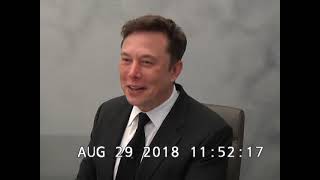 20261:00:51
 202652:05
 20231:04:02