2014年4月,马斯克在上海。他刚到的那天,上海改了规则。
原本上海对汽油车收牌照费,电动车免收,但进口电动车不在免除之列。他落地当天,政策改成进口电动车同样免牌照费。他在台上讲这件事的时候,语气里还带着没散干净的惊讶。
去之前我心里是有些忐忑的,担心一家美国汽车公司往中国出口汽车,会遇到冷淡,甚至是某种敌意。结果完全不是这样,他们极其友好、极其支持,甚至专门修改了项目,把进口电动车纳入电动车激励范围。(马斯克)
这场对话发生在华盛顿,美国进出口银行(Export-Import Bank of the United States,简称EXIM)2014年年会上。主持人叫霍克伯格(Hochberg),EXIM的董事长。台上摆着一台Model S,他开场时开了个玩笑:他老盯着这台车,担心谁忘了关灯,普通车灯开着很快就会把电瓶耗干,马斯克告诉他这车能撑一个月。
这场对话信息密度很高。中国、出口节奏、制造业回流、电池成本、卫星发射市场、可回收火箭、移民政策、企业税率,一路讲下来,中间还夹了一段关于五个儿子的吐槽。
交车现场像流行演唱会
马斯克说他在中国待了一整周,前一天晚上才飞回来。他此行的目的是交付第一批在中国销售的量产车。
他对现场的形容是:像流行演唱会。这个词从一个平时说话偏工程化的人嘴里说出来,分量不轻。他说这是他到过的所有地方里,反响最热烈的一次。
接待他的不只是消费者。政府层面也在动。上海那条牌照费规则的变化,直接降低了进口电动车的购置成本,这类成本在中国一线城市不是小数。
他把这套反馈看作一个信号:中国市场对特斯拉的接受度,超出他事前的预期。
不等美国市场饱和,就开始往外走
主持人问了一个很多美国制造商都会问的问题:一般公司都是先把本土市场做透,再考虑出口,特斯拉为什么反着来。
马斯克的答案是,他并不认为必须先把一个市场榨干再去做下一个。
交付的时间线是这样的:2012年年中在美国开始交付,一年多之后进入欧洲,再过大约八个月进入中国。2014年晚些时候开始右舵车交付,英国、日本、澳大利亚,还有南非。他补了一句,自己出生在南非,那边很多人抱怨为什么车还不来,他的回应是:正在路上。
他给出的比例是:加州工厂生产的车里,大约一半,也许略多于一半,会出口到海外;而出口的那部分里,大约一半去中国。
这个数字放在2014年很反常。一家成立十来年的汽车公司,在本土市场远未饱和的时候,就把一半产能指向海外,其中四分之一押在一个刚开放不久的市场。
一台带轮子的电脑,卖出去之后还在变好
主持人提到一个流行的比喻:有人说特斯拉像装上了轮子的iPhone。
马斯克说,方向上差不多。他自己更常用的说法是"带轮子的电脑"。
它不只是一台电动车,它从设计之初就是为了用上21世纪的技术。17英寸触摸屏,通过蜂窝网络或者Wi-Fi始终在线。你想听任何一首歌,直接说就行。按住语音键说"播放约翰尼·卡什的《Ring of Fire》",它就播。你说播放蒙提·派森的奶酪店小品,再冷门的东西它也能立刻放出来,你什么都不用做。(马斯克)
他在台上描述了几个具体功能:悬挂高度可以在中控屏上动态调节;即将推出实时路况,车辆会作为一个车队网络协同,为彼此优化路线。
还有一件在当时听起来很新的事:软件通过OTA下载,免费。车买回去之后会持续变好。
这一点值得停一下。2014年,绝大多数人对汽车的认知是:出厂即定型,功能只会随磨损而衰减。特斯拉把汽车变成了一个会收到更新的终端。今天所有车企都在讲软件定义汽车,这句话在2014年还很少有人当回事。
为什么把工厂留在美国:造机器的机器
主持人问,为什么选择在美国制造。他半开玩笑地说,很多人认为他这么干很傻。
马斯克的回答里有一段完整的制造哲学,值得逐句看。
我是相信制造业的。我喜欢造东西。不知道为什么,这件事变得不时髦了。如果你不只把制造看成造马路上的车这种无聊流程,而是把制造汽车的那套系统本身看成一非常复杂的机器,那么就像创新可以用于车的设计与工程,创新也应该、而且必须用于造机器的机器。你能想出很多很酷的新办法来造一台车。(马斯克)
接着他讲了另一半理由:工程和生产之间必须有紧的反馈回路。
如果生产在很远的地方,这条回路就断了。设计的人按某种方式设计了零件,却不知道这种方式极难制造。但如果车间离他的办公桌只有50英尺,他可以走出去看一眼,问题一目了然,还能和产线上的人直接对话。
反过来也成立。制造团队里很多人对怎么改进这台车有很好的想法,可如果他们在几千公里之外,这些想法传不回设计者耳朵里。
他的结论是,这种双向反馈经常被忽视,但它对把车做好、找到效率、把成本降下来极其有用。
这段话解释了特斯拉为什么把工厂放在加州弗里蒙特,而不是墨西哥或者亚洲。地理距离在这里被当成一种工程参数,而非成本参数。
中国会超过美国,因为豪华车的分布是双峰的
主持人问,市场会往哪走,竞争会从哪来。
马斯克的判断分两层。短期,美国仍是最强的市场。长期,中国可能卖得比美国多,理由只有一个:市场大。
他给了一个当时的时点数据:2013年中国成为全球最大的汽车市场。更关键的是结构,中国的需求分布是双峰的,一头是极高端的豪华车,一头是极便宜的经济型车,中间有一段凹陷。
豪华车那一头,比例夸张到什么程度:奔驰S级去年全球销量里超过一半卖在中国,是美国的两到三倍。
所以他的推论很直接:只看绝对数量,中国的市场迟早会大于美国,只是需要几年时间。
把电价和油价放在一张表上算
主持人问这台车在美国卖多少钱。
马斯克说,起步价大约7万美元,算上补贴,加州大概6万美元。
然后他主动把话题引到了另一张账单上。电比油便宜得多,而且电动车不需要做尾气检测,不需要换机油,常规保养项目少一大截。超级充电网络免费,意味着长途出行不花钱。
这些加起来,折合约1.2万到1.5万美元的价值。所以跟一台5万多美元的汽油车比,账是平的。
这段话的方法论比数字本身更有意思。他没有争论车贵不贵,他把比较对象换掉了:从"购车价对购车价",换成了"五年总拥有成本对五年总拥有成本"。今天所有做电动车生意的人都在用这套话术,2014年在台上讲这个的,是他。
3.5万美元的车,需要三次迭代和99%的把握
主持人问,什么时候能有一台3.5万美元的车,卡点是不是电池成本。
马斯克说,从特斯拉成立第一天起,目标就是造一台普通人买得起、又有吸引力的量产电动车。但要走到那一步,至少需要三次大的技术迭代,还要有大规模生产带来的经济规模。
他拿手机做类比。早期的手机是一块砖,有人在沙滩上举着鞋盒那么大的东西打电话,现在那个东西的算力放进了口袋,一百美元就能买到。手机经历了很多轮设计迭代。
电动车的难点在于,特斯拉想在只有三次主要迭代的情况下就冲到大众市场。他说这大概已经是能做到的最快速度。
具体怎么降本:那台车比Model S小大约20%,粗略一算,成本先降20%。剩下的30%,靠设计改进和规模经济。
他对这30%的把握,原话是99%。主持人说99是个好数字,他回了一句玩笑话,大意是我要是错了就认栽。
每年只有40颗大型商业卫星,但融资方式决定谁接单
话题转到另一家公司。主持人介绍,美国约60%的商业卫星由EXIM提供融资支持,EXIM最近刚和SpaceX做了一笔保加利亚卫星的交易。
马斯克先给了行业规模的底数:每年全球发射的大型商业卫星大约40颗,好的年份50来颗。用途包括广播通信,也包括给谷歌地图做测绘。
然后他讲了一件外行容易看错的事:这笔钱其实不进SpaceX的口袋。钱是给卫星运营商的,运营商拿着低成本融资,去跟卫星制造商签合同,再跟发射服务商签合同,有时是SpaceX。他们要的是最低成本的资金。
为什么要靠政府出口信贷机构?因为对面也有。
法国有个东西叫COFACE,在提供低成本融资上非常激进。如果没有美国进出口银行,我们在国际市场上会很难竞争,因为法国人倾向于照顾本国的火箭公司。他们会说,行,你可以拿到低成本融资,前提是你用阿丽亚娜火箭。所以有EXIM站在我们这边,去对冲COFACE的动作,非常重要。(马斯克)
这段话把一个常被忽略的事实说清楚了:在大型装备出口里,融资条件本身就是产品的一部分。技术好、价格低,但拿不到便宜的钱,单子照样丢。
美国曾经一颗商业卫星都发不出去
主持人翻出一段历史:1980年代,美国几乎没有拿到商业卫星发射订单,现在大约10%,还在增长。他问,这变化是不是全靠SpaceX。
马斯克的回答把时间线拉得更长。苏联解体之前,美国在商业卫星发射里占的份额非常高,是领导者。苏联解体之后,俄罗斯的火箭工业很快学会了怎么当资本主义企业,而苏联当年在火箭技术上投入了巨额资金,手里握着当时世界上最好的火箭技术。于是短短几年,商业发射市场几乎被俄罗斯整个拿走,美国从领导者变成几乎不存在。
然后是法国。政府往阿丽亚娜5号火箭里投了很多钱,那也是一款好火箭。市场从此被俄法两家分掉,俄罗斯大约四分之三,法国大约四分之一。这个格局持续了很多年。
转折点是几年前猎鹰9号(Falcon 9)开始发射。此后美国公司的份额稳步回升,到2014年,大约四分之一的商业卫星任务由美国公司拿下,主要是SpaceX。
他没有把话说满:如果能保持住,有相当大的机会拿回商业发射市场的大部分,让美国重回第一。但他也补了一句,鸡还没孵出来之前不要数。
一半的钱,干双倍的活
谈到NASA,马斯克的语气明显不一样,先说的是感谢。
我们和NASA的关系非常好,NASA对我们极其帮忙,说实话,没有NASA的帮助,我们可能走不到今天。(马斯克)
NASA选中龙飞船(Dragon)作为往返空间站的主要货运系统。他特别强调了一个别人不太注意的能力:上行有很多种办法,但要把空间站上的实验样品带回来,只有龙飞船能做到。而带回能力,才是空间站价值的关键。
接着他说了一段带点情绪的话。每个任务,NASA付给SpaceX的钱是另一家供应商(轨道科学公司,Orbital Sciences)的一半。那家送上去了比我们少的货物,什么都不带回,却拿双倍的钱。
主持人问他要不要抗议。他说不抱怨,只是觉得未来他们也许该少拿些任务,很高兴自己能提供性价比高一倍的服务。
这段话放在一场EXIM年会上讲,用意很明确。在场的人关心的正是美国出口信贷能不能撑住这些生意。
可回收火箭:燃料只占任务的0.3%
主持人提到一年多前参观SpaceX时看到的可回收火箭项目,问进展。
马斯克先做了一个区分,这个区分很关键。
我们在SpaceX迄今为止做的事情是渐进式的,不是革命性的。我们造出的一次性火箭,比市面上任何其他火箭都更好,效率大概比第二名好20%到30%。但这是渐进改良,它不会革新航天。要产生真正革命性的影响,我们必须实现至少一个数量级的改进,也许是两个数量级。唯一的路径是完全、快速地可重复使用。(马斯克)
他说这件事在航空航天业里被很多人认为不可能,多数人已经放弃了。
SpaceX当时刚达成的里程碑是:助推器完整再入大气层,展开着陆腿,在海上实现软着陆。先在海上做,是为了确认能精确落点;当年晚些时候计划转到卡纳维拉尔角做陆地着陆;如果这一年顺利,第二年尝试复用那枚助推器。
他用一组数字说明这件事的空间有多大:火箭加注的燃料、液氧和其他推进剂,成本只占整个任务的0.3%。一枚6000万美元的火箭,加满燃料只要20万美元。
如果能做到完全可重复使用,加上高频次发射,进入太空的成本有可能改善100倍以上。
这个比例是整场对话里最锋利的一个数字。一枚火箭的硬件几乎全部在一次性使用中被扔掉,而真正被消耗掉的推进剂,只值任务成本的千分之三。
美国该改的两件事:移民和税率
主持人问,美国政府还能做什么,让这里更适合创业。他自己加了一句:你从南非来,你应该有对比。
马斯克先说结论:美国确实是全世界创业最好的地方,尤其涉及技术的时候。然后提了两条。
第一条是移民。在我们的大学里读工程研究生的人,如果非常有才华,我们真的不想把他们送回国。要想尽一切办法留住他们。
一个顶尖工程师留下来,大概会创造出十个工作岗位。这是巨大的乘数效应。反过来,如果你缺了那个特殊成分,你是很难凭空把它造出来的。(马斯克)
第二条是企业税率。美国的企业税率相对欧盟实在太高,结果是苹果、谷歌这类公司把钱留在海外。
他坦白说,特斯拉是一家纯粹的美国公司,没有能力去玩这种国际税务壳游戏,也不会去玩。但他能理解那些跨国公司的CEO:手上一堆股东,要求利润最大化,而国际税制存在套利空间,美国税率又和几乎所有国家都不在一个水平上,激励就摆在那里。
结果是什么?大量资金被投到别的国家。
这等于我们给其他国家送了一份大礼。本来那些顶尖工程师应该搬到美国,在这里创造一堆就业;结果我们在给别国提供资金,让他们在那里创造就业。这挺慷慨的,可能慷慨过头了。(马斯克)
五个儿子觉得,跟爸爸打游戏最酷
最后一个问题很轻松。主持人说你有五个儿子,当个酷爸爸不容易,他们觉得爸爸最酷的地方是什么。
马斯克说,可能是火箭和车吧,但他们看起来并不怎么兴奋。他带他们去工厂,他觉得挺激动,孩子们站了20分钟就腻了。
他说,也许他们私下是兴奋的,只是没说。真正让他们高兴的事,是他陪他们打电子游戏。
双胞胎10岁,三胞胎7岁。
这段对话到这里就结束了。一个刚刚讲完如何把太空运输成本降低100倍的人,被问到儿子怎么看他,答案是打游戏。
这场对话里真正有用的东西
2014年距离现在已经很久,很多具体数字过期了。但那几个判断在今天仍然成立:把一半产能投向海外可以在本土市场饱和之前发生;软件更新能把一次性销售变成长期关系;制造业的创新对象是造机器的机器,不只是机器本身;出口生意里融资条件和产品性能一样重要;一个行业里公认不可能的事,往往正是数量级改进的藏身处。
还有一条更朴素的:他在台上花了很长时间解释反馈回路为什么重要,把工程师的办公桌和车间地面的距离当成一个工程变量来管理。这件事不需要火箭,任何一家做硬件的公司明天就能开始做。
- 把设计和生产的物理距离压到最小。如果你的工程师和产线不在同一栋楼里,先解决这件事,再谈降本。
- 不要等本土市场饱和才出海。按产品交付能力规划节奏,而不是按市场份额规划。
- 检查你的产品有没有OTA能力。一次卖断和持续改进,是两种完全不同的生意。
- 做出口生意时,把融资成本算进报价。对手的低息贷款和你的技术优势是同一个战场上的两件事。
- 在你的行业里找一句"大家都认为不可能"的话,那通常是数量级改进被埋着的地方。马斯克听到的是"火箭不能回收"。
- 把成本结构拆到最底层,找出那个比值最悬殊的环节。一枚6000万美元的火箭,燃料只占20万。
- 如果你在做硬件创业,先确认团队里那个不可替代的工程师能留下来,签证和股权都是产品问题。
- 别指望你的孩子崇拜你的工作。带他们去工厂,他们二十分钟就会腻,这是正常的。
0:00ladies and gentlemen please welcome chairman Hochberg and Elon Musk CEO and chief designer SpaceX well we're going to turn up the volume it's been a quiet
0:24conference so far but I think when we brought Elon Musk in here I had a chance to meet with Elon know and actually Scott Schlegel and I were out in San Jose about a month ago and this is a man who really knows how to push the envelope and change American manufacturing I kept staring at this
0:43coral morning I keep worrying about someone left the lights on because normal car you have to turn the lights off pretty fast before you run down the battery but Elon told me that he could probably last a good month before so we had a little controversy what to bring in the room we were thinking about a rocket we thought about a number of other things that was hard to get in so
1:04this is the smallest product we could kind of squeeze into the showroom to get started so let me ask when you you know I met about a month ago and you just came back from China usually about half your productions going to be exporting so don't you talk a little about that and how much is going to China what what that looks like sure so I actually just came back from China yesterday fact I was there all week until yesterday evening and I the
1:35thing that really surprised me was how positive the reception was for Tesla I going in there I was I would went in with some trepidation thinking that that be concerned about an American car company exporting cars to China and and that maybe there would be somewhere between indifferent to slightly hostile
1:55but but but actually I didn't encounter that at all in fact they were incredibly friendly and supportive including modifying some of their programs which offer electric vehicle incentives to include import electric cars and they actually made that if a noun that announcer for example Shanghai has the license plate fee that's paid normally for gasoline
2:22car and on the day that I arrived there they changed it to include imported electric vehicles as being having no license plate fee and so it was just really really amazed and and at the positive reception and among the public Tesla is is viewed super positively it was like when I held these customer
2:52events to hand over cars it was like a like a pop concert I mean it was looks crazy but by far the most positive reception of any place I've been so we handed over the first cars it pushed his vehicles production vehicles in China this week - very excited customers and and yeah we expect
3:16probably will end up exporting half will maybe a little more than half of the cars we manufacture in California to overseas and all that number probably half will go to China alone so so many companies might included look at exporting after you've saturated the US market you're clearly not doing that so
3:41maybe you could talk about that you're early on majority going to be exporting close to half your production who did talk to us about that yeah I think I think it makes sense to to not sort of saturate one market before moving to another I mean it is certainly true that we started deliveries in the US while in
3:59bansa flurries to China in fact almost two years in advance so so we started off with with the deliveries especially mid 2012 in the US and then a little over a year later started liveries in Europe and then about eight months after that we started deliveries in in China and that will end later this year will
4:24be muttering right-hand-drive deliveries for the UK Japan Australia and and probably South Africa since I've originally from set up I get a lot of complaints about why the hell what the car's not there but I'm like we're getting there some people compared a Tesla to a I'd like it so more like an iPhone on wheels
4:47that is that the right analogy to make I have two of them right yeah but yes I mean just basically get some real good on your iPhone and you're good to go I mean it's pretty much the same thing so it never certainly some analogies that in that direction that makes sense I imagine sometimes in fact myself
5:08referred to it as a computer on wheels it's I mean it's more than an electric car it's actually I think you call it that's really designed to take advantage of 21st century technology so it's got a 17 inch touchscreen display it's always connected to the Internet via cell modem or via Wi-Fi you can ask for any song
5:31any time just by literally asking for it so if you hold down the voice button and say play ring a fire by Johnny Cash it'll play it you could say play the teashop sketch by Monty Python anything you like the most obscure thing the car will actually play it on demand and it just works you don't have to do anything
5:52so and you can you can adjust the cause parameters like the ride heights of the vehicle you can do not adjust dynamically from the center screen and it you know it soon will be releasing real-time traffic so the cause will collaborate as a network fleet to optimize the route to your destination
6:17that's going to be pretty exciting and we're adding a lot a whole bunch more functionality to the cart you're going to actually bought the car it keeps getting better because of added to software functionality that we download to it at no charge and what makes just want to make the u.s. a really good
6:35platform to manufacture these and what these from the US well here's a good one hahaha yeah so certainly have been accused of doing of that being foolish but I think the I'm someone who believes in manufacturing I like many actually I like making things and I think for some reason that's got out of
6:57out of fashion I don't sure why but I think if you if you if you think of manufacturing not as some boring process of making Road copies but rather that the manufacturing system that creates the car is itself a very complex machine and just as innovation applies to the design of
7:21engineering of the car you can you can apply and should apply innovation to the machine that makes the machine and you can come up with some really cool new ways to make sure a vehicle and I also believe in having a tight feedback loop between engineering and production and so if if production is far away from
7:45engineering you lose that feedback loop and so someone who designed the car in a particular way didn't realize that it's very difficult to manufacture but the particular way that's designed but if if the factory floor is a 50 feet away from their desk then they can go out and they can just see it and it's obvious and they can have a dialogue with people on the floor and likewise a lot of people
8:08in the manufacturing team have great ideas about how to improve the car but if they're far away they can't communicate that to the engineers who designed it so I think that it's a it's a something that's often neglected but having that strong bi-directional feedback loop between engineering and
8:25production is really helpful for making car better and finding efficiencies and learning the cost where do you think the storage markets going to be for your car and also where the group with where competition might come from oh I'm sure so I think right now the United States is is our strongest market
8:49and I along term we might actually sell more cars in China than in the US just because the Chinese market is is so huge in fact last year China became the world's largest car market and in fact it's disproportionately so for premium sedans and they have somewhat of a bimodal distribution with a very high
9:14demand for premium cost and then a very very high demand for economy cars and it is sort of a bit of a dip in the middle and so for example for Mercedes s classes more than half of almost eighty s classes last year were sold in China worldwide so it was like two or three times what they sold in the your eyes so
9:38given that that's the basis for things then I would expect just on sheer numbers China is probably larger than the US market over time but that may take a few years to arrive and what's the we talked a little bit and people may yield this to maybe interested what would this car sell for here this one
9:59here so it was the Kibler car starts at about seventy thousand dollars before incentives right and with incentives and in California it's about sixty thousand dollars I should say so one thing that's important to consider though is that the the cost of electricity is much less than the cost of gasoline and you also
10:20don't have to do smog checks or oil changes or a lot of the things that you ordinarily have to spend on maintenance for a gasoline car so the operating costs are much lower and the Tesla supercharger network is free so you can go you have free long distance traveling around the country so when you when you net that out it's somewhere in the order of twelve fifteen thousand dollars of
10:45value so it's actually like maybe compare apples apples to a gasoline car save you like a gasoline car in the mid to high 50s and what's the impediment towards I know you've talked about a car about thirty thirty-five thousand dollar range is that about cost of batteries what's the what's the technological breakthrough that he gets here was a country absolutely so the goal of Tesla from the beginning has been to create an
11:10affordable and compelling mass-market electric vehicle it but in order to get there it requires at least three major iterations of technology and it applies a very large-scale production so you could have the economies of scale you've got to have design iteration this is this has been true of any new technology of any kind that's really ever been introduced if you can sort of state cell
11:36phones and how they started out you know wall street wine you have this giant brick but the guy was walking down the you know the beach on illicit talking to but on the size of a shoebox and and now we've got to burn that tiny and it's like the power of a supercomputer and you can buy one for about a hundred bucks so that that's gone through many design iterations with electric cars
12:00we're trying to get to mass market in just three major design iterations which is I think about as fast as you could do it and to get that for where we are right now to the $35,000 price point their company is Chris well that car would be about twenty percent smaller than the Model S so just the first proximation that would drop the cost about twenty percent for to achieve the
12:23other thirty percent of cost savings we need to take advantage of the design improvements and the economies of scale I'm very confident that we can achieve that additional 30 percent improvement with both of those in fact I'd say I am 99% sure you know I will be damned okay 99 is a good number
12:46let me ask you we've done well work with your other company actually we made you be working with down exports but mostly on SpaceX and we've learned that about 60% of the u.s. commercial satellite financed acted by the expert blood bank and we did a great muscling of interest we recently did a
13:08transaction with SpaceX for Bulgaria sat Oh what's driving this whole the satellite industry what's it mean obviously these iPhones and still maybe you could give us a more insight you mean what what is old satellite boomed and is actually also been a part of sure take story and part of what we've been
13:27working on can you give us some insight on you in a satellite marketplace well is that like my place is empty isn't quite the Exim financing may be increasing in recent years but in terms of the number of satellites it's a relatively steady flow of commercial satellites there's about roughly 40 large commercial commercial satellites that
13:51are launched every year and these are satellites that are used for broadcast communications in some cases of weather mapping for unit for Google Maps but there's a whole bunch of satellites of all different types and yeah so if it's pretty steady you know bad year might be very a good year might be 50 something like that and
14:24where it's really important you know where excellence really important is in helping fund the fund those missions actually it's a the money doesn't go to SpaceX is really to the satellites both the satellite operator who wants to operate a particular satellite for a particular purpose and then they will contract with a satellite maker and no contract with a launch provider and
14:53sometimes that SpaceX and then they will try to get the lowest cost of fund to to fund that and the excellent really important in this equation because well the the French have this thing called Co fast which is very aggressive in providing low class funding and if we didn't have the
15:21American Exim Bank the it were very difficult for us to compete on the international market because the French tend to favor their domestic rocket company and and they'll say well yes they'll provide low-cost funding if you use the ariane rocket and so it's really important to have us in our corner with
15:49the Exim Bank to that counter reactions of go-fast and what exchange I mean I I was in preparing for today in the 1980s there was almost zero commercial satellites launched the United States now I'm told around 10 percent and growing what what change that this has become is that all SpaceX or it's mostly
16:13space mostly a sec yeah so actually before the fall of the Soviet Union the United States used to launch a very high percentage of commercial satellites in fact the US was the leader in commercial satellite launch but with full virginian the Russian rocket industry was able to figure out how to be capitalist really
16:36fast and and they since of the USSR invested so much money in rocket technology they actually had really good rockets and arguably the best rocket technology in the world at the time of the fall of third year Soviet Union so they were able to completely take the commercial launch market away from the
17:02United States so in the United States when within the course of really just a few years from being the leader in commercial satellite launch to being non-existent virtually and and then then the French with the Ariane and it was a little bit of help from gilli put a ton of money into the Ariane
17:225 rocket also a good rocket and look in the world commercial launch market then became essentially divided between the Russians and the French the Russians probably about having about three-quarters of the business the French having about a quarter and that continued on quite a while until a few
17:40years ago when SpaceX started launching the Falcon 9 and since since then we've steadily increased the share of u.s. u.s. 1 missions and I think we're now now about a quarter of all commercial satellite missions are won by the US company we'll really want by SpaceX and I think that's we've got a decent shot
18:08if we if we keep at it of achieving a majority of the commercial launch market of winning over a majority of the commercial market and that's what yeah I don't ya know I count chickens before they hatch but it's looking increasingly positive that that will probably you know will probably probably restore the United States number one on commercial
18:39launches in the world you also do a lot of work for the u.s. government in the Air Force and you're in the launcher can what what portion of that is your business can you talk to us it's not really we're on the more commercial side but I still fill it out well actually as far as US government launches go we have
18:56a very good relationship with NASA NASA has been fantastic to work with and really has helped us a lot and in fact I'm not sure we'd even be where we are today with without the help of NASA so we're very grateful to them NASA selected us as the primary system for transferring cargo to and from the space
19:23station and so it's like what our dragon spacecraft is the only spacecraft capable of in any significant cargo down from the space station so there are variety means of getting to the space station but in terms of bringing the experiments back which is critical to leverage the value
19:43of the space station our spacecraft is the only one capable doing that and I'd like to also maybe note that our we get paid half as much per mission as overall Sciences another provider and they only take stuff up they take up less than we do and they take nothing down and they get paid twice as much per mission as we do but that's okay I mean I'm not - do you attack pain no I mean I think maybe
20:22they should get fewer missions in the future but but you know I'm glad that we were able to you know provide a service that's twice the value for money that the competitor does when I was out at SpaceX about a year ago I noticed that you also developing a recyclable rocket rocket did actually come back to earth
20:44yeah it would be the ultimate recyclable yes about that well this is the fundamental breakthrough that's needed in space transport to fundamentally transform it because I think what we've done thus far at SpaceX is evolutionary that not revolutionary you know we've we've made a rocket that in an
21:04expendable scenario is is it's better than anything else out there I mean by fine maybe 20 like the next best rocket we like 20 to 30% worse inefficiency so but that's definitely an evolutionary thing it's not going to revolutionize spaceflight to really have a revolutionary impact we've got to
21:32achieve at least an order of magnitude improvement maybe a two order of magnitude improvement and the only way to achieve that is with full and rapid reusability and that was a very difficult thing to achieve in fact a lot of people in the in the aerospace industry think it's not
21:50possible and in fact most have given up on it but I think it is possible and we recently achieved an important milestone which was to get the boost age of the Rockets to re-enter the atmosphere intact deploy landing legs and and and achieve a soft landing up in the ocean so we're first doing this in the ocean
22:20to make sure we can land accurately and then hopefully later this year we will transition to landing back on land at Cape Canaveral and then we'll aim to refi that that blue stage probably next year if this year works out and that will really be a massive change in space transport give it sort of a sense of the
22:48potential there it's the cost of the fuel and oxygen and other sort of expandable liquids in in the rocket it cost to effectively fuel it up is only 0.3 percent of the cost of the mission so it's the rocket costs sixty million dollars only costs a couple hundred thousand dollars to fill it up so the
23:15potential is there with a high launch rate if one can achieve full and referee's ability to improve the cost of space access by a factor of more than 100 well any advice what would you what could be what could we add services so what can the US government do to make this a better place to support business
23:39to make America even a better place to start a business you came from South Africa what else could we be doing to improve point of view well I I think the United States is pretty great honestly definitely the best place in the world to start a business and particularly if it involves technology you know I think certainly we
24:03need to take a look at our immigration laws if there are really talented people there doing grad graduate courses in engineering at our universities we really don't want to send them home we want to try to do everything we can to keep them here because like it's for every one person who's like a like an
24:26ace engineer that they're probably like ten jobs that will be created if that person stays here it's a huge multiplier effect and and conversely if you're missing that special ingredient view it's very difficult to create them I think also we probably need to reform our tax laws because the US corporate
24:46tax rate is really high relative to say the EU and what this causes companies do like an Apple or Google or others basics of basics of purely domestic company so we're happy about yeah yeah so yeah we we don't have the ability to play you know sort of some sort of text shell game and we wouldn't but but but it is
25:16tricky like if you're a head of a multinational and you've got all these shareholders who expect you to maximize profits and and you can play this sort of like international tax shell game and you and you're sort of that there's a strong incentive to do so because of the US tax rate being way out of whack with
25:35almost any other country what this causes covers the gap love Google career is to invest a ton of money in other countries right so this is a big gift that we're giving to other countries so instead of getting those you know sort of ace ace engineers and others to move to the US and create a
25:56bunch of drugs here we're actually funding them there create jobs there I was quite a nice thing we're doing but it's you know probably not a minister overly generous very generous very generous yeah let me ask you a final questions we've got we're going to wrap up you have five sons so it's hard to be a cool dad what are your kids think is the coolest thing
26:14about dad I'm not sure I'm Rockets the cars hey you know they don't seem too excited about these things because I kind of grew up yeah I taken to the factory and it's like you know it looks exciting they're like always stand up 20 times oh you get more excitement added on age really yeah yeah no I know maybe they were secretly excited and there's still
26:41one late on but you know to me but I you know to try to get them excited about these things and but they seem to be like more excited about like if I play a video game with them that seems to be like they're my favorite thing but they're only like the twins or ten and the triplets are seven so then you'll meet a young sight well thank you thank you for joining us
27:05say let's give me Robin you
资源与出处
- 视频在 YouTube 收看
- 档案silicon-valley.tech 档案页本页视频与文稿数据来自 Elon Musk Archive
- 精读本篇精读 Markdown 版
相关视频
同频道、同主题或相邻年份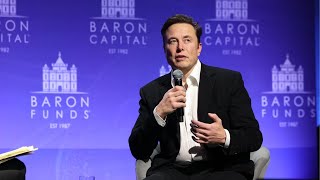 20251:00:20
 20141:53:20
 200829:36