2008年夏天,太平洋上的夸贾林环礁,一枚叫“猎鹰1号”(Falcon 1)的细长火箭已经立在发射台上。它此前飞过三次,后两次进了太空,都没能达到入轨速度。对一家火箭公司来说,这等于三次失败。
同一时间,旧金山的一场大会上,埃隆·马斯克(Elon Musk)坐在台上。对面是X大奖基金会主席彼得·迪亚曼迪斯(Peter Diamandis),主持人是凯鹏华盈的约翰·多尔(John Doerr)。三个人聊的话题是“为什么去太空”。
马斯克顺口提了一句:下一枚猎鹰1号已经在发射台上,大概一周后发射。语气跟说“下周去趟超市”差不多。
主持人问他,火星上什么时候会有人。
“我认为15到20年内,我们有可能把第一批人送上火星。”
十几年过去,火星上仍然没有人类的脚印。这个数字值得停下来想一会儿:2008年说这话的人,自己造的火箭还没成功入轨过一次,公司账上的钱只够再烧一回。他凭什么这么判断?
两个烧过手的少年
开场主持人让两人各讲一件别人不知道的事。
迪亚曼迪斯说,他八九岁的时候,手里大概有20磅化学品:高氯酸钾、钠、镁、硝酸钾。“放在今天,我会当场被捕。”
高氯酸钾这东西自带氧气,可以在水下引爆。他和朋友自己造火箭,朋友有一次把手炸伤了。原因是高氯酸钾亲水,碾碎的时候沾了水,就着了。
马斯克说,他的经历几乎一模一样,他的一个朋友也烧伤了手。
台下笑了。这件小事埋着整场对话的底色:两个人从八九岁起就在琢磨怎么把东西送上天,中间隔了三十年,路径不同,终点一样。
马斯克后来补了一句私货。他去过九次火人节(Burning Man),有一辆电动火箭艺术车。主持人问车带回来了没有,他说“应该是带回来了”。
用四十亿年当尺子
马斯克解释“为什么去太空”的方式,是整场对话里信息密度最高的部分。
他没花时间谈好奇心和探索精神。他先问了个更基础的问题:凭什么说一件事重要?
他的工具是时间尺度。把镜头拉到最远,看地球四十亿年的生命史,看哪些节点算得上大事。
单细胞生命出现,多细胞生命出现,动植物分化,生命从海洋爬上陆地,哺乳动物出现,意识出现。整部生命史,真正的大事也就半打左右。
然后他把“生命扩展到多个星球”放进这张清单。
这个类比的精妙之处在于:从海洋到陆地,如果你在陆地上待得不舒服,还能跳回水里。从地球去另一颗行星,没有回头路。所以它的分量至少和那次登陆相当,很可能更重。
还有一层更硬的逻辑:要把生命扩展到多个星球,前提是先有意识。意识在这件事里扮演前置条件,它算不上顺手捎带的副产品。所以马斯克说,这件事“超出了人类自身的小算盘”,它关乎生命本身。
在所有关于太空的宏大叙事里,这个论证最站得住。它的支点是坐标系,情怀在这儿派不上用场。时间轴拉到足够长,坐标轴拉到足够大,什么重要自然就显形了。
这套方法值得单独拎出来。多数人判断一件事值不值得做,看的是当下的痛感,哪个问题最吵就先解决哪个。马斯克看的是这件事在四十亿年里的位置。两种坐标系算出来的优先级完全不同,前者训练出消防队,后者训练出造船的人。
他自己也承认,这是一种未经证明的排序。但即使把误差放大十倍,结论依然成立:生命跨出地球,在整部生命史里也排得进前十。
那扇窗口刚打开,也可能关上
主持人多尔追问了一句要害的话:这扇窗口会一直开着吗?
马斯克的回答是,这是地球四十亿年历史上第一次,生命有可能跨出这颗星球。它是个“小小的窗口”,刚刚打开,也可能关上。
他说自己是乐观主义者,认为地球上的事大概会过得去。这不等于让人躺平。恰恰相反,正因为事情可能顺利,才更该抓紧把这件“第一次有可能”的事办成。
他做了一个区分:地球上最重要的问题是气候。如果非要二选一,他会选建立多行星生存。
“这就像问你更喜欢你妈还是你爸。”
“如果被迫选择,我会说建立多个星球更重要。但这就像问你更喜欢妈妈还是爸爸,是个糟糕的选择。”(马斯克)
台下又笑了。他其实是在说,这两个目标不在同一个时间尺度上。气候是这一百年的事,多行星是一万年以后的事。两个都要,只是优先级不同。
现场主持人接着往气候那个方向推。会议后面的议程里有阿尔·戈尔(Al Gore)的发言,主题是一颗处在危险中的星球。主持人想知道,太空这件事和那颗危险的星球到底能不能连起来,还是各干各的。
气候和太空并不是两件事
马斯克给了两层回答。
第一层偏工程。要在火星这种恶劣环境里建立生命,必须学会管理一个小气候,维持气候平衡。这套知识能转译回地球。在封闭系统里学到的气候调控经验,比在地球这个开放系统里瞎试要快得多。
第二层更直白。万一地球真的搞砸了,“至少我们备份了生物圈”。这话说得很轻,它是整场对话里最重的一句。它把太空从“探索”降级成了“保险”,而保险这个东西,你得在出事之前买。
迪亚曼迪斯补了一个更务实的角度。太空里那些测量海洋和大气的卫星,是理解气候变化的基础设施。他引了英特尔前CEO安迪·格鲁夫(Andy Grove)的一句话:你不测量它,它就不重要。
“你没法修复你没法测量的东西。”这句话在现场被重复了两遍。
两个人都提到,把地球的能量收支变成能看的图,是解决问题的第一步。迪亚曼迪斯说得很具体:戈尔的Triana卫星或者其他商业卫星,越早上天越好,越早拿到数据集越好。格鲁夫那句话还有下半段,说的是企业里也是一样,不被测量的东西不会进入管理者的视野。
这段对话在2008年听起来有点超前。十几年后回看,卫星遥感已经成了气候研究的主要数据来源,从海平面高度到甲烷泄漏点,很多结论都建立在轨道上的那几台相机上。
一枚火箭四千万,对手要一亿六
对话的中间部分,对做技术的人最友好。
主持人问,猎鹰火箭造一枚多少钱。
马斯克说,猎鹰9号(Falcon 9)的助推器大约4000万美元。龙飞船(Dragon)造价差不多,因为里面有复杂的航空电子和对接系统,虽然个头不大。
“这个价格不算太差,差不多是一架公务机的价钱。”
主持人接着问了个更狠的问题:如果买一枚同等能力的洛克希德或波音助推器呢?
“大约1.6亿美元。”
四分之一的价格,四分之三的折扣。
主持人确认了一遍:这是一家盈利公司?
“过去两年我们一直是盈利的。”
在火箭行业里,这句话本身就够狠。这个行业过去几十年的成本结构是固定的,因为客户只有一个,就是政府,价格没人较真。马斯克做的事,本质上是把这个行业重新按成本核算了一遍。他把一个政治定价的市场,强行拉回到工程定价。
这个四倍的差距从哪来,值得拆一拆。传统承包商的报价里塞着大量的合规成本、分包层级、固定利润率和政治分摊,每一层都加一遍价。SpaceX的做法是把供应链尽量收进自己厂里,用更少的部件、更简单的设计,加上一群愿意加班的年轻人。
同一条逻辑后来被用在汽车上。特斯拉的做法是把电池成本按原材料吨价去核算,而不是接受供应商的报价单。思路一致:先算清楚物理上需要多少东西,再看市场上卖多少钱,中间的差价就是机会。
3马赫和25马赫,隔了625倍的差距
真正决定火星票价的东西,马斯克用一道初中物理题讲清楚了。
亚轨道飞行,大概需要3马赫。入轨飞行,需要25马赫。动能和速度的平方成正比。3的平方是9,25的平方是625。
“换句话说,亚轨道飞行需要的能量不到入轨的2%。”
这解释了为什么贝佐斯的蓝色起源(Blue Origin)做亚轨道相对容易,而SpaceX做的入轨难得多。这个差距接近七十倍,几个百分点根本补不回来。
很多人对火箭的直觉是“飞得更高更难”。真实的约束是“飞得更快更难”,而且难在平方关系上。速度翻一倍,能量要涨四倍。这就是为什么在航天领域,性能的每一次微小提升都要付出天价。
还有返程。马斯克说,如果你想活着回来,得有隔热盾,因为你回来的时候速度太快,就像一颗流星。
火箭不是飞机。飞机降落时速度慢得多,火箭回来时带着巨大的动能,你要么烧掉它,要么用一套极其精密的隔热系统扛住。
所以“完全可重复使用的发射系统”才是那个根本性突破。马斯克说得很明确:这件事从来没有实现过,连近地轨道都没有。没有可重复使用,火星票价就永远下不来;票价下不来,多行星生存就只是纸上谈兵。
现场有人问,贝佐斯是不是也在做可重复使用。马斯克说,杰夫跟我的哲学几乎一模一样,但他做的是亚轨道,亚轨道比入轨容易太多。
这段话背后藏着一条判断行业的经验:看一家公司声称的技术难度,先看它的能量账本。亚轨道旅游和轨道运输听起来都在“上太空”,实际的工程难度相差两个数量级,两个市场也完全不是一回事。
猎鹰和龙,名字来自两部流行文化
中间有个轻松的插曲。主持人问,为什么火箭叫猎鹰、飞船叫龙。
马斯克说,猎鹰来自《星球大战》里的千年隼号,它跑科舍尔航线用了17秒差距。龙飞船来自一首儿歌《神龙帕夫》(Puff the Magic Dragon)。
“因为太多人觉得我搞这家公司是因为抽了大麻。”
全场笑。然后主持人让大家给下一艘飞船起名,台下有人喊“布里斯托”,有人喊“帕林”,还有人喊“露西在缀满钻石的天空”。
这种起名方式本身就是个信号。这家火箭公司不打算把自己做成一个政府承包商,它想做成一个有公众感的品牌。后面十几年,这个选择被反复验证:SpaceX的发射直播、回收船上的标语、失败时的自嘲,面向的都是普通观众,而非五角大楼的采购官员。
一杆进洞保险单撑起的X大奖
迪亚曼迪斯讲的是另一套逻辑:怎么用激励机制撬动突破。
X大奖的规则很简单。不管你是谁,从哪来,上过什么学,只要解决这个问题,钱就是你的。
第一个奖是安萨里X大奖(Ansari X Prize),奖励私人太空飞行。当时没人相信这事能成。他们给奖金兜底的方式很妙,买了一张“一杆进洞”保险单,因为保险公司也认为这奖永远不会被领走。
结果:为了赢1000万美元,参赛者花了1亿美元。后续投入超过10亿美元。迪亚曼迪斯的意思是,奖金金额本身没多大意义,真正起作用的是它制造出了一个市场。
这套机制的高明之处,是把政府的“发包”换成了公众的“悬赏”。发包需要预算、审批、供应商资质,悬赏只需要一笔钱和一条规则。谁能想到更好的做法,谁就上,出身不重要。
这套方法论后来复制到几个领域。谷歌月球X大奖(Google Lunar X Prize),3000万美元,任务要求是登陆月球、传回图像、移动500米、再传回图像。目前13支注册队伍,来自70个国家的1200多支队伍表达过兴趣。
零重力飞行那边,去年载了斯蒂芬·霍金(Stephen Hawking),本来计划做一次抛物线飞行,霍金做了八次。轨道飞行那边,用俄罗斯联盟号(Soyuz)送了五个人上空间站,第六位下个月出发。
现场还有个即兴环节。迪亚曼迪斯宣布,台下有位观众将成为下一次飞行的备份乘员,很快去莫斯科训练。被点到的是Esther Dyson。
她上台说了一句很实在的话。小时候以为去月球不用做什么准备,后来被别的事分心了。她还讲了个笑话,向上帝祈祷中彩票,上帝回答,那你买票了吗。她说自己现在就是在买票,只不过买的是备份,因为4000万美元的正票买不起。
主持人补了一句:备份也有可能真的上天。当年安萨里本人就是备份,正选那位日本富商体检没过,她飞了。
一颗小行星,等于人类采过的所有铂
迪亚曼迪斯抛出的数字最抓人:一颗平均半公里大小的小行星,价值大概20到30万亿美元。
小行星的成分五花八门。有些是碳质球粒陨石,说白了是脏的冰球。有些是镍铁。还有一些是行星核心的残骸,铂族金属的富集程度是地球铂矿的五万倍。
“那颗小行星上的铂,等于人类有史以来开采的全部铂。”
主持人问,我们有那么大需求吗?迪亚曼迪斯开玩笑说,他的计划是先买看跌期权,再宣布任务,然后融资,出发。全场笑。
这个玩笑里藏着一条严肃的投资逻辑:信息本身就能定价。你不需要真的把铂运回来,你只需要让市场相信你要运回来。
再往深想一层,小行星采矿的经济学很反直觉。铂的价格建立在稀缺上,如果真把半公里小行星的量运回地球,供应暴增会把价格砸穿,采回来的东西可能不值钱。所以现实中的收益路径多半不靠卖金属,而靠前期的估值、技术授权和衍生的数据服务。
迪亚曼迪斯还提到一个路线分歧。他更看好杰拉德·奥尼尔(Gerard K. O'Neill)设想的太空殖民地,在小行星带建文明,而不是再次钻进另一个星球的重力井。马斯克的回应是,只要能把其中一个做成,另一个也就不远了。
他还用了阿拉斯加的类比。十九世纪买下阿拉斯加时,它被叫作“苏厄德的蠢事”,一片遥远荒凉的地方。后来路修过去,资源和土地都成了资产。太空在马斯克眼里是同一个故事,先修基础设施,再谈开采。
这个类比在整场对话里被用得很省。迪亚曼迪斯说,现在地球上没有足够的资源,让所有人都过上美国人的生活水平,而太空里这些东西“近乎无限”。他把第一个万亿富翁会在太空里诞生这句话说了出来,说的时候还特意提了一句要抢马斯克的风头。
更值得记的是他给这件事找的理由。他说,让人类中很小的一部分人去思考下一步该往哪走,是一种道德义务。
宇宙里有没有别人
主持人问,你们相信外星有生命吗。
马斯克的回答很克制。他认为宇宙中存在某种原始生命的概率很高,最可能是细菌。地球生命史的绝大部分时间都是单细胞细菌,复杂的多细胞生命是后来才突然涌现的。至于智慧生命,在可能触及的范围内,他觉得没有。
主持人追问,整个宇宙范围内呢。
“可能比没有更有可能,但这是纯粹的猜测。我们没有地球之外任何生命的证据。”
迪亚曼迪斯的回答更激进。他说生命是宇宙的一种力,是自然的一部分。构成人类生命的那些元素,在恒星演化二十亿年的时候就准备好了。地球出现智能生命,是在四十多亿年的时候。所以在宇宙其他地方,生命可能有八十亿年的领先优势。
主持人替全场问了那个老问题:那他们在哪?
迪亚曼迪斯说,我们不会跟小细菌聊天。
两种回答放在一起,其实代表两种态度。马斯克守住证据的边界,说自己不知道;迪亚曼迪斯从概率和尺度出发,认为生命在宇宙里是常态。这两个立场在接下来十几年都没有被证伪,也没有被证实。
特斯拉的二十秒
接近尾声,主持人给马斯克二十秒更新特斯拉。
一周生产10辆Roadster。刚宣布在圣何塞拿了90英亩的地建总部。已经卖了1200辆。售价10.9万美元。现在下单,10个月后提车。主持人算了一下,明年营收大概2亿美元。
放到今天看,这个数字小得可怜。在2008年,这是一家成立五年、只有一款产品、一周出十辆车的公司。同一时期,美国三大车企正在破产边缘挣扎。
一个做电动车的新公司,一年卖一千多辆,售价十万美金,还拿到了订单排期。这件事在当时的意义,远远超过数字本身。
还有一点值得注意。这场对话里,马斯克同时在管三家公司:SpaceX、特斯拉、SolarCity。主持人介绍他的时候把这几个身份一起报了出来。2008年正是这三家公司同时缺钱的时候,他在台上谈火星的从容,和台下随时可能断掉的现金流,构成了这一年最戏剧性的对照。
整场对话讲的都是账本
把这场对话串起来看,马斯克讲的每一个数字,落点都在成本上。火箭的四千万对一亿六,入轨的625对亚轨道的9,可重复使用对一次性。他通篇在算账。
他要证明的是,去火星这件事之所以过去看起来像幻想,是因为没人认真算过这笔账。一旦算清楚,它就是个工程问题,梦想的标签可以撕掉了。
访谈结束之后,那枚立在夸贾林环礁的猎鹰1号,在第四次发射中终于成功入轨。这家公司当时只剩下一次发射的资金,这个故事后来被讲了无数遍,它和台上这段对话放在一起才显得完整:马斯克在台上说“完全可重复使用的发射系统”是根本突破,那时候他自己的公司还在为一次性入轨拼命。
十几年后再回头看,这场对话里最准的判断,就是那句话。今天整个商业航天竞赛,打的都是这一仗。可回收、复用、压成本,已经成了所有玩家的共同语言。至于火星15到20年那个时间表,反倒成了次要的东西。
迪亚曼迪斯那条线也兑现了一部分。X大奖的模式被复制到月球、基因组、海洋、能源几个领域,商业载人航天从国家项目变成了明码标价的服务。当年那个用一杆进洞保险单兜底的赌局,如今看起来像一场成功的市场教育。
给读到这里的从业者几条能直接用的东西:
- 算成本要拆到物理层,别接受市场报价。马斯克判断火箭贵不贵,看的是原材料和能量,不是波音的目录价。你做任何硬件产品,都值得做一遍这样的拆解,把每一项成本拆到材料、工时和能量。
- 看一个号称颠覆的项目,先查它的能量账本。3马赫和25马赫差了625倍能量,这是物理约束,商业模式绕不过去。很多看起来合理的路线图,都卡在能量密度上。
- 用奖金制造市场,别用补贴填补缺口。X大奖花1000万撬动了10个亿,因为它把竞争和声誉放进了同一个机制。内部创新项目也可以这么设计,设一个明确的目标和一笔明确的钱,公开竞争,不问出身。
- 关键系统要有异地备份。马斯克把“备份生物圈”当成立项理由之一,这个思路迁移到公司就是:核心数据、核心供应链、核心人才,都要有第二个物理位置。
- 信息本身就能定价。小行星矿还没去挖,看跌期权先摆上了台面。当你能让市场相信某件事会发生,融资和资源就开始流动,这一步比技术本身往往更早发生。
- 判断一件事要不要做,换个时间尺度再问一遍。用一个月看,和用十年看,优先级经常完全相反。马斯克用四十亿年做尺子,你用十年做尺子,也能过滤掉不少噪音。
- 看到一个被嘲笑的疯项目,先看它有没有算清物理账。算清了的,多半疯不到哪去,只是别人还没开始算。
0:02We have two all-star panels ahead of us. The next one is going to talk about a kind of futurology and potential that seems weirdly under-appreciated at the moment, but I think therefore is due for a revival. This is the potential of space to deal with the issues we've been discussing which we all have to confront. This was the excitement of my childhood era and I think it has potential to be exciting again. We have three three wonderful panelists. One of them is Elon Musk who's known in this business as the co-founder of PayPal. He also has been a leader in electric vehicles with Tesla and for our purposes, he is a serious entrepreneur in the space travel. His SpaceX company
0:38has won the competition to design and build the successor to the space shuttle when it retires. The other is Peter Peter Excuse me, Diamandis who's been for 20 years a leader and pioneer in the business of personal spaceflight. He arranged among others the recent trip of Charles Simonyi to the space station.
0:56He's the chairman of the X Prize Foundation which offers cash prizes for breakthrough innovation. The moderator is the universally known and admired John Doerr of Kleiner Perkins. So, please join me in welcoming our three panelists.
1:23Good afternoon. And it's great to see all of you especially in a intimate setting like this. It's going to be fun. We're talking with two amazing entrepreneurs, two rocket scientists, two visionaries, and a struggling venture capitalist who's always looking for great entrepreneurs like I'm seated next to today.
1:48Peter Diamandis is the head of the X Prize organization. He's a an adventure capitalist in his own right and we'll hear in a moment about the innovation that he's been able to inspire with a very innovative way of getting corporations, not just individuals, to go after great grand challenges. Besides the X Prize, he's also the founder of Zero Gravity Company and another firm called Space Adventures.
2:19We'll hear from him in just a second and then we have Elon Musk, who is a founder of PayPal and now the chairman of Tesla and of SolarCity but has come with us today to talk about Mars and why we why we would go to Mars. So, as we begin these conversations, I understand you can text questions. You can start doing that right now so we cover them in our conversation. And I've asked both Peter and Elon to kick things off by telling us one thing about themselves that almost no one knows.
2:55great. I I guess at the age of eight or nine years old, I probably had about 20 lb of potassium perchlorate, sodium, magnesium, potassium nitrate. I was probably a teenage or sub-teenage terrorist. I'd be arrested on the spot right now. I used to build my own rockets and and and we I I'd get I'd get, you know, 5 lb boxes of potassium perchlorate, which has a great, you know, it generates its own oxygen. It's so you can blow it up under water. It's really cool.
3:24And what was the most explosive event? my friend blew up his his hand. He was fine he's fine, but secondary burns. He was it's hydrophilic so he was crushing it up. And did you provide him the gunpowder? we were sort of building our rockets together. Yeah. Rocket boys. Elon? Well, I had almost exactly the same experience.
3:43Had a friend of mine who also burned his hand. Wow. But tell us something else about you. So, I been to Burning Man nine times and I have an electric rocket art car. Burning Man nine times and an electric rocket art car, yeah. Did you take that to Burning Man? Yeah, absolutely. Did it come back?
4:01I think so. Did it win an X Prize while it was there? Yeah, yeah, in a manner of speaking. Yeah. Very cool. So, there's a common theme here. They're crazy. And they're both interested in space. Why space? Well, I think that everything we hold of value on this planet, metals, minerals, energy, real estate, is in near infinite quantities in space.
4:27the first trillionaire is we made in space and I think I'm going to steal Elon's thunder, but I think it's a moral obligation for the human race. Some small percentage of us to be thinking about where humanity needs to go next. I have two halves of my life, if I can just speak for that before entering this video. One is the X Prize Foundation, in which we look at what are the biggest challenges we have in humanity. What are the problems and how can we incentivize those with a large cash prize that says, "I don't care where you're from, where you went to school, what you've ever done. If you solve this problem, you win the money." And we did that first with the Ansari X
5:05Prize for space flight that no one believed it could be done. In fact, we funded it with a hole-in-one insurance policy cuz the insurance company believed it was impossible it would ever be won. And we have four areas, exploration. we are doing space with the Google Lunar X Prize. Google's the sponsor of that. as Sylvia knows, we're we're going down to oceans and she's chairing our oceans X Prize steering committee. Thank you, Sylvia.
5:30in life sciences, we have an active prize called the Archon X Prize for genomics. First person to sequence 100 genomes in 10 days and Craig Venter's are heading that up and then energy, the environment, and global development. And my other half of my life is trying to create the markets in space, taking people there. So, we fly people in zero-gravity flights and in orbital flights to the space station.
5:55And do you give miles? Mhm. Not yet. Not yet. So, there's a video you want to show. I I'd love to show a a short video to punctuate some of those and give you a visuals. So, if we could run the first video. Some Ansari X Prize footage from 4 years ago. So, this is a spaceship one flying on second time to 100 km built by Burt Rutan, funded by Paul Allen. We had $100 million spent to win a $10 million prize. And there's been arguably over a billion dollars invested. We have our lunar lander challenge. John Carmack, you might know, is going after this. This is a launching capabilities equivalent to landing on the lunar surface.
6:42And of course, the $30 million Google Lunar X Prize. We have at this point 13 registered teams. We've had over 1,200 teams from 70 countries around the world. And this is you have to All you have to do is go to the moon, land, send back the mooncast, row for a half a kilometer, and send back another mooncast.
7:01Mention zero G. here we are. We operate We flew Stephen Hawking last year out of the Kennedy Space Center. Some images of him. He had an amazing time. We planned to do one parabola. We ended up doing eight. Somebody you know who's been flying with us before. And on the orbital side, we've flown five people to orbit to the space station with the Russian Soyuz. Here it is. Our sixth customer is going up next month.
7:30And this is really can we create the marketplace and get it out of the hands of the government into the commercial markets? Can we? Oh, I I absolutely. No question about it. It's just a matter of grading the marketplace that brings capital like yours into it. It's It's creating the gold rush and the land rush again.
7:50The There is huge value. An average half kilometer asteroid is worth something like 20 trillion dollars. But we'll get to that later. We'll come back to that. We'll come back to that. Elon, why space? Sure. So, I think space is extremely important. but first you have to go to the definition of importance and say why is anything important?
8:10And if you use a the the lens of history and you you zoom out far, I think you you can distinguish the less important from the more important. if you zoom out really far and look at the 4 billion year history of Earth and the evolution of life itself, and say what are the major milestones in the evolution of life itself? I mean, obviously there's single-celled life, multicellular life, there's differentiation to plants and animals, there's life going from the oceans to land, there's mammals and consciousness. There's maybe a half a dozen or so really big milestones in the history of life. and I think on that scale it would also fit the extension of
8:48life to multiple planets. it'd be at at least as important as life going from the oceans to land and arguably more important cuz you could easily, you know, if if you're going from oceans to land and got a little uncomfortable on the land, you could jump back in the water. but that's not something you could do with you know, going to another planet.
9:05in fact, I think going to extending life to multiple planets really requires consciousness as a precursor. So, if we've got something that's that's so important that it would fit on it'd be one of the half dozen or so most important milestones in the history of life itself, that's pretty darn important.
9:24And it goes beyond the parochial concerns of humanity. It's something that is of of importance to life in general. So, that's why I think it's it's important to do. And this is the first time in the 4 billion year history of Earth that has been possible. So, and how So, how long will it will it remain possible? I mean, if if things go well, obviously it will be possible for a long time, but if things if some if something unfortunate were to happen, it could that tiny tiny window that just just opened for the first time in 4 billion years could close.
9:59So, your notion of space and time is we got to get there now and be able to stay there. Yes. Because we may not be able to go there again. Yes, it's exactly if it's I'm actually an optimist, so I actually think that the that things will go fairly well on Earth. I don't and this is not to suggest complacency because there are very important issues the climate being probably number one in terms of earthly issues.
10:23Yeah. but you know, but I I think if this is the first time in 4 billion year years that life has had the possibility of doing that, we should take advantage of that of that little window and just in case it does close because extending to multiple planets is the surest gives us the surest chance of life lasting for a very long time because there's always the possibility of certainly life as we know it of of some either natural disaster or potentially man-made disaster that that extinguishes life and and that would be bad.
10:58Probably. Probably so. You have a video you want to show us? Yeah, absolutely. We can roll the This is a SpaceX video which is it was actually done by SpaceX in collaboration with NASA and so I don't know if we can play it, but We roll video two from space. Thank Yeah. So, this is courtesy of of NASA who who paid for the video.
11:22the launch pad you see there is launch pad 40 at Cape Canaveral. So, that's where we'll be launching our big rocket the Falcon 9 next year will be the the maiden launch. here doing stage separation, second stage ignition. and then separation of the Dragon spacecraft from the second stage.
11:42now approaching the International Space Station. This is a real physics simulation, so this is not an artist's impression or something like that. This is all the real engineering solid models of the station and of the the rockets and with a, you know, real physics involved, so. What does it cost to make one of these rockets, the Falcon?
12:04Well, the the the the price In high volume? Well, it it could be much lower at cost in high volume, but the the price for Falcon 9, the the booster is about $40 million. Mhm. and it's actually about the same for the Dragon spacecraft cuz there's a lot of complex avionics and docking systems and so forth, even though it's relatively small.
12:24Mhm. which which is not too bad. I mean, it's comparable to a corporate jet. Right. so and and actually in the world of rocketry, th- those are the bargain. That that's a really low price. Elon, how much would you pay for a Lockheed or Boeing booster of the same capability? About $160 million.
12:40That's pretty good. So, we're we're about a fourfold difference from 75% off. Yeah, absolutely. and And this is a for-profit business. It is. In fact, we've been profitable for the last jeez, 2 years. Really? so yeah. So, what's going on? That may be the very the neatest trick in rocketry.
13:00Let's go to this original question, why space, from the following lens. We have a We're going to hear in a little bit from Al Gore. We have a planet that is in peril. Yeah. Can you connect the climate crisis to space, or is is are they really separate? Well, agendas in your life?
13:20Definitely, if if we are able to establish life on another planet, which is like Mars is the only realistic possibility. and it's very difficult. it requires us to learn a lot about climate and and maintaining the climate equilibrium. so, there's a huge huge amount of that we'd learn in trying to establish life in a hostile environment.
13:42Right. that we could translate back to Earth. So, I think there is there is that connection. And then, of course, if things do really go to hell in a handbasket here, at least A few of us life is not we've backed up the biosphere, you know? So, you know, But you're not more concerned about the primary store here?
13:58Well, I think the the most important earthly problem is is climate. But but if forced to choose, I would say establishment of multiple planets is is is more important. But this is sort of like saying, "Do you like your mom or your dad more?" You know? somewhat of a you know, awful choice to make, so.
14:21Correct. The two of you disagree on one thing, and you're very excited about Mars, and you're very excited about Getting out of the gravity well of Earth. I think Is your gravity? Well, basically, getting out of the gravity well of Earth and being able to build the biospheres, the facilities, if you would, is a a line of work by Gerard K. O'Neill talking about building civilizations and and such out of the asteroids in the asteroid belts and getting instead of getting back into the biosphere or the deep gravity well of another planet.
14:53But once you can do one, you can do pretty much the other. Mhm. I I I think if you're trying to solve all of Earth's problems within the constraints that we have, you're limiting yourself where you don't need to. Mhm. we don't have the resources we need to bring everybody on the planet up to the standards of living that we have here in America. And I think that being able to look at space the same way that we looked at Alaska. We purchased Alaska in 1800, Seward's Folly, as this distant desolate wasteland. And then, we build the roads to get there and now we extract energy To nowhere and to Russia it's very close by.
15:31But on on a serious point when we build the infrastructure to get there we now extract resources that benefit the rest and we'll do the same in space. We'll bring resources from Mars back to back to Earth. Not not from Mars not from Mars. Do you offer miles? Maybe. Okay, questions you can text those to
15:54and So I have an announcement to make here today. Is there do we have any news? Yeah. Oh we can I I I do. As as you know we are in the business of getting people to the space station. We offer a seat and we offer a backup position and somebody here in the audience is going to be training in Moscow very shortly to go
16:13to eventually fly and if that person would please stand up. So we are looking forward to offering Esther frequent flyer miles as she goes to Moscow to train. Esther what what were you thinking when you decided to buy that? Can we have a microphone here please? Thank you very much. Oh right there excellent.
16:40Well when I was growing up I fully expected to go to the moon but I didn't think I need to do anything in particular to do it and then I got distracted by some other interesting things and now I have the chance to not get to go up but you know the old joke about God please let me win the lottery and God says so did you buy a ticket?
17:06And I'm buying a lottery ticket it's only a backup cuz I can't afford the 40 million Peter. Maybe we'll go down with the volume. But you should remember that Anousheh Ansari was the backup I know. Japanese and he got ill and she went orbit. I'm remembering. One out of four one out of five chance it's pretty good.
17:22Is the is the backup deposit applicable to a full flight? the backup deposit that vehicle It should be. The vehicle is going with or without and we'll cut Esther a good deal. All right. It it depends on the timing. Okay. Very very cool. Any other news? Elon, what's late breaking news?
17:40yeah, well actually if one thing I've got to mention is like the naming of Falcon 9 and and Dragon. you know, what what how's why do we name it booster Falcon one and and one Dragon? So Falcon's named after the Millennium Falcon in Star Wars because Falcon did the did the Kessel Run in 17 parsecs.
17:56Wookie. Yeah. and then Dragon was actually named after Puff the Magic Dragon. Aw. cuz so many people thought I was smoking weed to do this venture. So And the the next name will be? Yeah, good question. I don't know, but something like that. Suggestion nominations for the name of the next spacecraft. Just put your hand in the air and shout it out.
18:20Bristol. Bristol. Why Bristol? Palin? Palin, there's a good name. Back there. Yes, very brilliant. Lucy in the sky with diamonds. Lucy in the sky with diamonds. Okay, so we have some questions. Yes? Actually sorry, and there's a news item which is that we the the next Falcon 1 launch is on the launch pad at at at our on our island in Kwajalein in the Kwajalein Atoll.
18:45On the pad now? Yeah, on the pad right now. one that went up that didn't go all the way. we've had we've had three booster test launches so far. the flight two and three made it to space but not to full orbital velocity. so we're hoping flight four makes it to full orbital velocity. and we've not yet put out a press release or anything, but we'll we'll publish something on the website probably later today that the next Falcon 1 flight is on the launch pad on on our island in the in the Kwajalein Atoll, and that it will be launching in about a week.
19:15Excellent. Well, you heard it here first. Let's go to some questions. here's to Elon, when will there be life on Mars? Oh, when? I I think I think it's possible we could send the first people to Mars within 15 to 20 years. And what do you think it will cost then? When people are buying tickets to Mars?
19:43It's it's heavily dependent on the launch rate and whether we're able to make a fully reusable launch system. In fact, the the fundamental breakthrough that's necessary to extend life beyond Earth is a reusable launch system. You and that that's never been achieved, even for lower Earth orbit. No one has ever made a reusable system. And you can Is is is it Jeff Bezos building a reusable launch system? Blue Origin or whatever that is?
20:05I think he is. I mean, Jeff and I have almost exactly the same philosophy as far as Yeah. the the importance of extending life beyond Earth. Yeah. so, but but what Jeff's doing is suborbital, and suborbital is is much much easier than than orbital. In fact, to just to put a just to give some sense for this, to get to do a suborbital flight, you need to get to about Mach 3.
20:28Mhm. to do an orbital flight, and that's just below Earth orbit, you need to get Mach 25. Right. and the the the but the energy required goes as the square of the velocity. Right. So, you only need nine units of energy in one case, and 625 units of energy in the business, right?
20:43Yeah, it's it's a Basically, you only you need less than 2% of the energy to get to to do a suborbital flight. and and then of course, if you want to reenter and be alive, you need to shield yourself against that energy, cuz you come in like a like a meteor. Like a meteor or an asteroid, which actually goes to the next topic. Pe- Peter, you said something about an asteroid is worth a trillion dollars, which got my attention. These things regularly come in and burn up, don't they? Those are meteorites.
21:11we're we're basically bombarded by small rocks that burn up in the atmosphere, but there's millions of asteroids of various size. Some become very close to the Earth. And they come in different shapes, flavors, and sizes. Some are carbonaceous chondrites, which are dirty ice balls.
21:25Others are nickel nickel-iron. And some of them are basically past planetary cores that have on the order of a 50,000 time enrichment in platinum group metals over our our platinum mines here. And an average half kilometer size asteroid of that type is worth somewhere between 20 to 30 trillion dollars. Now, my plan is Do we have that much demand for platinum? Well, my my my plan is actually to buy puts on the market and announce the mission.
21:54And then finance it and go. But, a half kilometer asteroid of that type represents all the platinum that's been mined to date. Are your transactions going to be federally insured? So, do you guys believe in life on other planets? Do you mean Do you Do I believe that there is life?
22:16Yeah. I think there's a there's a high probability of some kind of primitive life form somewhere on a somewhere on other planets, but it's most likely bacterial. you know, the If you look at the history of life on Earth, it was really pretty much simple single-celled primitive bacteria for the vast majority of the time. And then then there was a sudden explosion into multicellular and more complex life forms. But, do I believe there's intelligent life out there? that that's perhaps within reasonable or any kind of possible reach of Earth, it No. No. No. I mean anywhere.
22:46Okay. Anywhere in the entire universe? That's right. You know, it's probably more likely than not, but that's a complete guess. And it's Sorry? Complete guess. Okay. I I hope there is, but there's there's We have no evidence right now of any life whatsoever other than on Earth. I I think life's ubiquitous in the universe. I think it is a force and force of nature. If you look at the the the elements required to form life like human life, we had that 2 billion years into the evolution of our stars.
23:18Our planets started basically 10 billion years ago. It was 5 billion years we have intelligent life 4 and 1/2 billion years into our process. So life could have had an 8 billion year head start in other parts of the of the universe. So I think it's ubiquitous. I think we're that's a long conversation.
23:36Then where are they? We We don't talk to little bacteria in the Let me come back to peril peril imperiled planet Earth. What can we learn from what you're doing that's directly applicable to the climate crisis? Right now on in the space stuff. Well, it's all Definitely space has been very helpful in assessing the state of the climate on Earth. I mean there's if you the the satellites up there that measure the oceans and atmosphere have been critical to our understanding of the changes that are taking place on Earth.
24:15And so I mean at SpaceX we will be launching similar satellites in the future. So I think that's perhaps the more in near term directly applicable stuff. Well, the conversation we just had with Vice President Gore in the green room talking about the fact that being able to visualize Earth and do the energy balance, you can't fix what you can't measure.
24:34And so one of the very first things is to get his satellite Triana or some other commercial satellites up there ASAP. So we have that the data set to understand. Or as Andy Grove said in Intel behaved, if you don't measure it it doesn't matter. And it's true. Absolutely. Let's close with the following. How about a 20-second update on Tesla?
24:55Wow, okay. Tesla in production of 10 cars a week with the Roadster, just announced the 90-acre headquarters in San Jose. and have been sold? Oh, 1,200. 1,200 and the price is 109,000. And if I ordered the 1,201, how long would it take to get? About 10 months. 10 months. And if I multiply those numbers, I get the revenue.
25:22Yeah, probably 200 million next year or something like that. 200 million? 200 million or so. Yeah, next year. Peter, the most exciting two X Prizes? The goal right now is to do something significant in the energy environment space. We have We're looking at in life sciences, cancer and health care.
25:42We'll be announcing something big there shortly. And so it's it's exciting to say what do people care about, where can we launch in the in the future very large cash prizes that change the way people view problems. Yeah. Well, let the games begin, let the prizes be awarded, and friends join me in thanking both Elon and Peter.
资源与出处
- 视频在 YouTube 收看
- 档案silicon-valley.tech 档案页本页视频与文稿数据来自 Elon Musk Archive
- 精读本篇精读 Markdown 版
相关视频
同频道、同主题或相邻年份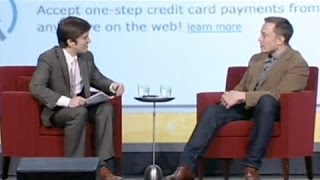 200824:51
 20091:32:59
 20111:00:36