一辆车在画面里飞快地加速,另一辆车看起来像根本没动。
2017 年 11 月 16 日,洛杉矶,特斯拉 Semi 卡车发布会。马斯克放的第一段视频就是这个:左边是特斯拉 Semi,右边是一台柴油重卡,两台车同时起步,跑的是实时画面,没有快放。几秒钟后,Semi 已经到 60 英里/小时(约 96 公里/小时),柴油车还在原地附近蠕动。
马斯克在台上没忍住,开始调侃:
抱歉让你无聊了。我知道它还在动,给它一点时间。(马斯克)
台下在笑,但笑完之后有个问题得面对:这是一台能拉 8 万磅、也就是约 36 吨货的牵引车。美国高速公路允许的最大总重,就是 8 万磅。这个重量级别的车,加速能力从来不是卖点,因为物理规律不允许。
5 秒和 20 秒,两个必须分开看的数字
马斯克先给了两个数字:空载时,Semi 从 0 到 60 英里/小时用 5 秒;挂上满载 8 万磅的挂车,用 20 秒。
5 秒这个成绩,和当年的一大票性能轿车、小钢炮在同一水平线上。把它放在一台半挂牵引车上,本身就不太正常。
20 秒更值得说。柴油重卡满载时的 0 到 60 加速,业内常见的量级在 40 秒往上,爬坡起步、匝道汇入这些场景全靠司机预判。马斯克没在台上报柴油车的具体秒数,他选择放视频,让两台车并排跑给观众看。这个处理很聪明:数字会被人挑刺,画面不会。
更关键的一句在后面。他说,这不是跑车化调校的玩具,这是量产车的真实加速能力。特斯拉在乘用车上做的事,现在搬到了一台商用车身上:电机在零转速就能出最大扭矩,没有变速箱换挡的空档,没有涡轮迟滞,踩下去就有。
柴油重卡要十几挡变速箱把扭矩一段段铺开,每一挡都是一个能量损耗点,每一次换挡都是一次动力中断。电机不需要这套东西。这件事在乘用车上只影响"爽不爽",到了 36 吨的卡车上,影响的是能不能在坡道上保住速度。
上坡这道题,才是真正拉开差距的地方
发布会的中段,马斯克把话题从加速转向了坡度。他给了一个对比:最好的柴油重卡,在 5% 的坡上只能维持 45 英里/小时(约 72 公里/小时);特斯拉 Semi 在同样的坡上,满载 8 万磅,可以持续跑 65 英里/小时(约 105 公里/小时)。
"持续"这个词是关键。很多车在坡底冲一下能到 60,跑几百米就掉下来。Semi 能一直保持 65。
为什么这件事值钱?马斯克算了一笔账:如果你拉一车货翻落基山脉或者任何山区地形,电动重卡每英里能比柴油车多赚 50%。
这个 50% 听着夸张,逻辑其实很朴素。卡车运输卖的是时效和里程,司机按小时算钱,车按天算折旧,一趟活有时限。坡道上速度从 45 提到 65,提升了 44%,一台车在同样的工时里能覆盖更多里程,摊到每英里上的司机成本、车辆成本、保险成本全都变薄。山区线路本来因为坡多而被视为苦差事,一旦速度不掉,这条线的经济模型就重算了。
马斯克在这里提了一个词,说团队为这套性能起了个缩写代号,他觉得很贴切。稿子里没留下具体字母,但从上下文看,他想强调的是这套加速和爬坡能力已经超出了商用车该有的范围。
500 英里,是按最坏情况算出来的
电动卡车被问得最多的问题永远是续航。马斯克的回答直接给了数字:500 英里,约 800 公里。
紧接着他补了一句限定条件,这句限定比数字本身更重要。这 500 英里,是在满载、高速公路车速、大约 60 英里/小时的条件下测的。也就是说,这是最坏工况,不是最优工况。
为什么强调这一点?因为卡车运营的实际场景和乘用车完全不同。乘用车车主关心的是"我偶尔要跑长途",卡车车队关心的是"我这条线每天跑多少"。美国绝大多数货运线路的单程距离在 250 英里(约 400 公里)以内。
这意味着一件事:一台 500 英里续航的车,可以拉着货去 250 英里外的目的地,卸完货,再空车或者带返程货开回来,全程不需要充电,甚至目的地那头连个插座都没有也无所谓。
马斯克的原话大意是,你可以把货送到荒郊野外,然后开回来。
这句话是整场发布会里最实的部分。充电基础设施一直是电动重卡商业化的死结:乘用车可以靠家用桩解决 90% 的场景,卡车不行,车队没有"回家插上"这个选项,要么在货场充,要么在服务区充,两个都需要别人先投钱。而 500 英里的续航把一大批线路从"必须依赖充电网络"变成"根本不需要充电网络",先把最容易的那部分市场拿下来。
子弹和谷仓墙
这些数字怎么来的?马斯克把答案指向了外形。
他说,普通柴油重卡的设计思路更像一堵谷仓的墙,方方正正,迎风面积大;特斯拉 Semi 是按子弹的形状做的。这句话不是修辞。重型卡车在高速巡航时,阻力里占比最大的就是空气阻力,而空气阻力和速度的平方成正比,和迎风面积、风阻系数成正比。一台满载的卡车跑 60 英里/小时,发动机输出的大部分功率其实都在推空气。
所以风阻系数每降一点,续航都是实打实地涨。
特斯拉 Semi 的风阻系数是 0.36。马斯克给了一个参照物:布加迪 Chiron,一台售价 200 万美元的超级跑车,风阻系数 0.38。
一台 36 吨的卡车,空气动力学表现比一台超级跑车还好。
这件事听起来荒诞,但拆开看并不神秘。超级跑车要为下压力、为发动机进气、为散热开口,还要保证轮胎宽度和抓地力,这些都是风阻的代价。卡车不需要跑 400 公里/小时,它只需要在 60 英里/小时把空气顺顺当当地让开。把下压力那些诉求全部砍掉,专心做低阻,理论上确实能做到很低。真正难的是,卡车是个方盒子,装货需要体积,法规限制长度和宽度,能做到 0.36 已经是把每一处细节都抠过的结果。
0.36 背后的一堆细节
马斯克在台上点了几个具体设计。
车头是子弹形状的鼻子,从驾驶舱顶部一路顺着流到挂车,中间没有台阶式的断层。传统的长头卡车在驾驶室和挂车之间有一道巨大的缝隙,气流撞进去形成涡流,白白消耗能量。
更实用的是侧裙。Semi 的侧面有可以活动的裙板,能根据后面挂的是新挂车还是老挂车自动调整,把牵引车和挂车之间的横向间隙补上。这个细节说明特斯拉想清楚了:路上跑着的绝大多数挂车不是自家的,车队不会为了买车头把几百台挂车全换掉。车头必须去适配现有的挂车,而不是反过来。
这些设计加在一起,才有 0.36 这个数字,也才有 500 英里这个续航。 aerodynamic 上的每一分收益,最后都会换算成电池包可以少装多少度电,电池少装,车就轻,成本就低,充电时间就短。这是一条环环相扣的链条。
发布会进行到这里,马斯克讲清楚了电动重卡最难的三件事:加速能不能跟上交通流、坡道上会不会掉速、续航够不够跑完一天的活。三个问题他都给了具体数字,而且都附加了限定条件,没有拿最优工况去糊弄人。
剩下的问题他还没答:电池得多大、车卖多少钱、什么时候能提车、充电要多久。这些留在了后面的部分。但对 2017 年的商用车行业来说,光是前半场这几个数字,就已经足够让所有柴油卡车厂商重新开会了。
- 看电动重卡的续航数字,先找限定条件。标称 500 英里如果是在空载、低速、恒温下测的,实际满载高速可能只剩六折。判断一台车能不能替你干活,用满载加高速加低温这三个最差条件去套,套得过才算数。
- 算自己线路的真实往返里程,别算单程。绝大多数货运线路单程在 250 英里以内,如果一台车能往返一趟不充电,它就绕开了充电桩这个最大障碍,可以直接进入你的采购清单。
- 山区线路要单独核算时间成本。如果你的线路有连续长坡,柴油车在 5% 坡上只能跑 45 英里/小时,电动重卡能维持 65,这段差距会直接体现在司机工时和每日趟次上。把这条线单独拎出来算,往往是最先值得电动化的部分。
- 关注车头对挂车的适配能力。车队不会为了换车头而换掉全部挂车,选车时问清楚侧裙、气流导流件能不能适配你现有的挂车尺寸,这个细节直接影响实际跑起来的能耗。
- 把风阻系数当成采购指标之一。风阻系数每降 0.01,高速巡航的能耗都会变。0.36 这个水平目前仍是重卡里的第一梯队,问供应商要这个数字,比听"省电"这种形容词有用得多。
0:00my great pleasure to welcome you here in Los Angeles all of you all of you I've played a very important role in making this event possible and ensuring the success of Tesla many of you here have given lots of referrals for the cells thank you very much [Music] [Applause] many of you over there have helped us on the trek program I've given us feedback and begin us a lot of advice and have placed a lot of reservations for the tract so thank you very much for your support and finally I want to thank all
0:40of our employees here in Los Angeles in the Bay Area and at the gigafactory for all the hard work for something [Applause] we make a lot of sacrifices but I think you will agree with me that it's worth it when you see those beautiful products I'm personally personally very passionate about trucks I've been lucky to work in that industry for a long time and I'm proud to say that we have the best trucks ever are you ready to see
1:15them bring them on [Music] [Applause] yes [Applause] we're given putting in the trucks the moment the trucks the moment alright [Music] alright welcome welcome welcome to the to the welcome to the Tesla semi truck event hope you like what you see I'm going to tell you about everything that this this truck can do it blows my mind I think it'll blow yours starting with performance so ever an acronym we came up with
3:27that I think really really describes performance well [Music] so tech technical term but let's show you what that means in in acceleration so one thing that care about Tesla is we're looking about performance we want we want a vehicle that feels incredible that accelerates like nothing else let's show what the truck what it's like to be in a Tesla truck this is real time
4:16so that's the Tesla with Tesla semi we'll go zero to 60 in five seconds that's by itself or whether trailer now at 80,000 pounds max gross vehicle weight so that's the most amount of weight you can carry on a US Highway this is the real-time acceleration of a Tesla semi that on the left the thing
4:45that looks like it's not moving is a diesel truck give it a moment [Music] I'm sorry to bore you I apologize boring I know especially it'll get there all right even with 80,000 pounds pulling match gross getting 60 miles an hour in 20 seconds that's what it can do now what about up a hill okay but the best
5:25diesel trucks can only do 45 miles an hour up a five percent grade desert Tim I could do 65 miles an hour 5 percent grade that's 65 miles now are continuous at max gross what this means is that if you've got if you're pulling a load over the Rockies or some mountainous terrain up a hill you're earning per mile you're
5:53earning 50 percent more per mile than you are in a diesel truck that's a gigantic difference so now one of the biggest questions we've been asked about electric trucks is well how far can they go because well let's find out so 500 mile range [Applause] with but what does a 500 mile range mean and by the way it's 500 miles at maximum weight at highway speed during like 60 miles an hour that's a worst-case
6:40scenario but what it means is that just because the vast majority of routes because the vast majority are are under 250 miles it means that you can go to your destination and back even if that your destination has no charging you can you can go there in back go there at home with without recharging so you can deliver a load about the middle of nowhere and come back
7:16now how do we achieve this one of the ways we do this is we design the Tesla truck to be like a bullet so whereas a normal diesel truck is designed more like a barn wall this is a bullet you can see this in the drag coefficient so the Tesla semi has a point three six draft refers to the weight before this is a really good number [Music] as by way of comparison if a bugatti
7:44chiron which is a 2 million-dollar supercar has a point three eight drag coefficients she's got a better drag coefficient than a supercar and by the way we yeah all the way you can see that in the design the weather we see that is what the bullet shaped nose we also have side flaps that map to the whatever trail you're pulling well it's a new trailer of old trailer but the side flaps will map to whatever trail you're pulling and close the gap so you
资源与出处
- 视频在 YouTube 收看
- 档案silicon-valley.tech 档案页本页视频与文稿数据来自 Elon Musk Archive
- 精读本篇精读 Markdown 版
相关视频
同频道、同主题或相邻年份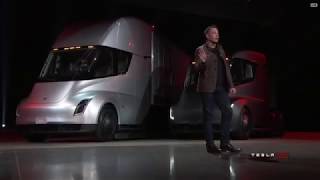 201834:01
 201722:42
 20178:56