到柏林郊外的格林海德(Grünheide)之前,多数人以为那里原本是一片原始森林。特斯拉要在那儿建超级工厂,砍树的消息传出去后,德国媒体吵了好几个月。参观完工地,主持人 Christoph Keiser 当面向马斯克求证这件事,马斯克的回答把在场的人都逗笑了。
“那片林子是专门种来做纸板的,就是个纸板农场。”他说得很轻,“所以今天我们做的事,是把纸板农场推平。”
现场没有下水道,没有自来水管道,地下也没有电缆,有的是足够的雨水和一片待推平的树。十二个月之后,那里立起了一大片厂房。
德国人对“快”这个字向来没什么自信。主持人当场把柏林新机场拖了十四年的旧账翻出来对比,问马斯克到底怎么做到的。
马斯克没有给励志答案。他讲的是批文。
临时许可换来的速度,代价是可能全部拆掉
在德国拿建筑许可不容易,这一点马斯克毫不掩饰。他的办法叫 precede at risk,接受临时许可先开工。这套机制允许企业在正式许可下发之前动工,风险写得明明白白:如果最终的长期许可被拒,已经建好的部分必须全部拆掉。
绝大多数公司不愿意冒这个险。一座几十亿欧元的工厂,可能因为一纸批文变成一堆废铁。
主持人追问,你是一家上市公司的 CEO,股东的钱,你怎么解释这种赌法?
马斯克的回答比问题更直接。
坦率说,投资特斯拉本身就带着大量风险。如果投资人想要的是低风险,我建议别投特斯拉。(马斯克)
他没打算把这件事包装成什么战略远见。愿意投特斯拉的人,买的就是速度。
创新速率慢一半,长期一定输
为什么速度这么要紧?马斯克的推理链条很短。
一家公司的竞争力,本质上由它的创新速率决定。假如 A 公司的创新速度是 B 公司的两倍,只要 A 不自己把自己搞死,也没有在婴儿期夭折,长期看 A 一定会赢。这话说得很绝对,可他认为这就是事实。
由此他反复强调一件事:造原型容易,量产要命。尤其是当你用的是别人没试过的先进生产工艺。
特斯拉绝大部分工程力量,花在了设计“造车的机器”上。他管这个叫 the machine that makes the machine。工厂才是难的那部分,车型设计相对来说简单得多。他一连说了好几遍,生怕在场的人当成客套话。
格林海德工厂的目标是年产五十万辆。他给的时间点相当保守:即便全力以赴,大概也要到 2022 年底才够得着这个产能水平。唯一的限制因素来自“我们能多快造出高质量、高可靠性的车”,订单从来不在限制因素之列。
需求不用操心,可负担性才要命
2021 年的欧洲,开电动车的人还不多。主持人问他,建这么大一个厂,担不担心需求。
马斯克的回答没有一丝犹豫:完全不担心。
他的条件很清晰:产品足够有吸引力,价格落在可负担区间,性价比够好,人们口袋里的钱够买,需求就永远不会成为问题。他不操心需求,他操心的是能不能把成本压到那条线以下。
他补了一句容易被跳过的话:就算你把性价比做到无限高,人们没钱买,那也没用。他们只能看着一个好产品干着急,那种挫败感对品牌毫无好处。真正难的事,是在持续提升性能与品质的同时把价格降下来。
物理学给的那套思维工具,被他拿去做了生意
有人问他,一个人怎么可能同时深入这么多不同的工程领域:特斯拉、SpaceX、Neuralink、The Boring Company、Starlink。
他的答案回到大学时代。他学的是物理,物理本质上是搞清楚宇宙到底怎么运转,这个底子足以支撑各种工程学科。更要紧的一点在于,物理学那套分析框架,可以套用到几乎任何事情上。
他具体讲了这套框架长什么样:第一性原理思维,把事情放到极端值上想,检验自己的假设。说白了就是科学方法。
与之相对的是绝大多数人的思维方式,类比思维。参照已经存在的东西,对照着做。这是大脑的省力模式,不需要费什么劲,可它也极难得出根本性的洞见。
第一性原理是演绎式的。先找出某个情境下最基础、最确定、颗粒度最细的那几条真理,把它们当作公理,然后从这些公理往上推。推的过程中要不断自问:这些公理是不是最可信的?是不是最相关的?它们是否必然导出这个结论?这个结论成立的概率有多大?
他特意强调,现实是概率性的,谈不上决定论,从来就没有非此即彼这回事。
主持人追问他什么时候顿悟的,是不是某个洗澡或者跑步的瞬间。他给不出戏剧化的答案,只说大概是 1994、1995 年前后,他在琢磨互联网这件事。
互联网是人类长出来的神经系统
那段推演值得单独讲,它展示了第一性原理思维长什么样。
他没有把互联网理解成“收发邮件、发照片的地方”。他往下追问:互联网在根本上究竟是什么?
答案是,互联网是人类的神经系统。
在此之前,信息传播更像渗透。信息要从 A 到 B,得有人打电话,有人写信,信还要经过一连串人的手才能送到。现在,信息可以从世界任何一个点瞬间抵达另一个点,全程不需要人搬运。
他打了个生物学的比方。一个原始的多细胞生物,细胞之间靠渗透或者扩散传递信号,慢且模糊。等演化出神经系统,信息传递的速度和可达性完全换了一套规则。
今天你可以在亚马逊雨林深处,靠卫星连上网,获取全世界的知识。而在过去,就算你住在藏书最多的美国国会图书馆里,你能接触到的也只是人类知识的一小部分。
所以他的结论是:人类正在变成一个超级有机体。前提是必须拥有接近光速的、任意两点之间的即时通信,靠渗透和扩散做不到这一点。人类正在按生物体的规则运转。
大学剩下的功能是社交
顺着这个逻辑,他说了一句让现场企业家有点意外的话。
既然你现在可以在网上自学任何东西,MIT 把全部课程都放上了网,教材全都能买到,习题也能在线做,那你今天免费能学到的东西,比过去一个拿到博士学位的人能接触到的还多。
那大学还剩下什么功能?
他的回答是:主要是跟同龄人待在一起,玩一玩,跟朋友聊天。他顿了顿补了一句,跟获取信息关系不大。
主持人顺势接了个梗:跟同龄人待在一起,这正是我们此刻在做的事。全场笑了。
车是带轮子的计算机,自动驾驶只靠眼睛
沃达丰 CEO Hannes Ametsreiter 问的是连接性和自动驾驶。他提到马斯克以前说过一句让电信运营商有点泄气的话,关于联网汽车需要什么样的基础设施,马斯克的回答是“给什么用什么”。
马斯克解释说,特斯拉的车几乎从最早一批 Roadster 开始就联网了,那会儿还是 2G,现在正准备切到 5G。联网的价值在于软件可以远程升级,很多问题一次 OTA 就解决,车主不用跑服务中心。车还能自己诊断故障,提前通知服务中心备件,服务效率完全是另一个量级。
车上的娱乐也算在内。他们跟 Netflix、Disney 都做了对接,车里还有浏览器,理论上网上能看的东西,车里都能看。车里还有游戏。
为什么要在车里堆娱乐?他的判断是,一旦实现完全自动驾驶,人在车里做什么就成了真问题。车自己开,你总得干点什么,娱乐,或者办公。所以娱乐会变得极其重要。
关于传感器路线,他的立场一如既往地强硬:特斯拉完全不用激光雷达(LiDAR),只用摄像头。
理由很朴素。人类世界的道路系统,本来就是为被动光学、也就是视觉设计出来的。要让车开好,就必须解决视觉问题。视觉一旦解决,其他传感器都变得多余。一个谨慎的人类司机靠两只眼睛就能把车开得极其安全,而计算机不会累,还有 360 度环视摄像头,正前方就装了三个,相当于后脑勺上长了眼睛。
他承认主动光学有一点价值,前提是波长能穿透遮挡,比如穿过雾、雨、沙尘。这种雷达必须分辨率足够高,能分辨你是在为一辆真车刹车,还是为一个桥洞、一个井盖刹车。4 毫米波长的雷达穿透性不错,分辨率得跟上才行。
那特斯拉怎么保持领先?他的回答又一次绕开了竞争叙事。他很少想“保持领先”这件事,更在意怎么把车主体验做得更好,怎么让车更好玩、更好用,怎么让人爱上这个产品。如果别人做出了更好的产品,那他们就应该赢。
20 年后,几乎每一辆新车都是电动的、自动驾驶的
Share Now 的 CEO Olivier Reppert 问的是 20 年后的城市出行。
马斯克给了两个“几乎”:20 年后,几乎所有新造的车都是全自动驾驶的,几乎所有新造的车都是电动的。
紧接着他泼了一盆冷水。整个车队并不会因此变成电动或者自动驾驶。
全球新车与卡车的年产量,满负荷也就一亿辆左右。在用的车辆总数是二十亿辆,而且还在涨。换句话说,新车产量只占在用车队的 5% 左右。就算从某一天起,100% 的新车都是电动的,也得再过 20 年,整个车队才会全部换成电动。
他提醒在场的 CEO,别拿手机换代的速度想这件事。车不是手机,不可能一夜之间全换掉。当时新车里只有几个百分点是电动的,全自动驾驶的新车是零。
有人追问城市里的挑战,他的回答还是那句:20 年后不是问题。然后他补了一句让人笑不太出来的话:我希望 20 年后文明还在。
能源:太阳能加风能,配电池,配高压直流
菲利普·莫里斯 CEO Jacek Olczak 问的是能源转型。
马斯克说他很有把握地预测:地球绝大部分电力将来自太阳能和风能。风能的表现甚至让他自己意外,成本已经极低,最好的风机很多是德国造的。
风有个麻烦:风速会变,有时候干脆不吹。人要的是稳定供电,有风才有电这件事没法接受。所以风机必须配大电池组做缓冲。太阳能同理,晚上没太阳,阴天也发不出电,一样要配储能。
那电动车能不能反过来当电网的缓冲?他讲了一段产品史。早期 Roadster 其实有 vehicle-to-grid(车辆到电网)功能,可是没人用。既然没人用还增加成本,就关掉了。现在要重新打开很容易,欧洲的接口方式基本不用改,美国大概需要一个一百美元左右的配件。
不过他真正看好的未来在别处。他看到的是屋顶太阳能加本地电池:屋顶瓦片本身就是光伏,或者在旧屋顶上加装太阳能板,再配一个家用电池。特斯拉有个产品叫 PowerWall,卖得不错。再往上一层,是电网级的太阳能和风能,加上长距离高压直流输电。
高压直流输电效率极高,他认为根本不需要超导体。原理很朴素,输电损耗是 I²R,电流的平方乘电阻。想减少损耗,就把电压升上去,让电流降下来,发热自然就低了。高电压、低电流,可以用极小的损失输送巨量电力。
他还主动提了核能:“我其实不反对核能。”他知道很多人不喜欢,可他坚持在没有自然灾害的地方,核能是安全的。他反对的是把核电站建在地震带、海啸区,或者会被命名的大型飓风扫过的地方。自然灾害构不成威胁的地方,核能非常安全。
在家充电,其实帮了电网的忙
Einhell 的 CEO Andreas Kroiss 做的是电池平台,从电动工具做到园艺设备,他的愿景是一个花园一块电池。他问马斯克,所有人都开上电动车以后,充电要多久,加电站门口会不会乱成一锅粥。
马斯克的回答很干脆:大多数人会在家里充电,就像给手机充电一样,晚上充。
这件事对电网是有利的。电网用电高峰在白天,人们晚上充电,正好填谷,所以并不需要新建一大堆发电厂。
难题出在没地方充电的人身上,比如街边停车的人。这部分需求要靠超级充电站,或者公司在办公场所提供充电。
他也给了一个总量判断:如果所有公路运输都电动化,总用电量大约翻一倍。因为主要充在夜里,发电厂装机容量不需要跟着翻倍。要增加的是太阳能、风能、地热、水电、核能这些装机。他个人的猜测是,长期看,大部分电力会来自光伏加电池。
飞机也能电动,门槛是 400 瓦时/公斤
DHL Supply Chain 的 CEO Oscar de Bok 提到航空货运的碳中和难题。马斯克先反问了对方有多少架飞机。
然后他给了一段很硬的算术。
飞机一定会电动化,可能量密度的门槛比车和船高得多。他粗略估算,要让飞机有像样的航程,大约需要 400 瓦时/公斤。这个“像样”指的是舒适地超过一千公里,还留有储备电量和应急电量。
超过 400 瓦时/公斤之后,航程的提升是非线性的。飞机大量能量花在爬升上,一旦到了巡航高度,空气稀薄,巡航功率很低。从 400 提到 450 或者 480 瓦时/公斤,看起来只涨了 20%,航程可能直接翻倍,到 2000 公里以上。
当时的现状是什么?电芯大概在 300 瓦时/公斤出头,最贵的那批能超过 400,量产电芯正在逼近 400。能量密度提升往往同时降成本,同样的能量用的材料更少,每单位能量的材料消耗就下来了。
他给出的时间表是:未来五年内,应该开始看到电动飞机。路径是先螺旋桨飞机,因为每公里效率普遍高于喷气式,然后是涡桨,再往后是商用客机。
火星:重要的是那座城市,他个人去不去在其次
最后一个问题:你还会亲自去火星吗?
马斯克的回答把个人英雄主义的叙事直接拆掉了。他说自己想去,可那只是 nice to have。SpaceX 存在的理由,落在火星上建成一座自给自足的城市这件事上。
这件事的意义在于人类,在于我们已知的意识的长期未来。他关心的重点,落点是人类成为一个跨行星物种。他觉得这件事对未来的鼓舞无法估量,比明天有几个人上去重要得多。
至于为什么喜欢德国,他答得有点含糊。他在这里一直过得很愉快,喜欢这里的工程文化,认识的最酷的人里有很多是德国人。他提到这里的人真的想把事情做成。
访谈里还有一段容易被忽略的插曲。DWS 的 CEO 提到自己有四个孩子,马斯克突然插话:“人们应该多生孩子,说真的,人不从哪来?”他补了句玩笑,说这件事“酿造”起来要很久。这话在 2021 年说出来像随口一提,放到今天看,是他后来反复公开表达的人口焦虑的早期版本。
把这场对话拆成能用的东西
这场对谈里没有新故事,他把讲过无数遍的东西又讲了一遍。可组合起来看,逻辑是自洽的:速度决定竞争力,速度来自第一性原理,第一性原理要求你把问题拆到最底层,然后坦然接受由此带来的高风险。
能拿走的,远不止“马斯克很疯狂”这种结论。下面这些是可以直接动手的事。
- 把一个正在做的决策拆到公理层。写下你假设为真的三到五条最基础的事实,逐条问:这条真的成立吗?概率多大?如果它不成立,结论还剩下什么。多数决策失误发生在没人回头检查前提。
- 区分“造原型”和“造机器”。如果你做的事情需要规模化,把至少一半的精力放在生产流程本身。产品能演示,跟产品能交付,中间隔着一整个工厂。
- 给速度定一个可比的指标。别用“我们很快”这种话,用“我们的迭代周期是竞品的几分之一”。马斯克的判断标准是倍数级的,两倍速长期必胜。
- 先算可负担性,再谈需求。任何“产品够好就有人买”的假设,都要先过一道价格门槛测试。算清楚目标用户的钱包能承受多少,再倒推成本结构。
- 用存量思维看长周期切换。新车只占在用车队的 5%,任何涉及实体资产替换的行业,转型周期都以十年计。做长期规划时,别用增量速度去推存量替换。
- 把用户行为习惯纳入基础设施设计。如果用户的自然行为正好削峰填谷,你的基础设施投资能省一半。设计之前,先看人们本来会怎么做。
- 接受“临时许可”式的风险结构。如果一件事的失败代价可控,最坏结果只是推倒重来、公司不死,用并行推进换时间通常值得。前提是你把推倒的成本算清楚了。
- 检查自己是不是在靠类比做判断。每次说“行业里都这么做”的时候,停一下,问这句话背后有没有一条真正的公理支撑。
最后一句留给那片纸板农场。很多看起来不可撼动的障碍,拆开看只是一片为造纸种的树。区别在于,有没有人愿意亲自去现场看一眼,别只听别人说那是一片原始森林。
0:07pioneers talk it's our great pleasure to have you for everybody to be joining into our discussion theme of the day is mission to mars and we have a very special guest today which is elon musk elon welcome thank you for having me you're the founder of so many companies of tesla of spacex we're going to speak to that in a minute but we have more than you in the round we have entrepreneurs talk today and let me shortly introduce the other guests in the round dr hannes amit schreiter he is the ceo of vodafone the telecommunications company we have olivier report he is ceo of share now the car sharing company with marcus essing the ceo of philip morris
0:46undergoing a very strict renovation of its business model moving away from tobacco we have andreas krois ceo of einel which is a company specialized in trading for do-it-yourself construction and building we have for batteries i'm sorry i said for batteries and for batteries our main business is our platform battery battery so we have something in common okay great doctor osaka verman he's ceo of dws the big b2c investment company and oscar the book he is ceo of dhl supply chain and my name is christophe keiser i'm your moderator i'm with axel springer so elon let's we just came from visiting your construction site in green hide and i think it's fair to say
1:34that everybody was deeply impressed 12 months ago this was a forest there was no such cardboard factory technically in the sense that the trees were just grown for use in cardboard so okay to be clear not an old growth forest it was literally a cardboard bomb that so sometimes people wonder are we knocking down old trees but it's just it's actually literally a cardboard farm and today we knocked down the cardboard farm okay but there wasn't any sewage no fresh water at least not in pipes underneath the ground this rain rain at decent amount but yeah and no electricity yeah and now it's a huge factory almost yeah i mean we have a lot of the core
2:17shell that's been built and there's still a transmitter work that goes on because the building is is like you know like if you get a computer this is the building is the box that the computer goes in but the computer is the hard part yes so please tell us germans are not really famous for building buildings very quickly look at we're in berlin right now look at the airport building airport right how did how do you manage to build so quickly well it is actually quite difficult to get all the permits and it requires a lot of effort and a lot of cooperation with the authorities so it may i would definitely not say that it is easy to get the permits it's
2:58not not easy one of the approaches that we did take was to proceed at risk with temporary permits so there is a way to accelerate things in the system to go with temporary permits but the risk is that your long-term permit could be denied in which case that you have to stop everything and tear it down yes so most companies are not willing to take the risk of the temporary permit and then the risk of having to stop and tear down elon you're a ceo of a publicly traded company very valuable okay of many public debates how do you explain taken this risk to shareholders i don't know i mean frankly i think there's probably a lot of risk associated with tesla
3:46and if a low risk situation is what an investor wants i would recommend not investing in tesla but many still invest in tesla because they believe in speed yeah why is speed of such an essence well i think the speed is a fundamental determinant of the competitiveness of any company so especially with when there's technology involved so the rate of innovation fundamentally determines which companies succeed you know which companies are number one in a in a particular arena like unless if like if one company has twice the speed of innovation of another provided that company does not die of a self-inflicted wound or die sort of have infant mortality
4:33the company with the the high rate of innovation will unequivocally win long term you're building a factory that is geared for half a million cars yes yes clear like i very much think that and i've said this many times the making of a prototype is easy but production is hard especially if you have advanced production techniques that people have not used before the the vast majority of of our engineering effort isn't is in manufacturing basically designing the machine that makes the machine so i can't emphasize this enough the the the factory especially in advanced factories the hard part the vehicle design is comparatively easy so we will aim for a half million
5:23vehicles a year that is our goal to get there as quickly as possible the only limitation on growth is how quickly can make can we make cars that are high quality high reliability that's the only the governing element on the rate of progress but nonetheless even with extreme effort i think it probably takes us until this is just a guess that until roughly the end of 22 to reach that level of production what about demand not many europeans drive electric cars yet yet you're building a gigafactory as as it's called yeah is demand or creation of demand an issue in your mind or do you do you think if the car is good if the car is workable if it's affordable
6:10it will be sold absolutely definitely yeah no question no doubt in your mind zero how come because creating demand is always a huge question on entrepreneur's mind but you seem totally confident that it will work absolutely if you have a compelling product and the price manager is affordable so the value for money is good the affordability you know people can have enough money to buy it and the product itself is compelling then demand is never going to be an issue so that is not something i worry about i do worry about making sure that we can achieve affordability thresholds because even if you make the value for money infinite if people do not have enough money to
6:56buy it they can't still can't it's and then it's just frustrating for people they see this great product too expensive can't buy it so making the car affordable is and while continuing to improve the the capabilities and quality of the product is is the that is the hardest problem so many people ask how does elon musk manage his life and i know you have been asked that question a lot of times and i heard a lot of interviews with you but but still even i wonder all the time how do you do this because tesla in itself is a huge complex operation with factories on all continents almost by now almost almost yeah but it's not your only company you have
7:35spacex which seems to be huge success you have your own space program you're talking about mission to mars you have neural link connecting computers to brains you're like a small company it's a small company it's very small you have the boring company building very small very small company yeah you envisioned hyperloop it's not a company but well a boring company can do the hyperloop boring company can do the hype yeah i mean hyperloop is essentially just a fast-moving electric car in a vacuum tube okay yeah you have starlink bringing fast speed internet to every almost every like square meter on earth is gonna be great it's gonna be great but but
8:20how's part of spacex and and as part of spacex yes how do you manage to dive so deeply into so many different engineering challenges well i studied physics and i certainly strongly recommend physics as a good grounding to understand the nature of reality i mean physics is at fundamentally just understanding how does the universe actually work and then that's a good foundation for then a variety of engineering disciplines and i think also the the analytical principles the the sort of analytical constructs used in physics apply to basically anything it's you know philips physics developed all these ways of of thinking like like first principles thinking thinking about
9:08things in the limit of high and low you know testing your hypothesis you know it's the scientific principle essentially these things are incredibly helpful in all arenas it's just most people tend to think by analogy or by comparison with something that already exists and and this this is a sort of a mental shortcut that requires less brain strain but it it does not it's hard to get fundamental insights unless you think about things from a first principle standpoint and the first principle standpoint is is kind of deductive thinking that almost has like the force of a natural law of a physical law of making things happen because they need to happen
9:57no first i mean first principles thinking is just saying okay what are the most fundamental truths that we know about any given situation like the things that at a very granular level the most the sort of simplest building blocks that that we're most convinced are true and then and then you reason up from those fundamental axioms and then you it's just sort of cogent thinking would be another way to to refer to it as say like are these axioms believed to be the most believe to be true are they the most relevant do they necessarily lead to a conclusion what is the probability associated with that conclusion the things that because reality is really probability it's not it's not
10:42deterministic it's not one or the other when did you have the personal epiphany understanding that this rule that comes from physics applies to the business world i think it applies to everything but i don't know i think probably 95 or 94 something like that while swimming while jogging under the shower when did it hit you was it a process or a moment i was i was thinking about the internet and those are the early days and like what is the internet fundamentally
11:29you know it's not it's like it's not like a place you get email or post pictures or something really the internet is like the nervous system for humanity whereas previously communication was more like osmosis in order for information to travel somebody would have to call someone with a phone or write them a letter and then that letter would be carried by another person to you know by a series of people to your destination now communication can ha can happen instantly from any place in the world to any anyone else and does not need a human to carry it this is this is sort of like at a cellular level you see say a small primitive multicellular
12:14creature will just communicate via from by osmosis from one cell to the next or diffusion essentially so but once you have a more sophisticated organism you have a nervous system the the speed at which information can travel is much faster and the accessibility of information is fundamentally different you know if you want now with the internet you could be you know in the middle of amazon jungle with the internet with a satellite connection and you have access to all the world's information whereas previously even if you lived in the library of congress in the us where the most books are you still would only have access to a fraction of the world's information
12:53this is this is basically humanity becoming a super organism to agree that's not possible unless you have sort of essentially instant light speed communication from anywhere anywhere as opposed to osmosis diffusion thus humanity transforming into something like a bio organism or at least behaving more same rules like the the speed of information flow and just in fact even not just speed but qualitatively the access to information was so limited before i mean now technically you you could teach yourself anything previously say universities had somewhat of a monopoly on higher education but now mit has all of their lectures online you can buy all of the textbooks you can
13:38you can do the tests online you can learn anything you want almost i'm not sure what you couldn't learn on online but you can learn right now online for free more than someone who did a doctorate could do before very impressive this is just yeah so i mean what is the purpose of universities at this point i think it's mostly just to hang out with peers okay have some fun and talk to your friends and hanging out with peers this is not for information good point hanging out with peers this is exactly what we're doing here and so open let's open up the round and please shoot questions this is supposed to be an open dialogue who wants to begin yeah i'm
14:18sure for sure so again what christoph said already we were deeply impressed by what we saw with the gear factory it's fantastic to see that one question which which i find very interesting since we are in the business of connectivity and i once heard you saying that connected cars autonomous driving what infrastructure do you need and your answer i think it was like we take what we get which is a bit disappointing for us because we have such great 4g 5g and want to hear that it needs to be connected what is your perspective on connectivity bandwidth you need for the car for the future and then another question to it how do you stay ahead because i think you were the
15:03first one to understand that electric mobility could be big and will be big and it's the right way it's good efficiency how do you stay ahead of the others because now everybody's coming i think the biggest stimulus of electro mobility is coming from competition because they all move in that means you're the original you are ahead how do you stay ahead with battery and with concepts software platform sure
15:28well our cars have been connected almost from the beginning from the early roadsters we we put you know cell modem even in the the early roadsters of our very first part about the first one in austria okay great thanks so we started off i think it was 2g at the time or something and now our cars are you know about to transition to 5g and everything so it's important to have a connected car so you can update the software and you can do remote analysis so a lot of the problems can be solved with the software update i mean our car is extremely adaptable it's basically like a computer on wheels and so so that this means like less time that people have to go to a service
16:20center and also the car can diagnose its problems tell the service center ahead of time we can stock the parts and then we can be much more efficient about service and you can also watch any tv on the car so it has you know high speed data connectivity you can watch really any show you want on the car is it a specific entertainment platform or you just take anything out of the internet yeah we just worked with you know netflix and disney and everyone else and yeah and just made it made it available there's also a web browser so you can technically you can watch anything that's on the internet as well and it also has video games i think entertainment is
17:13going to become extremely important especially as you move to fully autonomous cars if the car is driving itself then what are you going to do while you're driving probably want entertainment some maybe some productivity stuff and the autonomous driving you just do with some sensors leader rather etc or do you need more we we believe just just cameras aren't the way to go we don't use lidar at all the the entire road network is designed for passive optical essentially vision so if you in order to make a car drive properly you have to solve vision and at the point of which you sold vision you really don't need any other instruments like a careful driver
17:53human driver can can drive with an extremely good track record and the unlike a computer unlike a human the computer does not get tired yeah it has a 360 degree surround cameras it's got three cameras pointing forward so it's like being able to see with eyes on the back of your head basically so it's really vision is the way to go there's some value to active optical for a wavelength that's occlusion penetrating so it can see through fog or rain or dust but it has to be high resolution such that you can rely on like for example for radar at roughly a four millimeter wavelength this is good for occlusion penetration and but it needs to have enough
18:39resolution to know that you're breaking for a real object and not just a bridge or a manhole cover or something like that yeah how do you stay ahead yeah sure no let's go ahead last question and then we move on to all of you yeah no okay maybe just finish the last question that they asked how do you stay ahead how do you keep like i don't know if we'll stay ahead maybe we won't stay ahead i i don't i just think about how we can improve the experience for the owner of the car how can we make it the most fun the most functional what can we do to have them love the product as much as possible and if somebody else makes a better product then more power to them you know then i guess
19:18we should lose yeah okay good good good yes we we really believe that we can improve the quality of life in the cities and we love cars really we really love grass but we also believe car sharing is is something who makes the usage of car much more much more efficient for sure and also it makes really affordable even a very expensive car if you only have to pay it for a minute or a minute base or hourly basis it's really i would say something you can you can do whatever money you have what would be very interesting for us because we always try to look into the future also in our business very important and to innovate what we do in the mobility area is
20:03how do you see mobility in 20 years especially in urban areas and maybe you have the one or other ideas who would also help us to to further develop our product well i think in 20 years almost every car made will be fully autonomous and almost every car made will be electric this does not mean that the whole fleet will be electric or the whole fleet will be autonomous because the annual production rate of new cars new cars and trucks at full full speed is around 100 million units a year but there's this two billion cars and trucks in active use and that number is rising so that that's basically it takes 20 years from the point at which 100 of all
20:50vehicle production is electric it's still 20 years from that point before the fleet is fully electric so i think people sometimes you know it of course but sometimes people don't realize like you can't just it's not like phones you can't just replace all the cars and trucks overnight only fl only but new vehicle production is only five percent the size of the fleet and as it is right now only a few a couple of percent of new car production is electric and at least right now none no new car production is fully autonomous but 20 years from now probably essentially 100 electric essentially 100 fully autonomous and even in the urban area where i would say the challenge is
21:32the everything yes concerning autonomous no problem no no problem in 20 years 20 years my god you've not i hope civilization is around in 20 years you know i caught that as a win yeah okay great yeah great thank you marcus essing yeah philip morris elena we have been formulating a quite i think ambitious not very humble vision to lead the way into a smoke-free future which is i think pretty bold your vision i think what i learned is goes also beyond electric cars it considers the transition to renewable energy which i find super inspiring and the most important thing to me also to my kids yeah what do you think is needed on the one and do we look
22:10at the let's say green energy options that we know today like sun and wind and is it decentralized or would you build such an inspiring plant as we have seen today in a place where there's a lot of sun or wind or do you even look at totally new energy sources that go beyond that i mean i feel quite comfortable in predicting that the vast majority of of earth's electricity generation will be solar and electric solar and wind i should say so wind has actually been i've been surprised just how good wind has gotten wind power is extremely low cost in fact a lot of the the best wind terms are made in germany so the numbers are extremely good yeah
22:53that needs to be paired with a large battery packs in order to buffer the wind power because the wind speed changes and sometimes it doesn't blow wind so but people want steady electricity they don't want to have just have electricity when the wind's blowing so you have to have pair wind turbines with large battery packs and the same as with solar you've got to buffer the the soil park because obviously there's no sun at night and sometimes it's very cloudy do you see the growing electronic half lead as a buffer for that to be connected to the network or is that unrealistic i i mean i just i certainly could be wrong about this point the early
23:32roadsters we made had vehicle-to-grid capability but nobody used it so we you know it cost some money nobody was using it so we turned it off we can easily turn it on back on on right now and actually easy especially in europe because of the way the connectors work a little more we need like a maybe 100 accessory to be able to do this in the us but i i really think people want to have a home based battery like like i think the future that i see most most likely is solar on the roof so either where the roof itself this roof tiles itself are solar generating or solar panels retrofit on an existing roof combined with a local battery we have a product called
24:20the power wall that's very popular and then you need to combine that with grid level solar and wind so and and then have a long distance high voltage dc connections high voltage dc is extremely efficient at transferring electric power no need for superconductors in my view so like the the the energy penalty for for long distance electricity transmission is i squared r so it's the current squared times resistance so if you just increase the voltage you can have the current be low and then your i squared r heating is low so you have a high so high voltage low current you can transfer a tremendous amount of electricity with almost no very tiny losses so
25:15now you still need to compare it to pair that i think there's other sources like hydro geothermal i'm actually not against nuclear i know that some people don't like nuclear but i think actually nuclear in a situation where there's not natural disasters is actually fine i don't think you want to have nuclear in a place that has lots of earthquakes or tsunamis or something like that or big hurricanes with a name but in places where natural disasters are not a concern i think nuclear is very safe thank you very much mr kais thank you we are working in our company also on a battery platform completely different my vision is that i i rep with we
26:01revolutionize the do-it-yourself market i want to have a battery in every house with a garden that all the tools and all the garden equipment can be run on one platform so one battery for all tools around the garden and in the house okay the the key is for sure the battery same as in the car we're working every day on endurance and performance because this is what the customer requires in the car and also in tools and in garden yeah the difference i think is we have our charger always with us yeah and when we go all in electricity mobility what do you think how fast we can charge the cars and how long it will take us
26:52when everybody drives with the e-car to charge the battery that we're having not the completely mess in front of the fueling stations well i think most people are going to charge their cars at home generally people will charge their cars with their charge their cell phones and that's at home at night this actually works fairly well with the grid usage because the electricity usage on the grid is mostly during the day so you don't actually need a lot of new power plants yes given that people primarily charge their car at night at their house now not everyone can do that some people park on the street or something and that's where you need supercharger
27:35stations or charging at work so total electricity power consumption obviously will increase i mean when everything when all transport goes electric or road transfer transport going electric will approximately double electricity usage total electricity usage like i said because most of us at night that doesn't mean a doubling of the power plants but we will need to increase the amount of solar and wind geothermal hydro nuclear i think this is fine like i said in order to solve the needs of
28:16electric vehicles you know my guess is that the majority of the electricity production long term will be photovoltaics solar and paired with batteries obviously that's my guess dr velman thank you thank you very much dws yeah no thank you i think dws is an investing company in big companies around the world but i want to say i want to congratulate that you have choose germany for this gigaff you know sure fabric i i think might be you have for might be look into the engineer space it's a big culture in germany i have to say that i'm not native german but i've grown up here and this is a really big culture for automobile industry and i think that
29:02you came to germany is impressive for me by the but one thing what i learned is yeah i love germany it's great yeah it's it's i you know might be we have more time to talk in a later stage but one thing what i would like to also learn today from you is not to be engineer but to think in like a physician you know this is important i think this is i have a four young children so i have to advise them now a little bit differently i think people should have more kids yeah seriously yeah yeah no no i mean people don't have humans where are the humans coming from yeah yes you're right how to make them somehow yeah you're right take a long time to brew it up
29:39yeah i have i have four but you know i have to be carefully the cars are too small but again but i want to say you have revolutionized and i think dedicated header and dedication for electric cars what is your next big thing you know in your mind you know you called many companies you are owning what is your real you say this is a disruption you have in mind maybe you don't want to talk today but this might be interesting i mean first of all my goal is not disruption for the sake of instruction i i really think there's okay there's some important things we have to solve in order for the future to be good yeah i would say like my you know my sort of algorithm or
30:20optimization is like okay what set of things do we need to do to ensure that the increase the probability of the future is going to be good yeah and so if we if we have to solve sustainable energy yeah this is total logical if we do not solve sustainable energy then we have unsustainable energy then it's just a matter of time before things go before civilization collapses we must but even beside even if there was not an environmental issue since the availability of oil is limited yeah this is not something we can sustain long term yeah my original interest in electric vehicles was actually not environmental it was out of concern just you know studying physics and i'm
30:58like wait a second yeah we we immediately transitioned to solar electric yeah or we're going to have a problem and and and we run out of oil civilization collapses that's a problem now of course the environmental concerns have added to the urgency because the the more co2 co2 we put in the oceans and atmosphere the more we increase the probability that something will go wrong like i said like things are much more probability as opposed to certainty but i think it's an unwise experiment to dramatically increase the co2 yeah in the atmosphere and oceans given that we know we need to transition anyway because we ran out of oil yeah so why run that experiment it's not
31:41it doesn't make any sense we know we have to transition to a sustainable energy economy then let's just get on with it yeah you know let's just get on with it and not run the crazy experiment and see if the what happens if the atmosphere has 2000 ppm co2 this is crazy okay great and thank you question okay thank you very much and yeah that's it's nicely related to the point you were just mentioning so as i run dhl and dhl supply chain in there and we have quite some ambitious plans towards zero emission and and optimizing the supply chain for customers to get to that but one of the things we obviously always face is that we also run an airline
32:22and and that's actually the biggest the biggest ambition on how do we get that carbon neutral so i'm curious to pick your brain on that one well actually i'm just curious how many aircraft do you have many a lot okay so yeah so aircraft will certainly go electric the energy density requirement to have aircraft with the reasonable range is much greater than for cars or ships so my back of the envelope calculations suggest that you need about 400 watt hours per kilogram to have aircraft with a decent range this is where with a range where it's comfortably over a thousand kilometers including some reserves and you know emergency power and that kind of thing
33:18and then as you go above 400 per kilogram it gets really better in a non-linear way because you spend so much of your energy getting to altitude once you get to altitude the air is thin and your cruise cruise power is is quite low so once you get if you go to like 450 one-hour kilogram even though it's let's say 460 or 480 watts per gram you will you will double the range so even like a 20 increase let's say in energy density will double the range to at least 2 000 kilometers if not more so and we're getting there progressively with improvements in the energy density almost every year so this is just white house per kilogram and a lot of the improvements in energy
34:03density actually also improve the cost because you need less material because you're able to put more energy in the same amount of material which means less material per unit of energy you know where we are right now is you know a little over 300 watt hours per kilogram and some of the very expensive cells can do over 400 watt hours per kilogram but the the high volume cells i think will start to approach 400 watt hours a kilogram as well so i would expect to see a significant transition to [Music] electric aircraft starting initially with propeller planes because they're more generally more efficient per kilometer than jets and and then and then turboprops and then
34:51commercial airliners and that kind of thing that transition probably happens i think reasonably soon within the next five years we should start to see electric jets okay that's fascinating wow thank you our time is almost over let me just finish off with just a couple of very very short questions and very short answers do you still plan to go to mars personally i would like to go to mars the the the reason for spacex is not you know if i go to mars that's that's nice to have but but what is important is that we establish a self-sustaining city on mars this is important for the long-term future of humanity or consciousness as we know it and so it's less
35:35less about a few people tomorrow but more about creating a self-sustaining city on mars and and humanity becoming a spacefaring civilization which i think is incredibly inspiring for the future thank you and very last question you said you like germany for what reasons do you like germany i don't know i've always had a good time when i when i come here you started in munich a semester no no i studied german for it as semester actually in canada i don't know
36:04so i don't know i i do like the sort of the engineering culture and there's it's hard to say exactly why do you like something but i always have a good time and people i think they really want to get things done and i know a lot of the coolest people i know are german so i don't know that's that's why i love germany we leave it at that thank you very much for being here all right thank you very much and this has been thank you very much
36:40this has been our pioneer talk thanks for joining us thanks for everybody being here thanks elon musk for joining us thank you and have a good day all right thank you thank you thank you thank you great thank you thank you
资源与出处
- 视频在 YouTube 收看
- 档案silicon-valley.tech 档案页本页视频与文稿数据来自 Elon Musk Archive
- 精读本篇精读 Markdown 版
相关视频
同频道、同主题或相邻年份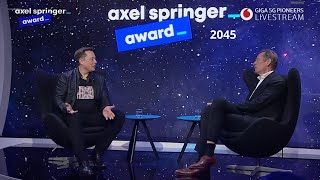 202229:32
 202011:48
 202028:07