1995年某个下午,帕洛阿尔托一间租来的办公室里,一位资深高管把一本厚厚的黄页电话簿扔到两个年轻人身上,问他们:「你们真觉得互联网会取代这个东西吗?」
那两个年轻人一个24岁,一个23岁,晚上就睡在这间办公室的地板上,因为租办公室比租公寓便宜。他们刚拿到一笔300万美元的融资,投资人还额外给了4万美元让他们去买车。哥哥花3.5万买了一辆1967年的捷豹E-Type,从经销商那儿开回家的路上就抛锚了。
十八年后,2013年,这两个人第一次以兄弟的身份同台出现在一个公开论坛上。主持人杰夫·斯科尔(Jeff Skoll)开场就抖了个包袱:他1995年认识马斯克的时候,两人在追同一个女同学,「后来我意识到,埃隆总喜欢当第一」。
这场对谈信息密度很高。马斯克讲了他为什么要去火星、为什么非要自己造火箭、为什么通用汽车碾碎自己的电动车是个错误判断。金巴尔讲了他为什么拿着3亿美元的身家跑去学厨、在911之后给消防员做了六周饭、以及一个学校菜园怎么能让孩子的蔬菜摄入量翻倍。
「他从没故意做过一件刻薄的事」
第一个问题很软:你们各自欣赏对方什么?
金巴尔的回答从摩托车开始。他7岁那年想要摩托车,弟弟6岁也跟着要。在南非,这么小的孩子骑摩托车并不常见。金巴尔说,他欣赏哥哥的地方是:他想要一样东西的时候,是真的想要,然后他会真的去把它拿到手。从小到大一直如此。
马斯克的回答更简单:「金巴尔是我认识的最好的人。我这辈子没见过他有意做过一件刻薄的事。」
这段对话定下了整场的基调。哥哥是那个往前冲的人,弟弟是那个知道什么时候该停的人。后面所有关于商业和人生的分歧,其实都从这里开始。
14岁开游戏厅,输给了父母
兄弟俩的第一桩生意在南非,一家街机厅。
他们的逻辑很扎实:知道自己这个年龄段的人喜欢玩什么游戏,因为自己就是游戏专家。14岁和15岁,在比勒陀利亚。租约签了,机器在路上了,最后卡在一件事上:办经营许可证需要年满18岁签字。
而他们从头到尾没告诉父母。
父母知道之后,一切停摆。金巴尔至今还有点不服气:「那本来会非常成功的。」
这件事的重点不在童年趣闻。他们讲的是一门算过账、做过市场调研、已经落地执行的生意,只是被一个年龄门槛拦住了。马斯克后来做SpaceX时的思维方式,和14岁那年没什么区别。
那趟从硅谷开到费城的公路旅行
1994年,兄弟俩开车从硅谷去费城。两人同时毕业,金巴尔说「因为我比他聪明得多」,马斯克补了一句「我修的是双学位」。
路上他们想做的事换了好几轮,最初想做医疗数据库。真正成型是在1995年,那一年他们形成了一个判断:互联网会从根本上改变人类。
马斯克用的比喻是神经系统。以前人类传递信息靠的是「渗透」,效率极低。你想查资料,得去国会图书馆,而且必须人在那儿,书才在那儿。有了互联网,你在地球上任何一个角落,只要连上网,就能接触到全人类的信息。
「人类几乎在变成一个超级有机体,而互联网就是它的神经系统。」(埃隆·马斯克)
这个想法在今天听起来像常识,在1995年不是。
Zip2做的生意很具体:帮媒体公司上线。做的是互联网出版软件,黄页、地图、行车路线这一类内容。客户名单里有纽约时报公司、奈特骑士报业、赫斯特,几乎所有大媒体集团。而那个当年把黄页簿扔到他们身上的高管,后来成了投资人。
睡办公室、在YMCA洗澡、轮流吃Jack in the Box
创业初期的目标低到什么程度?马斯克说得很直接:赚够钱付房租。
办公室只有一台电脑,白天当服务器,晚上马斯克用它写代码。两人睡在办公室地板上,去YMCA洗澡。金巴尔说,对他来说最难受的部分是连续吃了三次Jack in the Box。帕洛阿尔托晚上十点以后基本没什么吃的,只能在那份菜单上轮着点。
有一个凌晨三点的细节他记得特别清楚:他点了一杯奶昔,太累了,喝到嘴里发现里面有东西,整个人瞬间清醒。
1995年底,网景上市。不管那些人到底懂不懂互联网是什么,他们至少知道互联网上能赚钱,哪怕只是「更傻的人接盘」理论。1996年初,兄弟俩再去见风投,一轮融资一周就close了。300万美元。
金巴尔的描述很生动:「我们以为他们疯了。这些人显然不知道我们睡在办公室里。」
投资人后来还发现了一件事:这俩人是非法移民。他们只有一辆车,车轮还老是掉。于是投资人给了4万美元让他们去买车。马斯克拿了3.5万,买了一辆不能开的捷豹E-Type。金巴尔的原话是:「他得到了他想要的。停在路边看起来很棒。」
Zip2最终卖给康柏,3亿多一点。1998年底谈成,1999年初完成交割。
3亿美元之后,一个去学厨
主持人问:23、24岁,从付不起房租到身家过亿,这对你们后面的路有什么影响?
金巴尔的比喻是:「像一条在笼子里被打了四年的狗,突然被放出来,面前全是T骨牛排。」
然后他说了一句很实在的话:他以为自己在建的是一家做一辈子的公司,结果boom,人家给你一大笔钱,一切都超现实。
他去了纽约。他的判断是:技术是哥哥的事,他自己从小的热情在食物。在家里他是那个做饭的人。手里有钱了,那就去学最想学的东西。他进了纽约一所顶级的烹饪学校。
然后赶上911。他住的地方就在世贸中心旁边,毕业典礼在911之前。接下来六周,他在Ground Zero给消防员做饭。
这段经历定义了他后面所有的事。他说自己一直喜欢食物,但那六周让他明白了另一件事:食物能把人和人连接起来,能建立社区。他从那儿出来的时候,主意已经定了,要开餐厅。
从一笔3亿美元的退出里赚到钱,然后去开餐厅,按常规判断这个决定很奇怪。他自己也承认。但他说,对他而言这是对的。
最初合伙开了第一家店,计划一晚接待60人,他当时还同时在特斯拉和SpaceX帮忙,餐厅原本只是个副业。到今天,这家店一周服务1万人。
2003年那杯咖啡:三件事
马斯克这边,Zip2的钱几乎全部投进了X.com,也就是后来的PayPal。
主持人问他:把大部分鸡蛋放在一个篮子里,你还会建议创业者这么干吗?
马斯克的回答没有任何犹豫:
「我认为值得把自己的资本投进去。我不相信所谓『别人的钱』那一套。如果你自己不愿意把资产押上,你就不该要求别人押。」(埃隆·马斯克)
eBay收购PayPal之后,2003年前后,主持人在帕洛阿尔托一家咖啡馆问马斯克:接下来想做什么?
马斯克说了三件事:太空、太阳能、电动车。
这三个词不是随手列的。马斯克在大学时就想过一个问题:什么最能影响人类的未来?他给出的答案是三个领域。互联网。可持续能源,其中太阳能负责生产端,电动车负责消费端。以及人类成为多星球物种。
他加了一句限定,很重要:「我对地球上的生活相当乐观,我不认为会有迫在眉睫的灾难。但我仍然认为我们应该把生命延伸到地球之外。」
他描述的未来是一个分岔:要么人类成为跨行星的文明,要么被困在地球上,直到某次灭绝事件。两条路,没有第三条。
做法是在火星上建立一个基地,并且尽快让它实现自给自足。他不认为SpaceX能单独完成这件事,但至少可以把太空运输技术推进到能把一批人送上火星的程度。目前这件事做不到。
火星计划,起点是一盆植物
这里有一段很少被完整讲出来的起源故事。
马斯克最早想做的项目叫「火星绿洲」(Mars Oasis),本质上是一场慈善任务,跟造火箭毫无关系。方案是:送一个小型温室上火星,里面装种子和脱水凝胶,着陆后给凝胶加水,然后拍一张照片,红色的背景上长出绿色的植物。
他的判断依据是传播学:公众对「第一次」和「之最」有反应。这会是最远的一次生命传播,会是那张「红色背景上的绿色」的封面照。人们会因此兴奋起来,然后去要求政府增加航天预算。
这个项目的预期回报是零。他自己的想法是:钱花掉,事情不成,就这样。
但在推进这个任务的过程中,他发现自己对火星没有人的原因判断错了。他一开始以为问题出在意愿:公众缺乏热情,政客没有动力。所以他的方案是制造话题、点燃意愿。
做到一半他意识到,真正卡住的是成本。他能把航天器、温室、通讯的成本压下来,却压不下火箭的成本。
于是有了那段著名的经历:2001到2002年,他三次飞往俄罗斯,想买退役的洲际弹道导弹(ICBM)。第三次谈的时候,协议都谈成了。
他最后放弃了这条路线,理由是他想清楚了一件事:如果火箭运输本身存在根本性的成本问题,那么再多的公众热情也解决不了问题。他手里握着的全是意愿这一侧的筹码,卡点在方法那一侧。而如果人们知道有一条路可走、并且这条路不会实质影响他们的生活水平,他们就会支持。
他补了一段关于美国的观察:美国是一个探险者组成的国家,是从人类探索精神里蒸馏出来的,那种精神其实非常强。「但人们需要知道这件事是可能的。」
通用碾碎了EV1,车主点了蜡烛
特斯拉的起点也是同一个逻辑,只不过对象换成了车。
马斯克本科读物理,对电动车和超级电容感兴趣了很久。他当年从南非来加州,本来是要在斯坦福读应用物理和材料科学的博士,研究方向就是超级电容和电动车。互联网把他从这条路上拽走了几年。
PayPal之后他想回来。当时他并不觉得自己需要创业,因为通用汽车已经推出了EV1。他的判断是:通用会顺势做EV2、EV3,一代比一代好,逻辑很顺,那就不需要一家新公司了。
然后加州改了法规,不再强制要求电动车。通用召回了所有EV1,为了确保没人能把车拿回去,把它们集中到一块地方碾碎。
马斯克讲这段时的语气很有意思:「在碾碎它们的时候,那些不愿意交回车的EV1车主在现场办了烛光守夜,就像有人在被处决一样。」
「一家公司会忽略这种事,在我看来极其反常。人们为一件产品办烛光守夜,这是非常罕见的,尤其是通用的产品。如果人们在这么做,你真的应该注意。」(埃隆·马斯克)
于是他决定,得有人来造电动车。
但他同时强调:创办这些公司的时候,他们并不认为自己会成功。他认为最可能的结果是失败,只是这件事值得做,哪怕成功率很低。
前三次爆炸,第四次决定生死
SpaceX早期有个残酷的时间表:前三次发射都没成功,第四次是生死线。第四次失败,公司就没了。
金巴尔是早期投资人之一。他飞去夸贾林环礁看发射,那地方在太平洋中间,离夏威夷两千英里,得坐休伊直升机过去,感觉像《现代启示录》里飞往邪恶博士的岛。
他的态度是:「如果我投进去的每一分钱,只换来看着这些火箭爆炸,那也值了。」
这话听着像兄弟捧场,其实是真话。他补充说,看着马斯克在那种地方、用那么紧的预算搭出那些火箭,本身就是件了不起的事。
马斯克后来的总结很短:这些公司现在看起来势头很好,但每一个都曾有过一个临界点,往哪边倒都有可能。
天上那个巨型聚变反应堆
太阳城(Solar City)的创办人另有其人。两位创始人林登和彼得·里夫(Lyndon & Peter Rive)是马斯克的表兄弟,之前做过一家叫Everdream的公司,做计算机等电子设备的大规模管理,卖给了戴尔,做得不错。
起源是在火人节(Burning Man)。表兄弟在想下一步做什么,马斯克说太阳能行业需要好的创业者,如果他们愿意开一家太阳能公司,他全力支持。
他对太阳城的定义是:一家分布式的公用事业公司。现在是小的,希望将来是巨大的。它的能量来源是天上那个巨型聚变反应堆。
他顺手给了一个尺度感很强的论证:地球其实已经几乎完全由太阳能驱动。没有太阳,地球是一个3开尔文的冰球。太阳驱动着整个降水系统和生态系统。人类文明消耗的那点能量,相对太阳照射到地球的总量,其实很小。
太阳城在2012年12月上市。马斯克承认IPO过程相当艰难,但过了,现在表现尚可。
「你总在等着出大事」
观众席的第一个问题:哪些特质、能力或者环境,让你们走到了今天?
金巴尔的回答是全场最好笑也最诚实的一段。他住在科罗拉多一个叫博尔德的小城,他自嘲说:
在南非长大,赶上种族隔离崩溃,非常难的时期。去加州,赶上互联网崛起,兴奋但艰难。在纽约,赶上911。现在在博尔德这个小城,等着某件严重的事发生。
「这些经历对我最大的影响是一种持续的偏执。你总觉得有什么激烈的事情随时会发生。这让你一直绷着,一直往前走。」(金巴尔·马斯克)
马斯克的答案两个词:坚韧,以及对真相的极度专注。还有一条:从所有可能的来源获取反馈。
主持人补了一个他观察到的共性:两个人对细节的偏执程度都很高,体验里没有哪个小环节是他们不看一眼的。
他佩服本·富兰克林
主持人问马斯克:你被比作亨利·福特、理查德·布兰森、乔布斯,你自己跟谁比?
马斯克的回答很干脆:他不跟任何人比。历史上有一些他敬佩的人,科学家、工程师、文学人物。他特别提到本·富兰克林,理由是「那种把该做的事做掉的人」。
金巴尔说的是丘吉尔和乔布斯。他给出的理由跟成就无关:「他们把热情放进了工作里。驱动力来自创造,来自对社会产生影响,跟上班打卡没关系。」
这段话其实解释了他自己为什么在餐厅和后院菜园上花那么多精力。
嚼玻璃,然后凝视深渊
主持人讲了一段他自己的观察,可能是全场对创业者最有用的一段。
为了赚钱而创业的人,几乎总是失败。为了一个自己真正在乎的梦想而创业的人,钱反而会跟着来。
他引用了一位共同朋友比尔·李的说法:从零开始创业,就像一边嚼着玻璃,一边凝视深渊。
言下之意是:这件事本身就极其痛苦。如果你不喜欢你嘴里的这份玻璃三明治,你会过上非常悲惨的生活。所以必须做自己有热情的事,因为不管做什么,只要想做出点影响,都会非常难。
公益没法用利润当尺子
有观众问金巴尔:影响力投资(impact investing)和社会企业在解决世界性问题上能起什么作用?
金巴尔说他一周前刚跟一位大型社会投资人聊过这个话题,他坦白说自己struggle(纠结)。
他的看法是:做慈善很好,但如果你要求财务回报,就很难不让回报变成主要驱动力。双重底线、三重底线这些概念他天天在过,但那是他个人的选择。他的建议是:把钱和影响力分开。专注成功,把成功做到极致,赚到更多钱,然后用慈善去产生更大的影响。
马斯克的补充更系统:如果一个问题可以用盈利的公司解决,那就是最好的方式。只有当市场出现失灵的时候,才需要用非营利去补。而这种失灵其实没有想象中那么多。
顺带一提,马斯克是金巴尔那个非营利组织的最大捐赠人。
让学校菜园长在 playground 上
金巴尔的餐厅从很早就跟本地农户合作,在「农场到餐桌」这个词流行之前就在做。他们把自己定位成社区餐厅,其中一项社区工作是带学校的孩子接触食物:请他们来餐厅,端上鸡肝酱但不告诉他们是什么,孩子们吃得很开心,然后你告诉他们,他们就把东西吐出来。
转折点是一场事故。他脖子骨折,左半边身体瘫痪,在床上平躺了两个月。那段时间让他重新想清楚一件事:要回到对社会有更大影响的事情上。
他做了很多年学校菜园,然后把它产品化,成立「学习菜园」(The Learning Garden)。
这个项目的设计思路很值得看,因为它解决的是传统学校菜园的三个具体缺陷:
- 传统菜园在校园角落,围着栅栏,孩子看不见。他们把它放在操场上,几百个孩子每天都能看到、能玩。
- 传统菜园寿命短。他们用做游乐设备的材料来做,能用几十年。
- 传统菜园没法普及。他们做成模块化,能塞进任何校园:屋顶、沥青地都行。城市里很多土壤有毒,根本不能直接种,所以整套系统按FDA标准做,专门用来种食物。
效果数据很硬:校园里有学习菜园的孩子,蔬菜摄入量翻倍,从每天2.5份到5份。同样的科学课,在菜园里上比在教室里上,百分制成绩高15分。
菜园的有效性早有定论,真正卡住的是规模化。金巴尔的目标是十年内覆盖10万所学校。
他的时间表:两年前做了1个,去年50个,今年约200个,明年希望1000个,之后是几千个。
他讲这件事时最有力的一句是关于儿童肥胖的:20%的贫困家庭孩子进幼儿园时就已经肥胖。他用的词是「我们正在制造昂贵且低效的人」,而且这件事没有缓冲期,眼下就正在发生。这些孩子不只是胖,他们在挨饿,因为给他们的食物有热量但没有营养。
项目网址他也报了:thekitchencommunity.org。他还专门对着台下的学区负责人喊话,说早些时候跟他们有过几场激烈的讨论。
2013年的马斯克,和Zip2时期差在哪
主持人问了一个很好的问题:2013年的马斯克,和Zip2时期的马斯克,差别在哪?
马斯克的回答只有一件事,但分量很重:
「我过去做过几个招聘决定,那些决定里我把智力放在了心之上。我认为那是个错误。一个人是不是好人,除了善良本身之外,确实有实际影响。」(埃隆·马斯克)
他说这中间隔着一层层的疤痕组织。一个能把火箭送上天的CEO,回头总结自己最大的教训是「不该只看聪明」,这个答案比任何管理理论都实在。
金巴尔的回答是另一个方向:他现在更自在了,更能说「不」。
以前只要有机会摆在面前,哪怕是很赚钱的机会,只要不是他想做的事,他也会答应,然后陷进一堆自己并不热爱的事情里。现在他知道怎么拒绝了。
他说这可能是他学到的最有价值的一件事,而且他还有很多要学。
「95岁的时候还能干什么别的?」
最后一个问题:你们会一起去火星吗?
金巴尔:「95岁的时候,我们还能干什么别的?」
马斯克说他不打算在那之前去。然后主持人请他重复那句名言。
「我想死在火星上,只是不要死于撞击。」(埃隆·马斯克)
全场笑。这句话之所以流传,是因为它同时装了两样东西:一个认真到荒诞的目标,和一个关于工程风险的冷笑话。
这场对谈里可以拿走的东西
把两小时的内容压缩,其实能拿走的都是操作性很强的东西。
- 判断一件事值不值得做,先看它是不是在解决根本问题。马斯克放弃「火星绿洲」无关慈善好坏,他发现真正卡住火星计划的是火箭成本,公众意愿只是表层。做话题只能改变意愿,改变不了物理。
- 把自己的钱押进去。他的原话是:如果你不愿意把资产押上,就不该要求别人押。这条标准可以用来筛掉大量自己都不信的创业计划。
- 接受最可能的结局是失败,但仍然去做。特斯拉和SpaceX在创立时的预期都是失败。这个心态真正的用处,是让你在资源极度紧张时仍然敢做长期决策。
- 注意那些「不理性的用户行为」。人们为一款车办烛光守夜,是极强的信号。马斯克正是从这件事里读出了通用的判断错误,才有了特斯拉。
- 招人的时候别只看聪明。这是他二十年里最贵的一条教训,出自一个以智力密度著称的公司创始人。
- 学会说「不」。金巴尔的版本是:机会不等于该做的事。哪怕它很赚钱,如果不是你想做的,拒绝它。
- 做公益之前,先问市场能不能解决。能用盈利模式解决的问题,用非营利去做是浪费。只有市场失灵的地方,才需要另外一套工具。
- 如果要做一件难的事,先确认自己真的喜欢它。创业是嚼着玻璃凝视深渊,不喜欢这份玻璃三明治的人,会过得很惨。
兄弟俩坐在同一张沙发上,一个说要去火星,一个说要去装第200个学校菜园。看起来是两个方向,底下是同一套方法:找一个具体到能动手的问题,把它拆开,然后不管多难看都做完。
0:00we're honored and delighted truly delighted to welcome Jeff skull and his conversation with Lon and Kimble musk thanks very [Applause]
0:23much thank you very much Paul for the the very generous introduction my name is Jeff scho and I'm delighted to be here with my good friends Elon and Kimo musk in fact we're in for a treat I'm I'm not I'm usually the one that gets asked the questions so this is is a chance for me to put the shoe on the other foot and it's also the first time Elon and Kimble have been on a panel together I first met Elon in
0:551995 when he was dating a classmate of mine not long after that I I dated the same girl and and I realized then that Elon always likes to be [Laughter] first I've known Kimble for about a decade Kimble runs four restaurants in Colorado and he's invested heavily in Learning Gardens which I hope he'll talk about at length tonight Elon is the CEO of both Tesla Motors and SpaceX and he's the chairman of Solar City but the first question for both of you what what do you admire about each
1:37other I do it first so I I you know knows this but the the advantage of being his younger brother is is I kind of used to get what he wanted and he wanted a lot of stuff and so the one time I remember we we we he wanted motorbikes I was too young well I was he was seven I think and I was six or something like that which in this country is not very common to get motorbikes but one of the one of the great things I admire about Elon is when he when he wants something he really wants it and he goes and gets it and it's amazing to watch him do that as his as his brother and and he's done it throughout his life interesting well I think Kimble is just one of the the the the nicest
2:22people I I know in the world i' I've never in all all my life seen Kimble intentionally do a mean thing so I admire that a great deal the the the two of you as I understand it I mean entrepreneurs are interesting because they often get started at a young age doing entrepreneurial ventures of some kind and I understand that when you were still in South Africa you had a a venture of some kind yeah the the video arcade yeah the the yeah we had this brilliant idea to start a video arcade because we really knew what games were popular yeah and also we were video experts at 14 and 15 and the reason we had to stop was because we went to the city to
3:16get a a code variance and you need to be 18 to sign and we had never told our parents and we already had a lease we had games coming and now when the parents found out they put a stop to it which is a real because it would have been very successful [Laughter] yeah well I'm glad that wasn't the the the final barrier to success but you you that that was the first time that you worked together as brothers and eventually that led to a company called zip 2 I I wonder if you wouldn't mind talking about zip 2 how did it come about what was the idea what was the what was the whole process like for you sure well and Kimble do you want to do you want to start off
4:07or should I well I mean I would start with the road trip the road trip yeah yeah okay so a year before this is '94 we took Elon was working at some video game company in there's a theme Here what D I was actually working I doing two jobs one was at a video company a video game company that was ironically called Rocket science and and then working
4:33on Ultra Ultra capacitors during the day for electric cars and so we went on a road trip from Silicon Valley to Philadelphia and it was in '94 and we were both I'm younger than Elon but we were both finishing school at the same time because I'm much smarter than him youon actually was doing a double major so that's why but anyway so we ended up doing that and the we went we started with a medical Network medical database remember that yeah well there were a bunch of iterations but I think the the the the thought in 95 was that the internet was going to be something really that fundamentally changed Humanity it was like Humanity acquiring a nervous system you know previously
5:24people would communicate information almost by osmosis relative to how the internet Works you know if you wanted to have access to a lot of information like You' go to like the Library of Congress but unless you were physically where the books were you you didn't have access to that information but with the internet you could be anywhere in the world and if you connected to the internet you have access to all the world's information so it was really just like the humanity was almost becoming like a super organism with a nervous system so we want to be part of you know building some elements of that and there's a funny time because it made so much sense to us
6:01but we had literally had a guy throw us throw a Yellow Pages book at us he was a very senior executive and tell us do you ever really think the internet is going to replace this yeah and literally and you're kind of looking at them going this guy's screwed yeah yeah he didn't and people didn't know what the internet was yeah including in Silicon Valley yeah yeah there was like something that universities and like the government used and nobody was really doing anything on it and you certainly couldn't make money yeah yeah so did did you know that you were on to something right away or did people just think you were crazy and pursuing some bizarre
6:48dream when when did it occur to you that zip 2 might be a success well I mean when we first started out I think our Ambitions were really quite quite low it was really to make enough money to pay the rent yeah we we we got a VC give us money that was yay we thought it was all over then yeah it was pretty crazy I mean when we started out at 95 we we literally at the beginning we had one computer which would be the web server during the day and and then at night I'd program on it and and we'd sleep in the office we couldn't afford to to yeah anart it was cheaper to rent the office than to rent an apartment so we just rented the office and stepped in the office and
7:37shower at the Y the YMCA and for me the worst part was eating a Jack In The Box three times yeah man this this like it's really difficult to get food at paloalto after like 10 p.m. it's like Jack In The Box and a few other options so we rotated through the Jack in the Box menu I remember the one time I was literally at Jack In The Box hopefully you guys aren't whoever's from the companies are here and there was it was one of those like 3:00 in the morning things and it was I took a milkshake and I was so tired and there was something in the milkshake and I Lear like this yeah that's your standard just dropped to to nothing yeah so so yeah in
8:18through through the end of 95 where that's essentially we're just sleeping in the office and Ching at the YMCA and then and around the end of 95 is when net skate went public and and then whether or not somebody knew what the internet was they knew that you could make money on the internet somehow or even if it's only on the greater fool Theory so when we went and talked to VCH capitalist in early 96 there was a much greater interest in what we were doing in fact the round closed in like maybe a week or something it crazy yeah we went from sleeping in the office to people throwing I mean at again this is a financial crowd so you guys see these numbers every day but for
8:58us to hear we'll give you $3 million yeah that sound extremely we thought they were crazy like why would they do that it was literally like these people are insane they obviously do not realize we're sleeping in the office in fact when they when they did fund us they they realized that we were illegal immigrants well I mean yes we were I say was a great area yeah yes we were I was we were illegal immigrants we were sleeping in the office we didn't have a car we had one car where the wheel kept falling off but well actually yeah the the the wheel the actually pull up the car yes exactly and the and the venture capitalist actually bought us cars yeah well they they gave us 40
9:37Grand it was 40 Grand to go buy cars which was at the time was more money than we ever seen yeah and and I bought a a I spent 35k on a series 1 67 Jagger e type which didn't drive but but he got what he wanted yeah it looked really great by the side of the road he he he got it he was driving at home from the dealer and it and it broke down and he had to actually come to the house with on a flatbed truck right it didn't and it didn't improve from there I mean it was really BR should kept the truck yeah it it it reminds me in some ways of you know eBay went public 1998 and we
10:19had kind of the scrappy startup mentality as well and the first time I ever saw Elon on on TV was when you took delivery of McLaren superc car that's right so yeah right so so so presumably somewhere between sleeping on the floor of the office and the McLaren something happened yeah yeah so at sub2 we basically created software to help bring the media companies online so we it was sort of Internet publishing software it was the Yellow Pages Pages maps and directions that kind of thing and and we helped bring some of the major media companies online or at least a portion of what their online presence was and so we had his customers and investors
11:11New York Times company night rder a host and most of the major media companies and then in fact the guy that threw the telephone book at us eventually became an investor yeah right and then the company sold to compact for a little over 300 million yeah Circa 1999 late late '90s yeah that's right it was yeah think the deal was sort of struck late 98s and then it concluded early 99 and so so then what happens to you guys I mean at that point you're 23 24 years old give or take and you you've gone from being barely able to pay the rent to having substantial resources how how did that influence your paths in what you did next way I I like to think about it is I
12:00was like a dog in a cage getting beaten for four years and then they let me out and hear all the T-Bones you can eat so it was a very weird experience actually because you don't think I I thought I was building that company for life and then boom they you know they give you lots and lots of money and easy to carry bags and you it was totally
12:22surreal and and what did you do so I went to New York so I I I was done with Silicon Valley I think Tech olog is is my brother's thing he loves it and I I enjoy it too but but honestly for me food is what I've always been passionate since I was a kid I was the cook in the family and it's ironic he's much thinner than I am you know it's true I can eat anything although I'm finding out as you get older it doesn't work out that way yeah but no so I went to New York and I learned to cook I went to the you know I was young and I I figured you know what what else do you do when you have enough financial resources to do whatever you want and I always wanted
13:00to learn to cook so I enrolled in at a cooking school is one of the top schools in the country in New York City and had this incredible experience of cooking with some of the best most talented chefs in the world and it was a unique circumstance for me personally because I was there in New York during 911 and and I graduated from cooking school just before 911 and I lived right by the World Trade Center so I sort of everything happened it was a very big event in my life but what the rare opportunity it gave me was the opportunity to cook for the firefighters so I spent six weeks at Ground Zero cooking for the firefighters and that's when I kind of my I always
13:42loved food but my passion for community and connecting people to to each other through food was just an I mean I literally couldn't even describe how incredible this experience was and so I came out of that with a very strong intention to to start a restaurant and having been part of a company that just sold for 300 million and investing in PayPal which at the time is worth millions of dollars doing a restaurant was a weird decision but for me it was the right decision so for you it unlocked a path to dreams that maybe
14:16you had beforehand or just opportunistically you just said this is what I want to do and and you you still not only run the the the restaurant you began but the there's more to it yeah well do you mean the nonprofit or do you mean no I mean just in terms of there are more than one restaurant oh yeah sure so you know I I turns
14:41out I'm actually pretty good at cooking I didn't I didn't really know I was good at cooking but but when I opened the restaurant with I had two partners Hugo and Jen open the restaurant we were supposed to do 60 people a night and it was just going to be the SL project for me because I was still involved in elon's companies Tesla and SpaceX and you know today we serve 10,000 people a week you know and it's just just continues to grow Elon for you
15:11zip2 happened you sold it and it and bought the McLaren yeah and if I'm not mistaken you you invested most of that money into your next your next venture x.com that's right so yeah most the most of the funds went into x.com which was later renamed PayPal and yeah and that worked
15:37out pretty well it it worked out pretty well but looking looking back on it W would because you put a lot of your eggs in in that basket would you would you advise entrepreneurs to roll the bones quite the way you did yeah absolutely I think so I think I think I think it's worth investing your own capital in what you do I I don't believe in the sort of other people's money thing you know I think if you're not willing to put your own assets at stake then you shouldn't ask other people to do to do that so eBay comes along buys PayPal
16:22and then I I I remember 2003 give or take meeting Elon at a at a coffee shop in paloalto this was not long after the PayPal deal had closed and I said to Elon what would you like to do next and and you had three things to say right do you remember what they were well yeah but yeah I mean there basically you know space solar and electric cars space solar and electric cars yes two points yeah wait Space Electric cross what was the middle one well so I asked
17:07Elon what he wanted to do and he he he said he wanted to do something in solar power he wanted to colonize Mars eventually but to but to get there by building a rocket business a sustainable business and and building electric cars and let's talk a little bit about about Mars so where did where did this come from when when did you have that dream how did that come to be well
17:44I guess you know when I was in college that I thought about things that would most affect the future of humanity and and there were three areas that I thought would have the biggest impact and those were the internet sustainable energy of which solar power is the production side and electric cause the consumption side and then Humanity becoming a multiplet species I think our future will fundamentally bate to one where we are space breing civilization or one where we are confined to Earth until some eventual Extinction event although I'm quite optimistic about life on Earth I should point out I want to people think that that by that I expect some imminent
18:23catastrophe but I I think that the probable probable outcome for civilization on Earth is is quite quite good for a long time but I still think that we should try to extend life beyond Earth and have a and the thing to do is to establish a base on Mars and ultim and try to make that a self- sustaining base as soon as possible so I don't expect that SpaceX is going to do that sort of single-handedly but I think we're we're going to try to advance the technology of space travel to the point where we can at least send some number of people to Mars which is not currently
19:04possible as I recall when you followup question Jeff when when SpaceX started I think the first three rocket launches weren't successful and and the and the fourth one was what would have happened if the fourth one hadn't worked we would have failed yeah but but let's talk about the one of the the fail failur were spectacular so I mean I so I would go out to the island quajon with El and seeing giant exploding Rockets is quite an amazing site and I was one of the early investors in SpaceX and I said you know what if all I get to do is to see these rockets explode well worth every dime I put into this [Laughter]
20:02there there's something to be said about brotherly [Laughter] support but it was an amazing thing to watch what Elon would had built with those rockets in I mean on a Sho string in the middle of nowhere and literally the middle of the Pacific 2,000 miles from Hawaii and that exper we'd fly in these these what are they called the what are those helicopters Hues you're flying the Hues you feel like R out of out of Apocalypse Now flying to Dr Evil's Island really amazing I mean and again worth every penny still to this day I'd say so I I think the failures were actually unbelievably exciting to be part of yeah
20:49yeah thank you Eli you're welcome I mean the the the the point the point being that these Ventures now now seem to have a wonderful momentum and things are going well but I I remember well there was a point in time when when each of them had their their Tipping Point and could have gone either way I wonder I wonder if you could talk a little bit about the origins of Tesla sure so with the
21:20I as mentioned I was quite interested in electric cars from when I was doing my undergrad physics and in fact I originally came out to California to do PhD at Stanford and applied physics and Material Science to work on Ultra capacitors and electric cars so it was a longstanding interest of mine and and the internet kind of put that on hold for a few few years but then once after PayPal I decided I wanted to get back into electric vehicles and make something happen in that Arena particularly since GM had come out with the ev1 and and I thought okay well there's not really an need for a startup company to develop electric cars because obviously GM is going to create the ev2
22:04and the EV3 as logical sequence and it we get increasingly you get better and better with each iteration and so not really need for for for a new company in that Arena but but actually what happened was that after California changed the regulations to no longer require electric cars GM recalled all the ev1s and then just to make sure that nobody could get them back they crushed them in a in a in a lot somewhere and and in fact
22:34while they were being crushed the the people who had been the ev1 owners who did not want those CS recalled actually held a candle at vigil as though somebody was getting executed basically and it's like that just seemed extremely crazy that GM would ignore this because you know it's quite rare for people to hold a candle at digital about a product and particularly at GM products [Laughter] [Applause] so so if if if people are doing that you should really pay attention but but they they wanted to just sort of erase all that and so I thought okay well we got to try to create an electric car company but it wasn't as though in creating these companies that we thought
23:20that we would be successful I thought that the most likely outcome was failure but but it was still worth doing even though the the odds of success were low in fact even for for for SpaceX the originally what I started doing was not creating a rocket company but but actually was going to do a small mission to M which was just a philanthropic mission where you would send a small Greenhouse with seeds and dehydrated gel and the would upon Landing hydrate the gel and you'd have this cool picture of green plants on a red background and the public tends to respond to precedence and superlative so this will be the first lap on Mars furthest of Lifesaver travel
23:59and you'd have this great money shot of green plants on a red background so yeah I thought that would that would get people's attention so but but the expectation for that was was no return so the expect I I thought we wouldn't get any you know just spend the money on that and it wouldn't wouldn't happen and it was in the process of trying to do that mission that I concluded that I'd made a mistake with respect to my assumption about why why why why are there no people on Mars because I I started off thinking that it was because there was a lack of will and that if you could reignite the will then then it would happen so my initial thing with with even with the space side was
24:45was really to get the public excited and to to get people to essentially vote and ask her to have a bigger budget that was my goal initially and but as as I tried to do try to do that mission I was able to compress the costs of the the satellite or the spacecraft and and the the greenhouse and everything and the communication costs but I wasn't able to compress the the rocket the rocket costs and I actually tried had some Adventures along the way trying to trying to get a good deal on Rockets I actually flew to Russia three times to try to buy some
25:26icbms and I negotiated a deal too actually but after the third trip to to Russia which is it was very very strange I was like there in 2001 2002 and I I thought well if if we do this well it's it's going to generate a lot of interest but if the if there's still a fundamental technology issue with rocket transport then it's not going to solve the problem so I decided that it was it was not a question of will it was a question of of way and if if people thought there was a way to do it without it fundamentally affecting their standard of living then they would support such an Endeavor particularly in the United States which United States is a is a nation of explorers I mean
26:13it's a distillation of the human Spirit of exploration people came here from other places and and so that I think that that that exploratory spirit is is actually very strong but people need to know that that it's possible this this can be done with not materially affecting their Center of living so I mean what what you've accomplished is is amazing between
26:38linking up with the with the space station on launches and the model S winning car of the year and and and being just the phenomenon but a good yes I mean it's it's amazing it's amazing and and we'll come back and talk about solar City in a second but you you mentioned Gardens and I think that's a a natural segue we're surrounded by some beautiful gardens here on stage and kimle I wonder if you might want to talk a little bit about about these sure so the restaurants that we do in Colorado are before Farm to Table was a turn we we' work with local farmers and bring local food to the tables and we really considered ourselves a community restaurant and one of the
27:26things we did as part of the community was to reach out to kids in the community in schools and get them connected to food through school Gardens and we you know we'd bring them into the restaurant and we you know do everything from give them chicken liver pate without telling them what it was and they would you know thoroughly enjoy it and and then you tell them then they spit it out of their mouth and you know like fun things like that that we would we just did as a as a as a great way to connect into the community and then I I had a personal accident a very severe accident I was paralyzing my left and horizontal for two months after breaking my neck and just it really
28:03helped me focus on well let me go back to having more of an impact on society and I know there's a lot of philanthropist in the crowd and I have a lot of respect for that but for me it was very much about how can I give back but in a way that really I understood and and could could really see the see the impact and I'd been working with these School Gardens for many years and so I came up with this idea called The Learning Garden which you you see beautifully presented thank you very much Nancy for for for doing this and what we do is it's a nonprofit we go to schools around the country and we install these Outdoor Learning environments that are School Gardens and
28:41they're very different to Traditional School Gardens the Traditional School Gardens being in the corner of the schoolyard with a fence around it these are designed to be in the schoolyard on the playground where the kids will see it every day they hundreds of kids will enjoy it and and and play with every day and it's made out of the same material as playground equipment so it will last for decades unlike Traditional School Gardens which are very temporary we also came up with this idea to make it more modular so that you could fit it in any schoolyard rooftops asphalt there's a lot of toxic soil sadly in our cities where you literally couldn't put
29:13a garden there if you wanted to and these were all were designed to be FDA approved just for food for growing food and so what I did was really look at the problem based on the experience that I had working with Elon and working in whether it's manufacturing or operations or politics frankly which is is a very big political problem and you know what what value could I add and there are lots of great gardeners out there and I'll be first tell you I'm not a gardener but I but I really believe in the impact that these were having and and the data is amazing I mean we we see a doubling of vegetable intake when kids have a learning Garden on their schoolyard literally a doubling
29:54from Two and a half to five portions a day we see test test score particularly in science go up by 15 points on 100 point scale when they get taught the same science lesson in The Learning Garden versus in the classroom this incredible impact on their lives and the challenge was not a question of school Gardens that had already been proven the challenge was how do you scale how do you get something that will reach a 100,000 schools within a few years because that's the problem we have childhood obesity is today's problem it is not tomorrow's problem 20% % of underserved kids go are going into kindergarten obese it's an awful tragedy we have these poor children that
30:35are not only obese but they're actually starving because the food we're giving them has no nutrients it has calories but no nutrients and it's just this awful awful situation a real tragedy that we've that we're creating and so for me what I wanted to do was how do I come in and say okay I know what I know I know what I think I can do well let me see what I can create that could actually go into 100,000 schools within a few years and so so I created The Learning Garden with this idea to by the end of this decade to to reach every child that wants one or every school that wants one and we have that we have the capacity now what we need is the political will to to go do it and so
31:13we'll have about 200 installed this year and we started two years ago and we did One two years ago we did 50 last year we'll do about 200 this year hopefully a thousand next year and then many thousands off that Kim Kimble if people are interested in finding more out about the Learning Gardens where would they go the kitchen community.org please go if you're a superintendent and I know there's some superintendant in this room because I had a some heated conversations with you guys earlier please go learn about it because there's no better way to teach kids about science which we all understand is a massive problem in this country getting our kids to love science is so important
32:00and childood obesity is so important we need to fix this problem we are creating expensive unproductive people let's just stop that let's fix the problem let's fix it now AB absolutely I I I think we'll we'll talk a little bit about Solar City and then maybe open up to questions from the audience Solar City
32:27I mean your your family is a remarkable maybe you want to talk a little bit about how Solar City got going and your your role as chairman and and sure all that so well So Sol city was founded by two cousins of ours lynon and Peter RI who were really great guys and before Sol City they did a company called everdream which did large scale management of computers and and other assets electronic assets which was sold to Dell and and that that did pretty well so and the Genesis of of Sol city was actually you know we were burning man with our cousins and and and they they were thinking about what to do next and I said well I think there's a real need for for
33:17great entrepreneurs in the Solar industry and and I said if if if they were willing to start a solar power company then I would completely back them on that so they they took me up on the offer and created Solar City which what Solar City is essentially is a giant distributed utility or it's I'd say right now it's a small distributed utility but it will be hopefully a giant distributed utility and and it's obviously one that's based on on the Sun that giant Fusion reactor in the sky so it's it's something that'll last for for a very long time ultimately think that we will generate more energy from solar power than from any other source in fact it's worth noting that the the
34:06planet is already almost entirely solar powered in that we would be a frozen ice ball at 3 Kelvin if not for the sun and the sun Powers our whole system of precipitation and the the ecosystem so so really we're just talking about a little bit of extra power that Humanity uses for to to run civilization essentially but it's really quite a small amount relative to the amount that actually hits the Earth right and and Solar City went public a few months back yeah went public in in December it was quite a difficult IPO and were able to get it through and now it's doing reasonbly well well there are amazing successes on on both your parts we're going to go to
34:55questions from the audience assuming these monitors work as as of the moment they're not and if not then I will oh I I I see a monitor coming on here all right what what are the key traits skills or circumstances that have allowed you to be so successful I don't know why don't you answer for me or do you what do you I'll answer that's a great idea so the I live in a small town in Colorado called Boulder and my my joke is I grew up in South Africa during the collapse of AP parite very very difficult time then I went to California during the rise of the internet exciting but difficult time then I was in New York City during 911 difficult time now I'm in this
35:48little small town of Boulder waiting for some serious to go down so I think those had very big impact on me and I think the the impact personally is constant paranoia I guess maybe better I hate to say that not in a negative way but it's you're just kind of you know you're waiting for something really intense to happen all the time so I think that just keeps you on your toes and and keeps you moving forward yeah I think just to OB being being tenacious and being well I I think just being super focused on on the truth is extremely important and looking for feedback from all sources I think those those are really key yeah yeah I I'd also add
36:42know knowing both of you is that you're very detail oriented there there's no small part of the experience that doesn't get attention from you so another question that I had you know Elon you've you've been compared to Henry Ford Richard Branson you know Steve Jobs who do you compare yourself to I I don't really compare myself to anyone I mean it's not I mean there's certain people that I admire from history that I think are you know I think are great s certainly many of the scientists and engineers and literary figures and so forth and like I'm I'm a big big fan of Ben Franklin you know who was a scientist and sort of thinker and I mean he was kind of guys who who did did did
37:37what needed to be done you know so guys like that I right I wouldn't say I compare myself in anyway but I certainly admire them are are there people you you look up to I I think the the two that I look up to in my way I look the same thing as you know kind of look back I love Winston Churchill yeah he's cool he's the that guy I think is was one of the greatest gifts to Mankind and I think Steve Jobs right yeah and I think the thing that that makes me like these people is that they put their passion into their work and it's not about the job it's not about coming to work it's about creating making a difference in in your society and I think that that's
38:22what what I have always admired with my brother and with anyone else you know one one thing I've observed from my own entrepreneurial history is that people that start out building a company to make a lot of money almost invariably fail it's it's people that start out with with a a dream or something that they're passionate about and they care about and the money just kind of comes as as I think if you think about it you can get money both ways but if we have a mutual friend of ours Bill Lee who has this phrase that doing starting a business from scratch is like chewing gloss and looking into the abyss it is really really hard and if you don't like your glass sandwich
39:07you're going to have a miserable miserable life and so it's a very important lesson do what you're passionate about because no matter what you do if it's making a difference it's super hard to do it and so you better enjoy you better be passionate about it let's see if we have any other questions from from the audience yeah next next question please
39:31for Kimble what role and impact do you see impact investing and social Ventures having and solving the world's major problems so I actually get this question a to me a lot I was literally had this conversation with a major social investor a week ago I really struggle with it to be honest I think the idea of obviously investing is a philanthropist I love I think that's really great but if you're looking for a financial return it is super hard to not
40:04have that as your key driver I get the idea of double bottom line or triple bottom line and I I live that life all day long but it's a personal decision of mine and I I really do struggle with the right answer because the more money you make the more difference you can make in philanthropy and you can separate the two and you can be quite impactful as a philanthropist if you're a here on Wall Street you can choose to I me I'm sure once you reach a certain point everything you do will be for philanthropy after that and that makes a big difference in the world if you chose to invest in Social Ventures and get a smaller return I think you you struggle
40:43you actually success is very important and so I really believe in isolating the the problem focus on success getting it done and in the case of investing that means focusing on investing and getting the highest possible return Within reason you know human rights and all that stuff but but social investing I think is a very difficult space to to make work and actually
41:07maybe Jeff you should answer that question because you do that all the time yeah except I'm sitting in this chair well I I I I agree with you I I think you know so social investing has all the rigor and challenges of for-profit investing but added into that is the qualitative sometimes unmeasurable aspects of dealing with some sort of social change or or social good so one of the things I actually I mean on the nonprofit side I was specifically referring to for-profit social Adventures which but on the nonprofit side I get really frustrated because there is no measuring stick it's how are you doing you get to measure yourself that's you need to
41:54have you need to have some measuring some some common grounded measuring stick and in the in in the for-profit world you've got profit and in the nonprofit world it's very weird it's my first nonprofit so I'm I'm learning as I go I don't know what the answer is you Le anything to add on that well I mean but I think
42:20generally anything that that if it's possible to solve a problem with a with a profitable Venture then it's that's the best thing to do so it's only when like the there's some failure in the market and and there are some but actually aren't that many but in the grand scheme of things there are some failures in the market that have to be addressed with with a with a nonprofit and but but generally I'd say or
42:45on the side of I mean I do have a small Foundation no no so as not as I against giving stuff I do El's the biggest donor to the nonprofit yeah I mean yeah generally if there's a way to fix the market system that's the better way to do it but sometimes there isn't or the complications in doing it how how is the Elon of 2013 different from the Elon of the zip 2 days what have you learned well we learned I think well quite quite a lot a lot of scar tissue between now between then and now I think you know I've mentioned this at at when I was gave my to sou by Southwest but I think the
43:30I I've made several hiring decisions in the past which where I valued intellect over heart and I I think that was a mistake and so i' try to try to adjust accordingly you know that it actually matters whether somebody's a good person Beyond just you know goodness itself it right yeah Kimble same question the Kimble of 20 13 how are you different from the zip 2 days yeah as I say as you said that is a long time ago the I I would I
44:09would say I'm much more comfortable with myself I'm much more able to say no you know so if there's an opportunity in front of me that is very financially attractive or whatever and it's not what I want to do I just I know to say no you know in the past I I I would always say yes and I would get involved in things that that weren't what I was passionate about so I think that's probably the most valuable thing I've learned I think I I've still have a lot to learn so that's I think we have time for for one last question we got anything
44:44please wrap up in that case my last question is are are are are you are you guys going to go to Mars together we I think we I mean when we're 95 what the hell else we going to do yeah exactly I think that'll be fun I don't think I would want to go before that but well Elon has has a famous line
45:16about going to Mars right would you mind repeating it okay I mean so yeah I mean I think I would like to die on Mars but just not an [Laughter] impact all right I I I think on on that note I'd like to thank Elon and Kimble for a wonderful panel than thank you to the mil pretty extraordinary let's have one more time for Elana and Kimble and Jeff thank you
资源与出处
- 视频在 YouTube 收看
- 档案silicon-valley.tech 档案页本页视频与文稿数据来自 Elon Musk Archive
- 精读本篇精读 Markdown 版
相关视频
同频道、同主题或相邻年份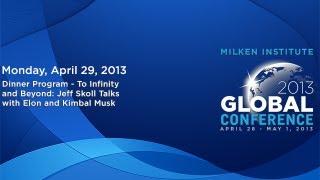 201350:56
 201357:39
 201344:55