如果让 100 位气候科学家投票,大概 3 个人认为最好的结果还能接受,剩下 97 个人认为最坏的情况正在路上。马斯克 2015 年在巴黎索邦大学说出这个比例时,礼堂里安静了几秒。
那天的讲题是气候变化与碳税,时间是 COP21(第 21 届联合国气候变化大会)在巴黎开会的当口。台下坐的是商科、工程、国际关系的学生。他没有讲情怀,也没有喊口号,从头到尾在算一笔账:人类现在这套规则,为什么在奖励错误的行为。
他讲话的风格很朴素,甚至有点笨拙,但每一段都指向一个可以被检验的因果链。
潘趣酒碗里多了一坨东西
开场他先讲碳循环,语气像在给高中生补课。地球上本来有一个稳定的循环:碳进大气,被植物和海洋吸收,再回到大气,这个循环运转了几亿年,一直没出事。
变的地方在于,人类往里面加了料。他给这个料起了个很难听的比喻,叫“潘趣酒碗里的大便”(turd in the punchbowl)。
我们把埋在地下几亿年、本来根本不参与碳循环的碳挖出来,几十亿吨几十亿吨地倒进大气和海洋。生态系统吸收不了这么多。(马斯克)
他放了一张图。过去一千万年,大气碳浓度在百万分之三百这条线附近上下晃,像心电图一样平稳。最近几百年,这条线几乎垂直拉升。
“这就是问题的本质。”他说这话时没有加重语气,反而很平。
随后是温度曲线,跟着碳浓度一起往上走。真正让人停下来的,是他接下来对“两度”这个数字的解释。
纽约被冰埋和被水淹,只差两个百分点
所有人都在讨论“升温 2 摄氏度”或“升温 3 摄氏度”。马斯克说,这个说法有误导性。
摄氏度是相对冰点的刻度,而物理世界理解温度用的是绝对零度。如果把温度换算成相对绝对零度的变化,2 摄氏度大约只相当于 0.7% 的变动。
他给了一组对照:纽约被冰盖埋住时,气温大约是零下 5 摄氏度;纽约被海水淹没时,气温大约是零上 5 摄氏度。放在摄氏度上看,这是 10 度的差距;放在绝对温度上看,只是正负 2% 的浮动。
“气候对温度的敏感度极高。”他说。
更麻烦的是,人类把这件事的难度又调高了一档。全世界大多数城市建在海岸线上,很多人住在离海很近的地方,还有一些国家地势极低,海平面稍微抬一点,国土就没了。
我们基本上是把文明设计成了对气候变化超级敏感的样子。(马斯克)
这句话是整场演讲的地基。后面所有关于碳税的论证,都建立在“我们输不起”这个前提上。
最好的结局是白忙一场
接下来是他整场最锋利的一段逻辑。
很多人把“退出化石燃料时代”当成一个需要被说服的目标,仿佛不努力就能永远烧下去。马斯克把这件事的性质换了:地下埋的碳是有限的,总有挖完烧完的一天,到那时人类必须用别的能源。关于“要不要转型”,其实没什么可讨论的余地。
所以他真正关心的是转型要花多少年,以及怎么把这个数字压小。
“最好的情况是什么?”他自问自答:最好的情况就是我们什么都不做,把这场必然发生的转型往后拖几十年。我们不会得到任何额外收益,只是把该做的事推晚了。
最坏的情况呢?他用了“displacement and destruction”这两个词,然后给了一个参照系:最坏的情况造成的流离失所和破坏,会超过人类历史上所有战争的总和。
这就是那 3% 和 97% 的来源。相信“最好情况”的科学家是少数派,绝大多数人押注的是最坏那一头。
他把这件事称为“人类历史上最愚蠢的实验”。理由很简单:明知道结果大概率是灾难,为什么还要做?
他还补了一段历史视角。工业革命之前,人类的目标是从砍树、捕鲸转向煤炭和石油,那次转型在当时的语境下是好事,因为它让森林和鲸鱼喘了口气。今天的目标换了,要从化石燃料转向可持续能源,用那些能撑十亿年的东西:水电、太阳能、风能、地热,以及在法国这种不在地震带上的地方,核电。
没人收的垃圾,和每年 5.3 万亿美元的隐形补贴
讲到这里,问题自然浮出来:既然转型是必然的,为什么推得这么慢?
马斯克的回答是经济学入门课的内容:所有排碳活动身上都挂着一笔没人付的账,一笔隐形的补贴。
他举了个数字例子。假设一个项目给企业带来 10 欧元收益,同时给社会造成 4 欧元损害。在一个健康的市场里,这 4 欧元要计入成本,企业的真实利润是 6 欧元,激励和行为是对的。
现实不是这样。那 4 欧元的社会损害没有被征税,不计入企业账本,于是利润显示为 10 欧元。多出来的 4 欧元就是超额利润,它像一个吸铁石,把人往排碳的方向拉。
这就是经济学 101。一个没有被定价的负外部性,会制造出不合理的利润,然后把资源全吸过去。(马斯克)
这个机制每年往大气里送进 350 亿吨碳。按国际货币基金组织(IMF)的估算,这笔隐形碳补贴的规模是每年 5.3 万亿美元。
他打了个所有人都懂的比方:垃圾回收。
没有人会主张建设一个“零垃圾社会”,那不现实。但一个社会必须有人为收垃圾付钱。现在的情况相当于全世界的垃圾都堆在街上,没人管,因为扔垃圾是免费的。
碳税要解决的,就是这笔“垃圾费”。
烟草公司留下的剧本
那为什么收不上这笔钱?
马斯克把矛头指向碳生产商,说他们用的招数和当年的烟草行业几乎一模一样。
当年关于吸烟有害健康的科学共识已经压倒性成立,烟草公司怎么办?他们去找出少数几个持不同意见的科学家,然后对外宣称“科学家们还有分歧”,用这种模糊感让公众以为事情没定论。
化石燃料行业今天在用同一套剧本。
他的应对方式是把激励拆掉,辩论放在其次。让排碳变得要付钱,超额利润消失,资本自然流向别处。
碳税是一道数学题,跟左右派无关
讲到这里,他给出了整场演讲最具体的政策主张,也是他反复强调的那一个:收入中性的碳税(revenue neutral carbon tax)。
拆开来看是三层。
第一层,提高碳税的同时,等量降低其他税。他举的例子是销售税或增值税(VAT)。总税负不变,只是把税的落点从“好东西”挪到“坏东西”上。这样只有那些高碳消费的人和企业会多付钱,普通家庭不会因为这项改革整体变穷。
第二层,分阶段实施。他建议给行业五年左右的缓冲期,碳税从小数目起步,逐年加码。今天就开始改造的公司,五年后不会被拍在地上;今天什么都不做的公司,五年后会很痛。
第三层,政府必须把话说死。企业最怕的是政策摇摆,只要规则清楚、时间表明确,投资决策自然会跟着调整。
根本问题是今天的规则在激励人们制造碳。你激励什么,就会得到什么。(马斯克)
他把这件事定性成一道数学题,跟左右派的政治标签没关系。多数经济学家在这个问题上的意见高度一致。政府平时干预市场,往往会加剧价格扭曲;但碳这个领域的价格扭曲大到离谱,任何大于零的价格都比现在接近零的价格更正确。
他还提到,补贴电动车、补贴太阳能板这类做法也有效,政治上更容易推动,但效率不如直接给碳定价。修价格是治本,补贴是治标。
哥本哈根那次,全球变暖还净增加了
有学生问他对 COP21 的看法。
他说自己没什么确凿依据,但感觉不错。然后拿哥本哈根做对照:那一次谈崩了,什么实质成果都没出来,他开玩笑说那场会议让全球变暖净增加了一点。
对巴黎,他的判断是“会有积极进展,问题是有多少”。他希望谈判团队和政治人物收到一个明确信号:这一次必须动真格。
有人问,那些经济高度依赖化石燃料的国家怎么办,怎么才能把它们拉上船?
马斯克把问题翻了个面。坏未来来了谁也跑不掉,所以这份账是所有人共担的。而且这些国家的转型阵痛也没那么大:只要调整税收结构,收同样多的税,把权重从“好东西”挪到“坏东西”上就行。
他用了烟酒税和果蔬税的例子。各国税制里,酒精和烟草的税率远高于水果蔬菜,没人觉得这有什么争议。碳也是同一个逻辑,把税码调一调,时间拉长一点,起点低一点,未来重一点,依赖碳的经济体自己就会慢慢脱钩。
他们没什么可失去的。不行动才会失去一切。(马斯克)
把碳埋进海底?他不看好
有学生问到碳捕集与封存(CCS),把二氧化碳从大气里抽出来,再埋到深海。
马斯克的回答很直接:他不知道有哪种碳封存方案既跑得通又算得过账。
往海里存,他明确反对。二氧化碳溶进海水会变成碳酸,海水 pH 值一变,贝类这类生物最先扛不住。
往地下洞穴存,理论上可行,但人类要处理的量太大了,找不到足够容量的地方。
他的立场很清楚:与其想办法把已经放出去的碳收回来,不如一开始就别放。
锂不是瓶颈,太阳才是答案
有人担心锂电池的锂不够用。
他纠正了这个印象。锂在元素周期表上排第三,地壳里到处都是,任何含盐的水里都有锂。以现在的资源储量,造出足够全世界储能用的电池没有任何问题。
他还顺手回应了另一个问题:电池的环保账怎么算?
他的答案是回收。锂、镍、钴这些材料,造电池时买一次,寿命结束后可以一直循环利用,长期看对碳循环的影响可以忽略。而化石燃料是每年把几十亿吨碳从地下永久性地搬到大气和海洋里,两者不在一个数量级上。
说到核能,他的态度比很多人想象的积极。核裂变在法国这种不处于地震带、不受自然灾害威胁的地方是好选择。核聚变也值得期待,ITER 项目就建在法国,但他估计要做到电厂级别的商业化,大概还要 30 年。
所以他更看好另一个方案:天上那个已经运行了 46 亿年的大聚变堆。
太阳每天准时升起,是一个巨大的聚变反应堆。我们要做的是用光伏板接住它,用电池把它存下来,用高压线把它送出去。(马斯克)
他给了一组面积数字。太阳每平方公里辐射的功率大约是 1 吉瓦,按 20% 的转换效率算,一平方公里光伏板能发出 200 兆瓦。用一小块西班牙的土地,就能供整个欧洲用电;用内华达或犹他州的一个角落,就能供全美国用电。理论上,光伏能发出的电是人类文明所需的一百倍量级。
“我们不缺能源,缺的是让资本流向正确方向的规则。”
世界上有两到三倍的电厂是多余的
有人问大规模储能,问政府和大企业有没有认真推进。
马斯克说已经有不少大型项目在跟全世界的电力公司合作。他顺势讲了一个很多人没意识到的事实:即便完全不算可再生能源,储能本身就能让电网效率大幅提升。
原因是用电负荷在一天之内波动常常超过两倍。除了水电,电没法存,必须实时供需匹配。为了满足那几个小时的峰值,全世界建了实际需要两到三倍数量的发电厂。
如果有了大型固定式电池组做缓冲,那些只在峰值时段开工、污染最重的电厂就可以直接关掉。
这件事被严重低估了。关掉最差的那一半电厂,本身就是巨大的减排。(马斯克)
建一座大工厂要五年,所以现在必须给信号
为什么他一直强调政府要提前五年把规则定死?
他给了一个很产业化的理由:重工业的时间常数就是五年。一座大型工厂从动工到满产,大约需要五年。
这意味着今天在建的工厂,决定了五年后世界的能源结构。反过来看,今天全球范围内几乎没有大型可持续能源项目在建,那么无论巴黎谈成什么样,五年后的能源格局大概率还是老样子。
政策的实际着力点落在今天动工的那些项目上,指望当年见效并不符合工业节奏。企业如果确信五年后碳税会很高,现在就会投产低碳产线。
特斯拉“靠一层皮”活下来
有学生问创业建议,问最好和最糟的建议分别是什么。
马斯克的回答没什么励志成分。他先建议想进能源行业的年轻人,要么加入一家做可持续能源的公司,要么自己开一家。然后他补了一句冷水:汽车和能源这两门生意都极其难做。
特斯拉和 SolarCity 刚起步时,他判断成功率大概只有 10%。
说实话,造车可能是所有行业里风险调整后回报最差的一门生意。(马斯克)
他给了两个具体的时间点。2008 年圣诞节前夜,特斯拉的融资在最后一天的最后一个小时才关闭,差一点就没了。2013 年初,公司账上的钱只够支撑一到两周。
还有一个数据:美国历史上没有破产过的汽车公司只有两家,福特和特斯拉,其余全都破产过至少一次,包括通用和克莱斯勒。
关于融资,他说得更坦白。因为自己都觉得要死,所以早期所有钱都是他个人出的,PayPal 卖掉的收入全投进了特斯拉、SolarCity 和 SpaceX,他不愿意拿着一个必死的项目去问别人要钱。
节约救不了我们
有学生提了一个反方向的问题:我们是不是该反思整个社会的发展模式?所有方案都在讲效率,是不是该少消费一点?
马斯克同意应该节约,不该浪费,回收要做好。但他否定了一件事:靠节约走不到好未来。
节约能把转型的时间往后推一点,但它替代不了转型本身。没有可持续的能源供给,再怎么省也省不出一个好结局。
我们没法靠节约走到一个可持续的未来。必须真的把可持续能源造出来。(马斯克)
你打不赢埃克森的游说团队,但你可以去问政客问题
一个物理系学生问得很尖锐:石油公司有钱有游说团队,我们是不是也该组织自己的游说力量?
马斯克说这条路走不通。
他给了一个对比数字,埃克森美孚一年的利润,超过美国整个太阳能产业的总价值。拿钱去拼游说,必输。
那能做什么?他给了两个动作。
第一个,把气候变成政治人物躲不开的话题。每一个募款晚宴、每一场社交场合,只要有人凑上去问一句“你在气候问题上做了什么”,政治人物就会开始重视。选票的压力比游说预算更管用。
第二个,让每个国家先做自己认为对的事,别等别人。他说气候谈判里有一种坏习惯,各国总在等别的国家先承诺。如果一件事对未来是对的,那就直接做。
他还说了一句关于政府角色的定位:政府制定规则,企业按规则玩游戏。规则一旦奖励坏行为,光靠个体善意是撑不住的。
顺带说一句火星和 AI
有人问,与其救地球,不如去殖民其他星球,怎么看?
马斯克说两件事都该做。他个人的精力大致分成两半,一半放在地球上的可持续能源,一半放在让人类成为多行星物种。目标是从总体上压低存在性风险:能源转型越快越好,同时多一个星球就多一层保险,顺便还是一场很棒的冒险。
关于人工智能,他没有展开,只说应该保持警惕。他认识很多做 AI 的人,这些人太确信结果一定是好的,而可能不那么好的结局也需要有人认真考虑,公众应该知道发生了什么。
关于那 2 摄氏度
有学生问他,最坏情况到底有多坏。
他给了一串数字。按目前的预测曲线,2 摄氏度的升温基本是确定的,问题在于会不会远超这个数。海平面上升会淹没全球 5% 到 10% 甚至更多的陆地面积。
这个比例听起来不大,但大约三分之一的人类住在海岸线或低洼国家。折算下来,可能有 20 亿人的家会被毁掉,所在的国家会消失。
回到开头那 3% 与 97%。人类正在做的这场实验,赌注是 20 亿人的住所。
他描绘的未来长什么样
有学生请他把未来讲具体一点。
他的版本是这样的:所有交通工具最终都会电动化,唯一的讽刺性例外是火箭。所有能源生产最终都会转向可持续。过程会持续几十年,比任何人期望的都慢。
落到生活场景里,就是家里有一块电池,小区变电站有一组电池,路上跑的是电动车,天上飞的是电动飞机。
他知道这个时间表不好听。即便巴黎气候大会谈出很强的成果,转型依然是以十年为单位计算的。所以真正的问题从来只有一个:怎么把这个过程加速。
整场演讲绕了一大圈,最后回到那个最简单的答案:给碳定个价,把价格扭曲修回来,让几十万亿美元的市场自己动起来。这比任何补贴、任何口号都更有力。
他最后说了一句很朴素的话,大意是:不管你把碳税定成什么价格,只要大于零,就比现在接近零的价格更接近正确。
如果你今天想做点什么
- 把碳税当成一个可以跟任何人聊的话题。它的逻辑简单到不需要专业背景:不付钱的污染,等于给污染发补贴。
- 下次见到民意代表或参与任何公共讨论,直接问一句“你在碳定价上是什么立场”。这个问题问的人多了,就会进入政治议程。
- 如果你是工程师或产品经理,去看储能这条线。电网的日内负荷波动在两倍以上,储能能把最脏的那批峰值电厂直接关掉,这件事的减排量被严重低估。
- 如果你在选公司或选方向,优先考虑可持续能源产业链上的岗位。这个行业现在卡在规模和成本上,技术已经不是拦路虎,需要大量工程能力。
- 如果你是创业者,别把“政策会变”当成商业计划的前提,但要把它当成风险变量。按最保守的政策环境做财务模型,把政策改善当成上行空间。
- 如果有人拿“科学家还有分歧”来反驳你,先查这句话的资金来源。这套话术在烟草行业用过一轮,剧本没换。
- 面对“节约就能解决”的说法,可以这样回应:节约能延长时间,但替代不了能源结构的替换。真正的解法是把可持续能源造出来,并且让它比化石燃料便宜。
0:00all for joining us for coming here and also to apologize to the others who couldn't join because we were fully booked very quickly actually when we launched the invitation they can follow the livestream if they are not here and you can find the video tomorrow morning on YouTube so we are pretty well organized actually well actually today
0:25is a very special day for our University we are extremely proud and I'm particularly very proud to welcome tonight someone very special someone who is probably one of the most influential person of the 20th and 21st centuries someone who is definitely the most creative mind of his generation he is
0:54the co-founder and CEO of a revolutionary car manufacturer challenging the mainstream car industry but is also the founder and CEO of a tremendously innovative company actually the first private company to launch and return a spacecraft from orbit and last but not least also the chairman of the larger solar energy provider in the US
1:27through his different activities his facing environmental social and economic challenges it deals with breathtaking projects on diverse issues like green mobility clean and renewable sources of energy space exploration so on and so forth by the way among the latest news here done here in France in Europe you probably heard that yesterday was inaugurated a new solar firm in the southern France something which is definitely or actually the biggest hover Europe now selling power at a cost well below the cost of power from the new generation of nuclear reactors and able to provide energy
2:24power for more than 50,000 households but also and more ver currently Paris is welcoming the UN climate change conference which faces the ice take half hour to manage with the climatic disruption the aim of the cop21 is keeping warming below the 2 degree Celsius compared with the pre-industrial here and for that the objective of the cup is to build Paris climate aliens meaning a universal climate agreement committing every one so in that context who better than Elon Musk for conversation with you please welcome Elon Musk
3:21huh thank you all right I was thank you for having me it's great to be here Paris is so one of my favorite places in the world and it's actually be but on the first trip that I went out of South Africa Paris that was where I went when I was a young little kid well my problem my parents brought me I know it's like six years old so I've left Paris ever since so thank you for having me I'm gonna talk about today is just in general terms what is needed to address the the climate crisis and this
4:07is the thing that if if we if we do what actions can we take that that will accelerate the transition out of the fossil fuel era so where we are today is you're not okay all right we're the present era where we have the like the carbon carbon cycle and my apologies if some of you already know all about this but I think some of these things are maybe not as obvious as they may seem so there's a certain amount of carbon that is circulating through the environment so it's going into the air being absorbed by an enegry getting absorbed by plants and animals and then getting back into the air and this this carbon is just circulating on the surface and this this is fine and it's
4:55been doing that for millions hundreds of millions of years the the thing that's changed is that we've added something to the mix so this is what I would call the sort of the turd in the punchbowl so the we added all this extra carbon to the carbon cycle and the net result is that with the the carbon and oceans atmosphere is growing over time it's much more than can be absorbed by the ecosystem it's it's really it's really quite simple we're taking billions of tons of carbon that's been buried for hundreds of millions of years and is not part of the carbon cycle taking from deep underground and adding it to the carbon cycle the result is that a steady
5:43increase in the the carbon in the atmosphere and in the ocean oceans which doesn't look like much if you look at on this chart but when looked at in the context of history it actually looks like this so the carbon plants million has really been bouncing around the 300 level for around ten million years and then in the last few hundred years it went into a vertical climb this this is the the essence of the problem this is very unusual and a very very extreme threat
6:21as you can see from from this rate of growth then this is accompanied by a temperature increase as one would expect and and then and then this temperature increase if people talk about two degrees or three degrees it's important to appreciate just how sensitive the climate actually is to to temperature and it's important to look at it in terms of absolute temperature not in degrees Celsius relative to zero we need to say what is the temperature change relative to absolute zero that's how the universe thinks about temperature it's not physics thinks about temperature it's it's relative to absolute zero so
7:03for small changes result in huge effects so New York City under ice would be -5 degrees New York City under water would be plus 5 degrees but looked at in an abyss as a percentage relative to absolute zero it's only a plus minus two percent change so that the the sensitivity of the climate is extremely extremely high we've amplified the sensitivity by building our cities right on the on the coastline and most of it most people live very close to to the ocean in some countries of course that are their very low-lying and would be completely underwater in in a in a climate crisis
7:49so then we've essentially designed civilization to be super sensitive to climate change and the important thing to appreciate is that we are going to exit the fossil fuels era so it is it is inevitable that we will exit the first we watch the era because at a certain point we will simply run out of carbon to mine and burn so the question is really when when do we exit the era not not if the goal
8:26is to exit the era as quickly as possible that means we need to move from from the old goal with a pre-industrial growth goal which was to move from chopping down forests and killing lots of whales that the old goal was to move from from chopping wood and and killing whales to fossil fuels which is actually in that context was a good thing but the new goal is to move to a sustainable energy future and we want to use things
9:03like hydro solar wind geothermal nuclear is also a good option in places like France which don't aren't subject to natural disasters and and we want to use energy sources that will be good for for a billion years so how do we accelerate this transition away from fossil fuels to a sustainable era and and and and what happens if we don't see if we if we wait and if we delay the change the best
9:42case the best case is simply delaying that inevitable transition to sustainable energy so this is the this is the best case if we don't take action now at the risk of being repetitive it's there's gonna be no choice in the long term to move to sustainable energy it's tautological we have to have sustainable energy or something run out of the other one so the the only thing we gain by slowing down the transition is is just learning it down it doesn't doesn't make it not occur it just slows it down the worst case however is more displacement and destruction than all the wars in history combined okay this is these are these the best worst-case scenario so then we have about three
10:28percent of scientists that believe in the best case about 94 7 percent that believe in the worst case this is why I call it the dumbest experiment in history ever why would you do this so the reason that the transition is delayed or Thor voice is happening slowly is because there is a hidden subsidy on all carbon producing activity
10:57in a healthy market if you have say 10 euros of benefit and four years of harm to society the profit would be 6 euros the sort of you know makes a big obvious sense this is where the incentives are aligned with a good future this is not this is not the case today but if you have the incentives aligned then the forcing function towards at a good future towards a sustainable energy future will be powerful in an unhealthy
11:27market you have your 10 years of benefit if your 4 years but before yours doesn't isn't taxed so you have an untaxed negative externality this is basically economics 101 so you have basically unreasonable profit and a forcing function to to do carbon emitting activity because this this this cost to
11:51society is not being paid the net result is 35 gigatons of carbon per year into the atmosphere so this is analogous to not paying for garbage collection and it's not as though we should we should say in the case of garbage have a garbage free society it's very difficult to have a garbage free society but it's just important that people 1/4 garbage collection so we need to go
12:27from having untaxed negative externality and if which is effectively a hidden carbon subsidy of enormous size 5.3 trillion dollars a year according to the IMF every year we need to move away from this and and and and have a carbon tax so but this is being this is being fought quite hard by the the carbon producers and they're using tactics that are very similar to what the cigarette industry or the tobacco industry used for many years what they would they would take the approach of having of even though the overwhelming scientific consensus was that swagging cigarettes was bad for you they would find a few scientists that would disagree and then
13:21they would say look scientists disagree so that that's essentially how they would try to trick the public into thinking that smoking isn't that bad the solution obviously is to remove the subsidy so that means we need to have a rail a carbon tax and to make it sort of something which is neither a left nor right issue we should make it a probably a revenue neutral carbon tax so this would be a case of increasing taxes on carbon but then reducing taxes in other places so maybe there would be a reduction in sales tax or v80 and an increase in carbon tax so that only those using high degree levels of carbon would pay an increased tax and moreover
14:14this I mean in order to give industry time to react this could be a phased in approach so that maybe it takes 5 years before the the carbon taxes are very high so that means that only companies that don't take action today will suffer in five years but there needs to be a clear message from from government in this regard but because the fundamental problem is the rules today incent people to create carbon and this is madness and whatever you incent will happen but that's why we're seeing little very little effect thus far and depending
14:56upon how what what action we take will drive the the carbon number to either extreme or moderate levels I think it's pretty much a given that that the two-degree see increase will occur the question is whether it's going to be much more than that not if there will be a two degree increase so that then the question is Oh
15:20what can you do I would say whenever you have the opportunity talk to your politicians ask them to enact a carbon tax we have to fix the unpriced externality I'll talk to your friends about it and fight the propaganda from the carbon industry so that that's the basic message I have and I'm happy to take questions
15:59so we have we have some mics in the audience being passed around you wanna raise your hand and we'll give you a mic hi sir hey I'm criminal past from the master of inter innovation and technology management management and my question is what do you say to those who think there are more important concerns right now then climate change and global warming sure I mean there's definitely there are many important issues in the world this is not the only important issue but it is I think the thing that will have the biggest negative effect on humanity if we do not address it I mean it based on
16:44on the projections that we're seeing right now these are like I said arguably best-case projections we're going to see significant rises in temperature and sea level the the net result is if we don't take action we could see you know anywhere from five to ten percent maybe maybe more of the landmass absorbed by water which would which is maybe not it's in sound like that much but about a third of humanity lives right on the on the coastline or in low-lying countries so we'd be talking about maybe two billion people being displaced and and their home is being destroyed in their countries being gone so I think we should take action
17:31hello sir thank you for coming here my question is I'm PhD student in marketing and what I study is what motivates people to participate in challenges now you have created a company which creates challenges which brought a rocket to moon and back if I if I'm not wrong my question would be do you think a challenge may be not moving back right yeah getting there my question to you would be do you think that incentives which is the biggest incentive to use monetary incentives are the best possible incentive to get people to participate and solve the world's biggest problems or do you think people can do it in order to just help everyone on the planet and make it better so is
18:08money the only way to put it ask people to get in and solve challenges or do you have other ways to actually motivate people to participate I think there's definitely a philanthropic element and there's the you know I think there's I think in general people want to do the right thing and they want to do what's good the the issue we have right now is
18:30that the rules fundamentally favor the bad outcome so when you're fighting for the good outcome and it's an uphill battle it it's just it's just slower so with respect to to climate change it's just critical at the government and the government is the center of rules the government decides what rules companies will play by and if we currently have a system which massively incensed bad behavior so even if most people don't do the bad behavior some people will still do the bad behavior yeah I mean money
19:06and prices our prices are basically just an information mechanism they're just they're just basically they tell you that it's money's mostly an information mechanism for labor labor allocation and folk you know and sort of tells companies what to do so it's just critical this is why it's so critical to be that actually be taken at a government level because the government is the one they're setting the rules of the game and and it's just crazy to have the rules of the game favor a bad outcome my name is Michelle I'm an
19:42undergrad in econo here a very solvent something also been tire my question is there are some new studies on removing carbon dioxide from the atmosphere and burrowing deep in the ocean do you think it's a sustainable solution and why thank you you know I'm not aware of any carbon sequestration or carbon storage system that is that that that works and works economically and and I definitely wouldn't want to we wouldn't want to store the carbon in the ocean because of possible acidification you know as the as the carbon as a co2 levels rise in the atmosphere some of that is absorbed into the ocean becomes carbonic acid and a lot of the shellfish
20:35in particular are super sensitive to changes in in pH level so I would definitely or against it when stored in the ocean there potentially you could try to store some of it in giant underground caverns but the sheer quantity we're talking about I don't think can be stored anywhere there's just there's just no nowhere to store it yeah and how long do you do Tesla Motors
21:05in intends to use lithium batteries knowing that it is not a limited resource well actually I think so lithium in terms of energy storage lithium I think is is definitely the future and will be for a long time that there's actually not as a shortage of lithium on earth so lithium is you know number three on the periodic table it's actually extremely common any salty water has as lithium so
21:32that there definitely won't be at lithium constraint on energy storage for batteries so I feel pretty confident that one could make enough batteries to store all the energy that the world needs with the current resources that are that are available hello my name is Eden Valley I am a PhD student in project and infrastructure finance in Cirebon first of all I would like to thank you for your latest product power wall which to me it gives to the citizens to have the power to select the way they can consume energy I can spend few thousand dollars to buy some solar panel and the power wall and to be free of any offer in the market my
22:26question is about the largest scale storage systems you have designed have you received any serious involvement from governments and large companies to develop such such infrastructure or you have any serious plans within within the United States or maybe in other countries for large energy storage yeah
22:53we do actually we've got a number of very very big storage projects underway with utilities around the world so both in the US and outside the the thing that's interesting about at the energy storage situation is that even even without renewables there's a huge potential to make the energy grid more efficient and to be able to shut down the the heaviest polluting power plants because the the energy consumption through the day it usually changes by a factor of two or more so an instance with the exception of hydroelectric you can't store the power it has to be available in real time the world has somewhere between two to three times as many power plants as it actually needs
23:41so if you can buffer the power with big big stationary battery packs then you can actually shut down the worst half of the power plants in the world so I think that's a sort of a very exciting thing that I think a lot of people don't appreciate and I think it's it's gonna make it make a big difference
24:04hi sir and coming from the master degree innovation and technology management and my question is do you believe that in the ability of government international government to present climate change and what would you suggest yeah absolutely I think is fundamentally is a government issue so it's it's it's the as mentioned the government's the one that sets the rules of the game that they said I hope you know how companies are rewarded financially and so in the absence of government actually establishing some kind of a carbon tax or potentially a cap-and-trade on carbon which I was very excited to see that China announced earlier this year that
24:48they were going to do that unless the government does something to fix the market Matic mechanism the it's we're fundamentally going to have a very slow transition out of the fossil fuel era so it's it's critical that government action changed the incentive structure yeah and that would be very clear and so it's like hopefully what comes out of this out of these the climate talks in Paris is that the governments of the world say that we need to put their foot down and I say five years from now let's say there has to be a huge change and
25:27and the and that companies know for sure that this is going to happen and if they do then that the the investment decisions they make today will bear fruit in five years so the for for heavy industrial applications or for heavy industry you kind of know what the world's gonna look like in five years if you know what what what what factories are being built today because if you build a really big factory to get to full production takes about five years from from the start and so since we know that today there are very few sustainable energy projects at large scale that are that are being built we know that unless something changes very quickly the sustainable energy will
26:13still be in a bad situation five years from now so you know I mean there are companies like you know at Tesla and SolarCity we're quite ideologically motivated but but that's that's relatively unusual so my name is Thomas what do you think about people who are saying then rather than trying to save the earth we should try to colonize other planets well I think we should do both yeah I think we yeah
26:50the I mean my sort of personal ideology is its kind of split right now between trying to be helpful on earth related stuff which is sustainable energy and then trying to you know advance space technology so we can establish self-sustaining city on Mars but I do think it's important to be a multi planet not just one planet but another planet so the and and the overarching goal is to minimize existential risk you
27:19know so if we look at look out into the future and say what are the things that pose a risk to humanity to what what what what what is gonna make the future good versus bad and I think if up see if we have a sustainable energy future that's good and the faster that comes the better and then if we're multi-planet species that gives us much more resilience against an extinction event and also would be a really great and fun adventure hi my name is Joe Aida
27:50and I wanted to know in your opinion what would the future will look like intermittent energy sources and how soon could we use nuclear fusion efficiently thank you sure well the the thing to appreciate about the industry being sort of installed industrial base is that it's it's really enormous like the number of petrol and diesel cars on the road and trucks is about 2 billion there
28:23are sort of hundreds of thousands of of power plants using fossil fuels so the the even if we if today we went super hard in the direction of renewables it would still take a long time so I think we will it's before we see significant changes probably 10 or 20 years and and that's there's a lot that can happen in 10 or 20 years of course so the faster
28:55we can bring that date forward the better hi my name is Natasha I'm from the master program of sustainable development I have two questions first one because I want to be optimistic that we are going to switch at some point to be completely sustainable and to use renewable energies do you think that they're gonna be a gap between developing and developed countries that and when developing countries will be able to reach developed ones switching into sustainable and renewable energies second one would be sustainability of nuclear energy in your opinion thank you sure and I actually I should answer the nuclear question because that was how boys just just before this I actually
29:41think that like nuclear fission if it's in a location that is not subject to natural disasters like like in the case of France there's a very high percentage of nuclear I think that's actually a good thing obviously you don't want to have nuclear fission power plants in places that are subject to natural disasters because that obviously it can go wrong so and so I think fission is a
30:08good is a good approach Fusion is also interesting and it's exciting to see what's happening with the ITER project which is a fusion plant that's being built in France III do think fusion is is a feasible technology I think we can definitely make fusion work the but but it is it is a there's kind of a far-off technology so to make fusion at the power plant level work is probably I don't know 30 years away and and a lot
30:39of lot of effort so the that's why in at least you know for now and I think maybe even in the long term I'm a proponent of using the big fusion power plant in the sky called the Sun so that the Sun is a giant fusion explosion and it it shows up every day and if we have photovoltaics or solar panels we can capture that fusion energy it also needs to be stored in batteries so we can use it at night and then we want to have high power light lines to transfer a solar energy from one place to another so but the important thing to appreciate is like if if let's say the only thing we had was with solar energy that that was the only power source you could if
31:23you just took a small section of Spain you could power all of Europe it's it's a very small amount of area that's actually needed to generate the electricity we need to power civilisation or in the case of the u.s. like a little corner of Nevada or Utah power the entire United States you do
31:47have a very impressive and stimulating career you succeeded in business while staying true to yourself and beliefs so I would like to know what advice you would give to a young entrepreneur who is aware of climate change issues and maybe what was the best and the worst advice you are given about that thank you okay well I think if somebody's once
32:13loosely entrepreneurial and energy I mean either either you want to start a company or you want to join a company that's doing something sustainable and it could be you know there's this of obviously wind solar and geothermal this tidal power so I would just say look at companies that are trying to do sustainable energy and decide if you want to join them or if you want to start one so I wouldn't you know
32:42starting companies in in either the automotive arena or the image like Energy Arena is of like quite a tricky business I mean when we first started at Tesla and SolarCity we thought they would fail before Tesla in particular we thought probably we've maybe 10% chance of success so it's you know
33:02particularly particularly cars the you know it's it's hot it's hard to stay alive as a car company honestly there's like this must be one of the worst risk adjusted returns yeah my name is Benjamin and I was wondering what do you wish for in terms of international rules and politics to facilitate implementation of your power wall battery well it's really that what I've
33:37been saying here is that that the government of the world need to price the the externality they need to put put a proper price on carbon and then automatically the right behavior will occur so this is by putting a price on carbon we're essentially fixing and a pricing error in the markets market system so I mean most of the times when government governments intervene in markets it's usually increases the pricing error but in but when when the pricing error is a huge tragedy of the Commons issue like we have with carbon capacity it's critical that the government put a price on it because you just can't go wrong I put it fight you in any price you put it will be more
34:19right than close to zero which it is right now so this is this is by far the most important thing if we want to accelerate the transition to sustainable energy there are other less effective ways by providing incentives and subsidies to say electric cars or solar but that that is that is a sometimes a more politically expedient way to do it but the best way is just to directly fix the pricing error by taxing carbon and this is I'd like if you ask most economists they would say the same thing so this is sort of what well-known and I've seen they caught economics world even could you say a few words on artificial intelligence because I you know I think I read or you you you know
35:06you were quarter than among others Bill Gates and Peter Thiel and so forth saying that you know you were afraid of the that one day and hyper you know intelligent machine would destroy humanity and you know are you investing a lot into artificial intelligence with you know because are we wasting a lot of energy because we're using you know we're not being smart or we're not having smart objects and so forth and how do you reconcile the two if you know there's a this long time you know long term major risk yeah I definitely want
35:41to stay stay on the you know sustainable energy topic because it's easier to get get derailed on too many other things but yeah I mean I think I just think we should be cautious about the advent of AI and a lot of the people that I know that our developing AI are too convinced that that the only outcome is good and we need to consider potentially less good outcomes and to be careful and and and and really to monitor what's happening and make sure the public is aware of what's happening i'm gabriele
36:16Rondon throne I stood innovation here in Cirebon I have a question about fundraising specifically about the fundraising process regarding what Tesla does what is the most difficult thing to raise funds in the beginning not now because now you have a well-developed project and the worldwide knows you and knows Tesla also but in the beginning about the industry that you are working
36:43about this kind of energy what is the most difficult thing to find investors and also to convince investors and keep what you thought in the beginning throughout the development of the company sure well in the beginning if any of Tesla and SolarCity I mean I thought the the probability of success was was so low that I provided all of the money so all of the money was just came from me personally so I didn't want to ask people other investors for money if I thought we were gonna die because I thought we were so so I invested you
37:27know entirely the money that I got from PayPal all of all of that got invested into Tesla Seoul City and SpaceX and and even then we only narrowly survived so you know in 2000 2008 for Tesla we actually closed the financing round on Christmas Eve 2008 it was the last hour of the last day that it was possible and you know that this is one of the tricky things with with something like a car company it's like there are good times and bad times and and when the economy goes south then that's when things get really really tricky for a manufacturing company so yeah I mean in the US for
38:12example like the only two car companies that haven't gone bankrupt in history or forward and Tesla that's it everybody else is bankrupt or went bankrupt at some point you know General Motors Chrysler and and others so so I think we just made it by the skin of our teeth these days the last few years it really I'd say in the last two years is when Tesla's achieved a level where it's not facing imminent death I mean even as recently as early 2013 we were operating with maybe one to two weeks of money hi
38:52my name is I would like to ask you don't you think that we need deeper reflection about our dynamic of society because all the solutions are top you're talking about is about efficiency but don't you think that we need to think differently and consume less because right now our DMACC is about confronting problems and
39:23going always in the same direction and trying to find the technological innovation to save us yeah I mean I do you think we we should be watch our consumption we shouldn't be wasteful but but II but even if we're a really conservative in our use of energy and are very effective with recycling and all sorts of things that that that delays the trade with the the need to move to a sustainable future but it doesn't eliminate it like if we don't have sustainable energy generation that that there's no way that we can conserve our way to to a good future we have to
40:09fundamentally make a sustainable energy available I mean on the plus side that there's actually an enormous amount of sense of sustainable energy and the energy from the Sun purse per square kilometre is a gigawatt so if you just had a one kilometer by one kilometer array of solar panels that we're generating well it would be receiving a gigawatt of solar energy then at a 20% efficiency you'd be generating 200 megawatts so we can actually generate
40:42way more energy like probably under a hundred times more energy then we actually need to operate civilization just with solar panels so we're just we just need to fix the incentive structure of the world to make sure that that that companies are incented towards sustainable versus unsustainable technology this is fundamentally the problem hello my name is Lilly and I'm a
41:08physics students Yale University but I graduated here so I have three questions so the first one is sort of political because because you mentioned it you said that scientists sometimes they diverge they have a different opinions and it's on anything yeah and that's also probably because sometimes they are financed by a different corporations and so you said that we should stop the propaganda we should try to ask the politicians to set the rules so that we will go in a better direction you know climate you know warming but so that
41:49probably goes against the interest of oil companies but as well probably the government's themselves when they have a financial interest so I was thinking perhaps your own I mean perhaps we could have lobbyists ourselves so that would be perhaps an efficient way to to have those rules put into you know so the
42:14these rules that the carbon tax would be a parade so that's my first question because also you know France is one of the main importer of nuclear energy so you know trying to ask them for a tax cut carbon tax when themselves are the the people who are making the most money from importing you know a nuclear energy from power plants one question per person for now great but it's going kind
42:48of an intermediate II you know like solar solar energy okay that's great but perhaps we need to store it with perhaps with lithium batteries but we we want to use like hey sure yeah the last one was not going to go to an end on its own because it's not an unlimited resource right maybe pick one out of the three questions you know sure
43:26I mean I I think it's you know each government should just that they should do the right thing without waiting for without depending upon what other governments are doing like the I think that's you know that there's too much in these climate talks of of countries like trying to only do things if another country does it I mean if some if it's if it's the right if it's the right thing for the future a country should just do it and don't worry about what other countries are doing just do the right thing and many of the countries are so it's it's really just you know we just want one encourage as many comments as possible to change the rules to incent a
44:09good future that this is fundamentally what worked what has to happen or we will substantially delay the transition away from carbon so and and yeah that that's that's why it has to happen and and and Tesla and socially that my companies are very tiny like we're tiny tiny companies so the in order for there to be a big move towards sustainability the the the giant companies have to know that that that that is what the government's are demanding for the future and that's what the people are demanding for the future so at the end of day if you know it the government's respond to to flood to to popular pressure like if you tell politicians that that your vote depends on them
44:58doing the right thing with climate change that that makes a difference so if they're having sort of a a fundraising event or dinner party or whatever and at every fundraising event in every dinner party somebody's asking them hey what are you doing about the climate then they will take action so I
45:15think you have tremendous power you you have the power to make the change we can't we can't - let me tell you we definitely can't beat the oil and gas industry on lobbyists okay then this is visit that would be a losing battle you know the you know Exxon makes more profit in a year than the value of the entire solar industry in the United States so it's like if you take it every solar company United States it's less than excellence profit in one year there's no way you can win on money that's impossible anything sir I've just
45:50one small question but very actual do you think the cop21 will be a success you know I am I I have I don't have any real basis for this but I have a good feeling about it I do have a good feeling about it so I think well it's gonna be degrees of success so it's sort of like like for example like the Copenhagen was was terrible like nothing nothing came out of Copenhagen the Copenhagen climate talks I mean it was basically I think there was a net increase in global warming as a result of that one unfortunately in the case of the Paris talks I think there will be some positive movement and it's a question of what degree and I think we need to send
46:29a clear message to the negotiating teams and to to the politicians that this time there needs to be significant change this time it something needs to happen hello and thank you for coming my name is Maria and I'm a student of international relations here my question to you is this we know that climate is global a common good so how do we get countries with economies relying heavily on fossil fuels on board with climate change which like how do we get those who have the most to lose on board thank you I think I think we just need to turn
47:12that argument around and say like look this this is a common good and if we if if countries don't take action that they all will share in in a bad future so that they need that everyone needs to take action and and care about what what the future is going to hold and leave my example so even countries that that are
47:41quite dependent on on fossil fuels if they just changed their tax structure they can they can move away from that in you know in a way that's not super disruptive to the economy they it's really just a question of collecting like the same amount of taxes but but weighted towards things that we
48:01that's that people believe are most likely to be bad instead of things that are most likely to be good and we do this already in you know in in in our tax code we tax alcohol and cigarettes much more than we tax fruits and vegetables it's just sort of the sensible things the sensible thing to do and nobody you know you don't and you know here you know country singer well we make lots of fruit you know we make lots of fruits and vegetables so like we want lower taxes or we make lots of Alcohol Tobacco and we want in their lower taxes that like that's a silly debate that it's gone and I think the same thing applies to to carbon emissions just just adjust the tax code
48:40and the right thing will happen over time and if it's graduated over time and you know start so small and become significant in the future then even if you're heavily dependent on carbon today the that that that message of of seeing what's gonna happen in the future will have a huge impact on on the way that any given country's economy works so so
49:03that they will then become not dependent on carbon because of the incentive structure so I really don't think they have anything to lose here and we're anything to lose by taking action and a lot to lose by not taking action we have time for maybe two or three more questions so there's one right here hi my question is about batteries so electric bad batteries today especially lithium-ion have a significant carbon footprint and potential impacts on both the environment and our health and the environmental impact moves away from consumables and to how the way how we produce and how we store the waste that comes from it so the gap with fossil fuels might not be as wide as we think
49:46so my question has how do you respond to this and how do you see this evolving in the next years so I'm not sure I totally understand the question could you say that again yeah basically did the impact on the environment of today our ways of Electrical batteries batteries and how
50:09do you equate this with fossil fuel and its impact as it's more about the production and how we use the waste and how we store the waste and so how do you see this how is this gonna be optimized in the next years or is this gonna change yeah well the one thing is like once you once you've built a battery then at the end of life at the battery you can recycle those components so it's it's a it's it's something that you know has no long-term or negligible long-term impact on the carbon cycle because you essentially you get this with lithium and nickel cobalt and and you create to create the battery you created you just essentially get those materials once and
50:51then you recycle them forever so I think the the it's really a negligible impact for batteries on the environment and yeah and and as compared to carbon producing in mining and birding billions of tons of carbon every year which poop which effectively permanently from from a human standpoint affects the carbon the carbon content of the oceans in atmosphere so yeah it's it's really what
51:28we're talking orders of magnitude difference between fossil fuels and batteries like you know not even on the same scale so my question is taking into consideration of a technology now is it some of a breaking point it is advanced but not so advanced to pass to sustainable clean energy how do you see this integration of clean energy in for long term in the future step by step maybe how do I see the integration how do I see us getting to a sustainable energy future yes yes how will will the clean energy integrate into a society taking into consideration that technology isn't advanced sure well
52:17I mean I expect you know all transport to go fully electric over time with the ironic exception of rockets and and then all energy production to go sustainable over time this will take this will take a long time in many decades but you know the way it'll manifest itself is by people having batteries in their homes or at the utility substation and by driving electric vehicles and having
52:50electric planes but as I said that this is this is going to be quite a very slow transition because the incentive structure is so biased against sustainable energy so in fact even I think even if there's quite a strong action by government as a result of the climate talks in Paris I think it's still going to be a transition that's measured in decades so it will be it will be a slow a slow transition and and
53:24the fundamental question is how do we accelerate that transition that that's the real question here what actions can we take that would accelerate a transition to a good future and that's why I'm so so harping on this notion of a revenue neutral carbon tax I think that's something that every country can implement and it can be graduated and facing over time and this is this will be by far the most effective thing for accelerating that transition to a good future all right well thank you for one you
资源与出处
- 视频在 YouTube 收看
- 档案silicon-valley.tech 档案页本页视频与文稿数据来自 Elon Musk Archive
- 精读本篇精读 Markdown 版
相关视频
同频道、同主题或相邻年份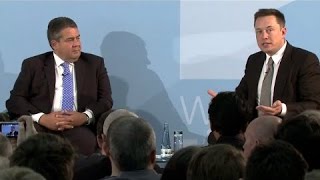 201551:52
 201638:13
 201612:13