一辆二手的特斯拉 Roadster 正飘在地球和火星之间的轨道上,驾驶座坐着一个穿宇航服的假人,仪表盘上还粘着一个更小的假人,尺寸跟火柴盒差不多。这两件事都不是公关公司策划的。
2018 年 2 月,猎鹰重型(Falcon Heavy)首飞。按行业惯例,新火箭第一次上天不会装贵重卫星,只会塞一块混凝土配重,因为没人愿意拿几亿美元的载荷去赌一枚还没飞过的火箭。马斯克觉得这事太无聊了。
首飞放什么?别人放混凝土,他放自己每天开的车
他当时的原话大意是,放块混凝土太没意思了,得加点料。这个念头是在朋友家的厨房里定下来的。那位朋友是乔纳森·诺兰(Jonathan Nolan),写《蝙蝠侠:黑暗骑士》和《西部世界》的那位。诺兰建议他放一辆特斯拉进去,马斯克说行,车库里就有一辆,直接拿来用。
被送上天的这辆车不是一号车,也不是什么收藏级样车。按他自己的说法,序列号大概在一千五百号左右,就是他在洛杉矶日常代步的那辆。如今它绕在太阳轨道上,轨迹会经过地球和火星附近,谁都能查到它在哪。
车上还坐了个人。马斯克的说法很直白,光放辆车太空了,总得有人开,于是有了那个叫 Starman 的假人。再后来,一位叫诺拉的朋友提议,在仪表盘上放一个火柴盒大小的特斯拉模型,里面再塞一个迷你版 Starman。他也照做了。
他顺带讲了个笑话:等外星人哪天发现这辆车,大概会推断人类极度崇拜这个东西,所以专门做了个小的复制品摆在旁边。就像人类挖到古代文明的遗物,总倾向于解释成神殿、祭坛、祭祀用具,也许真相只是个普通人家的日用品,没那么庄重。
发射前他对成功率的估计并不高。猎鹰重型有三枚助推器、二十七台梅林发动机,同步点火这件事本身就有太多出错的可能。他当时的反应是:能飞起来简直不可思议。
汽车公司每时每刻都在往破产的方向跑
访谈现场有位车主提问,他在 Turo 上出租自己的八辆特斯拉,问特斯拉内部有没有团队在做车辆共享,因为 Model Y、Cybertruck 在共享场景下看起来比别家更适合。
马斯克的回答很干脆:过去几年特斯拉的注意力根本不在共享上,而在怎么让工厂继续转。
你可以把任何一家汽车公司想象成每时每刻都在朝破产狂奔,你要做的就是想尽办法别让它跑到那儿。(马斯克)
这句听着像玩笑,往下听会发现是 2022 年的实况。供应链中断一个接一个,缺一个零件,整条产线就停,全世界的仓库里堆满半成品,车造不完也发不出去。过去两年对他来说是彻头彻尾的噩梦。
他点了几个具体卡点。2022 年春天上海的封控让上海工厂停摆;奥斯汀这边在爬 4680 电池和结构化电池包的产能;更荒诞的是,用来生产 2170 版本车型的产线工装卡在中国港口,没人能把它运出来。工厂在,工装在海上,产能自然上不去。
柏林和奥斯汀两座新工厂被他形容成两个巨大的焚钞炉。现场有人接话说那像垃圾桶着火,他纠正说垃圾桶太小了,那是超级工厂级别的火。大量支出,几乎没有产出,每天在烧几十亿美元量级的钱。
他还补了一句常被忽略的事实:把一座工厂推到高产能,比当初把它建起来更费劲。建厂是施工问题,爬产是无数个零件、供应商、工艺参数同时收敛的问题。
关于共享,他的判断是自动驾驶会把这个问题整个抹掉。真到全自动驾驶那天,车队的调度、清洁、维修、充电会变成另一门生意,人可以管几十辆车,像放牧一样照看一群车,而不是自己握着方向盘接单。至于中间态,他没兴趣投入工程资源。
Model 3 不会有 Plaid 版,S 和 X 是感情分
有人问,会不会出 Plaid 版的 Model 3。他的回答只有一个词:不会。
理由是复杂度。特斯拉内部把“给自己加复杂度”称为最大的敌人。再多一个高性能变体,意味着多一套验证、多一条产线、多一堆售后问题,收益却不成比例。
Model S 和 Model X 今天还在生产,他承认这不是因为它们能赚大钱,更多是感情因素。这两款车满产也就十万辆一年。Model 3 和 Model Y 两年内会到两百万辆以上,乐观估计三到四百万辆,差着一个数量级。
他给了一条经验法则:价格翻倍,买得起的人会少掉一个数量级,远不止减半。所以高端车型的天花板从来不在性能,在钱包。
媒体为什么敢骂特斯拉,不敢骂通用
话题转到公关。有车主问,普通人能帮上什么忙。马斯克的回答绕到了广告这门生意上。
传统媒体的收入里,汽车广告占很大比重,甚至常常是最大的一块。通用汽车在报纸上投广告,报纸转头写一篇通用的负面报道,广告主一个电话打过去,明年的预算就没了。不需要谁下命令,编辑心里清楚谁在付工资。
特斯拉不投广告,于是在这门生意里成了唯一可以随便打的靶子。他形容 2017 到 2019 年那段时期,媒体的负面报道像不间断的水流,标题从“特斯拉是骗局”到“特斯拉要完”,三年没停过。
结果销量一路涨。
他的结论有点反常识:那就继续骂吧。因为大多数人根本不读正文,只扫标题,而标题带来的曝光本身就是价值。他自己也承认,一周之后你大概只记得在某篇报道里看到过特斯拉,具体写了什么完全想不起来。
被问到要不要干脆开始投广告,他的态度是犹豫的。这事在原则上让他不舒服,但从纯商业角度看,确实是一个可以打的选项。
点开链接,撞上付费墙,然后彻底放弃
顺着媒体的话题,他吐槽了付费墙,语气明显带情绪。
点开一条新闻链接,页面提示订阅;订阅流程有十几页,要填一堆个人信息;填完了还老忘密码;在 Twitter 内置浏览器里打开,登录状态不生效,得跳到外部浏览器,再跳回 App。他自己订了《纽约时报》和《华尔街日报》,从 Twitter 点进去照样被判定为未订阅用户。
他给的方案是按篇付费。一篇文章十美分、二十美分,点一下就能读。这个模式在音乐行业早就跑通了,一首歌按播放次数结算,没人为了一首歌买下整个曲库。
媒体这边,这笔钱是增量收入。绝大多数点进费城问询报某篇现场报道的人,本来永远不会订阅,但那条新闻只有他们家的记者在现场,其他媒体都在转载。这些人不订阅,却被硬生生挡在门外,双方都亏。
他还抛了一个更大的想法:Twitter 应该介入这一层。用户在 Twitter 里订阅内容,点开链接直接能读,体验统一,媒体拿到分成。他甚至建议,西方干脆把微信抄一遍。
微信是个了不起的产品,你用它可以聊天、付款、做几乎一切事情。中国之外没有对等的东西,那就照抄好了。(马斯克)
日本一年少了六十万人,政策改了也没用
访谈中间有段跑题跑得很远,但信息量不小。有位车主说自己生了四个孩子就不再生了,马斯克接话说他在“敲婴儿鼓”,见到朋友就劝人生。
他给的数据是日本一年人口减少六十万。日本没有实行过计划生育,寿命全球最长,人口照样在缩。他把这个趋势看得很重,一旦进入下行通道,下降速度还会加快。
中国的情况他讲得更细。一孩政策取消后改二孩,再改三孩,生育率没有明显反弹。他把原因归结到更底层的变量上:受教育程度、收入水平、城市化、宗教性。受教育程度越高、越富裕、宗教性越弱,生育率越低。
这里有个常被误判的点。很多人认为生育率低是因为养不起,他的反驳是:社会福利网最好的地方,生育率恰恰最低;越穷的地方,孩子生得越多。数据上的相关性他称之为无法辩驳。
他还提到宗教与生育率的关系。多数宗教教义鼓励生育,这在历史上直接影响了人口规模。他的推论是,如果信教群体持续多生、无神论群体持续少生,几十年后这会变成自我实现的预言。
把全人类堆成一个肉丸,能放进中央公园
讨论人口的时候,他顺手拆了一个直觉错误:很多人以为地球上人已经太多了。
他的算法是看横截面积。从洛杉矶飞到纽约,往下看,随便扔一个保龄球或者一发炮弹下去,砸到人的概率低得惊人。哪怕在洛杉矶这种看起来人挤人的地方,把所有建筑和车辆做成半透明,从上往下统计人类占据的横截面积,比例不到百分之一。
他还讲了一个流传很广的图:把全人类堆成一个肉丸,体积大概只够放在纽约中央公园,高度比最高摩天楼略高一点。另一个版本是让所有人类肩并肩站着,不叠罗汉,整个纽约市的面积就能站下。
这话有现实佐证。2003 年哥伦比亚号航天飞机返航解体,残骸散落在美国南部多个州,搜索回收了几万块碎片,没有一块砸死人。他解释过其中的物理:航天器沿轨道再入时几乎是平行于地表飞行,以每秒约七公里的速度减速、解体,碎片沿途洒下,覆盖范围很广,但人类的横截面积实在太小。
他的结论是,人类密度低到再翻一倍也毫无压力。对资源的担忧,在他看来更多是分配问题,总量从来不是瓶颈。
自动驾驶:雷达是个错误
全场技术含量最高的部分,是他复盘为什么拆掉雷达。
目标很清楚:城市道路上的点对点行驶,零干预。要求很苛刻,一次都不许接管。
他说这条路比他最初想象的难得多,远超预期。有人直接问,你连续好几年都说“今年就能实现”,怎么回应。他的回答是:今年。
现场笑成一片。他自己也承认过去过于乐观,原因是不了解问题的规模。距离成功很近的感觉会反复出现,像驴子眼前吊着胡萝卜,永远差一点,于是继续拉车。
雷达的问题在于,它能让系统“几乎”解决问题。多数时候雷达和视觉神经网络给出同样的结论,偶尔冲突,冲突的时候没人知道该信谁。两套传感器给出两个答案,代码里就必须有一个仲裁逻辑,而仲裁逻辑本身会引入新的错误。
拆雷达的决定在内部遭到强烈反对,自动驾驶团队最初站在对立面。他拍了板。拆掉之后,团队的反馈是没人愿意装回去。
更关键的发现在后面。雷达一拆,神经网络的真实水平暴露了:它比大家以为的弱很多,之前的很多表现是靠雷达兜着。只剩视觉之后,没有任何东西可以躲。
架构也跟着改了。以前是神经网络输出一堆点,再由 C 代码判断哪里是车道中心。后来改成让神经网络自己解释这堆点,理解场景的语义。这套网络被反复重写,按他的说法重训了上千次。外部看到的是“两步前进两步后退”,实际是在换地基。
两条路线竞争?不必,问题不在动机
有人提了个合理建议:既然拆雷达有风险,为什么不养两个团队,一个保留雷达和老方案,一个走纯视觉,让它们竞争?特斯拉在星舰项目上就这么干过,博卡奇卡和佛罗里达两个基地并行推进。
他的回答是,这个团队不缺动机,也不缺工作强度,缺的是时间。他把自动驾驶软件与 AI 团队称为自己共事过的最好的软件团队,还特意说自己对技术水平的判断很苛刻。这个团队是跌了很多跟头才凑起来的,中间有过好几次推倒重来。
他给的理由还有一层:道路系统本来就是为人类的眼睛和生物神经网络设计的。车道线、路牌、红绿灯、反光标识,全部按人类的感知方式来。所以用摄像头加数字神经网络去解题,逻辑上最自洽,其他传感器路线绕不开这个根本事实。
他的判断相当激进:特斯拉会拿到自动驾驶方案,其他公司连边都摸不到,五年之内不会有第二家。这套东西可以授权给别的车厂,虽然对方情感上不愿意,因为在产品力上等于认输。一旦交付,一个月之内所有人都会看明白。
一米的车距误差,就是撞与不撞的区别
他讲了一个很少对外展开的工程细节:统一向量空间。
车上跑的不止一个神经网络。识别动态物体的是一个,识别静态物体的是另一个,各自输出自己的结果。问题是它们的输出没有汇入同一个约定好的坐标系。同一辆车,一个网络说在这个位置,另一个说在那边,系统就可能把它判进不可行驶区域,车于是莫名其妙停下来或者绕开。
时间同步也是坑。两个网络的帧率不同,一帧之差在时速一百公里时就是三十多米每秒乘以三十三毫秒,大约一米。一米在对向车流里意味着什么,不用解释。
他还讲了监管带来的荒诞场景。加州司机普遍滚动停车,路口没人时不会完全停死。自动驾驶如果严格依法把车刹到零,反而像个别扭的家伙。更麻烦的是车速表法规:仪表不能显示低于实际车速的数字,所以即便轮子完全静止,屏幕上也必须显示 1 英里每小时。用户投诉车没停稳,特斯拉只能录一段轮子的视频去证明轮子真的没转。
竞争对手也没少投诉 Autopilot,因为他们在产品上找不到对等的答案。
一千五百个标注员,被算法放大一百倍
外界容易把自动驾驶理解成一段跑在车上的软件,实际上一大半工作在后端。
特斯拉有一千五百名人工标注员。他们的产出被自动标注工具放大,他估计放大倍数至少一百倍,等效于十五万人的劳动。流程是这样的:一段视频有几千帧,自动标注先把车道线、车辆、行人全标出来,人只需要确认或者微调某一条线,修正结果再喂回模型,让自动标注工具学会更准地标注。
误标是隐藏的杀手。如果同一类场景里绝大多数标注正确,只有一小部分标错,神经网络会学到一个错误的概率分布,认为车道线偶尔会跳到另一个位置,于是它的判断开始摇摆。团队要做的,是回到标注工具里一行行排查,把那一小撮错误数据删掉。
他说自己脑子里七成的算力被两件事占着:自动驾驶和让星舰入轨。其余的杂事如果不做,就会堆成麻烦。
未来人类开车,会像电梯操作员
他用了一个很准的类比。
一百年前坐电梯,轿厢里有个专职操作员,负责拉闸、对准楼层。今天回头看,你会觉得那个岗位多余,按钮就在墙上,为什么要雇个人?
自动驾驶普及之后,人类开车就是那个岗位。人会显得反应慢、注意力涣散、判断不稳。他甚至说,全自动驾驶的车能开得比詹姆斯·邦德还稳,而通过门槛其实只是比人类更好,人类这个基准线并不高。
他对安全的预期是全自动驾驶把事故率降到现在的百分之一以下。但他也承认,过渡期会很长。路上跑的大多数还是人开的车,人会突然变道、会疲劳驾驶、会闯红灯,自动驾驶能做的有限。
访谈里有人提到一位女士骑车时被疲劳驾驶的卡车司机撞死。马斯克说,如果那辆卡车装了 Autopilot,它会保持在车道内,那条命不会没。
关于被起诉的风险,现场有人说得很直白:救了九成的人没人表扬,剩下一成会告你。他的态度是,这种事应该拿统计数据上法庭,事故少了十倍,就不该因为剩下那点事故被惩罚。
Apple Music、老车主和越来越少的顶级工程师
后半段的提问回到产品细节。
车主们想要原生的 Apple Music,目前 Spotify 可以登录车机账号,Apple Music 只能走蓝牙。马斯克起初没听懂问题,绕了几圈才明白是“不要通过手机,直接登录车机”。他说会去推动。他还顺口提了一句,蓝牙的传输码率是可以提升的,音质瓶颈可能就在这儿。
有人感谢 Waypoints 功能,说这改变了他们的用车方式。他顺势吐槽自家日历集成做得不好,说自己干脆不用日历,看日程全靠瞄一眼。
一位 2018 款 Model X 车主提了个小需求:打转向灯时在屏幕上显示盲区摄像头画面,新车型有,老车没有。他回应得很坦白,资源永远不够,排优先级的方法是“这件事能让多少人受益,乘以受益的程度”,给老车型加功能的排序非常靠后。那位车主自嘲是老古董,他补了一句,你还有终身免费超充。
聊到招人,他说了一个残酷的观察。真正顶尖的软件工程师数量极少,而且他认识的不少人在赚到钱之后就不写了,转去做投资或者半退休。他自己属于异类,天生就停不下来。
费米悖论:我们大概率只能找到细菌
最后一段聊到了宇宙。
宇宙年龄一百三十八亿年,人类有文字的历史五千年,前者是后者的两百多万倍。他说这个比例意味着,如果一个文明的技术痕迹存在过,我们应该早就看见了。但至今没有任何确凿证据:没有信号,没有探测器,没有访客。哪怕只是某个外星文明在太阳系附近丢下一个一英寸见方的纯钛立方体,人类也会立刻知道,因为那东西不可能是自然形成的。
他的推断是,能进行星际通讯的文明在同一时期共存于同一个星系的概率极小,可能为零。但生命本身大概率存在,只是形态简单。地球在很长一段时间里只有古菌和细菌,真核细胞的出现是个巨大的门槛,线粒体被吞进细胞、还要跟着细胞分裂同步复制,这件事的成功率低到难以想象。所以他猜,人类找到的第一个外星生命,大概率是细菌。
关于宇宙的起源,他承认没有答案。有没有第一因,有没有造物者,他说只能按证据做概率判断。他提到模拟假说:从 Pong 那种方块,到今天照片级真实的多人游戏,只用了我们这一代人的时间,如果这条曲线继续,游戏和现实会无法区分。
至于宗教,他的表述很克制。宗教让人相信自己已经知道答案,科学路径是承认不知道然后去弄清楚,这两种态度会导出完全不同的行动。他没有兴趣辩论,只指出一个后果:如果信教群体持续多生、世俗群体持续少生,几十年后社会的信仰结构会自己改写自己。
把这份访谈读成一张行动清单
- 做制造业或硬件创业的人,把供应链当成第一优先级。工厂建起来只是开始,把产线爬到高产能比建厂更耗人,任何一个零件卡在港口都能让整条线停摆。
- 做出行、租车、车队生意的,别把长期赌注押在“人类司机加平台派单”的中间态上。自动驾驶到来时,真正的岗位是车队运营:清洁、充电、维修、调度,一个人管几十辆车。
- 做产品或算法的,如果你的系统有多个模型、多个传感器输出,先建一个统一的坐标和时间基准,再谈功能。一米的偏差在高速场景里就是事故。
- 做内容或媒体产品的,按篇付费和统一的阅读体验是明显的空白。用户不订阅不等于不愿意为单篇付十美分,把这条路堵死,双方都亏。
- 带技术团队的,遇到路线之争要敢拍板,但拍板之后要允许团队把地基重挖一遍。外部看到的反复,往往是架构在升级。
- 招顶级工程师时接受一个现实:钱到某个量级之后,只有使命能留住人。很多有天赋的人在财务自由那天就停止写代码了。
- 看人口问题别只盯政策。教育、收入、城市化、宗教性这四件事和生育率的相关性,比补贴政策强得多。
- 评估 AI 能力时,别只看演示视频,去看它的数据标注和调试工具链。一千五百名标注员被自动标注放大一百倍,这才是模型表现背后的真实成本。
0:11I want to especially thank you for Starman, putting Starman in Roadster into space was the most life changing thing I've ever seen. Also, I wanted to give you this, and thank you for allowing this to happen. This is the Starman Begins episode we just made. Just a gift. Thank you.
0:27Thank you. Thank you for, I mean, the course we're on, that I was a space geek as a kid, and I didn't believe anything was gonna happen, because in the 90s, nothing was happening. And I didn't even pursue an engineering career because there was nothing to do in space. But when I saw that, I was like, I knew that this was real, and pretty much changed everything I was doing to make this.
0:46All right, cool. Thank you. That's great. Yeah, and do you know how K to B that arose to was in the Falcon Heavy? I've heard bits of internal war, but never from you. So I would love to hear this. Well, normally when there's a new rocket that's launched, there's something very boring, like a chunk of concrete or something, is just as, because you don't risk an expensive satellite
1:09on the first launch of a new rocket. So I was like, hey, guys, we can't put a chunk of concrete. That's going to be super boring. That's what boring we do. No, truly. They did do it. In fact, literally, I think it was a chunk concrete or something that they put on their first launch of the Delta IV or something.
1:28So now we're going to spice it up. So I was talking to my friend, Jonah Nolan, who's like, you would like the really good Batman movies and Westworld and stuff like Crystal, his brother, so. Oh, wow. And I was in his kitchen, and he suggested that, I should put a Tesla in, and I was like, oh, OK, that's a good idea.
1:50And so I was like, well, I've got one in my garage. I can use that one. So it's not serial number one or anything. It's like later, like 1,500 serial number or something like that. And so literally the car that I was driving around LA is now in orbit around Earth and Mars. You could track it.
2:08Yeah. But it was basically like, let's have something that looks cool instead of boring concrete. And I really thought there was quite a good chance to rock with a failure fail. We've had a number of rocket failures in the past. So there's so much that can go wrong with a Falcon Heavy, that's kind of surprising that it'll work.
2:28That goes like, holy crow, I can't believe it'll work. This is insane. That was my reaction with the Falcon Heavy launch. And then the star man was like, well, we've got a car. I put someone in the car, you know, otherwise like he's driving it, you know. And so that's where we put the star man in the car.
2:46And then there's the tiny star man in the car. Yes. And that was a friend of mine, Nora, who is like, yours should put like a spool, I should put like the matchbox Tesla on the dashboard with a tiny star man in it. I was like, okay, we'll do it. And then I don't know what the aliens are going to think when they discover it.
3:11Clearly they worshiped this thing, and then they made a small version of it because they worship it so much. It's like the stuff that we discover of ancient civilizations, the answer might be much more less serious than we think. We just think everything's a temple that they worshiped.
3:29Maybe it's not. It's just like some thing that they made. It's moved all the way down. Exactly. I also have one selfish question, car sharing. Obviously we're working towards full autonomy, that's the main goal, but there seems to be a.5 step. And I'm actually a car share, I have eight Teslas and one of the other, I'm sharing on Tarot.
3:49And I just feel like there's so many ways that the Model Y specifically is optimized and cyber-truck and future are even more optimized for car sharing. Is there someone working on that at Tesla? Our issues for the last few years have been not car sharing. I guess like a rental car is kind of a car sharing situation.
4:11Sure. It hurts being a big player now. Yeah. We've just been trying to keep the factories operating the last couple of years. It's been a very difficult thing. And like supply-shaded eruptions have been severe, like extremely severe. So it is required all of our attention just to keep the factories going, not to think of
4:34like, at the end of it, like the super hard part for a car company is like, how do you get revenue above cost so you don't go bankrupt? And so it's not really like, you know, as long as our demand is enough to absorb the production and we have production enough to cover our fixed expenses,
4:57then we're in an okay spot. Right? I'm thinking about like downtime. If these cars are traveling 400,000 miles, sitting in someone's driveway, they're not gonna collect 400,000 miles before the paints kind of had any issues. I imagine that increasing the utilization of the existing fleet, obviously, fossil driving does that, but up until then, if we have car sharing installed to increase utilization, increase the number of miles on these vehicles, it's a good thing for the world.
5:21I said that that is a high class problem that, you know, the thing that like car companies,
5:34you should think of car companies as like at any given point they desperately want to go bankrupt. Okay, the car company is desperately trying to go bankrupt at any given point in time. So in order to have that not be the case, you have to have the fact that factories have to have to be active.
5:52Otherwise you have parts piling up in warehouses all around the world and you can't ship but if you're missing any parts you can't finish the car and ship it. So the past two years have been an absolute nightmare of supply chain interruptions, one thing after another. And we're not out of it yet.
6:13So that's overwhelmingly our concern is how do we keep the factories operating so we can
6:27pay people and not go bankrupt. And then everything else is nice to have. Even recently, the COVID shutdowns in China were very, very difficult. You guys actually say the least so well that we all think of you as a tech company first which has like you know like Alec Apple right they make hardware, but they've spent way more money on software Which I'd even say I've got the perception sometimes if it's like oh, yeah Things are they've got this just huge stack of bandwidth, but like you're right about of money and hardware moving through this place
7:01But like this factory is losing insane money right now Because we can't make it we look because we Like we should be out putting a lot more cars from this factory versus a very puny amount of cars. But we had challenges with the 4680 ramp and with the structural pack ramp and then ironically
7:24the tooling because we were able to do 2170 sales with the tooling necessary for making 2170 variant cars just stuck in China. So we have this Shanghai factory in-op. We've got the tooling to enable this factory stuck in port in China with no one to actually move it, which basically then caused this factory's production ramp to be very tiny.
7:56Now this is all going to get fixed real fast, but it requires a lot of attention. And it will take, like I said, it'll take more effort to get the factory to high-volume production than it took to build it in the first place. And the same is true of Berlin. Berlin's in a slightly better position because Berlin started off with the 2170 style and
8:18did not have the 4680 instructional pack risk. So both Berlin and Austin factories are gigantic money furnaces right now. Okay, this should be like a giant roaring sound, which is the sound of money on fire. Okay, that's what... Dumpster, fire, right? Dumpster, yeah. Bigger than a dumpster.
8:43Shonsh is too small. Gigafactory level, lightly Berlin and Austin are losing billions of dollars right now, because there's a ton of expense and hardly any output. So getting roller and orsten functional and getting Shanghai back in the saddle fully are overwhelmingly out-conserved.
9:09Everything else is a very small thing, basically. Understanding that this is not of immediate concern, but does a plaid model 3 make sense to you in your mind? No. Could the weight even handle that power strain? Like its potential. We're trying to reduce complexity. I understand.
9:37Yeah. Okay. And we're our own worst enemy in adding complexity. I mean, the grand scheme of things, the Model S and X are, we're doing them not because they are huge money owners, but really for sentimental reasons. Like at full output, we're talking about 100,000 cars a year for S and X.
10:04But three in a while we'll do two million plus. So it's like 10X or more frankly. I think three and a while probably do three or four million and S and X will top out at 100,000. Just because the affordability drops off exponentially with price. So as price rises, you basically, a number of people that can afford an S or an X, it doesn't drop by a little, it drops by an order of magnitude.
10:33So a doubling of the price will drop the affordability by a factor of 10. It's a rough rule of thumb. Is there any additional thing that we can continue to do? I mean, we tried to have this with the solar taxing. I mean, it's probably hard, even like, I'm asking you, how can we help?
10:52It feels like a weird question. Well, I mean, the public support is certainly appreciated. And shooting down the part is always very helpful. And there's an argument for maybe we should advertise, because the traditional media will not run negative pieces about automotive, because automotive is one of the biggest, if not the biggest, advertisers in their paper.
11:19So they're like, the ads could literally be nothing through the better because of the articles that are called lessons. Yes, like this is like, so Tesla's like basically free game, whereas it's safe to say that if they run some negative piece about General Motors, right next to a General Motors ad, General Motors parking exactly is gonna call them up and say, why did you do that?
11:44Do you wanna call it now? Yeah, exactly. It's like, yeah, your budget next year, we'll be spending nothing with your publication as much. Yeah. Yeah, exactly. And they don't have to do that because they know. So there's a test of understanding that you don't run hit pieces on your major appetizers.
12:05Yeah. It's bad for business. Yeah. Right. And people say, oh, this, don't worry. There's a fire. This is a trial. It's a wall between the business and editorial. I'm like, yeah, but they also know who's paying their salary, okay. They don't need like, they're not idiots. Say whether there's a firewall between me and my boss, but you don't know me.
12:27Yeah, exactly. They just know, don't go there. That's what they know. But they can go to, they can trash tiles, like it tells us it's an advertise. So that's the issue. So maybe we should advertise it at least, like, you know, I don't know, it sort of, it doesn't feel right, but that is something we could do.
12:49I mean, the grand scheme of things though, like if you look at like, if you ignore sort of the Stearmendron and say, just like, okay, well, is it actually causing us to sell fewer cars? It doesn't seem to be. So then why should we care? Man does not miss you. So they can actually, I mean, frankly, a bunch of the pieces trashing Tesla, you know, like, especially like, So like 2017 through 2019, the press was just a non-stop hate stream.
13:19It was like, tesas are fraud, tesas are failure. Tesas are fraudulent failure. Tesas are like, you know, thumbing through the puss, the sorest were like bad words to use. It was like insane. You just like, click on like the phone, like the stock ab ticker. And I remember like, for three years straight, it would just be like headlines just trying
13:43trash and Tesla just all over and over and over again. And our sales went up. So I'm like, okay. Yeah. So I'm like, I guess, keep trash enough. You know? Because at the end of the day people were like, oh yeah, just keep bringing about Tesla. I don't know why, but I just keep bringing about it.
14:01I can't remember what the article was about, but I know I read about Tesla 17 times. And GM's none. No, that's good press or whatever. Yeah, all press is good press. There's some truth to that, you know? So, because generally you say, like of the articles that you read about a newspaper like last week, how much content can you remember about those articles?
14:26Really, it's just the headline. It's sentiment? Yeah, the headline, vaguely. People aren't reading the articles. Yeah, yes. I don't like there's a big movement on Twitter, like please read the article before you retweet it or forward it. You've retweeted tried to do some flutter.
14:39And everyone's just forward retreating and forwarding this on the freaking headline. Even the content says the exact opposite of what the airline is. And the headline shows by the editor and the writers, like I didn't even pick the headline. Literally said the total opposite of what the headline was.
14:56And people don't even know because they just forwarded the headline. Actually, one of the best one things that should happen in Twitter is like every time you click on a news article, you hit a paywall. And it's like, how do you do? Yeah. super annoying. Yeah, exactly. So you just see the headline. You literally can't read
15:16article. So there's a little sign there that says can't read article. Yeah, and it's like, I don't want to get a subscription to Philadelphia choir, but I'm sure they have every on a game and a good article that I'd like to read, but I don't like 18, like 12,000 subscriptions. And also, they don't even make it easy to get a subscription.
15:39This 18-page process where you tell us everything about your entire life is what's required to subscribe to XYZ and newspaper and some, whatever. Who's going to do that? Imagine what it would do. And then I keep losing my password for the ones that I'm talking about. And then it opens like Twitter's emulated browsers.
15:58It doesn't even log in anyway. Yes, exactly. It's like I actually have a subscription to the New York Times and the Wall Street Journal. I'll like open it, I click on the Twitter link, and I'm like, it's saying that I'm not a subscriber. So then I have to like click go to the web server, have it redirect to the app on my phone.
16:14This is Cockamade nonsense, right? It feels like a problem for Apple, though. I was literally just about to say it. Which be, I wonder if it should be the best. It's just annoying. It's like a weird one. I was just trying to figure out what the hell's going on, and it's like paywall, and then, everyone thinks I'm fucking paywall, and then, and you look literally on your website.
16:31It's a simulation. Yeah. It's annoying and even when you have the subscription, it doesn't figure it out. And I mean, Twitter is totally messed. If Twitter got in the middle and algorithmically started deprioritizing content that did that, eventually, I was saying, when he was saying about Apple, Twitter could ultimately end up like Apple, which is like, you want your content that's subscribed to be that way?
16:54Great. Users can subscribe to Twitter to whatever news is. And when they click, it's good. Twitter can, honestly, make a better user experience. It did get in the middle of that. I might not pay in a dollar a month with the Atlantic, as part of a $5 a month Twitter plan. It gets me all the subscribe news.
17:09Right now clicking a link and going to it, I just lose my fucking mind. Yes. I'm going to Reddit to go find the fucking link with somebody like poke it all down. Totally. I'm gonna call this if that ever happened one day. No, I think that's the thing I should have. No, I know. Like this is definitely like a loss of value here
17:26that is simply missing where it's like, I understand that all these publications want to maximize the subscribers and kind of own their customer and stuff. But there's a huge number of people who are never going to subscribe to that publication. Like let's say, not pick up the Philadelphia Choir, but let's say you don't love Philadelphia.
17:46So most of the time, you don't want to read the articles. But every now and again, they've got some reporter on the scene at some news event, and they're actually the smallest article. Everyone else is just copying them and printing their stuff. And so you want to read the Philadelphia Choir
18:01article, but there's no chance you would become a subscriber. So they're not losing a subscriber, but they are annoying everyone who's not going to be a subscriber. So there's got to be some way to solve that. I can sort of plug the Twitter or I'll put a couple of those. Ten cents for this article or something.
18:17Exactly. One knows point for this article. It should be like, I'll pay ten cents for this article, whatever, but the answer is 20 cents. It's like fine. And that should work. That's how it should work. Music artists get paid like that already. It's being a listen based on the scale that I've sold out over a lot of dimensions.
18:37This is going to have to go to the compartments. There's just like this. And there's no losers here. In fact, the media company will be a winner. They won't be incremental revenue. Over and above those who would never subscribe to the publication. And they're going to read the news and not have to stop behind payables over to Madhouse.
18:54I mean, we don't even have a map that's as good as we chat in China. In China, you get like live on WeChat, basically. It's like, yeah, everyone is like, they live on WeChat. You do payments, you do everything. It's like, yeah, it's great. Basically, WeChat is kick-ass. And we don't have anything like WeChat outside of China.
19:13So I was like, my dear, how about if we just copy WeChat? Hey. Hey. Copy them. Buy a Twitter, copy's WeChat. Yeah, pretty much. Yes. Better user experience. Well, before you have to go, we should probably get a selfie or picture with you if you'll find it. Thank you. Thank you for telling me.
19:34What do you mean these days? What am I doing these days? YouTube and I review electric cars for a living. I write out those cars on Terro, car sharing. And I'm considering what it would look like to build an app that makes that experience better, because Terro is good, but it is not specialized.
19:49And so now there's so many things that could do better for the Tesla experience. If you build it, I'll use it. And autonomy is just such a monumental breakthrough. That is just car sharing will just not matter really. I get that. I get that. But the 0.5 step of what do other learnings maybe do you have there as far as maintaining cars, who's responsible, those kind of thing.
20:09That's where I think it has. Yeah, nothing is. I mean, there will need to be sort of a shepherd of cars. Exactly. That's why I'm trying to be at this point. Car shepherd. You know, in total, you told people years ago not to try that. No, I mean, so this is like this. That was until we're there.
20:24It's not like this, like, cars still need to be like maintained. Like if it's like, you know, you got to clean the car, you got to, you know, if it gets scuffed or damaged, it's got to be, it's like tending a flock of cars. I don't know. Very personally. Yeah, exactly. So, the also, it's like, I mean, I think it will effectively,
20:41like for people that are currently like, we're we're all Lyft drivers, it'll be like, OK, like instead of you driving yourself, you manage, I don't know, 50 cars or something like that. And you tend to your flock. Exactly. Yeah. Basically, Ryan has 52 cyber trucks on order. Oh, really?
20:57OK. We need to get on that. I mean, the design at least finally is locked and worked. For sure locked? Yes, locked. For sure locked. Hands off down. Yeah, seriously. We got too carried away with the internet. That features. Later on. I mean last year the chip shortage was so bad that even if we had it wouldn't matter.
21:29You could just rob me one pocket to pay the other pocket. And we could even could have made the stationary storage stuff because stationary storage batteries were, they used chips too. So then we had to like basically start of the powerwall line to make carbs and even then can make what all the costs would work in me.
21:49So I think Australia from that into China COVID shutdown, which was really, like not just affecting Shanghai production, but also like this little, some parts that are made in, what caused me in California that are parts made of China. And it was, and we have tooling stock in China as well.
22:10So I think I'm not sure everyone knows how, just how serious that the COVID shutdowns for trying to, it's not done yet, by the way. It's not like major green light yet. It's cool. Bumpy, bumpy. Yeah, it stops a ramp up. If you were to guesstimate one with the Cybertruck hit production.
22:31I think it'll next year. Okay. We're roughly 12-bunstage. Okay. I'm excited. I'm excited we are for it, man. I'm so excited. I've got the start-up thing already. It's gonna go out and it's out. I mean, that's what I'll be driving when it's... Oh, really? Yeah, absolutely. I stopped having kids at four because I can't grow.
22:50I can't have a side structure if I'm past that. So I stopped at four. That's my man. I'm done. Six seats. You outdid your contribution to society? Exactly. Yeah. I mean, I'm here. It's like, man, so many friends I have like zero on one kid. That's why I'm like, I'm always banging the baby drum.
23:09Because I'm like, man, civilization's going to collapse. And then. He'll be killed. Yeah. Yeah, like where do you think people come from? Like some magical fucking people factory? The stork. The stork. The stork? The baby stork? I mean like he's... They gotta come from somewhere and they take ages to grow.
23:32You know, so unless, you know, like the thing it has to happen is like once the growth race starts going down, it seems to accelerate in a downward trajectory. trajectory. Like Japan is leading into carrier. They're about to collapse. No, population collapse. 90. They lost 600,000 people last year. That negative 600,000. And Japan is
23:54like pretty close to being the longest, like there are live discrepancies like 85. So, like that's the only thing, that was worth keeping the population plummeting before. But now despite having like the world's longest lifespan, it's still losing population. To say something. I was saying something.
24:12So it seems to me the rate of that decline is such one that's going to be not really able to be turned around. We kind of got a plan for what we do in spite of it happening. Yeah. Well, if that trend continues, Japan is just going to plan out the spirit as well most countries in the world.
24:29So it's not like, you know, I'm just saying if that trend continues, hopefully it doesn't. But if it does, this is going to be, I don't know what China is going to do. Like, China's going to have, like, a period of time of great prosperity of, like, the next 10 years. And then, but China's like roughly half a replacement rate.
24:49You know, maybe... Well... Because of the one child policy. They got rid of the one child policy several years ago. Yeah. Then made it two child policy. Now it's a three child policy. Okay. Growth rate unchanged. Really? Yes. Well, it's so ingrained in them. Oh, interesting. Interesting.
25:06It's a matter of two. And Japan never had a one-track policy, and they still went that path. So you should look at the trends. It's like basically with education and openization, for great comments. And there's people like, oh, people can just afford it. Nope, actually, the places that have the best social safety nets have the lowest birth rate.
25:29OK, that's not the reason. Yeah, it says in versus true, right? The poorer you are, the more kids you have. Yeah, mostly I think there's a social economic study that says that reason why it is because parents need comfort. I mean you can say like, whatever causes, it's hard to say what the cause would be, but
25:51the correlation cannot be argued with. And the more religious, the less educated and the poorer, the higher the both rate. So if for lower religious, low on the religion, high on education, and high on income, that has the lowest birth rate. Yeah. Yeah. I think a reparced the data that's probably an argument to be said, how we got to the side of the religious, how large of impact on getting to the size of population we did, because if you study religion, you know, like most of them preach the brief root for multiple Go go go go numbers. Yeah, multiple the more into the Multiply yeah
26:44So yeah, hopefully the things turn around Yeah But the current trend is is not good for me growth recently I'm trying to set a good example. Another reason why we do another civilization on another planet. Yeah. The number of number of humans is not training well. I think a lot of people are under the impression that, like,
27:10you know, the current number of humans is unsustainable on planet, and this is totally untrue. Yeah. We could double number of humans and be okay. That's a little key to the rainforest. People forget we're animals. If we actually couldn't sustain it, we would just die off. Yeah, the population density is actually very low, and most parts of the world have no people in it.
27:29So if you fly out with the country from LA to New York or something, and you look down and say, what percentage of the time if you dropped a bowling ball would you hit somewhere? Very low. How does he really like round down zero? Really? Yeah. You just give him a few cities. And say, yeah, it's fine.
27:49It's the most objects and you still hit them. Yeah, you can't even figure out bowling balls. I feel like we should test this. Yeah, like if you have a... It's like sounds of the tools. You have a cannonball and your goal is to hit a person. Or die. And you're going to die. Because you're not going to...
28:06Because you're landing a bus. Even in LA, like you think LA's got a lot of people, but you look at the actual... If you like just look to say what cross-sectional area is human, like the cross-section of... But you take like several blocks in LA and make the houses and cars translucent.
28:25And look at, OK, well, looking at from above, what percentage of the cross section of the area is humans? It's almost nothing. It's below 1% in LA. Interesting. Yeah. Have you ever seen a giant ball of flesh they did that if you combined every human into it? In New York City? You've seen it, right?
28:41The big ball of goo of all humans pushing the one thing. It would sit in New York. What's the big park in New York? Central Park? It would sit in Central Park. That's it? That's it? And it's a little bit taller than the tallest skyscraper. It's not very big at all. It's not like a cuboid of humans.
28:55You put a few points on the volume. Oh, God, that's not. What's it? It's the giant meatball. It's like a meatball. It's like a dog. It's like a dog. Everyone, it's all of us. We're just a meatball on the side. Yeah. It's a lot to put us to the meme, dude. There we go. Yeah. Actually, it might be a little screenshot without the...
29:16On a single floor, you could fit all humans in New York City on one floor without even having... What do you mean on one floor? I mean like... Not... Oh, surface area. Yeah. How thick would that human pie be? No, it's just one human tall. I'm just saying there's no humans. Without stacking.
29:33Without stacking. It's just side by side, do you mean? Yeah, I just say like, what's cross-sectional area of a human? Yeah. I say, okay, there's eight billion of those. Yeah. What's the area of New York City? Oh, it's less than... You can fit all the humans. You can stand for all the humans in New York City.
29:44Yeah. I love the phrase cross-sectional area of a human. I think there's something you can start from a space. We're targeting and the cross-section is slow. So we're going to have to just force the missile because of that low cross-section of humanity. That's basically what it comes down to.
30:02So anyway, if you were living in some bustling city, they think humans must be everywhere. But actually, there are very few cities. No place in America has the density of Manhattan. And then even if you've got like sort of what seems like a density like LA, the actual cross-sectional area, that's human is small, like less than 1% of the areas human.
30:25So that means that if you drop accountable, that didn't bounce too much. Probably you're hitting a human is extremely low. Wow. That's interesting. We've had pieces from rockets and multiple nations re-enter the tanks and crash, uncontrolled, and not hit anybody many times. So we had the space sort of tragedy, like on entry, it rained debris across the entire United
30:48States. And I don't think there were any entries at all. Like the entire, yeah, a lot of debris, and nothing. I'm scared. Oh my God, it almost hit me. Yeah. They were in Bournables. Like, they recovered most of the material, Michelle. Wow. and zero people were ahead heavily. And here's an interesting part of that, is it was going not vertical, it was going around the earth, which increases the probability.
31:17No, it's coming in from what was going, more or less probability on the surface. And then, and start sort of breaking up, I believe, over the US. Like a crop test. Or at least, certainly, like, none of the parts fell in the ocean, and all fell on the cotton on the land, I believe.
31:33So that's it because it's, when you go over it, you're going parallel to the surface. You know, roughly 25 times this would be a sound. So the cells decelerating and breaking apart as a, and the debris is raining down on the US and no people will hit. But there are actually very few humans on it.
32:00I have one FSD related question. Would it be possible for us to get access to some folks to give narrative feedback from the experience we're having? Some of us drive a shit ton of miles, cross-country, something about the Texas and back. And there's things that we saw that there's no button or email I could possibly send to say, hey, here's what we're, here's the issues we're seeing.
32:18Here's how they're breaking down. And more importantly, here's how they're breaking down across contexts, right? Like if there was any way, if it would be helpful, if it's not, then no worries. But if there's a way to give that narrative feedback to somebody, I think it might help.
32:32I mean, our goal right now is to get to zero interventions and point-to-point drives in cities. So the polish is less important than solving for zero intervention point-to-point drives in cities. A sure amount of work required to do this, bulk is aligned. And to the best amount of all, just a team, do we know of anyone who is even trying to pull in us perhaps we don't know of anyone?
33:01Maybe there is someone. But I've seen a lot of technology problems and solving real world AI, such that I caught the drive itself, is one of the hardest problems I've ever seen. And it is way harder than I originally thought by far. So what would you say to the people that have said,
33:25for several years, you've said it'll be this year. It'll be next year. What would you say to those people? It'll be this year. Perfect. We got him. To put that out. OK, make hope for six months. Yeah, I know. I think it's still tracking for this year. But as far as the, I'm going more for the.
33:43Yeah, why was I overly optimistic in the past? I did not understand the scope of the poem. And you feel you do now? Yeah. It's very easy to get close to it working. and where it feels like it's just, you know, all right there, just a little further, you know. And it's like the, you know, the donkey with the carrot over here, and it's like, that's why these keep, you know, pull the cart a bit further faster, pull the cart faster, maybe that car's gonna come closer.
34:24And frankly, having radar and ultrasonics was a mistake radar especially, because radar allows you to get close to solving it and solve it most of the time, except when you can't lock the radar and the visual neural net. Radar and vision disagree, which one is right. And so you basically have to get rid of the radar.
34:55And once we got rid of the radar, which by the way was initially strongly opposed by the autopilot team, And now nobody wants to radar back. Is that right? Yeah. I have to lay down the law and say, that radar is coming out, man. It is, that radar is a question. If you carry that question, you can't run.
35:13So it just, the radar would work. It just, the signal, the radar was contributing more noise than signal at the end of the day. So that wasn't creating a contributing signal, but it was more noise than signal. And so that's the, it had to be removed. And once the radar was removed, then it became clear that actually our neural nets are much
35:39worse than we think they are. So they were being helped by radar too much. So now just having to use vision, you can't hide behind anything. vision has to work, the neural net vision has to work. And then there was quite a profound change to go from bag of points neural net to having a neural net interpret that bag of
36:11points to figure out what a lane center is. And previously we were doing that all in C. So you know, I mean the neural net architecture is insanely complicated at this point. It's It's a lot of layers. And then they'll turn out, oh, actually, we need to leave this layer, put this layer on.
36:37And we've re-occupied to the neural net so many times. Here's a question I could have from the outside. It seems like Tesla has one general autopilot team. Why not have two competing against Joe? You did it with Book of Chica and Florida. Why not have one that still has radar and all the old data points and a separate team and make them compete.
37:00I think the team does not lack for motivation level or work ethic. They work super hard and the tells the autopilot sort of software, AI team is like the best software team I ever worked with. I'm a harsh judge of technical skill and they are outstanding. It took a while for us to get there.
37:24We had a lot of false starts with the autopilot team. And there's like Insulkin Valley, there's like, I don't know, like 12 people who say they're a responsible for the autopilot, but they're not. Generally good people on our team too. I still hang out with some of them, I'll say some of them ski with some of them, good people.
37:47Not often, they're on a lot of time. Yeah. Don't worry about the location, it's like, there's so much energy. I don't know. The talent level or the power team is, I mean, they're just extremely good. So, at the end of the day, the streets were designed for eyes and biological neural nets.
38:11That's what the entire road system was designed for. So, therefore, it makes a perfect sense, frankly, that cameras and digital neural nets are required to solve cell-priting. Basically, after repeat what humans do, but insolicon. And nothing else will actually solve it. So I mean, Tesla's actually going to be in a situation where Tesla has a self-driving
38:38solution and no one else is even close, not even for five years. Licensing? Yeah, sure, absolutely. We're not going to stop. It will need to slap them in the face. Like, baf, baf. But like, hey, we think, it has to be taking sales away from them. Oh, it'll take sales away from Uber, it'll take sales away from everything.
39:05So. It'll be very clear once it's actually delivered, it'll be very clear that this is the way. Everyone will know in that moment, within a month, this is the way. If they don't already know. For anyone who has the beta, you've seen the trajectory of the third one. It's very clearly going to achieve full self-driving.
39:26It's just a question of this, and debate about when. But if you say, what is the rate of improvement per unit time, you can say this is clearly going to get to a point which is where it's much safer than you. And it's not far. Is that point you cross? And it feels as if we are slowing the progression.
39:45And I want to know that it causes. So the thing that's sort of hard to appreciate from outside the company is that we'll re-opt the neural net like put a thousand times. I mean, the things that I take up the most amount of brain space for me are working on self-driving and getting Starship to orbit.
40:14those are two things that take up, I don't know, 70% of my brain space, like something like that, those two things. And then there's other things that just don't require as much sort of brain-sea view cycles. But a lot of chores, basically. If I don't do my chores, then shit gets a fan, basically.
40:37I hate doing chores. So anyway, just basically Autopilot's absorbing a massive amount of brain cycles. That and getting started to all of it. There's two things that are well-mingly, a super majority of brain cycles. So the reason that the say 12, but one or whatever, it didn't seem like it was that great, was because we refracted somebody of neural nets that, like to the outside, it seems like two steps forward, two steps
41:20back. And so it feels like we've proven this flat, but actually a whole shit ton of like we just re-alked in neural net. So like, it's a word for having like an A and a C architecture to having a C and an A architecture. But now you've improved. room to grow. Yeah, exactly. So, you know, the, they still, we still don't have a unified
41:47vector space where all of the neural nets pour their output into a single agreed upon vector space for both fixed and moving objects. So, yes, that's quite important because like, If they disagree, like if the moving objects in your own net, like currently, they're fairly separate.
42:12The moving objects network and the static object network, if they disagree on the position of a car, then you could say, well, this car is in a non-drive space position because of a disagreement between the neural nets. And then if they're not running at the same frame rate, you can get a time error as well.
42:31And if cars are moving at 30 meters per second or something, then you have a 33, 34 millisecond error, like the cars now moved a lot. So it's moved a meter. So a meter is a lot. Not colliding with something. It's a ton. Yeah. It can be like, is this car driving along? Let's say there's cars going in on opposite directions.
43:07If that car coming towards you is offset by a meter, that could be the difference between cladding and not. And so it could even be a time lag error between one you're on the next and you're going to have an issue. So it's not, and the level of it as these neural nets get very good, they will be much, much better than human.
43:26So it will be able to drive better than James Bond could possibly drive. Fortunately, the threshold for succeeding is just being better than a human. And humans have really a lot of latency in general. So it's not actually all that high of a bar when you realize it. It's sort of like you think like elevator operators back in the day.
43:49And yeah, you can be an expert elevator operator, but you got to flip that relay and get the elevator and the floor to line up exactly. It's like you're not going to succeed nearly as much as the computer. So now, if you did have an elevator operator with a big relay switch, you'd think that's pretty
44:07backwards and you'd really prefer to have a button. That's how it will be with the or how it's good in LPG. Yes, like normally human drives will be like an elevator operator. That's a good analogy. Yeah. Yeah. And the precision of what a pile will be insane. After hitting the no interventions on city streets, what's the next benchmark that comes after that?
44:32And I'm assuming it's on some number of miles, some number of drives happening because like for saying true zero then you've reached autonomy, right? Like true zero. It's going to be extremely rare to have an intervention. I mean, driving from my friend's house to New York factory today, I had no interventions.
44:51And actually that's, Orson has, you know, even city streets are on the highway. So the only one thing I say is like the speed that the car decides on is wrong. So I had to like, adjust speed several times. Which is I understand from feedback from the auto pilot team that is considered intervention, right?
45:10Did you have the pedal accelerator? No, it's not. Okay. I'm not doing that accelerator. Oh, okay. Cool. Gotcha. The car is going, basically it was generally going too slow. Gotcha. And there's definitely going to be a collision with reality here, because it's like the rolling stop.
45:24In California, everyone does a rolling stop. It doesn't. It's a re-roll. Yeah, you practically at rear-ended if you don't. Yeah, there's no one at the intersection, and you squish to a halt. It's kind of weirdo-ed as that. So then technically, that's against the law. So you don't have to go to all up and arms about it, and said, oh, you have to come to a full zero.
45:49And then because of some rule about the speed, you can never show the speed below what it really is. And so you have to err on the side of it being just slightly above what it really is. So sometimes it would show one mile an hour, even briefly, even though the wheel was stopped.
46:11Because of knitzer rules, that's speed. And then somebody said in a complaint, so then we had to literally show a picture of the wheel, a video of the wheel, while showing, see it says one mile an hour, but that's because of your rules that make us round up to one mile an hour. But the wheel is not moving.
46:30Literally, it's been sending the video to prove that the car wheel is not moving, even though it says 1MPH, and that says 1MPH, because of their rules. So we're getting a lot of complaints about what not from competitors about Autopilot, because they have no answer to it. And they're not thrilled about the idea of licensing it from Tesla.
46:59That's not like, oh, yeah, let's give our competitor a ton of money. It's not the no one objective. Because the value is just ridiculous. Yes. value of a fully self-driving car is like we've never seen before. Yeah. Yeah. Why do you think everyone undervalues self-driving? I think that the world doesn't really understand the value of it.
47:20Why is that? Well, it's sort of like, I think if someone's never seen a unicorn or something, you know, like, but like, it's just a horse with a hornet set. No big deal. It's a magical creature. That's what it basically self-driving sounds like some magical fiction thing to most people,
47:46until you actually use it. And then it blows your mind. So now it would be that hard to use it. They could just like poke someone who's in the beta program and it's in the car. Right now. They were sharing. Yeah, seriously. It wouldn't be that hard to figure it out, but they're not trying.
48:01And so they're all just thinking that no, self-driving It's very far away. Slash, they have invested in some solution that will solve it, which we want. No one is pursuing a pure vision AI approach to this. It also requires a massive amount of labeling, like custom auto labeling software,
48:26a massive array of training computers. It's not just the in-car software. It's all of the training and labeling and debugging software. We all wrote all that, too. Like it didn't exist. The sheer mass software tells us written, just in software tools, debugging is insane. And being able to take the frames of video and analyze the frames of video and see, ah, this is where it got the error.
48:54And this is why when the order labeling software needs to be corrected, and this order labeling is, in and out itself, a massive thing. Because we have, I think, 1,500 human labelers. Wow, yeah, but they're amplified probably by a factor of a thousand by the water label. At least a factor of a hundred. Wow. So it's more like having a hundred and fifty thousand labor.
49:20It's like it's a lot. It's huge. It is huge. And the speed of the order labeling means that like the rate at which you can order label and then... So when you order labeled an entire video segment, that's like thousands of frames that you're more labeled. And then all the human has to do is say, oh, yes, that's correct, or tweak that line slightly over.
49:52That's it. And then it corrects the order label. And you feed that back into the order labeling. Basically, you train the order label to order label. and then you have fewer, fewer errors over time. And of course that human was correct. No, we don't. There's a lot of training examples.
50:12And you just trust that the error is. It's consistently. Yes. It's rare for the error to occur. A number of the improvements have been us going through the order-lating software and saying, why is the probability of this thing not much higher that we think it should be. And a number of cases, it's been because of a very serious
50:37mislabeling error. So then what the neural network think is that the vast majority of the time, the line is over there. But every now and again, it's over here. And it's like, no, it's still over here. That was just a labeling error. So it actually tries to compensate for statistics.
50:55So it's like, oh, there's an old distribution error. There's this little hump over here. No, no, no, there's not a little hump over here. That's just mislabeling. Dlete, dlete. Dlete, dlete, dlete. Oh, nah, everything's on nod words. So some of these must, like a significant mislabeling error can have quite a significant reduction in the effectiveness of the neural net.
51:17Yeah, for sure. One thing I saw was walking through. I was at Target the other. Literally yesterday, I was walking through the parking lot. And this old lady was backing up. Of course, wasn't looking out at all for me. And she almost hit me. And what I was going to say is that a lot of the people that are going to be saved from full self-driving won't know it.
51:36Whether it's my Tesla drive, Dodge, and we were at Best Buy. We were going to Best Buy today. We're already way through other people. Yeah. By car. I think that drove me long. Yeah. So it's crazy. But no, it'll be on the song. I mean, when we saw it down the autopilot path, I was actually told somebody said, oh, yeah.
51:56Well, you know, somebody said, well, You're not gonna be gonna get no praise for the whatever 90% of people you save and you can be sued by a 10% of people you don't So the thing was task yes exactly So it's like But the other day I think we just have to put this before jury and say listen you got a belief statistic here
52:15Because it's like if this is like you know I think highway safety is like an order of magnitude safer than people and it's like it's like these are not small numbers here You know just they objectively how many crashes were there? Oh, it's 10 times fewer Okay, so like the company that massively reduces deaths and accidents should not be penalized for the few that do occur.
52:39That's like that would be super messed up. Because the total full autonomy safety is going to happen. I mean even with full autonomy there's still not going to be a non-zero number of things because this is a long fall. Well, like you're still interacting with, you know, like the, it's going to take a long time for the fleet is autonomous.
52:58So like when the fleet is autonomous, I'd say at that point, the problem, like accidents will be insanely rare, like a hundred times less or more than what they are right now. Like you just have to literally leap into traffic with no chance of the car at work. Like it actually like practically is suicide, you know?
53:15So when all the cars are autonomous, but for a long time, there will be autonomous cars mixed in with 99.7% non-autonomous cars. And then that means people will do, will swerve across traffic, like, so you go down a road. And somebody with a high speed non-divided road and a truck just drives into you.
53:41OK. What are you supposed to do? Can't avoid that. Yeah. And I think people also realize just how many people are dying out there from basically drivers falling asleep I mean, Jay's wife was killed by a truck driver that fell asleep. I forgot about that. She was on a bike. She was on a bike.
54:04Yes. And a truck driver fell asleep. The truck veered across the road and ran over and killed him. Yeah. And if that truck had had a water pilot, it would have stayed in late. And it would not, it should be a life date. Wow. The irony of that. Yeah. So anyway, either way, we're just going to keep doing it.
54:26Yeah, got to do it. It just takes the heat. I don't. Well, last thing. We won't take as much alpha waves or mind share, but a lot of people, a lot of fans and owners want to know about Apple Music. You've been avoiding my question on that so I stopped asking. And what are we looking for here?
54:50What is Apple? Just another new way for the longest time. Waypoint. Thank you for waypoints. That was the life change. Thank you for waypoints. Thank you for waypoints. Thank you. Thank you. Thank you. Thank you. Thank you. Seriously. Yeah, it could definitely be better. Come on, man.
55:11It just takes seriously. Seriously. I'm sorry. Come on. Sure. I mean, she's just like sick with your calendar and you shouldn't have to type anything. Yeah. I had to use my calendar for that to work. Do you have the calendar sync book and pretty well? I just don't use the calendar.
55:28He doesn't use the calendar. That's a general. Yeah. For me it's a hit and miss but. Yeah. For all that we had to work well, I think I haven't used it in a while. But it should basically just automatically take you where you want to go without saying. Yeah. I just look at the calendar and go based on that essentially.
55:46So Spotify title amazing. Thank you. Oh my god, the sample in the new model, that's when you actually connect it to Wi-Fi. We made it right before the cyber rodeo. We were in a parking garage with Wi-Fi. Oh my god. Really, I'm lost in audio. Yeah, title's great. I love it. But, ballafians don't have title, but they do have Apple music, so they've just been asking.
56:04So, low on your side, really. Like, are you talking about like, Apple's like car implementation? No, no, no, no. No, we say it early. So Spotify has a subscription that you can pay to like subscribe to it. Yeah. as an Apple music that you can subscribe. Oh, you mean just not through the phone, basically?
56:21Yes. Correct. To the car. Yeah, exactly. So just to avoid Bluetooth. Yeah, correct. Exactly. Because then it's still manual. Yeah. Yeah. There's a fair amount of customers who use Apple music. OK, I'll pursue Spotify. That's true. Yeah. No problem. I use Apple. I actually have one of the rare people who I use, I don't use a gas Spotify.
56:45But I just use Spotify through Bluetooth. I mean, so I use Apple Music through Bluetooth. Oh, you do. So if I play Apple music, I'm just Bluetooth. Oh. Yeah. Doesn't bother you. Sound quality? I mean, the sound quality is like, we can definitely improve the Bluetooth data rate, if that's the bottleneck we're talking about.
57:10And that would make everyone happy, but not just the Apple Music voters. Sure. Yeah. I use Spotify, but I still do it through my phone because like that's just how I do my house. I do it through my phones when I get my sonos in the car and goes through. Yeah, I'm pleased with them.
57:25I might solve that. I got the 16 to 32 and make it happen. No, I'm just sorry. I'm just still in awe of like this whole experience. Yeah. Yeah. Sorry. You caught me one of those Like moments we already have wave lights so I have no feature request
58:01So Alright, I'm a peasant now with legacy S or have a legacy p100d So the blind spot camera when you right-click or when you use the blinker it doesn't show up. So when you reverse though, you know the repeater cameras, they would show up, they show up in you know all the new ones, but I'm on the legacy X. It's 2018 December.
58:26Show us up, we need to get the car in reverse. Yes, so it's already there. It's just, it's about the future on the three when you hit the blinker on it. Yes, yeah, exactly. I love that. I mean, Elon, you responded to me to do it and then it just didn't get on my car. So it sucked.
58:42It seems like a small number of people, but a value of the feature too. That's why I said I'm a peasant, but I'm not going to. It's fine. I mean, I'm not saying like our resource allocation is perfect because it certainly isn't. But I mean, one just needs to stack rank the issues by like how much good will this do
59:01times number of people? And we have a lot of long list of things. So the, I'm pretty far down the list is like, you know, adding features to legacy products. Yeah. That's why I said I'm a peasant. How different we were saying that as upgrade? Oh, come on. I got free lifetime super treasure, man.
59:21It's, yeah, it's just like, it doesn't make sense for, you know, future people to. Yeah, that makes sense. Like if there was like some factory that just produced great software engineers, like you just ordered, like, I would need a hundred great software shares, then no problem.
59:39But there is seems like there's a very small number of great software shares. Makes sense. And a bunch of the ones that I know are great got rich to stop working. Yeah. I probably know if you're those. God damn it. That's why you're trying to bring the price down. No, stop leaving.
59:54Yeah. I mean, I know a lot of very capable people, and once they got rich, they just stopped working. Sure. It's like, I don't know. their life, but they stop coding, and they just, I don't know what they do. Like once them say they invest in stuff, but, you know, yeah, I mean, like,
1:00:21there's a lot of really capable people who are semi-retired that I know. I almost like the weirdo, it was like, I flow work like a maniac, I just wired that way. So, for most people I know, they just pass certain amount of money there. They work, not work there, they do as much less.
1:00:42Well, and this is the interesting thing for this interview. I've never actually heard you say that, like, basically you're an existentialist. I've not heard you say that directly. I've always thought that. I actually basically was studying it in high school. Yeah. Right around the same time I discovered Tesla and I was inspired, I had to do that.
1:00:56And so it's just interesting that, like, yeah, I don't see you ever really retiring just because of the fire that is driving you to work right now. Yeah. I just don't see it happening. Yeah, exactly. So it's like, try to figure out what's going on.
1:01:18Yeah. And then I'll make you yell. Yeah. And then just take the set of actions that are most likely to enable us to figure out what's going on and understand the universe. True. I think if you're not an alien, I just that you're trying to become an alien. You're trying to pursue and find other life potential.
1:01:39He's the best. Yes, we're trying to be the alien. He's trying to be the alien. He's trying to be the alien. He's an alien. He's talking about it. He's talking time. I never thought of it that way. Yeah. At some point. Yeah. Yeah. Aspirinauts are kind of just aliens. Yeah. I mean, it's very, it's very, you know, the story of Paradox is profoundly important question.
1:01:59and this book that's like, I don't know, 50 answers to the story of Paradox or something. And we're not going to get the put out a new one where they can take out some other answers to the funny products. It's quite good. Because it's very troubling that we don't see science aliens.
1:02:17It's very troubling. Something does not have... I used Universe 13.8 billion years old and we see no evidence of any alien positive visitation whatsoever. Nor can we detect any signals or anything like that. Nothing. The only thing I can think is it's time bound. We are the last one that's currently alive, and there may be future ones that become alive,
1:02:39or at least can be perceived as alive in the future. Well, if the universe is, say, 13.8, you know, go like basically 13,800 and something million years old. So you talk about that instant? Well, if you even want to increment the third digit past decimal point, that would be a million years in the future.
1:02:57And civilizations, as much as the start of writing, is 5,000 years old. So. And given current birth rates, too. Yeah. So do you think we're alone? Emily, yes. We're 200 times the length of civilization. What was that one? Yeah. So do you think we're alone? I'm absolutely stating the, I think we're adhered to the scientific method, which is that we have no evidence.
1:03:31Yeah. It's not just our. Just this there is nothing that with no evidence of aliens live whatsoever nothing nothing nothing flat damn nothing Yeah, no signals no You know like all of it would have taken would be for like an alien civilization to put like like a one-inch cube of Pure titanium Like just like just a titanium cube. I'll be like what can aliens man because they sure as well didn't know how to how to refine the ox dyes and and create like a cube of pure titanium
1:04:08But what if that will pure anything pure nickel? How about that? It's my my daily life. Well if we if it when we find the especially the first one will be more like a bacteria We probably won't find you know human like able to modify the world around them. I think we'll find bacteria
1:04:23Yes, I think this this likely like if you look at earth But the Earth was just basically archaic bacteria for a very long time. And it was a huge thing to have mitochondria get incorporated into a cell. And then have that mitochondria also divide when the cell divides. Those are so gigantic.
1:04:46And you just can't have a complex organism really of any size unless you've got a little power plant with mitochondria in your cell. So the mitochondria basically seems to have been like some bacteria, archaic bacteria that got captured, and then essentially when it's symbiosis with the thing.
1:05:05But then the crazy thing is like how does it replicate itself when the cell divides, the mitochondria must divide at the same time. How do the mitochondria absorb that? So there must have been like crazy number of times where mitochondria was absorbed, but did not replicate itself when the cell did.
1:05:25I think that's why I think we'll find bacteria, but guess the follow-up question is, how would we even perceive that if it's further than our sources? How do we perceive bacteria as life if it was outside our sources? Because that's what gives me hope. That it's just so small or different that we just haven't yet been able to look for.
1:05:47Yeah, well, and I think generally we're looking for like life we can talk to, you know, type of thing. Doesn't matter if it's life versus life we can talk to. Yeah, I mean, if we find a planet of trilobites, you know. OK. That's still incredible. You're not quite able to. It's cool.
1:06:01Can't talk to them. It's like simple shelf creatures. Sorry for my baby. It's not at all. And they're probably different. Maybe they'll make it different. Even more. Simple shelf creatures. They're like, OK, we found a wide range of simple shelf creatures. I think that seems quite likely, frankly.
1:06:23Yeah, there we go. Yeah, no, I mean, I say the probability standpoint. I think that's likely. It's like how many civilizations that can actually talk to that are around at the same time as we are around, those appears to be a vanishingly small number, maybe zero, that are in this galaxy.
1:06:45we don't really know of a way to get to other galaxies with current physics. Would you say, given potentially all the unknowns, what are your thoughts on their being like creator? You know, in general I was saying like, if you're going to aim for an evidence-based approach to existence, then you simply say, what is the evidence?
1:07:10And your conclusion should be probabilistic according to the evidence. So there's clearly some, like we don't know what the origins of the universe are. We don't know if this is just, is this a simulation or is somebody's video game? I mean if you look at how at the progress of video games going from simple blocks with
1:07:32Pong to you know 3D rhythm, you know, masterly multiplayer, photorealistic video games, in our lifetime. If that train continues, video games will be indistinguishable from reality. So, I'm saying in our video games, we're saying that this is a remarkable situation with this. You can still be at a single turn of civilization.
1:07:58Yeah, I mean that's the wild thing, right? There's the history of it. Find it. Find it. Something caused the universe to come into being. You know, there's like some uncorbed cause. Like there's some like originate. It's like it came somewhere. It's a whole separate question. Is there someone, some invisible creature or invisible deity judging our actions and deciding whether we're going to go to a good place or a bad place when we die?
1:08:28That doesn't seem to be the case. Or at least it's not clear what the rules are. Because then there'd be a lot of mass murderers and stuff that should have been, I don't know, not enough in a good place. I don't know. It's hard to say. People get very defensive about religion because it's like, you know, they're sort of identify themselves by
1:08:56a particular religion. I'll put out there if you kind of drive yourself by existentialism, it's like replacing that to them. Yeah, it's replacing their purpose for me. Well, it's certainly, it would be a change to say like let's pursue an expansion of consciousness in order to understand the nature of reality whereas if you say no I do I do understand the
1:09:27nature of reality because I believe in this in this religion or that religion and that is that is my explanation for reality which is how a lot of people with your view of things. Yeah. So I'm like, OK, you know, I mean, one doesn't want to get into a religious debate. It's just going to be a different path
1:09:51that people follow if they take religion, face value, versus take the position that we don't know what's going on and we want to find out what's going on. So it's a very different set of actions. I guess what I'm saying, religion lets people believe that they know what's going on already.
1:10:12Yeah. And I don't really have any issue with religion provided that we just generally go in the correction that both is consciousness. And at the end of the day, if religion results in more people being created and the atheist on having kids, then well, it's going to be a self-fulfilling prophecy.
1:10:39Yeah? Those are. Yeah. None of the people around will be religious people. For you. All right. Thank you. Make sure you work. Sure.
所以,字面意义上,我过去在洛杉矶开的那辆车,现在正在环绕地球和火星的轨道上运行。
And so literally the car that I was driving around LA is now in orbit around Earth and Mars.
所以过去两年就是供应链中断的绝对噩梦,一件事接着一件事。而我们还没有走出困境。
So the past two years have been an absolute nightmare of supply chain interruptions, one thing after another. And we're not out of it yet.
所以柏林和奥斯汀两家工厂现在都是巨大的烧钱炉。
So both Berlin and Austin factories are gigantic money furnaces right now.
所以价格翻一倍,能负担得起的人会减少到十分之一。这是个粗略的经验法则。
So a doubling of the price will drop the affordability by a factor of 10. It's a rough rule of thumb.
基本上,微信非常厉害。而在中国之外,我们没有任何类似微信的东西。
Basically, WeChat is kick-ass. And we don't have anything like WeChat outside of China.
不,实际上,社会保障体系最好的地方,生育率最低。
Nope, actually, the places that have the best social safety nets have the lowest birth rate.
是的,人口密度其实非常低,世界上大部分地区根本没有人。
Yeah, the population density is actually very low, and most parts of the world have no people in it.
所以我的意思是,Tesla 实际上会走到这样一个局面:Tesla 拥有自动驾驶解决方案,而其他任何人都差得远,甚至五年内都追不上。
So I mean, Tesla's actually going to be in a situation where Tesla has a self-driving solution and no one else is even close, not even for five years.
所以它将能够开得比詹姆斯·邦德所能做到的还要好。幸运的是,成功的门槛只是比人类更好。
So it will be able to drive better than James Bond could possibly drive. Fortunately, the threshold for succeeding is just being better than a human.
好吧,所以,一家大幅减少死亡和事故的公司,不应该因为少数仍然发生的事故而受到惩罚。
Okay, so like the company that massively reduces deaths and accidents should not be penalized for the few that do occur.
资源与出处
- 视频在 YouTube 收看
- 视频原始视频文件
- 档案silicon-valley.tech 档案页本页视频与文稿数据来自 Elon Musk Archive
- 精读本篇精读 Markdown 版
相关视频
同频道、同主题或相邻年份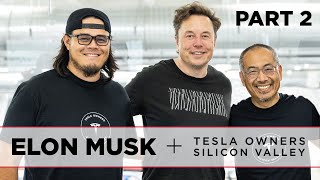 20221:03:06
 20097:22
 200911:36